Pampas grass
Cortaderia selloana. Family Poaceae. Ornamental grass.
Also called Common pampas grass.
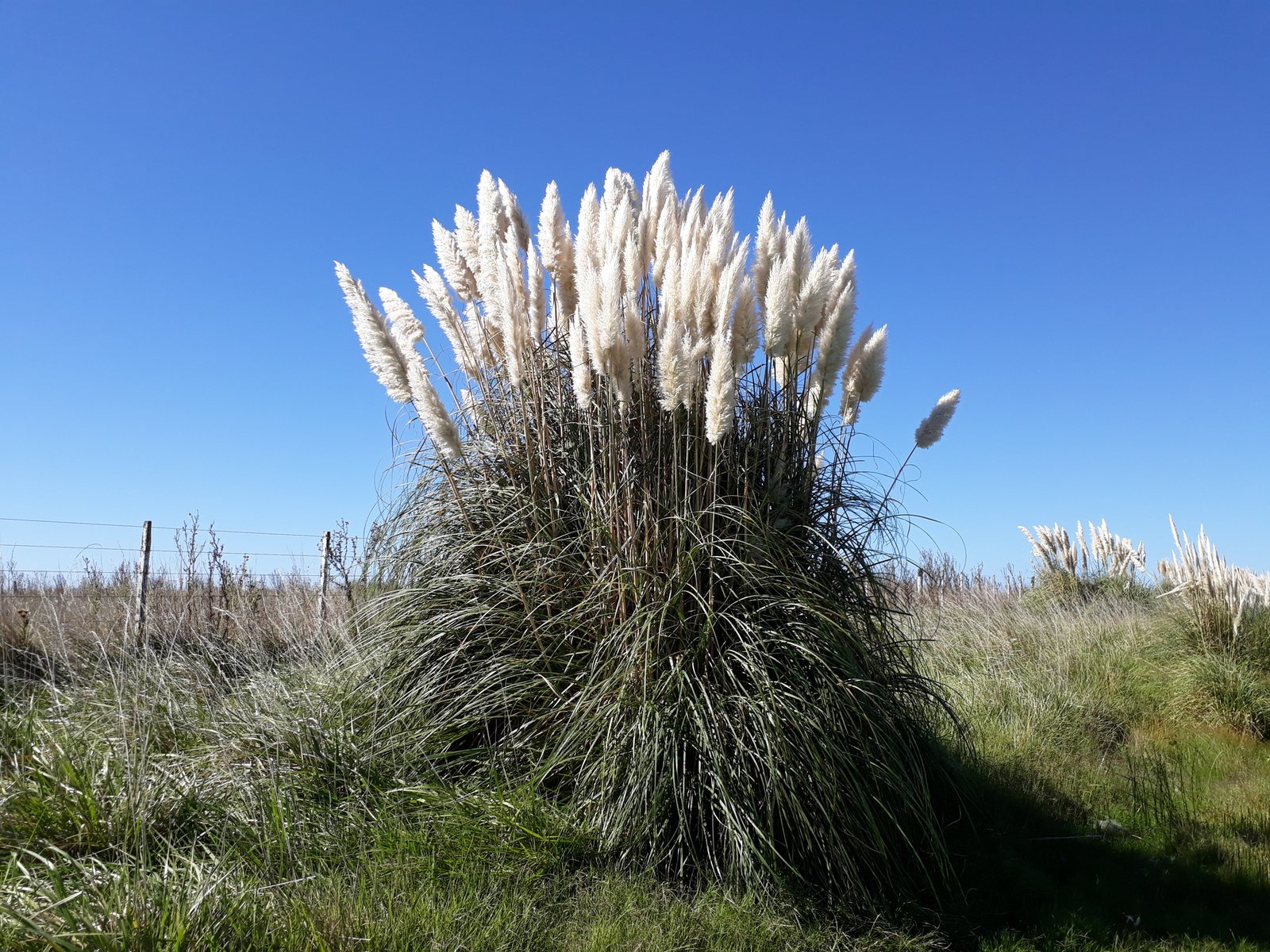
A large, clump-forming grass grown for arching leaves and tall, feathery flower plumes in late summer and autumn. It makes a strong focal point in spacious gardens, but its sharp leaves, bulky mature size and invasive behaviour in some regions make careful placement essential.
At a glance
- Sun
- Full sun; flowering is reduced in shade.
- Water
- Water regularly during establishment. Established clumps tolerate drought, but flower better with occasional deep watering during prolonged dry weather.
- Soil
- Well-drained soil, including sandy or gravelly ground; tolerates a broad pH range. Avoid waterlogged soil, especially in winter.
- Height
- 6-10 ft (1.8-3 m), including flower stems
- Spread
- 4-6 ft (1.2-1.8 m), sometimes wider with age
- Flowers
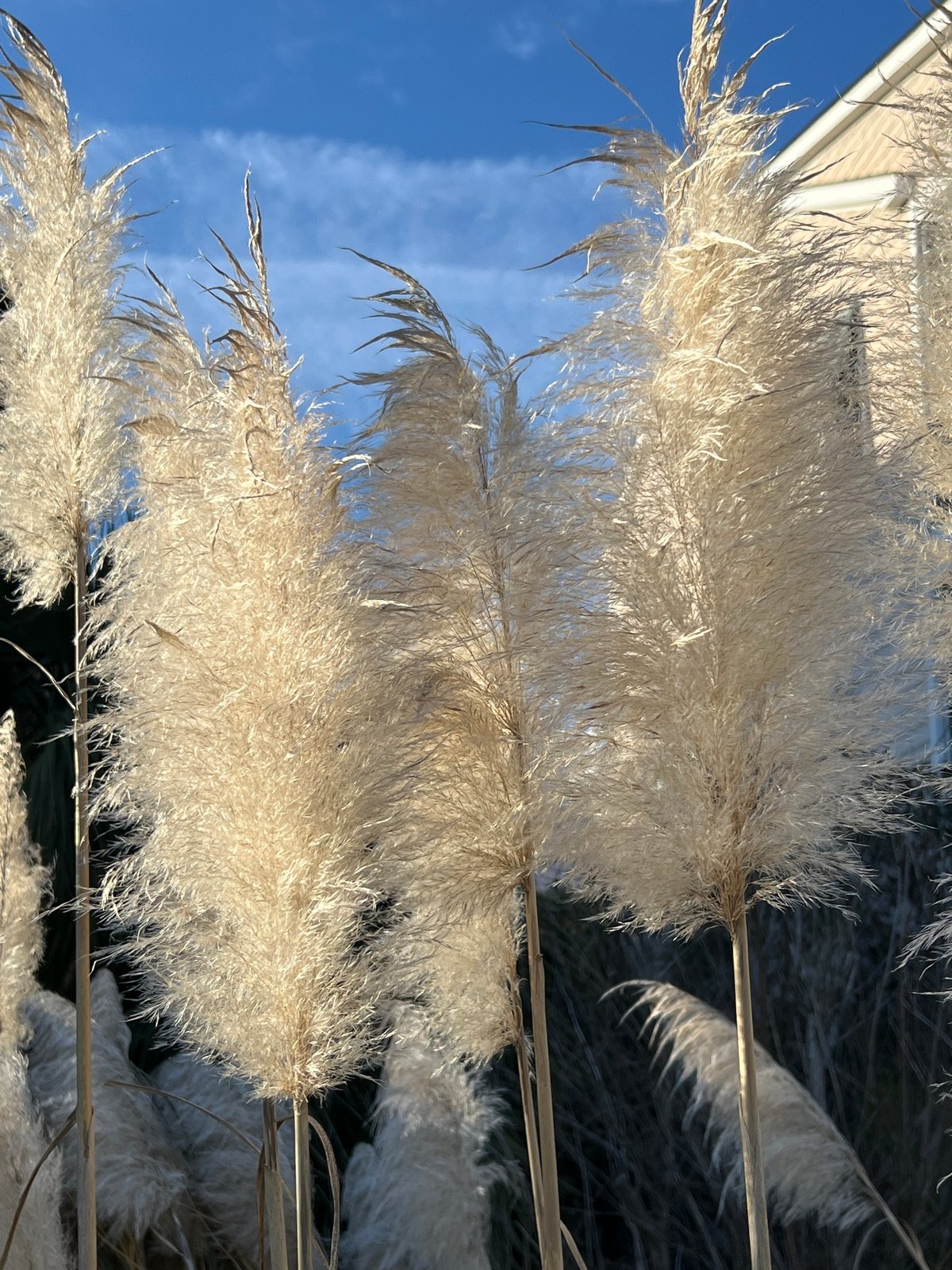
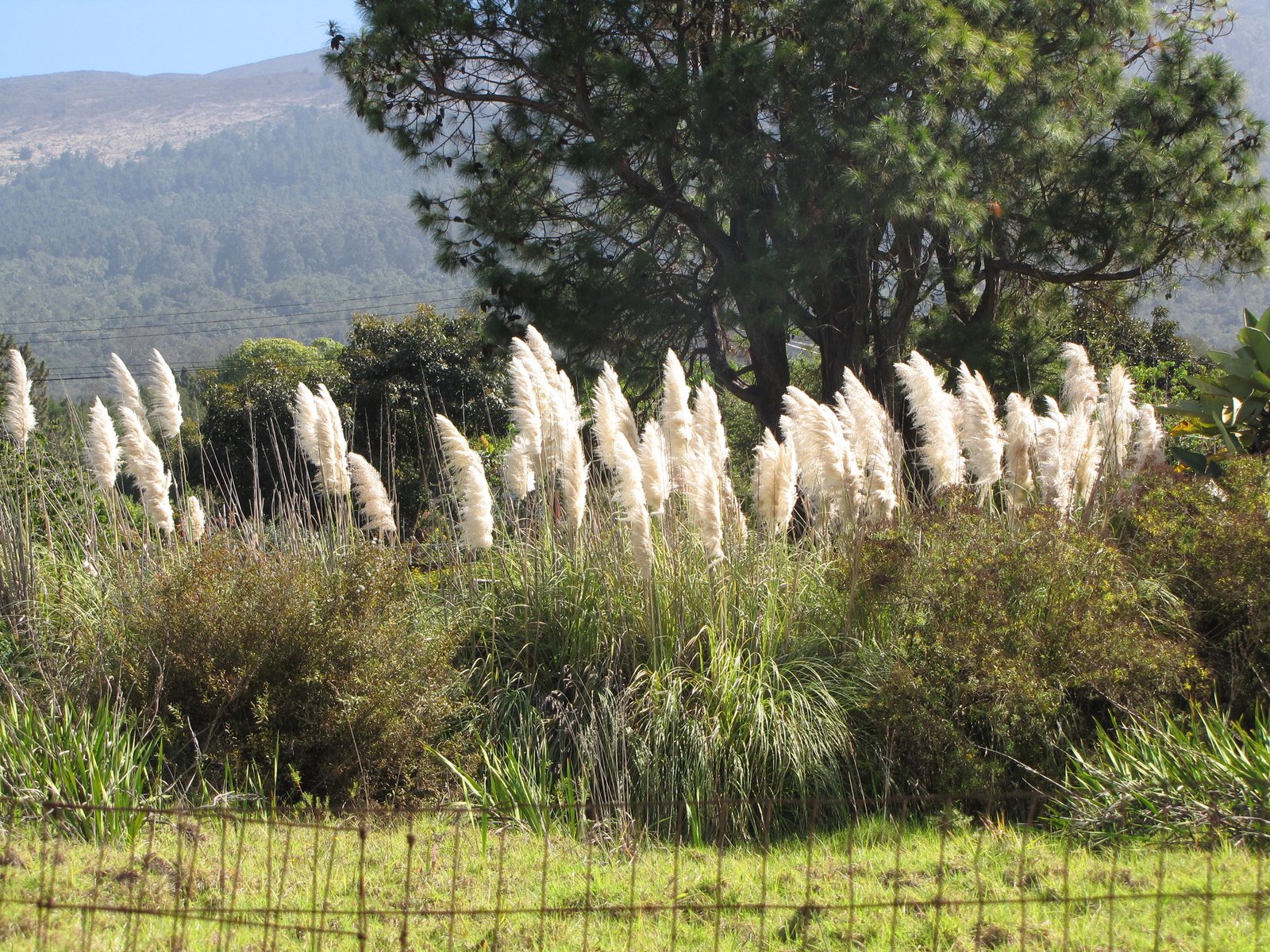
- Late summer to autumn; large silvery-white to cream plumes, sometimes pink-tinged, often remaining attractive into winter.
- Foliage
- Long, narrow, arching grey-green leaves with sharply serrated edges. Usually evergreen in mild climates; foliage browns or dies back in colder winters.
- Growth
- Fast in warm conditions once established.
- Care needed
- Medium
The year at a glance
- Deer resistant
- Drought tolerant
- Heat tolerant
- Wildlife
| J | F | M | A | M | J | J | A | S | O | N | D | |
|---|---|---|---|---|---|---|---|---|---|---|---|---|
| Flowers | ||||||||||||
| Fruit | ||||||||||||
| Plant |
Northern hemisphere months. In Australia, shift them by six.
- Difficulty
- Moderate
- Toughness
- Very tough
Will it suit your garden?
Pick your zone, country, light and whether you have pets.
Full sun is 6 or more hours of direct sun a day, part shade 3 to 6 hours, shade under 3.
How it grows
Planting day
1.1 ft (0.35 m)
After 1 year
5 ft (1.6 m)
After 2 years
8 ft (2.4 m)
full size
About 2 years to full size.
From a typical nursery size, at an average rate for this kind of plant. A rule of thumb, not a forecast.
Good to know
- Cats and dogs
- Safe
- Invasive in
- the US and Australia
- In the garden
- Spreads vigorously: plan to contain it.
- Growth rate
- Fast
Care
Jobs through the year
- WaterApr–May, Sep, every 21 days
- Established clumps rarely need water; water only if soil is dry, and water new plants more often.
- WaterJun–Aug, every 14 days
- Deep-water established clumps during prolonged drought for stronger flowering; otherwise skip.
- PruneFeb–Mar
- Cut old foliage and stems to 30 cm before new growth; wear gloves, sleeves and eye protection.
- FeedApr
- Apply a light balanced feed only if growth is weak; avoid rich feeding.
- DivideApr–May
- Divide only when necessary and where permitted; use protective clothing and sturdy tools.
- DeadheadAug–Oct, every 14 days
- Remove plumes before seed dispersal wherever escape is possible; do not grow where invasive or prohibited.
- ProtectOct–Nov
- Keep the crown well drained; zone 6 sites are marginal and may need a hardier alternative.
- Check local weed regulations before buying or planting; choose a non-invasive alternative where pampas grass is a problem.
- Plant in spring in colder regions, allowing room for the full mature clump well away from paths, play areas and buildings.
- Water deeply during the first growing season, allowing the soil surface to dry between waterings.
- Feed lightly in spring only if growth is weak; rich feeding can produce excessive foliage.
- Keep mulch away from the crown and improve drainage rather than watering persistently wet plants.
- Wear thick gloves, long sleeves and eye protection when handling leaves or dividing clumps.
Pruning. In late winter or early spring, before new growth extends, cut old foliage and stems back to about 12 in (30 cm), avoiding emerging shoots. Do not burn the clump; remove flower heads before seeds disperse wherever escape is a concern.
Through the year
- Late winter
- Cut back old foliage and remove accumulated dead material before new growth starts.
- Spring
- Plant or divide clumps where growing this species is permitted; water thoroughly after planting.
- Late spring
- Check establishment and water new plants during dry spells; feed lightly only if needed.
- Summer
- Deep-water established plants during prolonged drought if you want strong flowering.
- Late summer
- Enjoy emerging plumes, but remove flower heads before seed release where spread is possible.
- Autumn
- Check drainage and clear nearby dry debris; retain plumes for winter structure only where seed escape is not a concern.
In the garden
- Use as a solitary focal point in a large lawn or open gravel garden where its full outline can be seen.
- Place at the back of a broad sunny border with tall perennials, allowing space for the arching leaves.
- Combine with drought-tolerant shrubs and perennials for contrasting fine foliage and upright flower stems.
- Use in spacious coastal gardens for wind-tolerant structure, but not beside natural habitats where it could escape.
Garden styles it suits: Architectural minimal, Coastal, Dry gravel garden, Mediterranean, Modern and Winter interest.
Plant it with: Russian sage, Lavender, Yarrow, Sedum, Sea holly and Red-hot poker.
Wildlife: Dense clumps can provide shelter for small animals and birds, but the flowers are wind-pollinated rather than a nectar source. In invaded habitats, it can displace native vegetation and reduce habitat quality.
Problems to watch for
- Crown or root rot in wet soil: improve drainage, reduce watering and replace badly rotted plants.
- Poor flowering in shade or after excessive feeding: move to full sun and reduce fertiliser.
- Winter damage in exposed or marginally hardy sites: choose a sheltered, well-drained position and remove dead foliage in spring.
- Unwanted seedlings: remove plumes before seed dispersal and dig out seedlings while small; replace the plant where escape cannot be controlled.
Safety
Not known to be toxic to cats, dogs, horses or people. The leaf edges can cause significant cuts, and swallowed blades may irritate or injure the mouth and digestive tract; keep it away from children, pets and livestock routes.
Where it spreads. Spreads aggressively by wind-borne seed in coastal California, Hawaii and parts of Australia, including New South Wales, Victoria, Tasmania and Western Australia. It is regulated in several Australian jurisdictions; check current state and local rules before planting. Avoid planting near dunes, wetlands, roadsides or other open natural habitats.
Easily confused with
Purple pampas grass (Cortaderia jubata)
Usually has pinkish-purple young plumes that fade to tan, held well above the foliage on very tall stems. Plume colour overlaps, so reliable identification may require botanical examination;
Hardy pampas grass (Tripidium ravennae)
Has more upright foliage with a conspicuous pale midrib and narrower, less fluffy flower heads; it is generally more cold-hardy.
Chinese silver grass (Miscanthus sinensis)
Usually has narrower leaves with a clear white midrib and open, fan-shaped flower clusters rather than dense pampas plumes; its foliage dies back in winter.
The name
Cortaderia comes from a Spanish word referring to cutting, for the sharp leaves; selloana honours botanist Friedrich Sellow, and pampas grass refers to the South American grasslands.
Propagation. Divide manageable clumps in spring using sturdy tools and protective clothing. Seed-grown plants vary, and seed propagation is best avoided because of escape risk; do not propagate where the species is restricted.
Checked against open data
- Accepted botanical name
- Cortaderia selloana
- In the US and Canada
- Introduced in the lower 48 states.
- Native range
- Argentina Northeast, Argentina Northwest, Argentina South, Bolivia, Brazil South, Chile Central, Chile North, Chile South, Paraguay and Uruguay.
- Measured
- Average height 262 cm.
Sources: GBIF (CC BY 4.0), USDA PLANTS and Trefle (CC BY 4.0). The care and design notes are LandscapeGPT's own.
See it in your own yard.
Upload a photo of your yard and see it redesigned with plants that suit your climate, each checked against your zone.