Pansy
Viola × wittrockiana. Family Violaceae. Annual.
Also called Garden pansy, Large-flowered pansy.
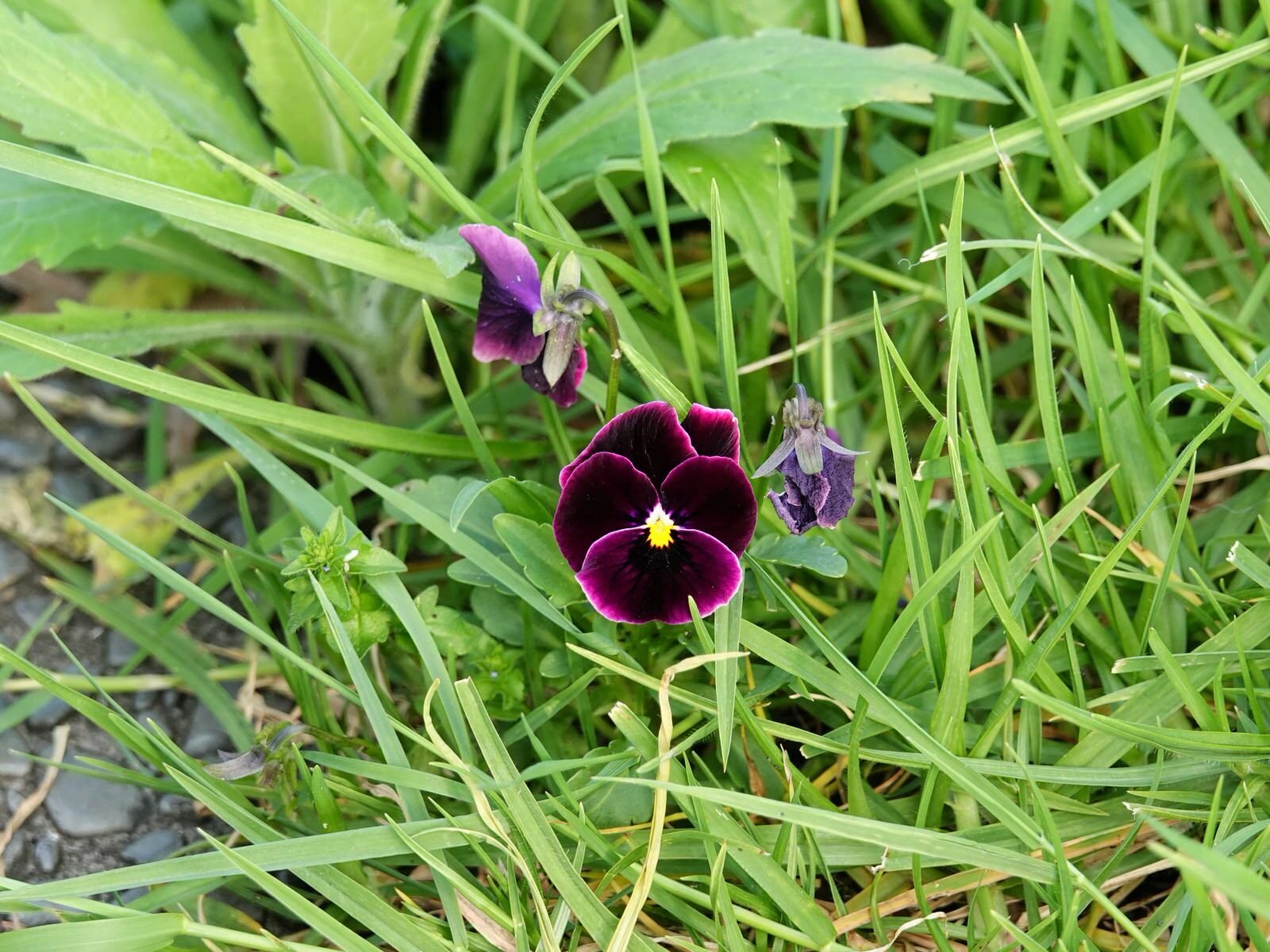
Pansy is a short-lived perennial usually grown as an annual for its broad, rounded flowers, often marked with dark central blotches. It provides colour in beds and containers during cool weather, including winter in mild climates, but usually declines in sustained summer heat.
At a glance
- Sun
- Full sun in cool climates; morning sun and afternoon shade where spring becomes hot.
- Water
- Keep the root zone evenly moist but not waterlogged. Containers may need frequent watering during dry or windy weather.
- Soil
- Fertile, moisture-retentive, well-drained soil; use fresh multipurpose potting compost in containers.
- Height
- 0.5-0.75 ft (0.15-0.23 m)
- Spread
- 0.5-1 ft (0.15-0.3 m)
- Flowers
- Spring to early summer in cold climates; autumn through spring in mild climates. Flowers come in white, yellow, orange, red, pink, purple, blue and near-black, often with contrasting faces or blotches.
- Foliage
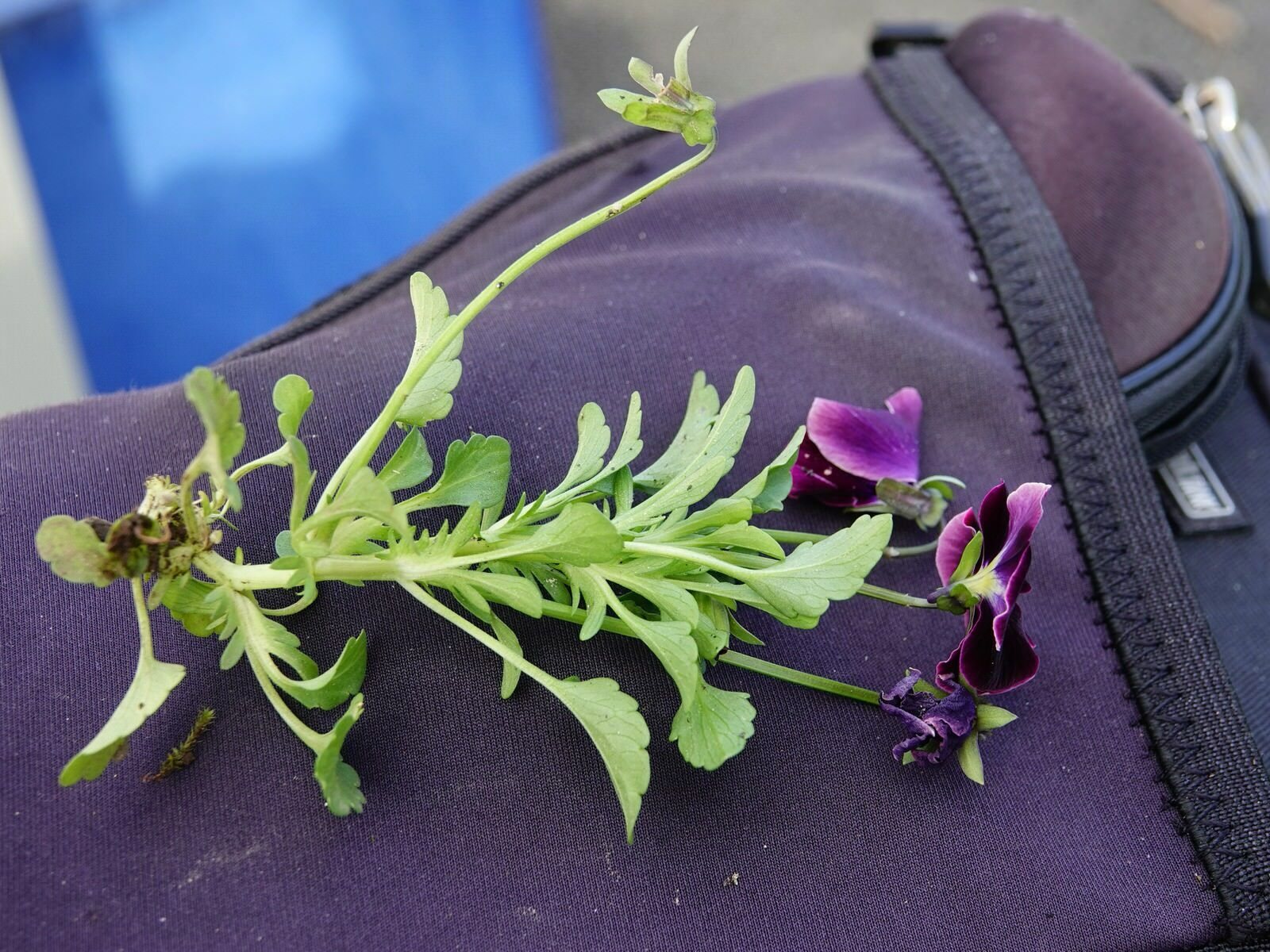
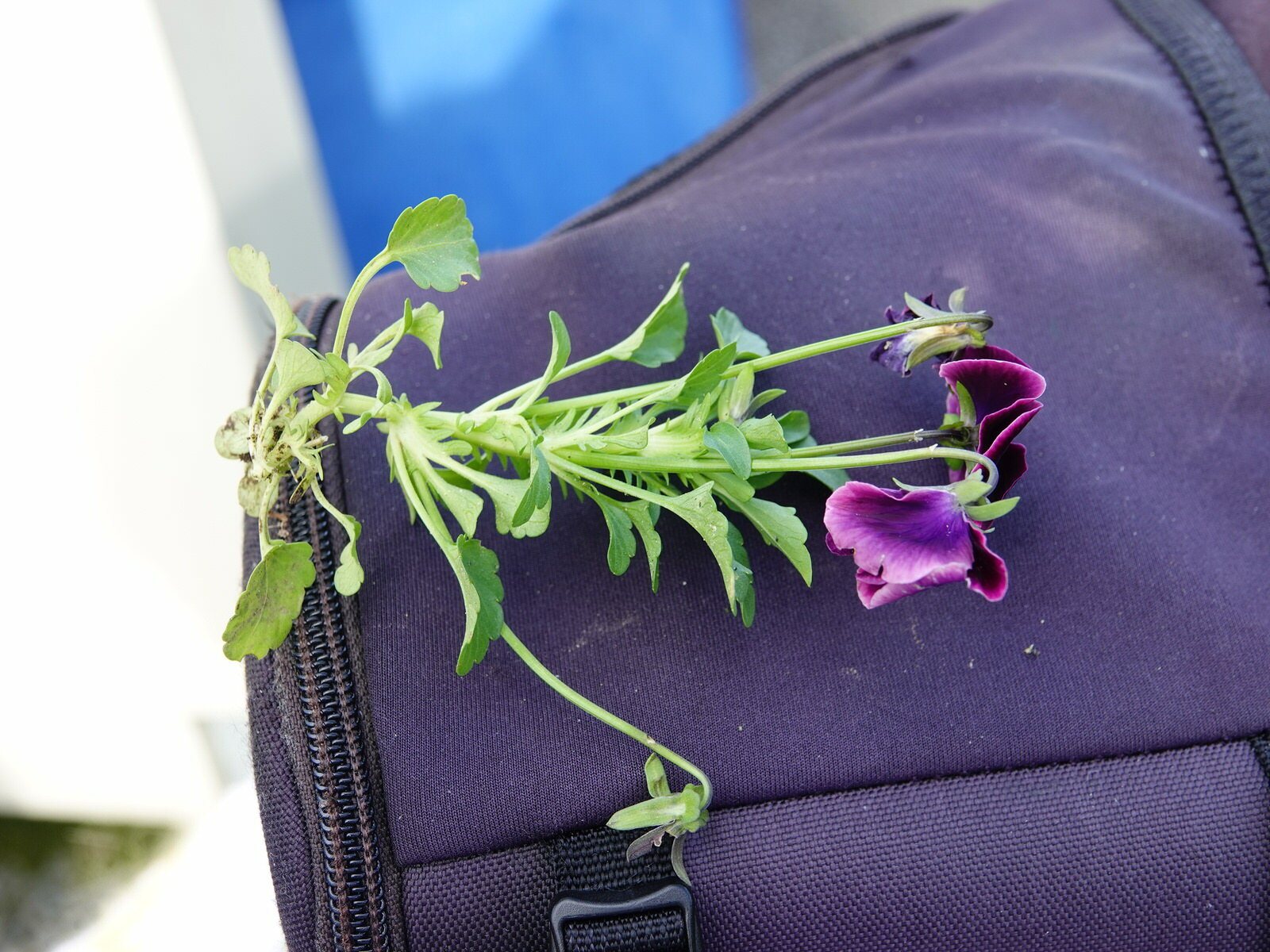
- Low clumps of green, oval to rounded leaves with shallowly scalloped edges; foliage can persist through mild winters.
- Growth
- Fast; young plants can reach flowering size within one growing season.
- Care needed
- Medium
The year at a glance
- Pollinators
- Low allergen
| J | F | M | A | M | J | J | A | S | O | N | D | |
|---|---|---|---|---|---|---|---|---|---|---|---|---|
| Flowers | ||||||||||||
| Plant |
Northern hemisphere months. In Australia, shift them by six.
- Difficulty
- Moderate
- Toughness
- Fairly tough
Will it suit your garden?
Pick your zone, country, light and whether you have pets.
Full sun is 6 or more hours of direct sun a day, part shade 3 to 6 hours, shade under 3.
How it grows
Planting day
0.5 ft (0.15 m)
After 1 year
0.6 ft (0.19 m)
full size
Full size in one season.
From a typical nursery size, at an average rate for this kind of plant. A rule of thumb, not a forecast.
Good to know
- Cats and dogs
- Safe
- Growth rate
- Fast
Care
Jobs through the year
- WaterMar–May, Sep–Oct, every 7 days
- Keep established beds evenly moist when rainfall is insufficient; check new plants and pots more often.
- WaterJun–Aug, every 3 days
- Water surviving plants during dry weather and shade them from afternoon heat; check pots daily.
- WaterJan–Feb, Nov–Dec, every 14 days
- Check overwintering beds and water only if dry and unfrozen; avoid saturated soil.
- FeedMar–Jun, Sep–Oct, every 21 days
- Feed actively growing container plants with balanced liquid fertiliser at label strength.
- DeadheadMar–Jun, Sep–Nov, every 7 days
- Remove faded flowers and developing seed capsules to encourage further blooms.
- PruneMar–May, Sep–Oct
- Trim leggy stems back to leafy growth during cool weather and remove damaged foliage.
- MulchMar, Sep–Oct
- Apply a thin mulch after planting, keeping crowns clear.
- ProtectJan–Feb, Nov–Dec
- Cover autumn plantings with breathable fleece during prolonged hard freezes or drying winds.
- Water at soil level when the surface begins to dry; do not leave pots standing in water.
- Feed container plants every two to three weeks with a balanced liquid fertiliser at the label rate.
- Space plants about 0.5-0.75 ft (0.15-0.23 m) apart to allow air movement.
- Apply a thin mulch around bedding plants, keeping it away from their crowns.
- Protect autumn-planted pansies from drying winds and prolonged hard freezes with breathable fleece.
Pruning. Remove faded flowers and developing seed capsules regularly to encourage more blooms. In cool weather, trim leggy stems back to leafy growth; replace plants that collapse in summer heat.
Through the year
- Late winter
- In mild climates, remove damaged leaves and faded flowers; check that winter containers drain freely.
- Early spring
- Plant hardened-off young plants once the soil is workable and severe freezes have passed.
- Late spring
- Deadhead regularly, feed containers and watch for aphids on new growth.
- Summer
- Remove heat-exhausted plants. In cool climates, keep remaining plants watered and sheltered from strong afternoon sun.
- Early autumn
- In mild-winter regions, plant fresh pansies after summer heat eases, allowing time for roots to establish.
- Late autumn
- Clear fallen leaves from plants and prepare fleece protection where prolonged hard freezes are expected.
In the garden
- Edge spring beds with low bands of colour beneath tulips and daffodils.
- Fill window boxes and doorstep pots with repeat-flowering cool-season displays.
- Plant in regular blocks for formal bedding schemes, choosing one colour or a restrained mix.
- Combine with primroses and forget-me-nots for a soft cottage-garden display.
Garden styles it suits: Cottage garden, Traditional, Formal, Victorian, Small-space and Winter interest.
Plant it with: Tulips, Daffodils, Primroses, Forget-me-nots, Sweet alyssum and English daisies.
Wildlife: Flowers can attract bees and other insects, although nectar access and value vary among cultivars. Pansies are not a substitute for a varied planting of nectar-rich flowers.
Problems to watch for
- Slugs and snails chew leaves and flowers: inspect after dark, remove hiding places and use labelled iron-phosphate bait if needed.
- Aphids cluster on buds and new shoots: wash them off with water or use insecticidal soap according to its label.
- Grey mould causes fuzzy growth and rotting flowers in damp conditions: remove affected material, improve spacing and avoid wetting flowers.
- Root and crown rot cause wilting despite wet soil: discard badly affected plants, improve drainage and avoid planting crowns too deeply.
Safety
Not known to be toxic to cats, dogs, horses or people. Flowers are edible when correctly identified and grown without unsuitable pesticide treatments; ornamental nursery plants should not be assumed safe to eat. Eating large amounts of plant material may cause stomach upset.
Easily confused with
Heartsease (Viola tricolor)
Usually has much smaller flowers with a yellow lower petal, pale middle petals and purple upper petals; garden pansies generally have larger, broader, more overlapping petals.
Horned violet (Viola cornuta)
Usually has smaller, more numerous flowers with a conspicuous slender spur behind each bloom. Hybrid bedding violas can blur this distinction.
The name
Pansy comes from the French pensée, meaning 'thought', while wittrockiana honours the Swedish botanist Veit Brecher Wittrock.
Propagation. Sow seed in trays, cover lightly and keep cool and evenly moist until germination. Allow roughly 10-14 weeks to produce flowering plants, depending on temperature and cultivar. Seed saved from hybrids may not resemble the parent; buying young plants gives more predictable results.
Checked against open data
- Accepted botanical name
- Viola wittrockiana
Sources: GBIF (CC BY 4.0). The care and design notes are LandscapeGPT's own.
See it in your own yard.
Upload a photo of your yard and see it redesigned with plants that suit your climate, each checked against your zone.