Paperbush
Edgeworthia chrysantha. Family Thymelaeaceae. Shrub.
Also called Chinese paperbush, Oriental paperbush.
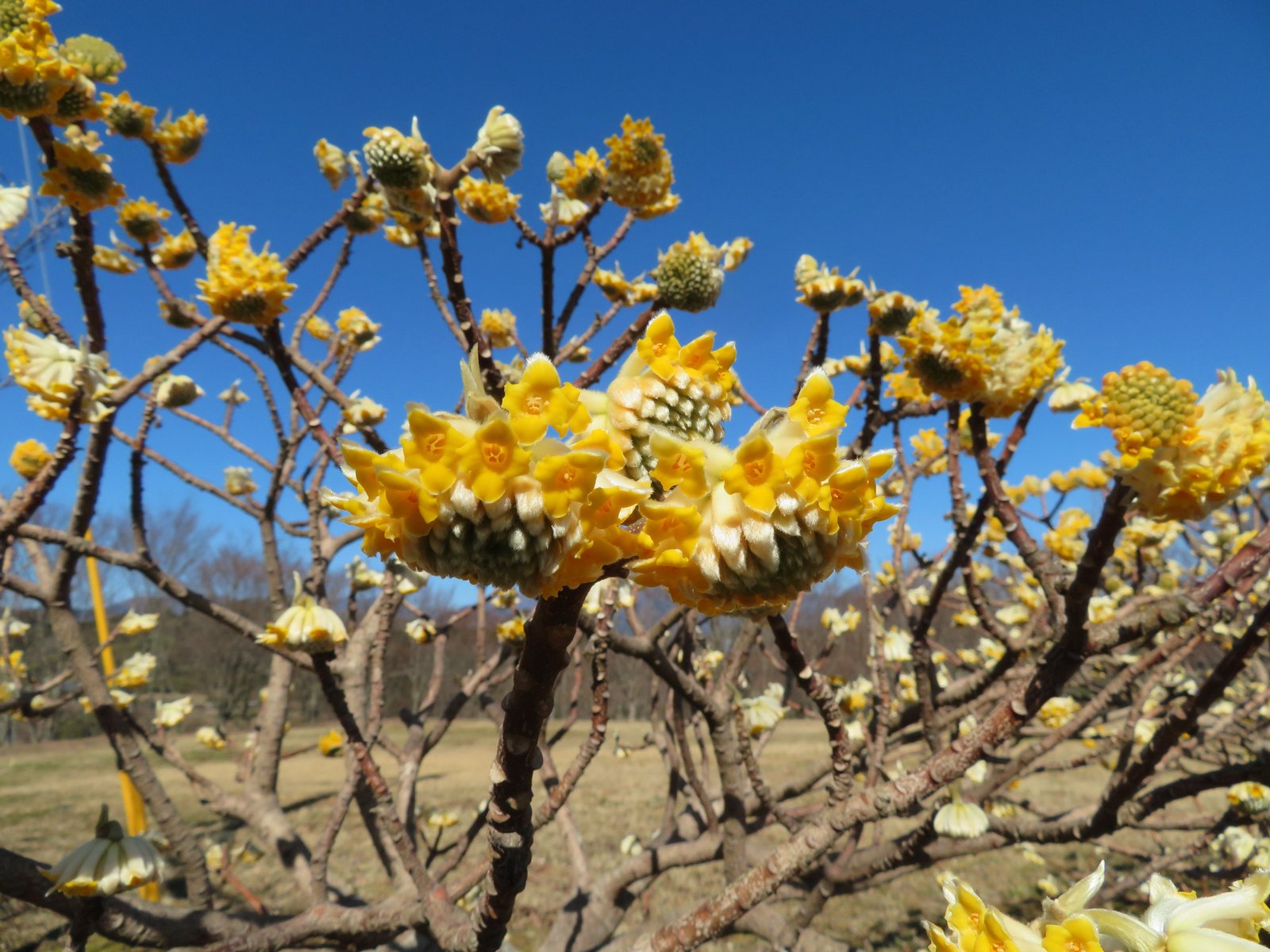
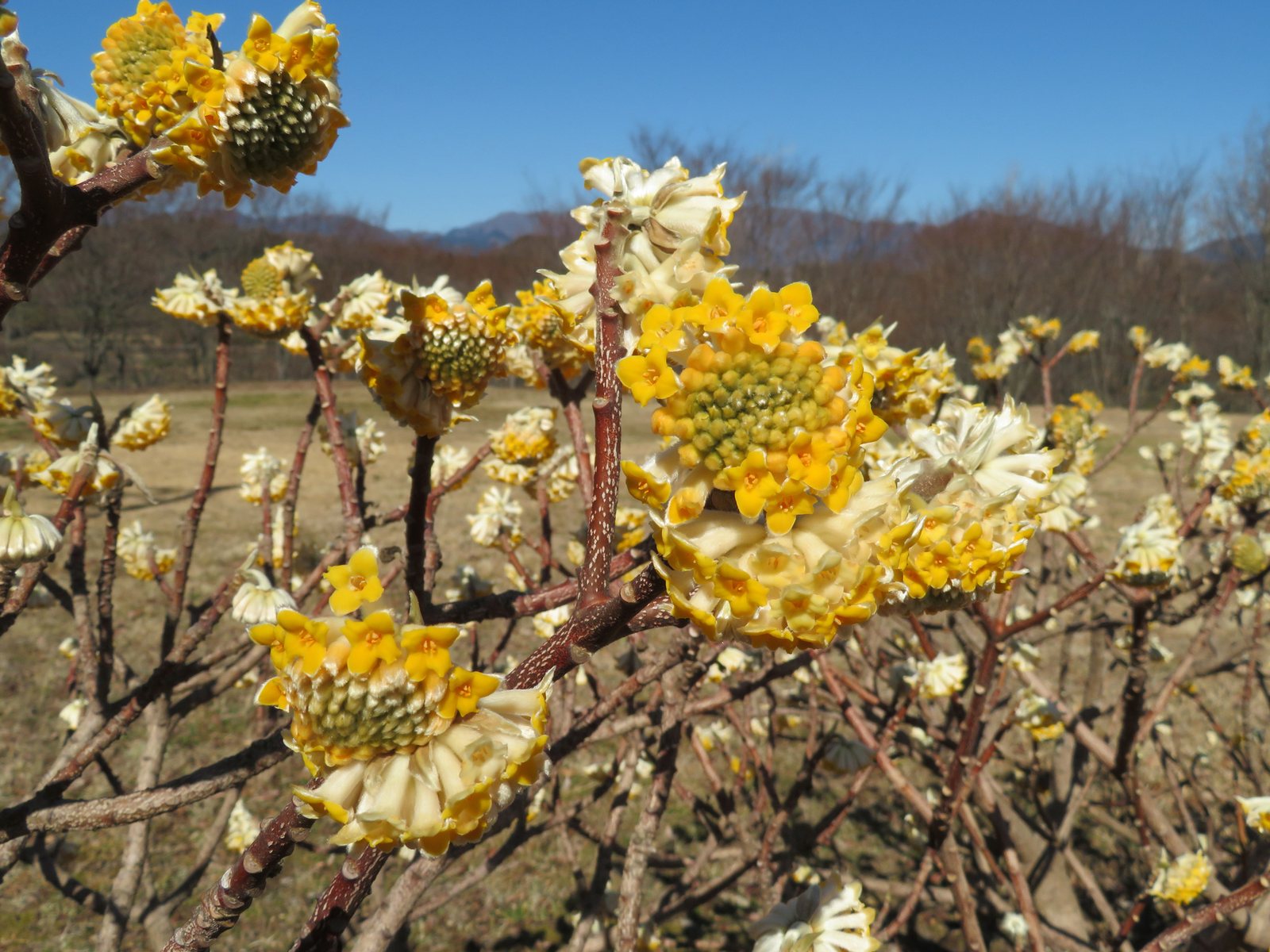
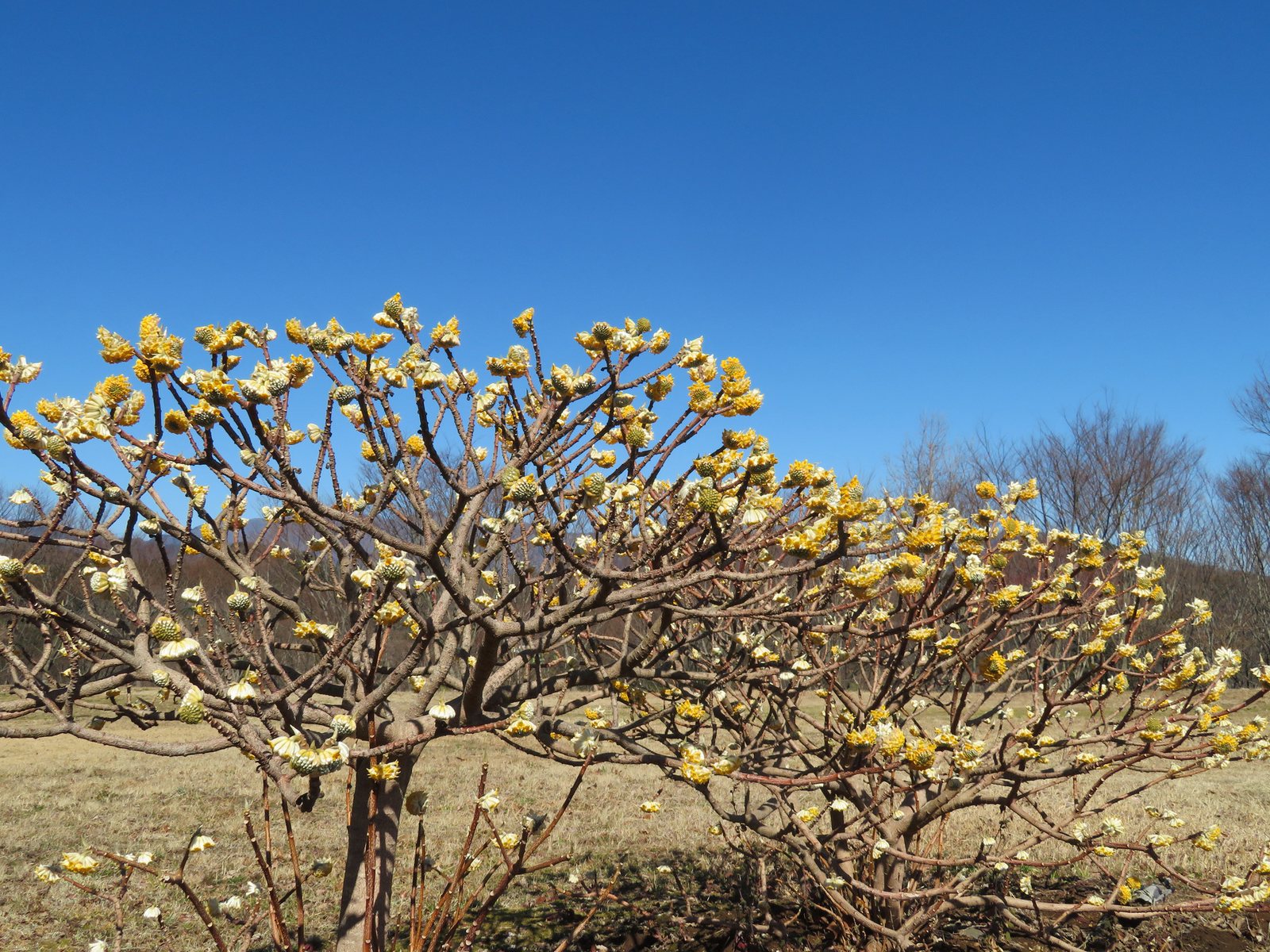
Paperbush is a deciduous shrub grown for its rounded clusters of fragrant yellow flowers, which open on bare branches in late winter and early spring. Silvery flower buds give it winter interest, while broad summer leaves create a leafy backdrop. It needs a sheltered position and soil that stays moist without becoming waterlogged.
At a glance
- Sun
- Partial shade, ideally with morning sun and afternoon shade. Full sun is possible in cooler climates if the roots stay moist.
- Water
- Water regularly while establishing and during dry spells; established plants still dislike prolonged drought.
- Soil
- Humus-rich, moisture-retentive but well-drained soil, preferably slightly acidic to neutral. Avoid waterlogged ground and dry, shallow soil.
- Height
- 4-6 ft (1.2-1.8 m), occasionally taller
- Spread
- 4-6 ft (1.2-1.8 m), occasionally wider
- Flowers
- Late winter to early spring; fragrant clusters of tubular flowers with yellow interiors and silky, creamy-white outer surfaces.
- Foliage
- Deciduous, with large, soft-looking, blue-green to mid-green leaves clustered towards the shoot tips; autumn colour is usually yellow.
- Growth
- Moderate
- Care needed
- Medium
The year at a glance
- Pollinators
- Low allergen
- Fragrant
| J | F | M | A | M | J | J | A | S | O | N | D | |
|---|---|---|---|---|---|---|---|---|---|---|---|---|
| Flowers | ||||||||||||
| Plant |
Northern hemisphere months. In Australia, shift them by six.
- Difficulty
- Moderate
- Toughness
- Needs looking after
Will it suit your garden?
Pick your zone, country, light and whether you have pets.
Full sun is 6 or more hours of direct sun a day, part shade 3 to 6 hours, shade under 3.
How it grows
Planting day
1.6 ft (0.5 m)
After 1 year
2.3 ft (0.7 m)
After 2 years
3 ft (0.9 m)
After 3 years
4 ft (1.1 m)
After 5 years
5 ft (1.5 m)
full size
About 5 years to full size.
From a typical nursery size, at an average rate for this kind of plant. A rule of thumb, not a forecast.
Good to know
- Cats and dogs
- Safe
- Growth rate
- Moderate
Care
Jobs through the year
- WaterApr–May, Sep–Oct, every 10 days
- Check established shrubs and water deeply when soil starts drying; water more often for the first two years.
- WaterJun–Aug, every 7 days
- Water deeply during dry weather before leaves wilt, allowing drainage and adjusting for rain.
- MulchMar–Apr
- Apply 5–8 cm of leaf mould or compost, leaving a gap around stems.
- FeedApr
- Feed lightly only if growth is weak after checking moisture, drainage and soil conditions.
- PruneApr
- After flowering, remove dead wood and lightly shorten awkward shoots; avoid hard pruning.
- ProtectJan–Mar, Nov–Dec
- Shelter from drying winds and fleece young plants during severe frost; outdoor survival is unreliable in zone 6.
- Plant in spring in colder areas, choosing a sheltered site away from drying winds and frost pockets.
- Water deeply during the first two growing seasons and whenever established plants face prolonged dry weather.
- Apply a 2-3 in (5-8 cm) layer of leaf mould or compost each spring, keeping it clear of the stems.
- Feed lightly in spring only if growth is weak; avoid heavy nitrogen feeding.
- Choose its permanent position carefully, as established plants resent root disturbance.
Pruning. Little pruning is needed. Just after flowering, remove dead or damaged wood and lightly shorten awkward shoots; avoid hard pruning and cutting off the developing flower buds later in the year.
Through the year
- Late winter
- Enjoy the flowers and protect young plants with horticultural fleece during unusually severe cold.
- Early spring
- After flowering, remove dead wood and make any minor shaping cuts.
- Spring
- Plant new shrubs once the soil is workable and mulch with compost or leaf mould.
- Summer
- Check soil moisture during dry weather and water deeply before leaves begin to wilt.
- Midsummer
- Take semi-ripe cuttings if you want to propagate it.
- Autumn
- Check drainage and shelter before winter; leave the silvery flower buds untouched.
In the garden
- Plant near a regularly used path or doorway where you can enjoy the winter fragrance.
- Use as a specimen in a sheltered courtyard, allowing room for its broad, branching outline.
- Place at a woodland edge with ferns and shade-tolerant perennials beneath it.
- Combine with winter-flowering shrubs and early bulbs for interest before the main growing season.
Garden styles it suits: Woodland, Winter interest, Sensory garden, Japanese, Modern courtyard and Pacific Northwest woodland.
Plant it with: Hellebores, Snowdrops, Epimediums, Japanese painted ferns, Camellias and Witch hazels.
Wildlife: Flowers provide nectar and pollen for bees and other insects active during mild late-winter and early-spring weather.
Problems to watch for
- Wilting or scorched leaves: check soil moisture, water deeply when dry and provide afternoon shade in hot climates.
- Root rot in wet soil: improve drainage before planting or choose a raised site; do not leave roots standing in water.
- Frost-damaged buds or shoots: grow in a sheltered position and protect young plants during severe cold.
- Yellow leaves and weak growth: check for waterlogging, drought or very alkaline soil before adding fertiliser.
Safety
Not known to be toxic to people, cats, dogs or horses, but reliable species-specific poisoning information is limited. No particular part is established as a serious poisoning hazard; it is nevertheless not an edible plant, so discourage chewing or ingestion.
Easily confused with
Winter daphne (Daphne odora)
Winter daphne usually keeps its smaller, leathery leaves through winter and has pink-purple buds opening to pale flowers; paperbush flowers on bare stems and develops much larger summer leaves.
Oriental paperbush (Edgeworthia papyrifera)
This name is often treated as a synonym of Edgeworthia chrysantha rather than a separate garden plant, so nursery labels may refer to the same shrub.
The name
Edgeworthia honours the botanist Michael Pakenham Edgeworth and his sister Maria, chrysantha means golden-flowered, and paperbush refers to the use of its bark fibres in papermaking.
Propagation. Take semi-ripe cuttings in midsummer and root them with gentle bottom heat; rooting can be slow and uneven. Layering low branches is another option. Sow fresh seed when available, although germination may be slow.
Checked against open data
- Accepted botanical name
- Edgeworthia chrysantha
- In the US and Canada
- Introduced in the lower 48 states.
- Native range
- China South-Central, China Southeast and Myanmar.
Sources: GBIF (CC BY 4.0), USDA PLANTS and Trefle (CC BY 4.0). The care and design notes are LandscapeGPT's own.
See it in your own yard.
Upload a photo of your yard and see it redesigned with plants that suit your climate, each checked against your zone.