Paprika yarrow
Achillea millefolium 'Paprika'. Family Asteraceae. Perennial.
Also called Common yarrow 'Paprika', Achillea 'Paprika'.
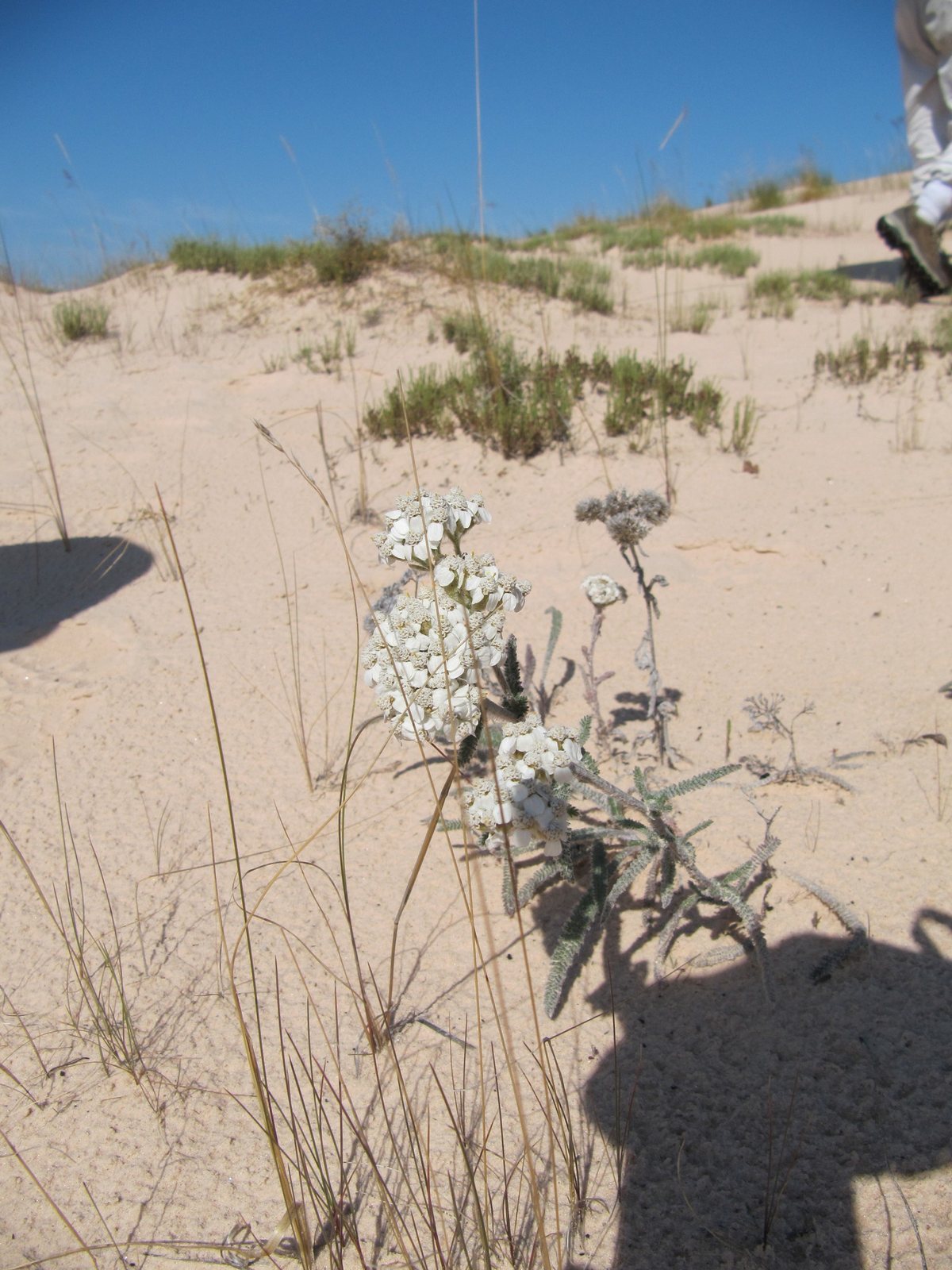
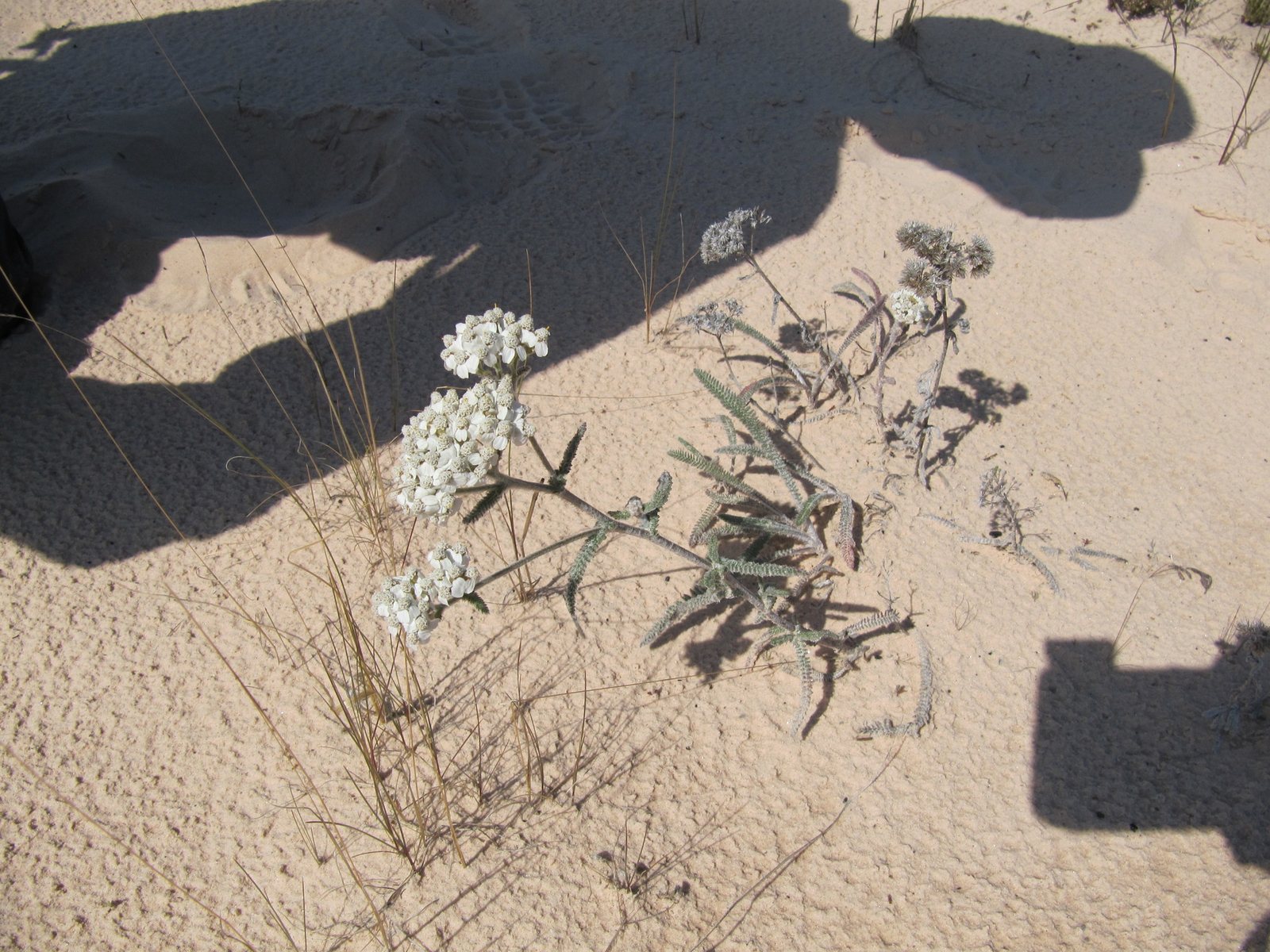
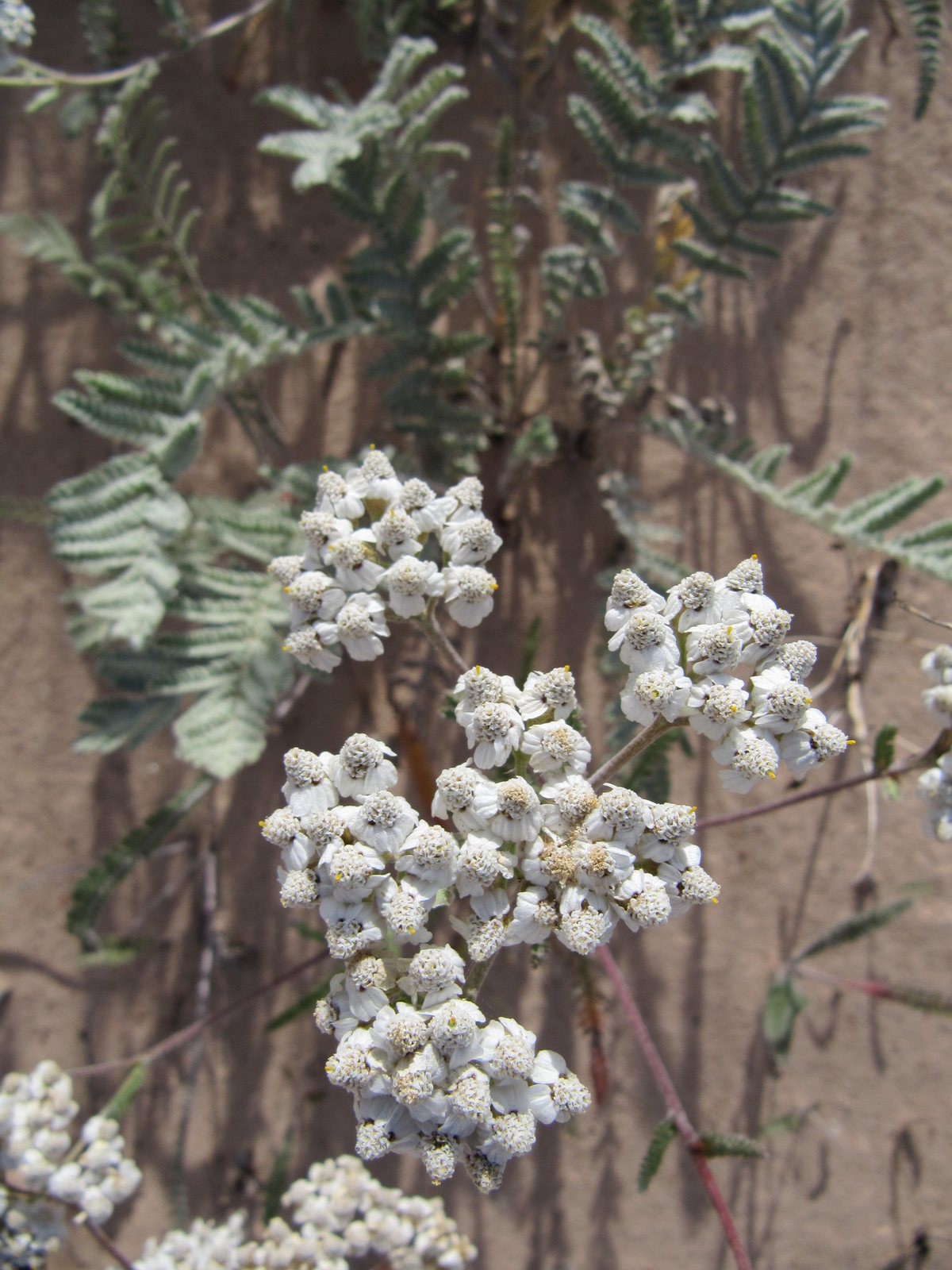
Paprika yarrow is a clump-forming perennial with finely divided foliage and flat flower clusters that open red with yellow centres, then fade through salmon and pink. Grow it for summer colour, pollinating insects and cut flowers in sunny beds with freely draining soil.
At a glance
- Sun
- Full sun; flowering is weaker and stems are more likely to flop in shade.
- Water
- Water regularly while establishing; once rooted, water during prolonged dry spells rather than keeping the soil constantly moist.
- Soil
- Well-drained sandy, gravelly or loamy soil, preferably of low to moderate fertility. Avoid wet winter soil and heavy, poorly drained clay.
- Height
- 1.5-2.5 ft (0.45-0.75 m)
- Spread
- 1.5-2 ft (0.45-0.6 m), spreading farther over time by creeping rhizomes
- Flowers
- Early to late summer, sometimes repeating into early autumn after cutting back; red flower clusters with yellow centres fade to salmon, pink and pale cream.
- Foliage
- Aromatic, finely divided, fern-like green to grey-green leaves.
- Growth
- Moderate to fast
- Care needed
- Low
The year at a glance
- Pollinators
- Deer resistant
- Drought tolerant
- Cold hardy
- Heat tolerant
- Wildlife
- Fragrant
| J | F | M | A | M | J | J | A | S | O | N | D | |
|---|---|---|---|---|---|---|---|---|---|---|---|---|
| Flowers | ||||||||||||
| Fruit | ||||||||||||
| Plant |
Northern hemisphere months. In Australia, shift them by six.
- Difficulty
- Easy
- Toughness
- Very tough
Will it suit your garden?
Pick your zone, country, light and whether you have pets.
Full sun is 6 or more hours of direct sun a day, part shade 3 to 6 hours, shade under 3.
How it grows
Planting day
1 ft (0.3 m)
After 1 year
1.4 ft (0.42 m)
After 2 years
1.8 ft (0.55 m)
After 3 years
2 ft (0.6 m)
full size
About 2 years to full size.
From a typical nursery size, at an average rate for this kind of plant. A rule of thumb, not a forecast.
Good to know
- Cats and dogs
- Toxic
- Native to
- the US, Canada and the UK
- Invasive in
- Australia
- In the garden
- Spreads vigorously: plan to contain it.
- Growth rate
- Fast
Care
Jobs through the year
- WaterApr–May, Sep, every 21 days
- Water established clumps only in prolonged dry weather; water new plants more often until rooted.
- WaterJun–Aug, every 14 days
- Water deeply only during prolonged drought; avoid keeping the crown continually moist.
- PruneFeb–Mar
- Cut away old stems before new growth starts.
- DivideMar–Apr
- Divide crowded clumps every two to three years, discarding woody or bare centres.
- DeadheadJun–Sep, every 14 days
- Cut faded flower stems back to leafy growth to encourage repeat flowering; leave final heads for winter if desired.
- PruneAug–Sep
- Remove wandering shoots to keep the clump within its allotted space.
- Water newly planted clumps when the root zone starts to dry; reduce watering once established.
- Avoid routine feeding and rich manure, which encourage soft, floppy growth.
- Keep the crown clear of thick, damp mulch; gravel mulch suits well-drained sites.
- Divide crowded clumps every two to three years, discarding woody or bare centres.
- Remove wandering shoots if the clump spreads beyond its allotted space.
Pruning. Cut spent flower stems back to leafy growth after the first flush to encourage more flowers. Remove dead stems in late winter or early spring before new growth develops.
Through the year
- Early spring
- Cut away old stems and divide crowded clumps as growth starts.
- Spring
- Plant in full sun and well-drained soil; water until roots establish.
- Early summer
- Check for aphids on soft shoots and wash off small colonies with water.
- Summer
- Deadhead faded flower clusters or cut stems for indoor arrangements.
- Late summer
- Trim finished flowering stems to leafy growth and remove unwanted spreading shoots.
- Autumn
- Leave sound stems for winter structure if desired, but remove diseased foliage.
In the garden
- Plant in repeated groups through a sunny border to carry warm red and salmon tones between other perennials.
- Pair with upright blue salvias and catmint for contrasting flower shapes and colours.
- Mix with ornamental grasses in naturalistic planting, where the flat flower heads contrast with fine leaves and airy seed heads.
- Use in gravel gardens and dry, sunny borders with other plants that dislike rich, wet soil.
Garden styles it suits: Cottage garden, New perennial (prairie), Pollinator garden, Dry gravel garden, Hot border and Desert / xeriscape.
Plant it with: Catmint, Perennial salvia, Russian sage, Purple coneflower, Feather reed grass and Lamb's ears.
Wildlife: The accessible flower clusters attract bees, hoverflies, butterflies and other beneficial insects. It is often left alone by deer and rabbits, though neither resistance is guaranteed.
Problems to watch for
- Flopping stems: move to full sun, avoid fertiliser and excessive watering, and divide congested clumps.
- Crown or root rot: improve drainage or move to a raised bed; remove rotted plants and avoid persistently wet soil.
- Powdery mildew: increase spacing and air circulation, and remove badly affected foliage.
- Aphids: wash colonies off young shoots with water and allow ladybirds and other predators to feed.
Safety
Yarrow is toxic to cats, dogs and horses if eaten; leaves and flowers contain compounds that can cause vomiting, diarrhoea or other digestive upset. For people, handling may cause contact dermatitis, especially in those sensitive to the daisy family, and eating substantial amounts can be harmful; do not treat this ornamental cultivar as food.
Where it spreads. Can spread aggressively by rhizomes in garden beds and lawns in the United States, Canada, the United Kingdom and Australia. The species is naturalised and considered an environmental weed in parts of southern Australia, including Victoria and Tasmania; this concern applies to yarrow generally, not a separate listing for 'Paprika'.
Easily confused with
Common yarrow (Achillea millefolium)
The foliage and growth habit are similar, but wild forms usually have white or pale pink flowers rather than the red, yellow-centred flowers of 'Paprika'.
Fernleaf yarrow (Achillea filipendulina)
Usually taller, with larger golden-yellow flower plates and generally coarser, grey-green foliage.
Red valerian (Centranthus ruber)
Has broad, undivided leaves and loose clusters of small tubular flowers, rather than feathery foliage and flat clusters of tiny daisies.
The name
Achillea refers to Achilles and the plant's traditional association with treating wounds, millefolium means 'thousand-leaved', and 'Paprika' refers to its spicy red flower colour.
Propagation. Divide healthy clumps in spring, replanting vigorous outer sections. Division or basal cuttings preserve the cultivar; seedlings will not reliably match 'Paprika'.
Checked against open data
- Accepted botanical name
- Achillea millefolium
- In the US and Canada
- Native in Alaska, Canada, Greenland, the lower 48 states and St. Pierre and Miquelon. Introduced in Canada, Hawaii, the lower 48 states and St. Pierre and Miquelon.
- Native range
- Northwest Territorie, Norway, Nunavut, Ohio, Oklahoma, Ontario, Oregon, Pakistan, Poland, Portugal, Primorye and Prince Edward I..
- Measured
- Soil pH 6 to 8. Average height 16 cm.
Sources: GBIF (CC BY 4.0), USDA PLANTS and Trefle (CC BY 4.0). The care and design notes are LandscapeGPT's own.
See it in your own yard.
Upload a photo of your yard and see it redesigned with plants that suit your climate, each checked against your zone.