Patriot hosta
Hosta fortunei 'Patriot'. Family Asparagaceae. Perennial.
Also called Patriot plantain lily, Hosta 'Patriot', Hosta fortunei 'Patriot'.
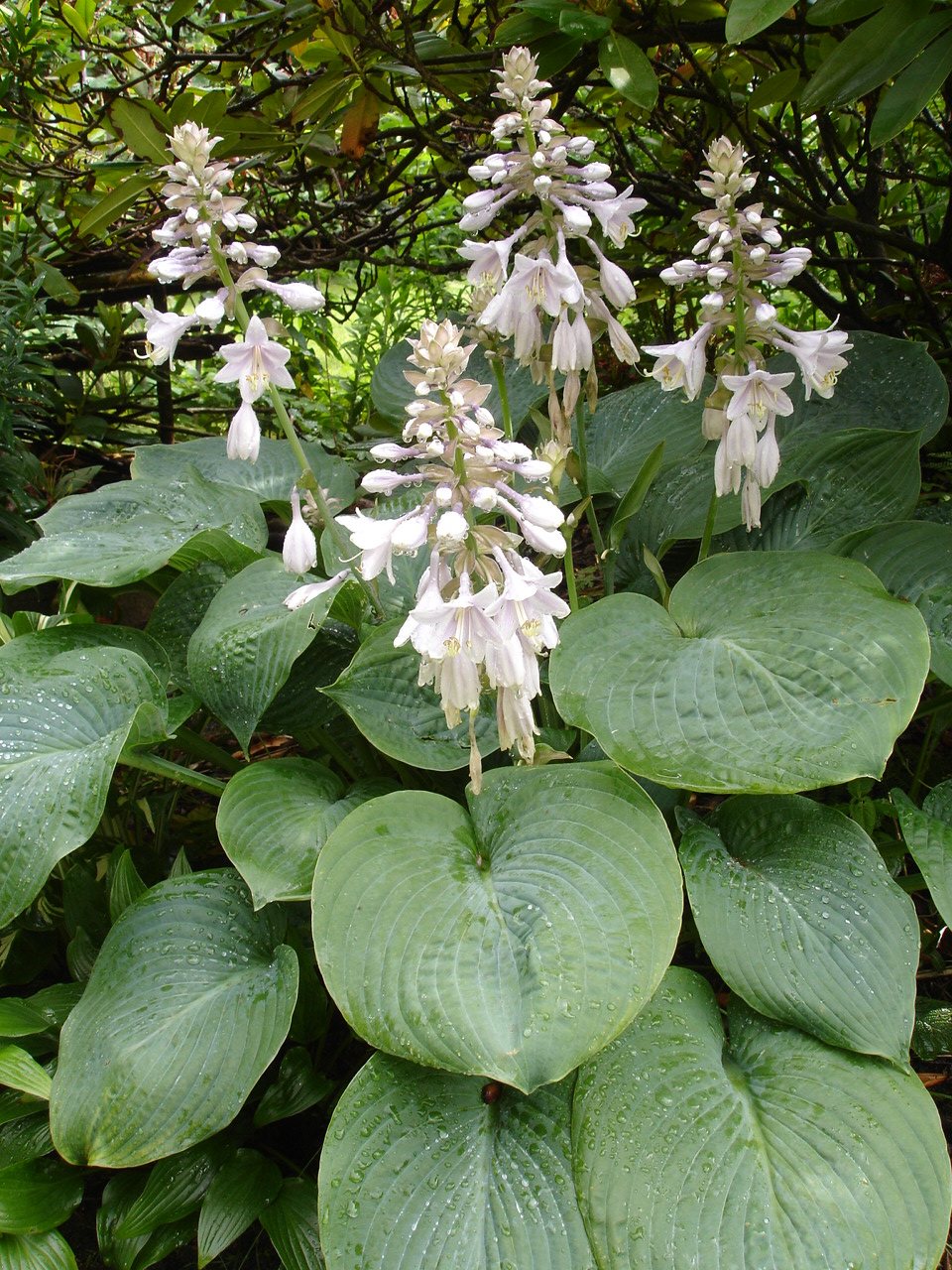
Patriot hosta is a deciduous, clump-forming perennial grown for its green leaves with broad, irregular white margins. It brightens shady borders and containers, producing lavender flowers above the foliage in summer. It needs winter dormancy and is less dependable in warm climates with little winter chill.
At a glance
- Sun
- Partial shade or dappled shade; gentle morning sun is suitable where soil stays moist. Avoid hot afternoon sun, which can scorch the white leaf margins.
- Water
- Keep the soil evenly moist during active growth, especially in the first year. Established clumps tolerate brief dry spells, but prolonged drought causes brown edges and early dormancy.
- Soil
- Humus-rich, moisture-retentive soil with good drainage; tolerates mildly acidic to mildly alkaline conditions. Avoid waterlogged soil, particularly in winter.
- Height
- 1-2 ft (0.3-0.6 m), with flower stems sometimes taller
- Spread
- 2-3 ft (0.6-0.9 m)
- Flowers
- Lavender, funnel-shaped flowers on upright stems in midsummer.
- Foliage
- Broad, pointed oval leaves with dark green centres and wide, irregular white margins; slightly puckered at maturity. Dies back in autumn.
- Growth
- Moderate; usually takes several years to form a full-sized clump.
- Care needed
- Low
The year at a glance
- Pollinators
- Cold hardy
- Low allergen
| J | F | M | A | M | J | J | A | S | O | N | D | |
|---|---|---|---|---|---|---|---|---|---|---|---|---|
| Flowers | ||||||||||||
| Plant |
Northern hemisphere months. In Australia, shift them by six.
- Difficulty
- Easy
- Toughness
- Fairly tough
Will it suit your garden?
Pick your zone, country, light and whether you have pets.
Full sun is 6 or more hours of direct sun a day, part shade 3 to 6 hours, shade under 3.
How it grows
Planting day
1 ft (0.3 m)
After 1 year
1.1 ft (0.35 m)
After 2 years
1.3 ft (0.4 m)
After 3 years
1.5 ft (0.45 m)
full size
About 3 years to full size.
From a typical nursery size, at an average rate for this kind of plant. A rule of thumb, not a forecast.
Good to know
- Cats and dogs
- Toxic
- Growth rate
- Moderate
Care
Jobs through the year
- WaterApr–May, Sep–Oct, every 14 days
- Water established clumps deeply if rain is insufficient; young plants need more frequent watering.
- WaterJun–Aug, every 7 days
- Water at soil level during dry weather, keeping the root zone evenly moist.
- MulchMar–Apr
- Apply 5 cm of compost or leaf mould, keeping the crown clear.
- FeedApr
- Use balanced slow-release fertilizer only if growth is weak or soil is poor.
- ProtectMar–May, every 7 days
- Check emerging shoots for slugs and snails; hand-pick or use labelled iron-phosphate bait.
- DivideMar–Apr
- Divide only crowded clumps or when more plants are wanted.
- DeadheadJul–Aug, every 14 days
- Cut finished flower stems to the base unless saving seed.
- PruneOct–Nov
- Remove collapsed foliage after it dies naturally; leave green leaves intact.
- Water deeply during dry spells, directing water onto the soil rather than repeatedly wetting the leaves.
- Apply compost around the clump in spring; use a balanced slow-release fertiliser only if growth is weak or soil is poor.
- Mulch with 2 in (5 cm) of compost or leaf mould, keeping it clear of the crown.
- Check emerging shoots for slugs and snails and protect them before leaves unfurl.
- Divide only when you want more plants or an established clump becomes crowded; routine annual division is unnecessary.
Pruning. Cut spent flower stems down to the base unless you want seed. Remove yellowed or collapsed foliage in late autumn or winter, leaving healthy green leaves until they die naturally.
Through the year
- Early spring
- Check emerging shoots for slug and snail damage; start protection promptly.
- Spring
- Plant or divide clumps as growth begins, water thoroughly, and mulch around the crown.
- Late spring
- Check spacing and moisture as leaves expand; feed container-grown plants according to the fertiliser label.
- Summer
- Water during dry weather and remove spent flower stems if seed is not wanted.
- Late autumn
- Clear collapsed foliage and inspect the crown for signs of rot.
- Winter
- Keep dormant container plants draining freely and shelter pots from repeated freezing and thawing in very cold regions.
In the garden
- Repeat clumps along a shaded path, using the white leaf margins to define the edge.
- Plant beneath deciduous trees where there is enough soil moisture and limited root competition.
- Combine with ferns and fine-leaved sedges for contrasting leaf shapes in woodland borders.
- Use in a large shaded container as a foliage feature, with room for its mature spread.
- Pair with white flowers and dark green foliage in a cool-coloured shade border.
Garden styles it suits: Woodland, Japanese, White garden, Cottage garden, Modern courtyard and Blues and silvers.
Plant it with: Japanese painted fern, Japanese forest grass, Astilbe, Siberian bugloss, Hellebore and Solomon's seal.
Wildlife: Flowers provide nectar for bees and may attract hummingbirds in North America. Deer and rabbits may eat the foliage.
Problems to watch for
- Slugs and snails chew holes in leaves, especially as shoots emerge: remove hiding places, hand-pick after dark, or use an iron phosphate bait according to its label.
- Leaf scorch causes dry brown edges in strong sun or drought: provide afternoon shade, mulch, and water consistently.
- Crown rot develops in poorly drained soil: improve drainage, avoid burying the crown, and remove badly rotted plants.
- Hosta virus X can cause unusual mottling, distorted leaves, or colour bleeding along veins: remove infected plants, do not propagate them, and disinfect tools between plants.
Safety
Toxic to cats, dogs and horses if eaten; all parts contain saponins that can cause vomiting, diarrhoea and abdominal discomfort. Poisoning is usually gastrointestinal but warrants veterinary advice. Not known to be toxic to people, though it is best treated as an ornamental rather than food.
Easily confused with
Francee hosta (Hosta 'Francee')
Also has green leaves edged in white, but the white margin is usually narrower. Patriot originated as a sport of Francee.
Fire and Ice hosta (Hosta 'Fire and Ice')
Its variegation is reversed: leaves have white centres and green margins rather than green centres and white margins.
The name
Hosta honours Austrian physician and botanist Nicolaus Thomas Host, while fortunei honours Scottish plant collector Robert Fortune.
Propagation. Divide established clumps in early spring as shoots emerge, keeping roots and several growing points on each division. Water divisions well until established. Seedlings do not reliably retain Patriot's leaf pattern.
Checked against open data
- Accepted botanical name
- Hosta sieboldiana sieboldiana Hosta fortunei 'Patriot' is an older name for Hosta sieboldiana sieboldiana.
Sources: GBIF (CC BY 4.0). The care and design notes are LandscapeGPT's own.
See it in your own yard.
Upload a photo of your yard and see it redesigned with plants that suit your climate, each checked against your zone.