Perennial kale 'Taunton Deane'
Brassica oleracea 'Taunton Deane'. Family Brassicaceae. Perennial.
Also called Taunton Deane kale, Taunton Deane perennial kale.
A long-lived, branching kale grown for repeated harvests of tender leaves rather than a single crop. It forms a substantial, woody-stemmed plant in mild-winter gardens, but needs winter protection or replacement cuttings in colder areas, including most of Canada.
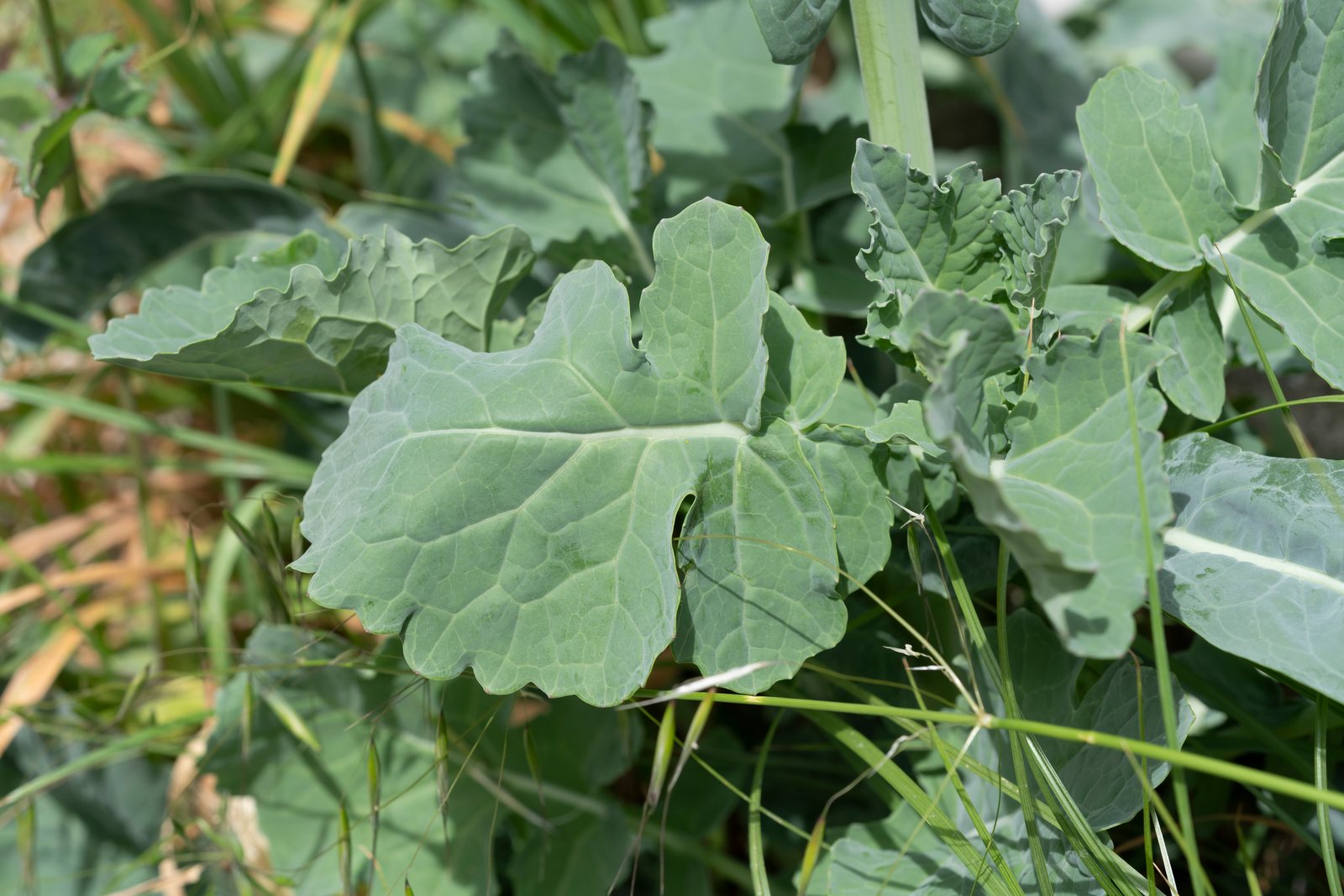
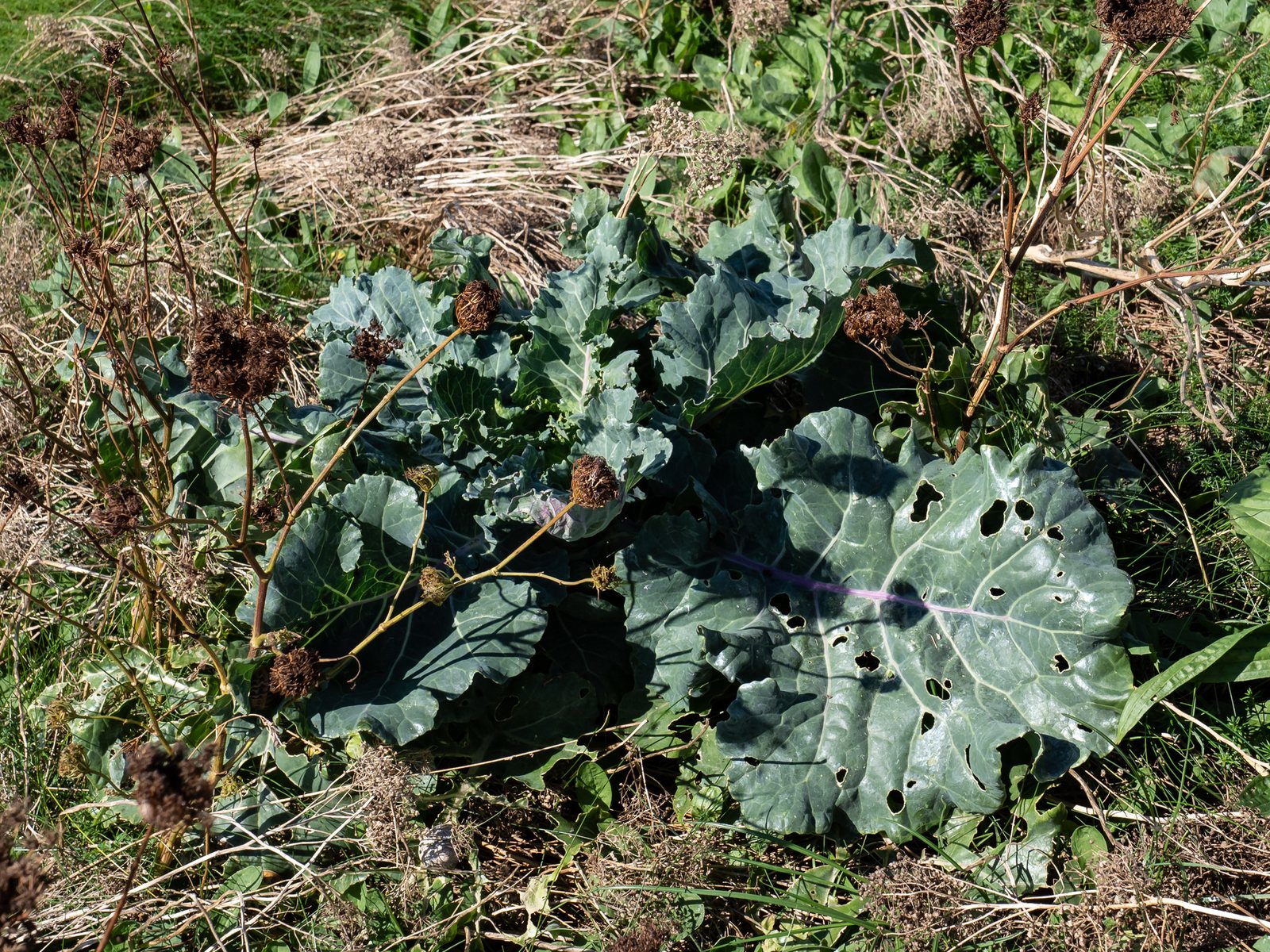

At a glance
- Sun
- Full sun; light afternoon shade is useful in hot summers.
- Water
- Water deeply during dry spells, keeping the root zone evenly moist but not waterlogged.
- Soil
- Fertile, moisture-retentive, well-drained soil, ideally neutral to slightly alkaline. Avoid sites where brassicas have suffered from clubroot.
- Height
- 4-6 ft (1.2-1.8 m)
- Spread
- 3-5 ft (0.9-1.5 m)
- Foliage
- Evergreen. Broad, blue-green to grey-green leaves with prominent pale veins, carried on branching stems that become woody with age.
- Growth
- Fast once established.
- Care needed
- Medium
The year at a glance
- Wildlife
- Edible
| J | F | M | A | M | J | J | A | S | O | N | D | |
|---|---|---|---|---|---|---|---|---|---|---|---|---|
| Fruit | ||||||||||||
| Plant |
Northern hemisphere months. In Australia, shift them by six.
- Difficulty
- Moderate
- Toughness
- Fairly tough
Will it suit your garden?
Pick your zone, country, light and whether you have pets.
Full sun is 6 or more hours of direct sun a day, part shade 3 to 6 hours, shade under 3.
How it grows
Planting day
1 ft (0.3 m)
After 1 year
3 ft (0.92 m)
After 2 years
5 ft (1.5 m)
full size
About 2 years to full size.
From a typical nursery size, at an average rate for this kind of plant. A rule of thumb, not a forecast.
Good to know
- Cats and dogs
- Safe
- Native to
- the UK
- Growth rate
- Fast
Care
Jobs through the year
- WaterApr–May, Sep–Oct, every 14 days
- Water established plants deeply during dry spells; water newly planted cuttings more often.
- WaterJun–Aug, every 7 days
- Water deeply if rainfall is insufficient, keeping the root zone moist but not saturated.
- MulchMar–Apr
- Apply compost or well-rotted manure, keeping it clear of the main stem.
- FeedMay–Jul
- Feed only if repeated harvesting produces small or pale leaves.
- PruneApr–May
- After severe frosts, shorten leggy branches to leafy shoots; avoid stripping all old wood.
- ProtectMay–Sep, every 7 days
- Inspect for caterpillars and aphids; use securely fitted insect mesh where needed.
- ProtectSep–Oct
- Secure tall stems and keep spare rooted cuttings under cover in colder gardens.
- ProtectJan–Mar, Nov–Dec
- Protect during severe freezes; outdoor overwintering is unreliable in zone 6 and colder zone 7 sites.
- HarvestApr–Oct, every 7 days
- Pick tender outer leaves from established plants, retaining growing tips and ample foliage.
- HarvestJan–Mar, Nov–Dec, every 21 days
- Pick sparingly only during mild weather when healthy foliage and some growth remain.
- Allow about 4 ft (1.2 m) between plants so you can reach the leaves and inspect for pests.
- Water new plants regularly until rooted, then water deeply during prolonged dry weather.
- Apply compost in spring and feed during active growth if repeated harvesting produces small or pale leaves.
- Mulch with compost or well-rotted manure, keeping it clear of the main stem.
- Stake tall stems in exposed gardens; mature branches can break in strong winds.
- Keep a rooted cutting as a replacement before winter in colder gardens.
Pruning. In spring, after the risk of severe frost has passed, shorten leggy branches to healthy leafy shoots to encourage a bushier plant. Remove damaged stems and avoid cutting the whole plant back into bare old wood at once.
Harvest
Start picking once a young plant is well established and producing plenty of new growth; take tender outer leaves while leaving the growing tips and enough foliage for recovery. Harvest regularly through the growing season and during mild winter spells, choosing leaves before they become coarse and reducing picking when growth slows.
Through the year
- Spring
- Plant rooted cuttings after severe frosts, and water them in thoroughly.
- Spring
- Shorten leggy growth, check stakes and apply compost around established plants.
- Late spring
- Begin regular leaf harvests once plants are growing strongly; inspect leaf undersides for eggs and caterpillars.
- Summer
- Water during dry spells and use insect-proof mesh where cabbage butterflies are troublesome.
- Late summer
- Root several healthy, non-flowering shoot cuttings as replacement plants.
- Autumn
- Secure tall stems against wind and move spare rooted cuttings under cover in colder regions.
- Winter
- Pick sparingly during mild weather and protect plants during unusually severe freezes.
In the garden
- Place at the back of a vegetable bed as a permanent leafy crop above lower seasonal vegetables.
- Use in a generous edible border with chard and culinary herbs for contrasting leaf shapes.
- Plant beside a regularly used path in a kitchen garden so leaves are easy to gather.
- Include on the sunny edge of a food forest, away from heavy shade and competing tree roots.
Garden styles it suits: Potager (kitchen garden), Cottage garden, Edible landscape, Homestead, Food forest and Farmhouse.
Plant it with: Swiss chard, Chives, Parsley, Thyme, Calendula and Lettuce.
Wildlife: Leaves feed cabbage butterfly caterpillars and other brassica insects. Flowers, if produced and left unpicked, provide nectar and pollen for visiting insects.
Problems to watch for
- Cabbage white caterpillars can strip leaves: inspect undersides, remove eggs and caterpillars, or cover plants with well-secured insect-proof mesh.
- Cabbage aphids cluster on young shoots: remove badly infested leaves and wash smaller colonies off with water.
- Slugs and snails damage young plants: remove hiding places, inspect after dark and use locally approved slug controls if needed.
- Clubroot causes swollen roots, wilting and poor growth: remove affected plants, avoid moving contaminated soil and do not replant susceptible brassicas in that bed.
Safety
The leaves are edible for people and are not known to be poisonous to cats or dogs in small food amounts, although large servings can cause digestive upset. Brassicas are unsuitable as unrestricted feed for horses: large or repeated amounts can cause serious health problems. Do not offer garden prunings to horses.
Easily confused with
Daubenton's perennial kale (Brassica oleracea 'Daubenton's')
Usually forms a lower, more spreading plant with smaller leaves. Young plants can be difficult to distinguish, so a reliable nursery label matters.
Walking stick cabbage (Brassica oleracea var. longata)
Typically develops a much taller, straighter main stalk with leaves concentrated toward the top, rather than Taunton Deane's branching, bushy framework.
The name
The cultivar name refers to the Taunton Deane area of Somerset, England, with which this perennial kale is associated.
Propagation. Propagate by healthy, non-flowering stem cuttings in spring or summer. Take shoots about 4-6 in (10-15 cm) long, remove the lower leaves and root in moist, free-draining potting mix in bright shade. Cuttings preserve the cultivar; seed is not a reliable way to reproduce it.
Checked against open data
- Accepted botanical name
- Brassica oleracea
- In the US and Canada
- Introduced in the lower 48 states, Pacific Basin and Puerto Rico.
- Native range
- France, Great Britain and Spain.
- Measured
- Soil pH 7 to 7.5. Average height 50 cm.
Sources: GBIF (CC BY 4.0), USDA PLANTS and Trefle (CC BY 4.0). The care and design notes are LandscapeGPT's own.
See it in your own yard.
Upload a photo of your yard and see it redesigned with plants that suit your climate, each checked against your zone.