Persian ironwood
Parrotia persica. Family Hamamelidaceae. Tree.
Also called Persian parrotia, Ironwood.
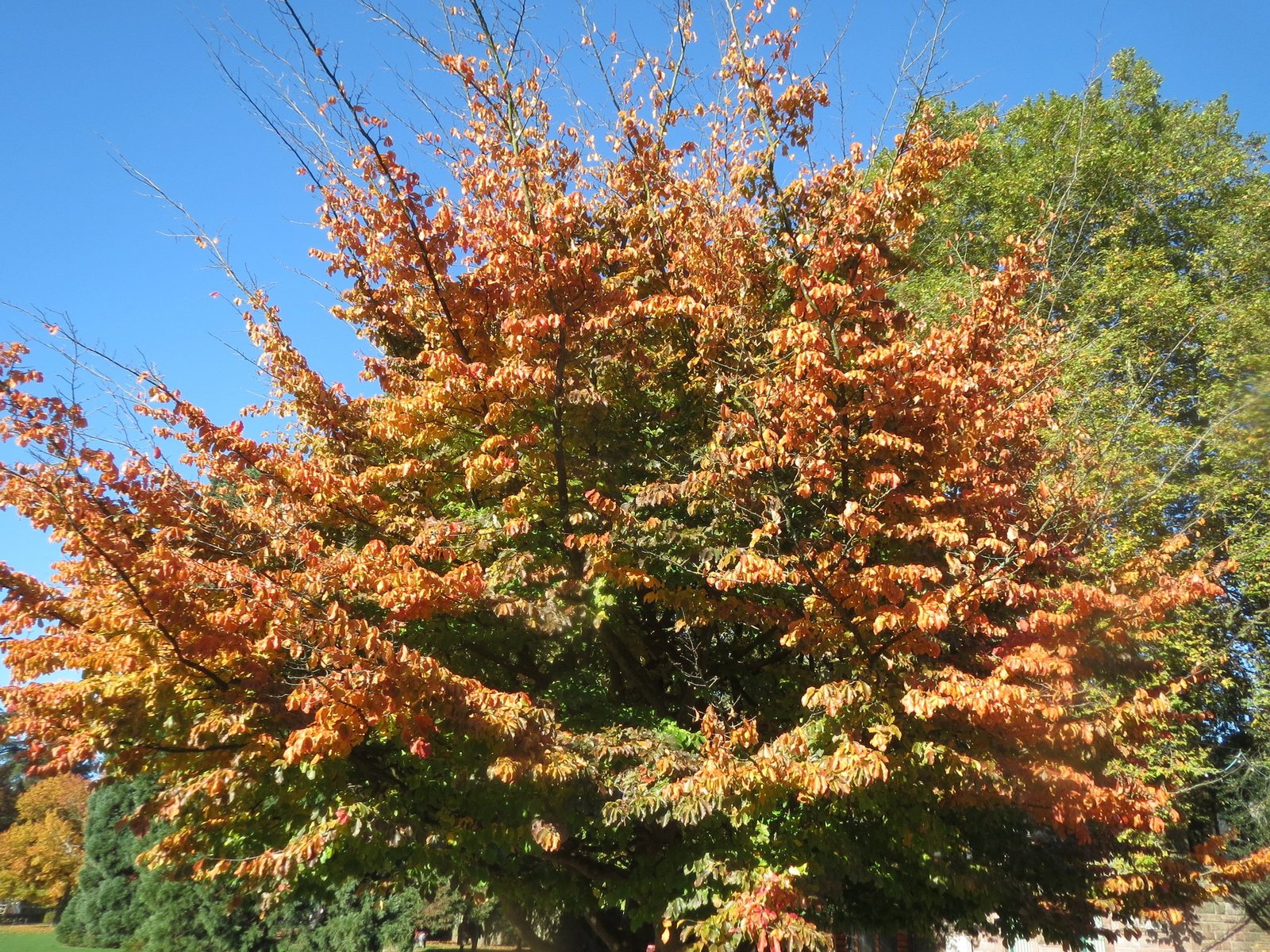
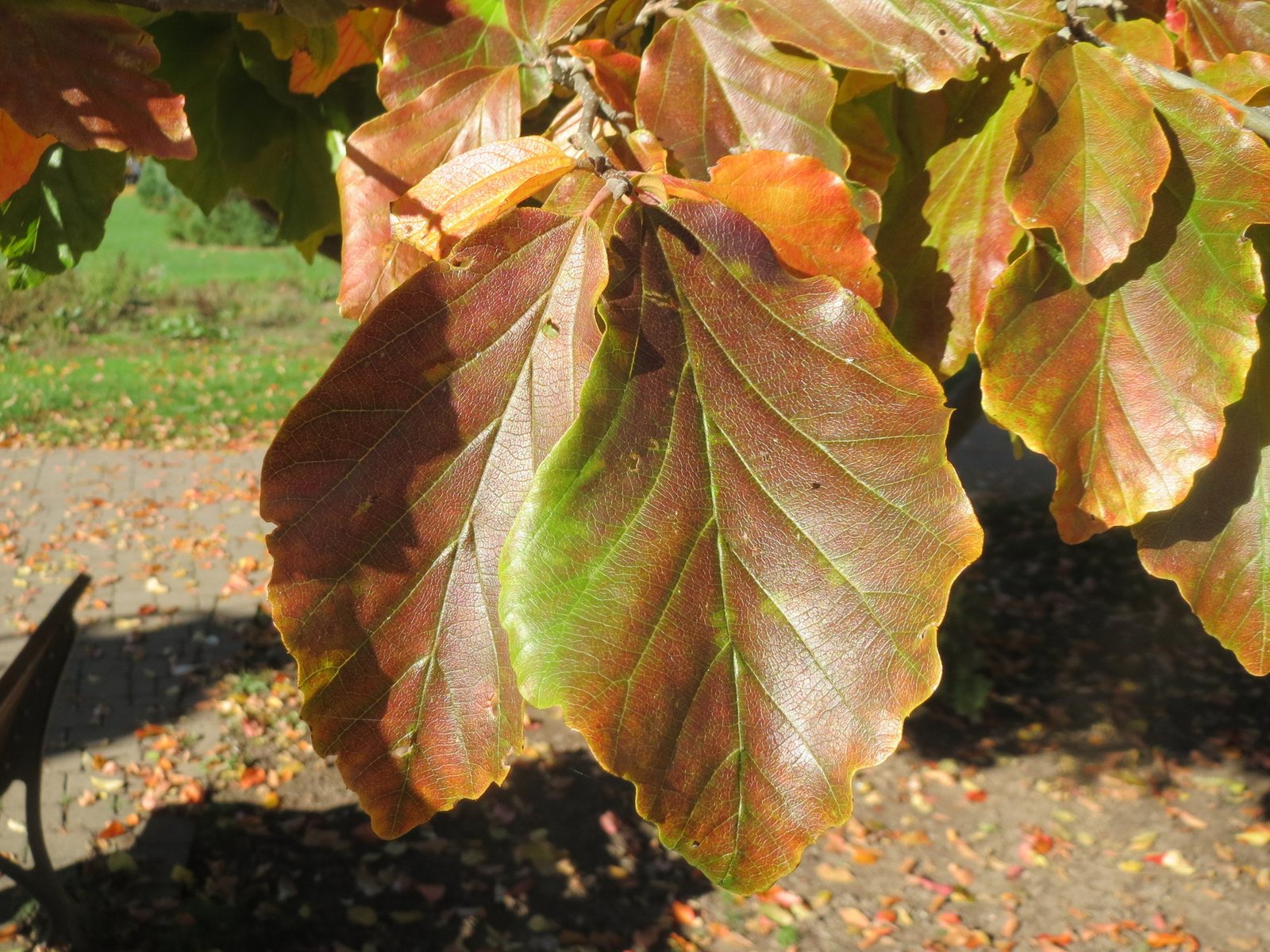
Persian ironwood is a deciduous tree, often naturally multi-stemmed, grown for its spreading shape, peeling bark and long-lasting autumn colour. Its leaves turn yellow, orange, crimson and purple, sometimes all on the same tree, while mature trunks develop a patchwork of grey, cream and brown bark.
At a glance
- Sun
- Full sun to partial shade; autumn colour is usually strongest in sun.
- Water
- Moderate; keep young trees evenly moist. Established trees tolerate some drought, but prolonged dry conditions can scorch leaves.
- Soil
- Moist but well-drained soil, preferably slightly acidic to neutral; tolerates clay and some alkaline soils, but not persistent waterlogging.
- Height
- 20-40 ft (6-12 m), occasionally taller with age
- Spread
- 20-30 ft (6-9 m)
- Flowers
- Small clusters of red stamens without showy petals appear on bare branches in late winter to early spring.
- Foliage
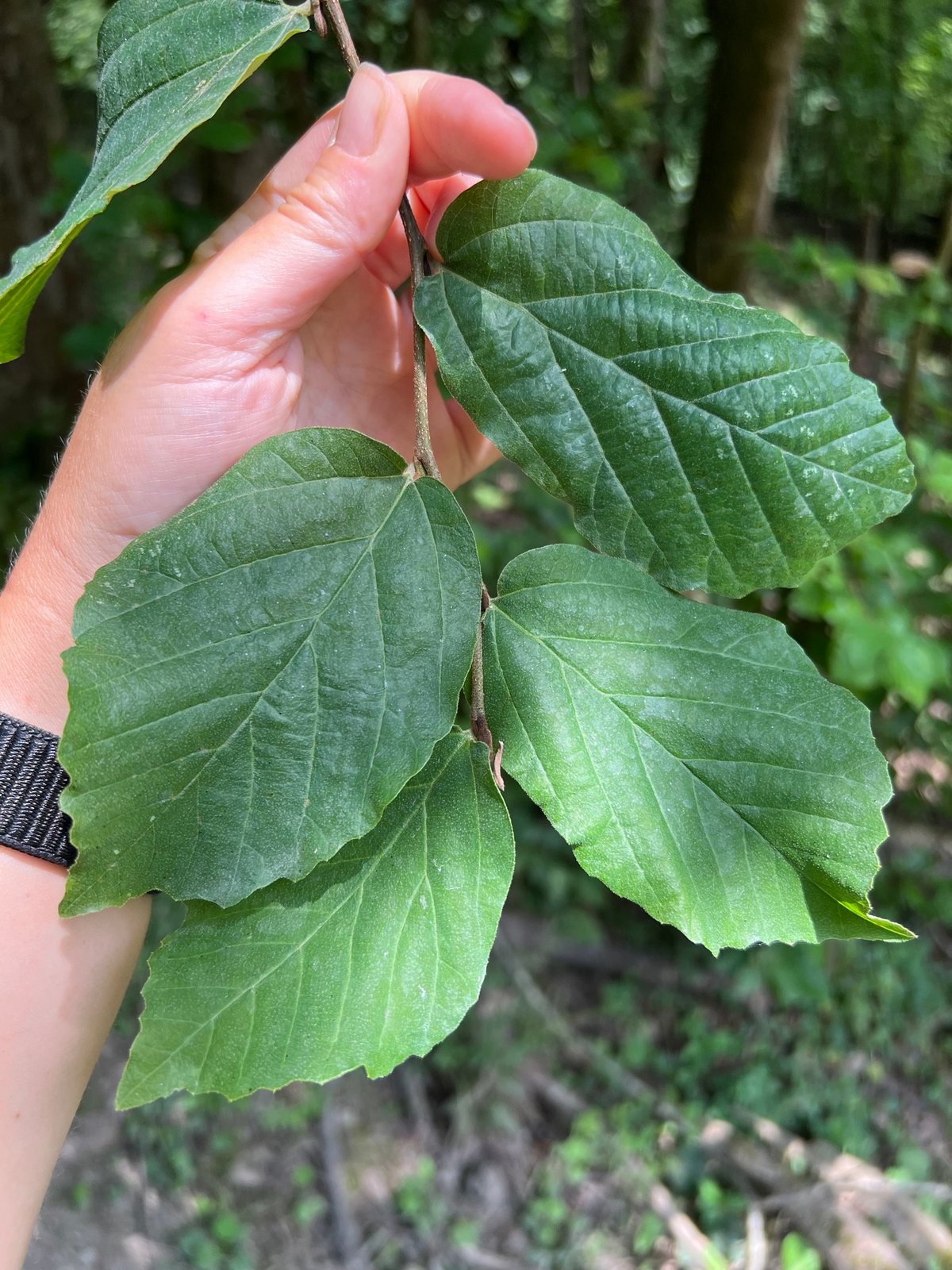
- Glossy green, oval leaves with wavy, shallowly toothed edges; yellow, orange, red and purple autumn colour.
- Growth
- Slow to moderate
- Care needed
- Low
The year at a glance
- Drought tolerant
- Disease resistant
- Wildlife
| J | F | M | A | M | J | J | A | S | O | N | D | |
|---|---|---|---|---|---|---|---|---|---|---|---|---|
| Flowers | ||||||||||||
| Plant |
Northern hemisphere months. In Australia, shift them by six.
- Difficulty
- Easy
- Toughness
- Very tough
Will it suit your garden?
Pick your zone, country, light and whether you have pets.
Full sun is 6 or more hours of direct sun a day, part shade 3 to 6 hours, shade under 3.
How it grows
Planting day
7 ft (2 m)
After 1 year
7 ft (2.3 m)
After 2 years
8 ft (2.5 m)
After 3 years
9 ft (2.8 m)
After 5 years
11 ft (3.3 m)
About 26 years to full size.
From a typical nursery size, at an average rate for this kind of plant. A rule of thumb, not a forecast.
Good to know
- Cats and dogs
- Safe
- Growth rate
- Slow
Care
Jobs through the year
- WaterApr–May, Sep–Oct, every 14 days
- Water established trees only if soil is dry; keep young trees evenly moist.
- WaterJun–Aug, every 14 days
- Water deeply during prolonged dry spells; young trees may need weekly watering.
- MulchMar–Apr
- Refresh organic mulch to 5–8 cm deep without touching the trunk.
- PruneFeb
- Remove dead, damaged or crossing branches while retaining the natural crown.
- FeedMar–Apr
- Feed only for confirmed nutrient deficiency or weak growth in poor soil.
- Water deeply during dry spells for the first two or three growing seasons.
- Spread 2-3 in (5-8 cm) of organic mulch over the root area, keeping it clear of the trunk.
- Allow room for the broad mature crown rather than relying on pruning to contain it.
- Feed only if growth is weak or a soil test shows a deficiency; routine heavy feeding is unnecessary.
- Stake only if the root ball moves in wind, and remove the support once roots provide firm anchorage.
Pruning. Prune lightly in late winter while dormant, removing dead, damaged or crossing branches. Establish a single trunk when young if wanted; otherwise retain its natural multi-stemmed form and avoid topping or hard annual pruning.
Through the year
- Autumn
- Plant while the soil is workable and moist; in very cold regions, plant in spring instead.
- Late winter
- Remove damaged or crossing branches and check that ties are not cutting into bark.
- Early spring
- Renew the mulch, leaving a clear gap around the trunk.
- Late spring
- Check new growth and soil moisture; investigate persistent yellowing before adding fertiliser.
- Summer
- Water young trees deeply during dry weather and watch for leaf scorch.
- Late autumn
- Collect fallen leaves for leaf mould, or leave a loose layer over planted beds.
In the garden
- Use as a specimen in a lawn or generous bed where its spreading crown can develop fully.
- Place near a path or terrace where the peeling bark can be seen in winter, allowing clearance for mature branches.
- Combine with evergreen shrubs to provide a dark backdrop for autumn foliage.
- Underplant with spring bulbs, ferns and shade-tolerant perennials for a layered woodland garden.
Garden styles it suits: Woodland, Autumn colour, Winter interest, Japanese, Architectural minimal and Low-maintenance.
Plant it with: Japanese forest grass, Hellebores, Snowdrops, Epimedium, Japanese painted fern and Witch hazel.
Wildlife: Branches provide cover and potential nesting sites for birds. Leaf litter shelters small invertebrates; the small flowers are not a major nectar feature.
Problems to watch for
- Brown leaf edges during hot, dry weather: water deeply, maintain mulch and check that the root zone is not drying out.
- Poor growth or root decline in waterlogged ground: improve drainage or move a young tree to a better-drained position.
- Yellow leaves with greener veins on strongly alkaline soil: check soil pH and drainage; use a suitable chelated iron treatment if iron deficiency is confirmed.
- Late frost damage to young leaves or flowers: avoid frost pockets when planting; established trees usually produce replacement growth without treatment.
Safety
Not known to be toxic to people, cats, dogs or horses. No particular poisonous part is recognised, but species-specific animal safety information is limited; do not treat the leaves, bark or seeds as food.
Easily confused with
Witch hazel (Hamamelis species)
Both have broadly oval leaves and strong autumn colour, but witch hazels have conspicuous ribbon-like flower petals; Persian ironwood has small red stamens without showy petals and develops patchy peeling bark.
Large fothergilla (Fothergilla major)
Fothergilla has similar autumn foliage but remains a shrub and bears conspicuous white, bottlebrush-like flowers in spring rather than small red flowers on bare winter branches.
The name
Parrotia honours the physician and naturalist Friedrich Wilhelm Parrot, persica refers to Persia, and ironwood describes the hard, dense wood.
Propagation. Grow from seed using warm followed by cold stratification; germination can be slow and irregular. Named cultivars must be propagated vegetatively, usually by grafting or specialist cutting techniques, to remain true to type.
Checked against open data
- Accepted botanical name
- Parrotia persica
- Native range
- Iran and Transcaucasus.
- Measured
- Average height 665 cm.
Sources: GBIF (CC BY 4.0) and Trefle (CC BY 4.0). The care and design notes are LandscapeGPT's own.
See it in your own yard.
Upload a photo of your yard and see it redesigned with plants that suit your climate, each checked against your zone.