Persian lily
Fritillaria persica. Family Liliaceae. Bulb.
Also called Persian fritillary.
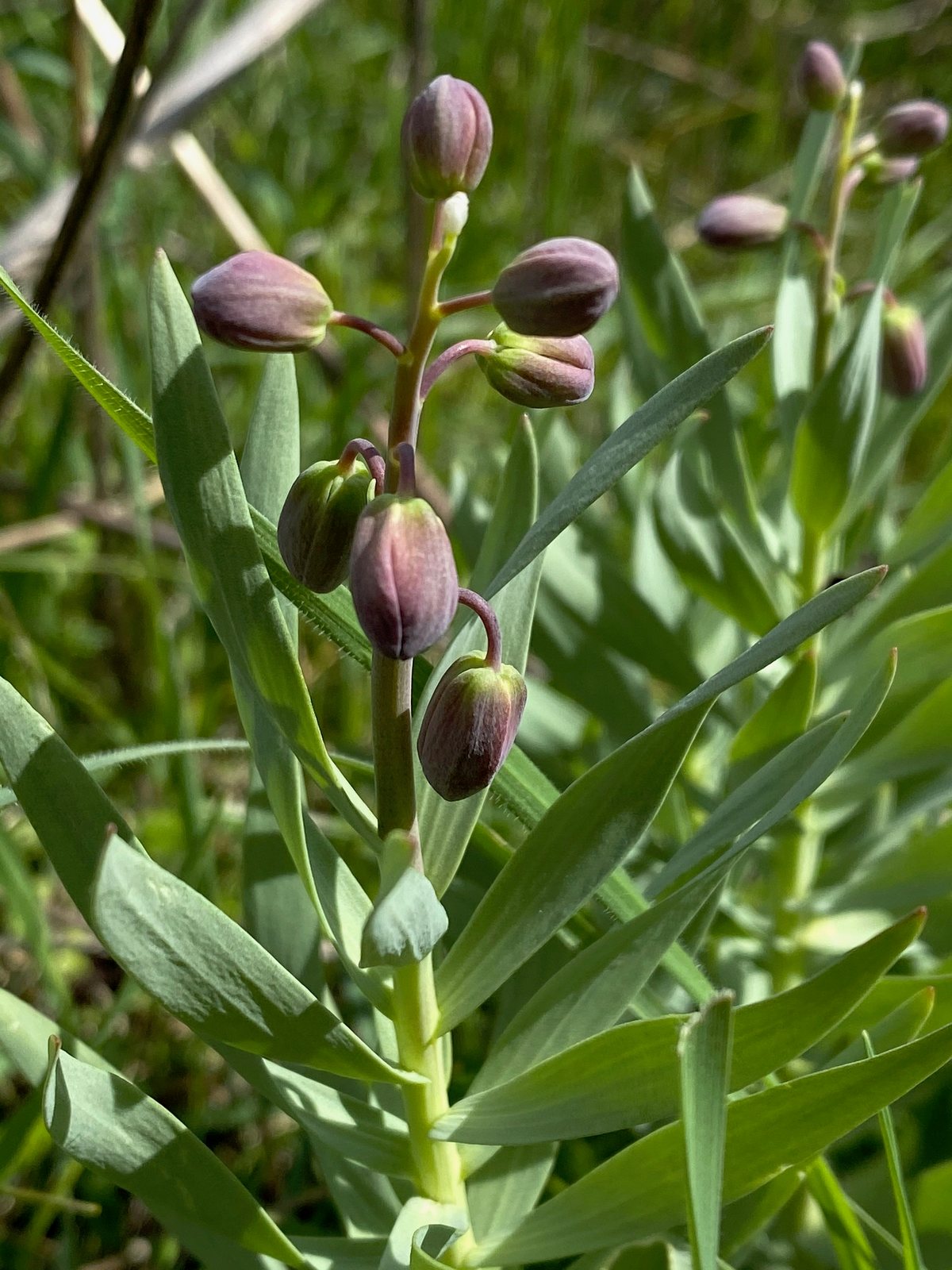
Persian lily is a spring-flowering bulb with tall stems carrying many nodding, deep purple bells above blue-green leaves. Gardeners grow it for its strong vertical shape and unusually dark flowers; it performs best where the soil drains freely and summers are warm and fairly dry.
At a glance
- Sun
- Full sun; light afternoon shade is useful in hotter climates.
- Water
- Water moderately during spring growth, allowing the surface soil to dry between waterings. Keep the dormant bulbs relatively dry in summer and avoid waterlogged soil in winter.
- Soil
- Fertile, very well-drained soil, preferably neutral to alkaline. Raised beds are useful on heavy clay; avoid planting pockets that collect water.
- Height
- 2-4 ft (0.6-1.2 m)
- Spread
- 0.5-1 ft (0.15-0.3 m)
- Flowers
- Mid- to late spring; numerous nodding, bell-shaped flowers, usually deep plum-purple to almost black, sometimes greenish or cream.
- Foliage
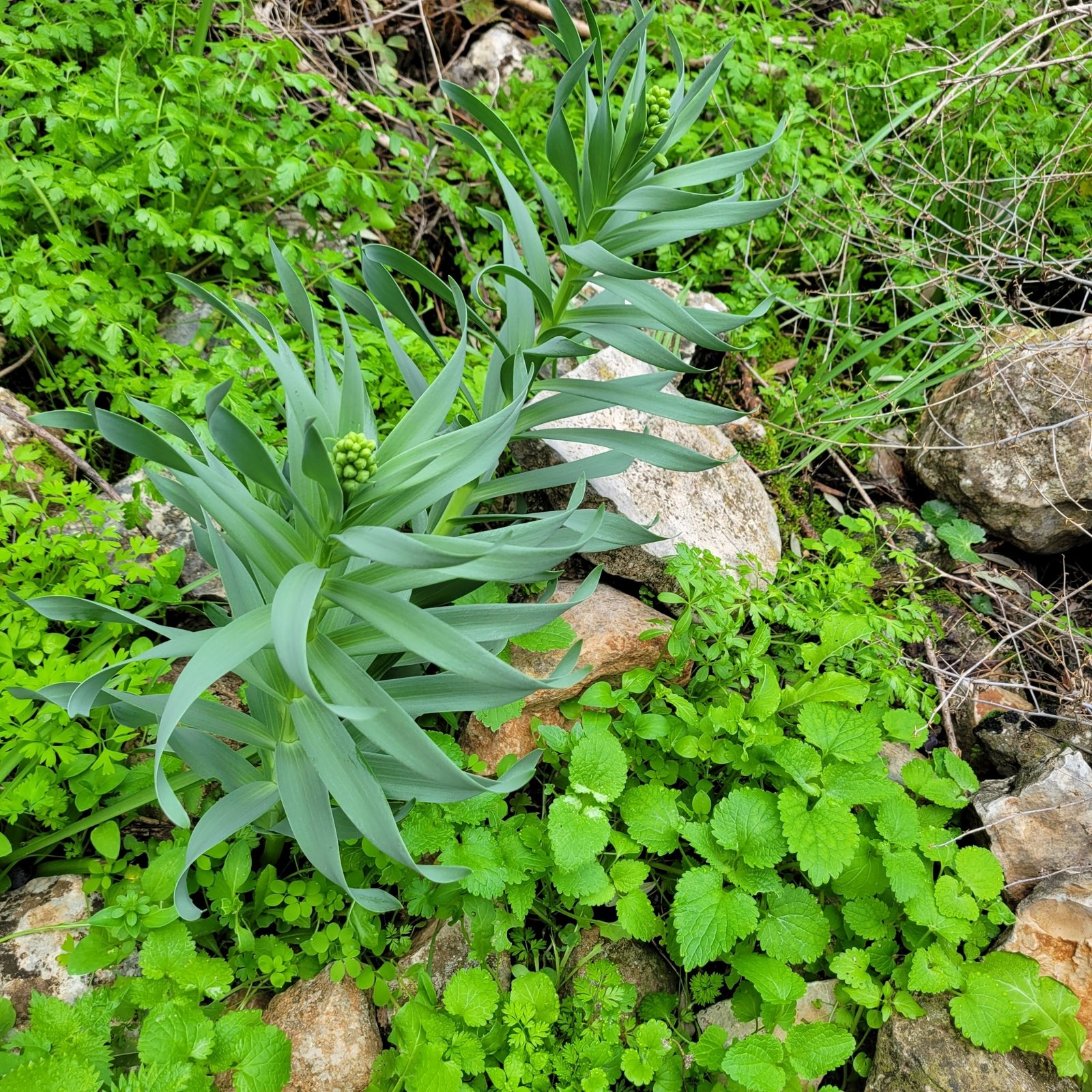
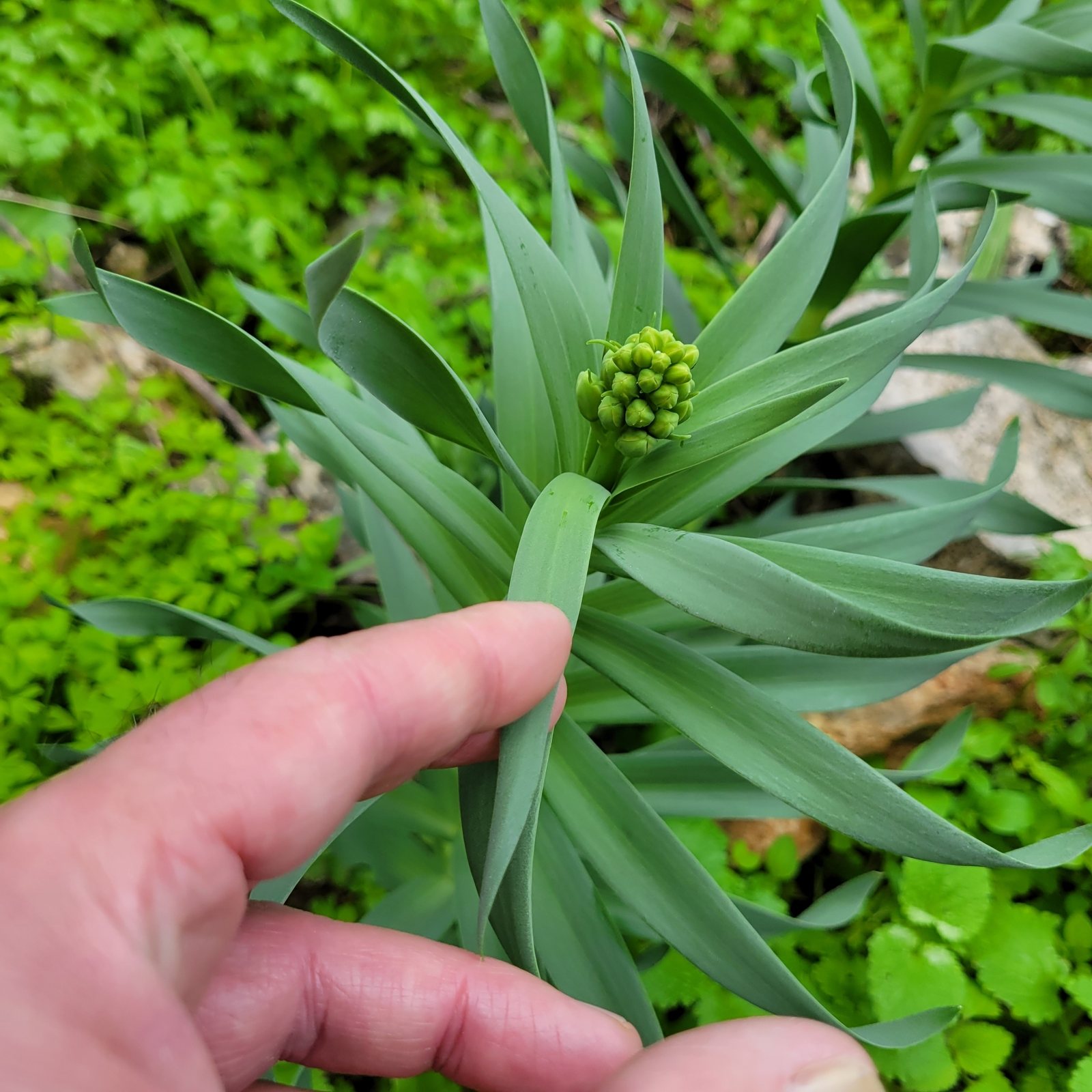
- Blue-green, narrow, slightly fleshy leaves arranged up the stem; foliage dies back after flowering.
- Growth
- Moderate during spring; clumps increase slowly.
- Care needed
- Medium
The year at a glance
- Pollinators
- Deer resistant
- Low allergen
| J | F | M | A | M | J | J | A | S | O | N | D | |
|---|---|---|---|---|---|---|---|---|---|---|---|---|
| Flowers | ||||||||||||
| Fruit | ||||||||||||
| Plant |
Northern hemisphere months. In Australia, shift them by six.
- Difficulty
- Moderate
- Toughness
- Fairly tough
Will it suit your garden?
Pick your zone, country, light and whether you have pets.
Full sun is 6 or more hours of direct sun a day, part shade 3 to 6 hours, shade under 3.
How it grows
Planting day
0.5 ft (0.15 m)
After 1 year
2.4 ft (0.73 m)
After 2 years
3 ft (0.9 m)
full size
About 1 years to full size.
From a typical nursery size, at an average rate for this kind of plant. A rule of thumb, not a forecast.
Good to know
- Cats and dogs
- Toxic
- Growth rate
- Slow
Care
Jobs through the year
- WaterMar–Apr, every 7 days
- Water established bulbs if rainfall is scarce, allowing the surface to dry between soakings.
- WaterMay–Jun, every 14 days
- Water only during dry spells while foliage is green; stop once it dies back.
- FeedMar
- Apply balanced bulb fertilizer as shoots emerge, following label rates.
- ProtectMar–May, every 7 days
- Inspect for slugs and lily beetles; stake tall stems early in exposed sites.
- DeadheadMay
- Remove faded flower heads unless decorative seed capsules are wanted.
- PruneJun–Jul
- Cut stems to ground level only after all leaves have yellowed and withered.
- DivideJul–Aug
- Separate offsets only if crowded or flowering declines; replant promptly.
- ProtectJun–Aug
- Keep dormant bulbs relatively dry and avoid moisture-holding mulch over them.
- Plant bulbs promptly in autumn, about 6-8 in (15-20 cm) deep and 8-12 in (20-30 cm) apart; do not let unplanted bulbs dry out.
- Water during active spring growth if rainfall is scarce, but stop routine watering once the foliage has died back.
- Apply a balanced bulb fertilizer as shoots emerge, following the label rate.
- Keep heavy, moisture-holding mulch away from the bulb area, especially during summer dormancy.
- Stake tall stems early in exposed gardens, using discreet supports.
- Leave established bulbs undisturbed unless clumps become crowded or flowering declines.
Pruning. Remove spent flower heads unless you want seed, leaving the leafy stems intact. Cut stems to ground level only after the leaves have turned yellow and withered.
Through the year
- Autumn
- Plant bulbs in a sunny, freely drained position; improve drainage across the whole bed rather than adding gravel only beneath each bulb.
- Late winter
- Check for standing water and watch for emerging shoots before weeding or cultivating.
- Early spring
- Feed as growth begins, water during dry spells and install supports where needed.
- Spring
- Inspect shoots and leaves for slugs and lily beetles; remove pests promptly.
- Late spring
- Remove faded flower heads, but leave all green foliage to replenish the bulbs.
- Summer
- Let foliage die naturally, keep the dormant planting area relatively dry and separate offsets only if necessary.
In the garden
- Plant small groups through sunny mixed borders for dark vertical accents above lower spring flowers.
- Combine with pale tulips and ornamental onions for contrasting flower shapes and colours.
- Use in gravel gardens or raised beds where sharp drainage suits the bulbs and the blue-green foliage stands out.
- Place among later-emerging perennials that conceal the dying foliage without creating a heavily watered summer bed.
Garden styles it suits: Architectural minimal, English country, Dry gravel garden, Mediterranean, Modern courtyard and Persian (chahar bagh).
Plant it with: Tulips, Ornamental onions, Bearded iris, Catmint, Mediterranean spurge and Hardy geraniums.
Wildlife: The spring flowers can provide nectar and pollen for bees. It is not a native plant in the United States, United Kingdom, Canada or Australia.
Problems to watch for
- Bulb rot in wet soil: improve drainage or move bulbs to a raised bed; discard soft, decaying bulbs.
- Poor flowering: provide more sun, retain foliage until it dies naturally and avoid frequent summer irrigation; cool, wet summers can also prevent reliable flowering.
- Lily beetles where present: inspect leaves for red adults, eggs and dark, debris-covered larvae; remove them by hand.
- Slugs and snails on emerging shoots: check at dusk, remove pests and use an appropriate labelled control if damage continues.
Safety
Poisonous if eaten, especially the bulbs, which contain toxic alkaloids. Keep all parts away from people, cats, dogs and horses; ingestion can cause serious illness. Species-specific information for pets and horses is limited, so seek medical or veterinary advice promptly after ingestion.
Easily confused with
Crown imperial (Fritillaria imperialis)
Has a ring of large orange, red or yellow bells beneath a conspicuous leafy crown, rather than many smaller bells arranged along an elongated stem.
Fox's grape fritillary (Fritillaria uva-vulpis)
Much shorter, usually bearing only a few brownish-purple bells with distinct yellow rims rather than a tall spike of numerous flowers.
The name
Fritillaria comes from the Latin for a dice box, referring to the checkered flowers of some species, while persica means 'Persian.'
Propagation. Separate offsets carefully during summer dormancy and replant promptly; small offsets may take several years to flower. Seed can be sown fresh in pots kept outdoors, but germination may be slow and flowering takes several years.
Checked against open data
- Accepted botanical name
- Fritillaria persica
- Native range
- Cyprus, Iran, Iraq, Lebanon-Syria, Palestine and Turkey.
Sources: GBIF (CC BY 4.0) and Trefle (CC BY 4.0). The care and design notes are LandscapeGPT's own.
See it in your own yard.
Upload a photo of your yard and see it redesigned with plants that suit your climate, each checked against your zone.