Peruvian lily
Alstroemeria aurea. Family Alstroemeriaceae. Perennial.
Also called Golden lily of the Incas, Golden alstroemeria.
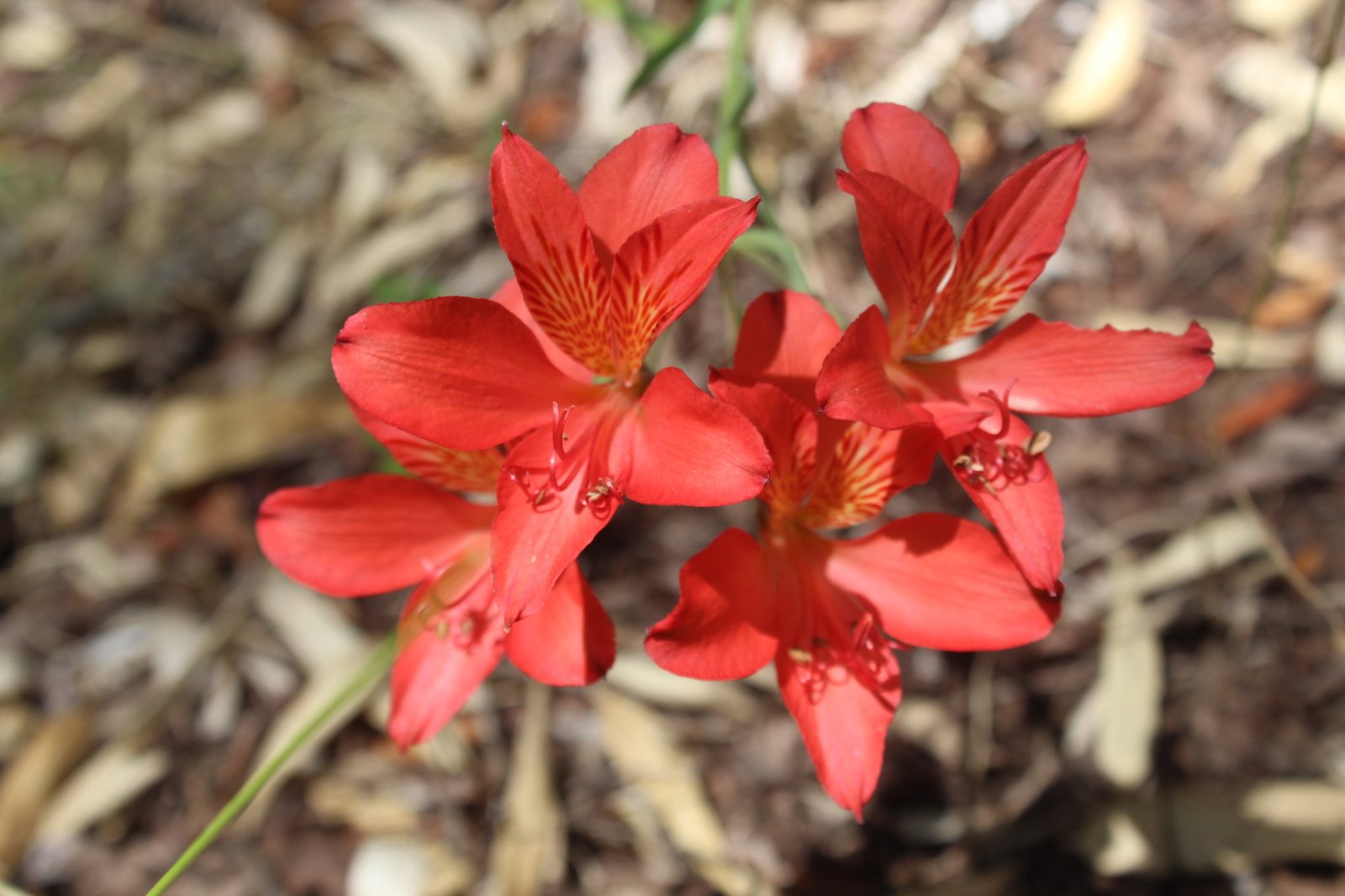
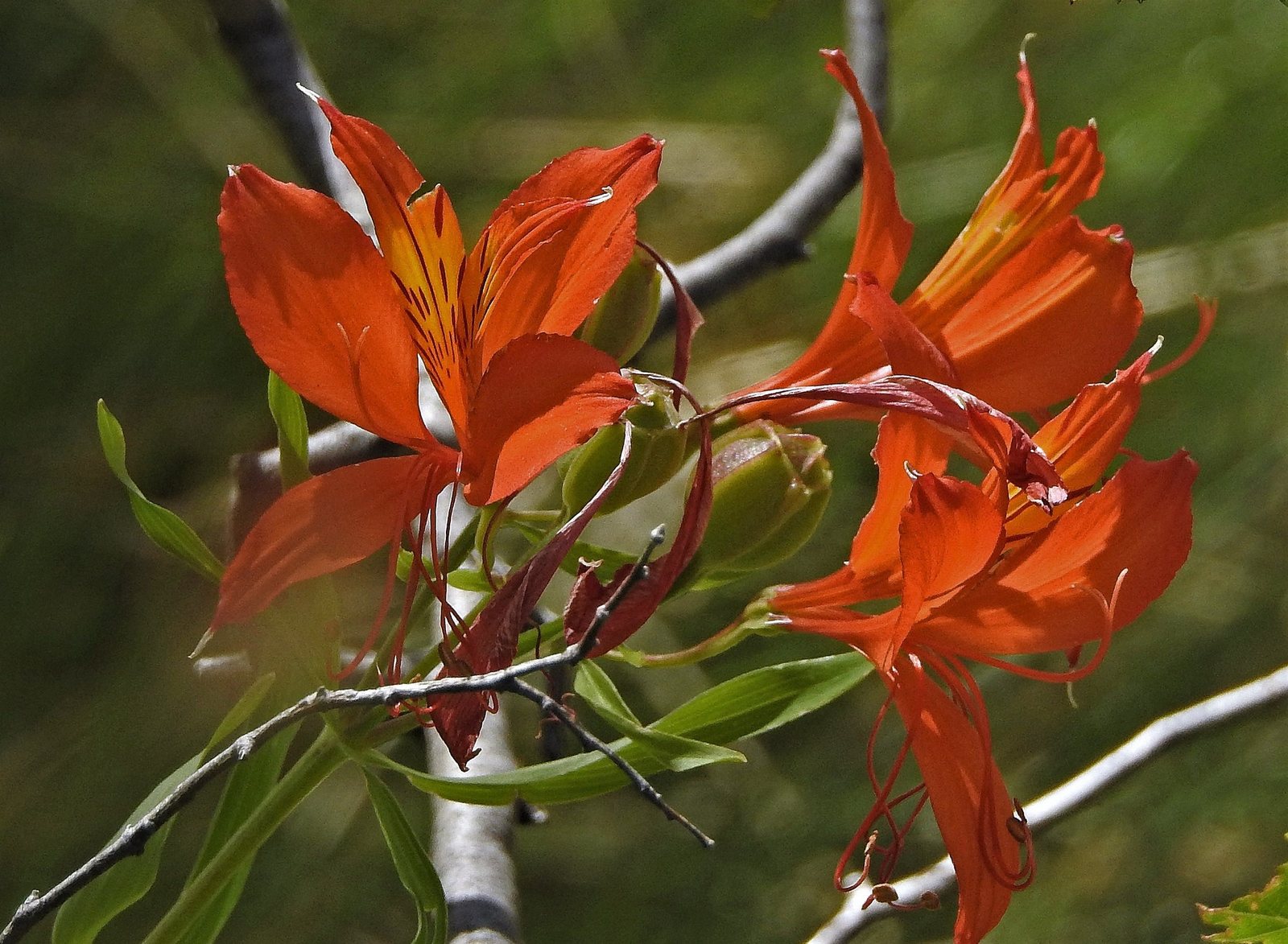
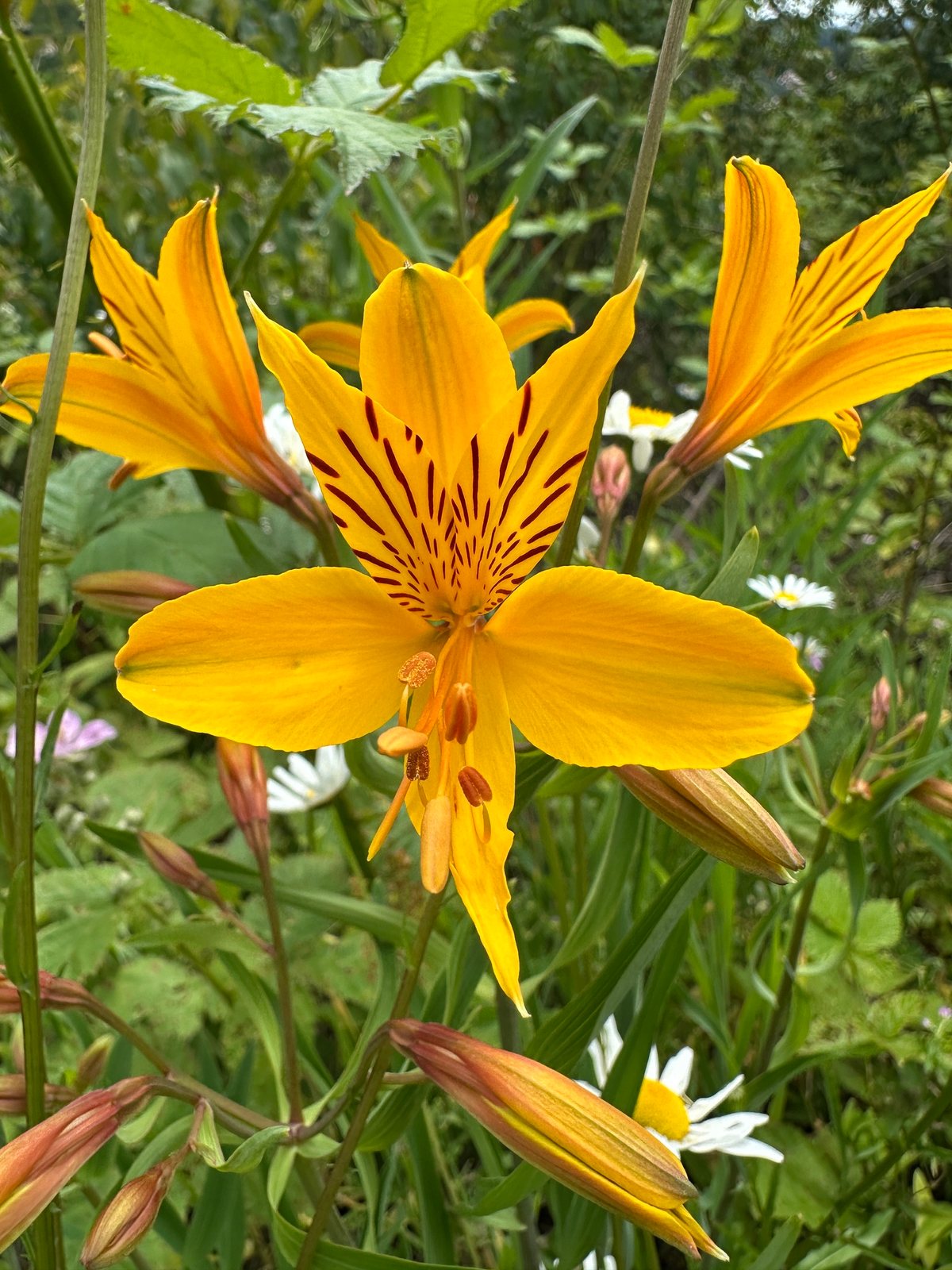
Peruvian lily is a clump-forming perennial with fleshy underground roots and upright stems carrying yellow or orange, dark-streaked flowers. Gardeners grow it for summer borders and long-lasting cut flowers, but this species can spread well beyond its original planting.
At a glance
- Sun
- Full sun to partial shade; afternoon shade is helpful in hot climates.
- Water
- Water regularly during active growth, keeping the soil lightly moist rather than saturated. Reduce watering as the foliage dies back.
- Soil
- Fertile, humus-rich, well-drained soil; avoid ground that stays wet in winter.
- Height
- 2-4 ft (0.6-1.2 m)
- Spread
- 1-2 ft (0.3-0.6 m) initially; spreading roots can eventually form much wider colonies.
- Flowers
- Late spring through summer, sometimes into early autumn; yellow to orange flowers with dark reddish-brown streaks on the inner petals.
- Foliage
- Narrow green leaves twist at their bases so that the undersides face upward. Stems and leaves usually die back for winter.
- Growth
- Moderate to fast once established.
- Care needed
- Medium
The year at a glance
- Pollinators
- Heat tolerant
- Low allergen
| J | F | M | A | M | J | J | A | S | O | N | D | |
|---|---|---|---|---|---|---|---|---|---|---|---|---|
| Flowers | ||||||||||||
| Plant |
Northern hemisphere months. In Australia, shift them by six.
- Difficulty
- Moderate
- Toughness
- Fairly tough
Will it suit your garden?
Pick your zone, country, light and whether you have pets.
Full sun is 6 or more hours of direct sun a day, part shade 3 to 6 hours, shade under 3.
How it grows
Planting day
1 ft (0.3 m)
After 1 year
1.8 ft (0.55 m)
After 2 years
2.6 ft (0.8 m)
After 3 years
3 ft (0.9 m)
full size
About 2 years to full size.
From a typical nursery size, at an average rate for this kind of plant. A rule of thumb, not a forecast.
Good to know
- Cats and dogs
- Mildly toxic: may upset a stomach
- Invasive in
- Australia
- In the garden
- Spreads vigorously: plan to contain it.
- Growth rate
- Fast
Care
Jobs through the year
- WaterApr–May, Sep, every 14 days
- Water established plants during dry spells while foliage is green; young plants need more.
- WaterJun–Aug, every 7 days
- Keep established roots lightly moist during growth and flowering without saturating the soil.
- FeedApr
- Apply a modest balanced feed, avoiding excess nitrogen.
- MulchApr
- Apply compost around the root area to conserve moisture.
- DivideApr
- Divide only when necessary, handling brittle fleshy roots carefully.
- ProtectMay
- Support tall stems before flowering and check emerging shoots for slugs.
- DeadheadJun–Sep, every 14 days
- Remove spent stems at the base; cut rather than pull on young plants.
- PruneOct–Nov
- Cut foliage to ground level only after it yellows or is killed by frost.
- ProtectNov
- Add deep, loose winter mulch; in zone 6, lift for frost-free storage or use a sheltered container.
- Water deeply during dry spells while shoots are growing and flowering.
- Apply compost and a modest amount of balanced fertiliser in spring; avoid heavy nitrogen feeding.
- Mulch the root area to conserve moisture, adding extra winter protection near the cold end of its range.
- Support tall stems with a discreet ring or twiggy stakes before flowers open.
- Check the edges of the clump each spring and remove unwanted shoots with their attached roots.
- Divide only when necessary, in spring, handling the brittle fleshy roots carefully.
Pruning. Remove spent flowering stems at the base; established plants usually tolerate a gentle pull, but cut stems on young plants to avoid disturbing their roots. Cut dead foliage to ground level after it has yellowed or been killed by frost.
Through the year
- Early spring
- Remove dead stems, inspect for spreading roots and apply compost.
- Spring
- Plant or divide as growth begins; water well while roots establish.
- Late spring
- Install supports before tall stems become crowded or start to lean.
- Summer
- Water during dry spells and remove spent flowering stems.
- Early autumn
- Remove seed capsules if you do not want seedlings.
- Late autumn
- Clear dead foliage and mulch the root area in colder gardens, without trapping water around the crown.
In the garden
- Plant in the middle of a mixed border, where neighbouring foliage can hide the lower stems.
- Combine with ornamental grasses for upright summer flowers against fine-textured foliage.
- Use with blue salvias or catmint for a strong orange-and-blue contrast.
- Grow in a dedicated cutting bed where spreading roots are easier to monitor.
Garden styles it suits: Cottage garden, English country, Traditional, Hot border, Modern rustic and Sensory garden.
Plant it with: Salvia, Catmint, Hardy geranium, Switchgrass, Yarrow and Daylily.
Wildlife: Flowers provide nectar and attract bees and other visiting insects. It is not a native plant in the United States, the United Kingdom, Canada or Australia.
Problems to watch for
- Slugs and snails eat emerging shoots: inspect young growth and use barriers, hand-picking or an appropriate iron-phosphate bait.
- Root and crown rot in waterlogged soil: improve drainage or move the plant to a raised bed; avoid winter irrigation on already wet ground.
- Aphids cluster on soft shoots: wash them off with water and encourage natural predators.
- Vigorous spreading can crowd nearby plants: remove outlying roots promptly or grow it in a large container, checking drainage holes for escaping roots.
Safety
The sap can cause allergic skin irritation in people, so wear gloves when cutting or dividing it. Eating plant material may cause mild digestive upset. Alstroemeria is generally regarded as non-toxic to cats, dogs and horses, although chewing it can still upset a pet's stomach. It is not a true lily and does not carry the severe kidney-poisoning risk that true lilies pose to cats.
Where it spreads. Spreads vigorously by underground growth and can be difficult to remove completely. It is an environmental weed in parts of southeastern Australia, including Victoria and Tasmania, and is invasive in parts of New Zealand. Avoid planting near bushland or dumping roots and garden waste in natural areas.
Easily confused with
Chilean lily (Alstroemeria ligtu)
Usually has pink, lilac, red or whitish flowers rather than the characteristic golden-yellow or orange flowers of Alstroemeria aurea; garden hybrids can make identification less certain.
Daylily (Hemerocallis spp.)
Has a basal clump of long, strap-shaped leaves and mostly leafless flower stalks. Peruvian lily has narrow leaves distributed along its flowering stems.
The name
Alstroemeria honours the Swedish naturalist Clas Alströmer, while aurea means golden, referring to the flower colour.
Propagation. Divide established clumps in spring, keeping several shoots and plenty of fleshy roots on each division. Seed is also possible, but germination can be slow and irregular, and seedlings take longer to flower.
Checked against open data
- Accepted botanical name
- Alstroemeria aurea
- Native range
- Argentina South, Chile Central and Chile South.
Sources: GBIF (CC BY 4.0) and Trefle (CC BY 4.0). The care and design notes are LandscapeGPT's own.
See it in your own yard.
Upload a photo of your yard and see it redesigned with plants that suit your climate, each checked against your zone.