Phlox 'David'
Phlox paniculata 'David'. Family Polemoniaceae. Perennial.
Also called Garden phlox 'David', Summer phlox 'David', Tall phlox 'David'.
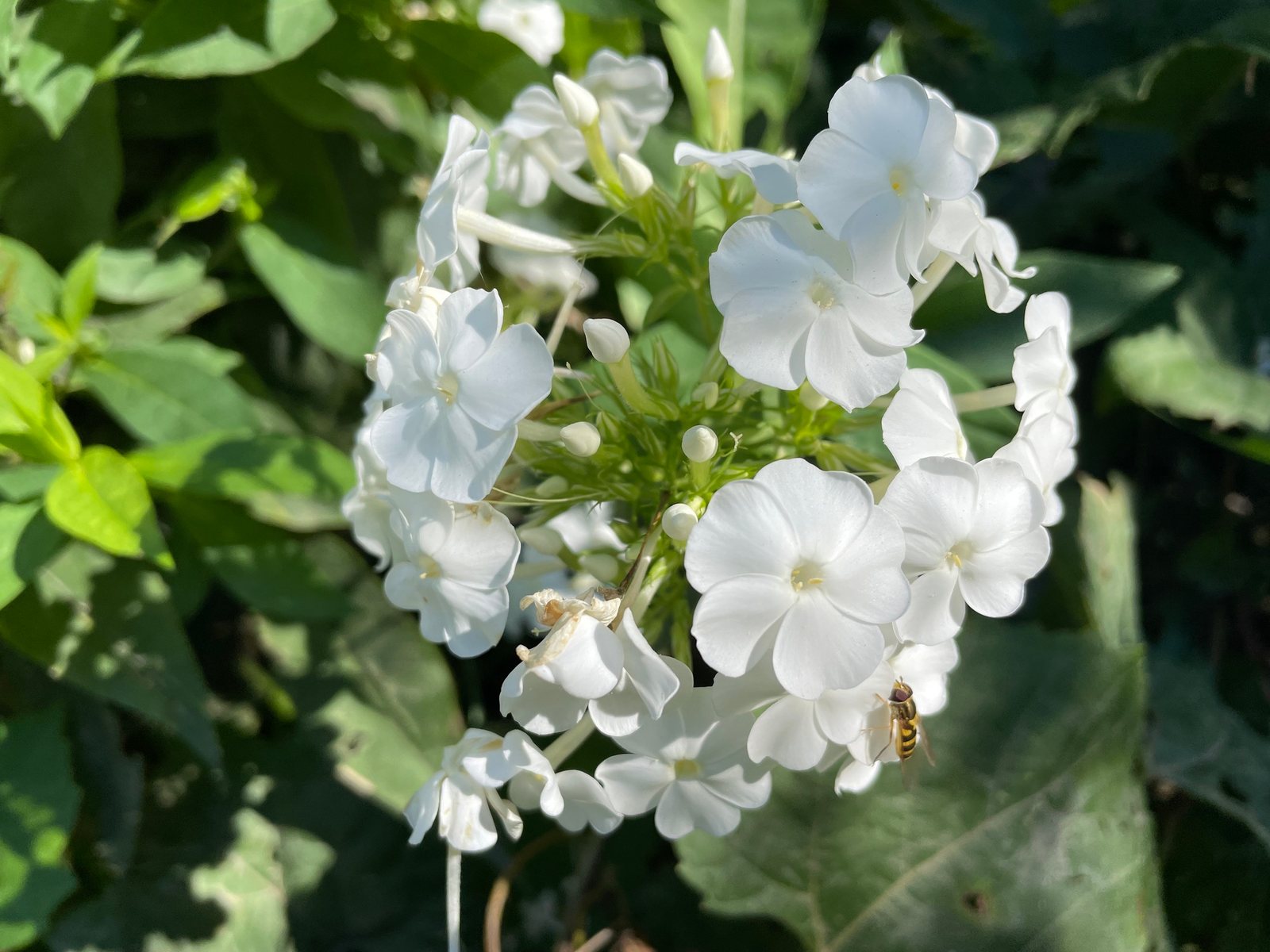
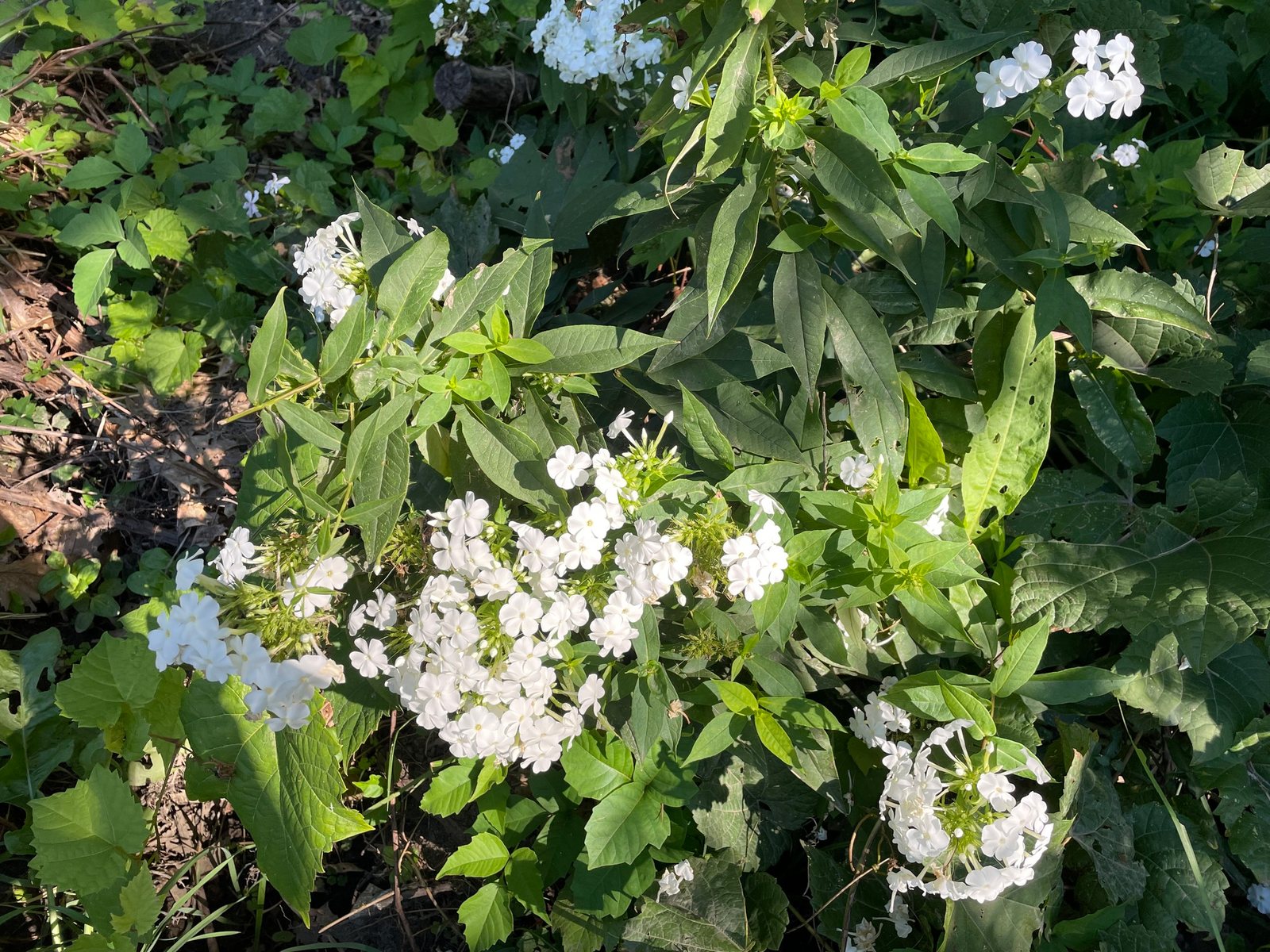
'David' is an upright, clump-forming perennial grown for large heads of fragrant white flowers in summer and early autumn. It brings height and late-season colour to borders and attracts butterflies. Its good resistance to powdery mildew makes it a useful choice, though it still needs moisture and good air circulation.
At a glance
- Sun
- Full sun to partial shade; afternoon shade helps in hot climates, but heavy shade reduces flowering.
- Water
- Keep the root zone evenly moist, especially during summer and while plants establish. Avoid prolonged drought and waterlogged soil.
- Soil
- Fertile, humus-rich, moisture-retentive but well-drained soil; tolerates mildly acidic to mildly alkaline conditions.
- Height
- 3-4 ft (0.9-1.2 m)
- Spread
- 2-3 ft (0.6-0.9 m)
- Flowers
- Midsummer to early autumn; fragrant, pure white, five-petalled flowers in large terminal clusters.
- Foliage
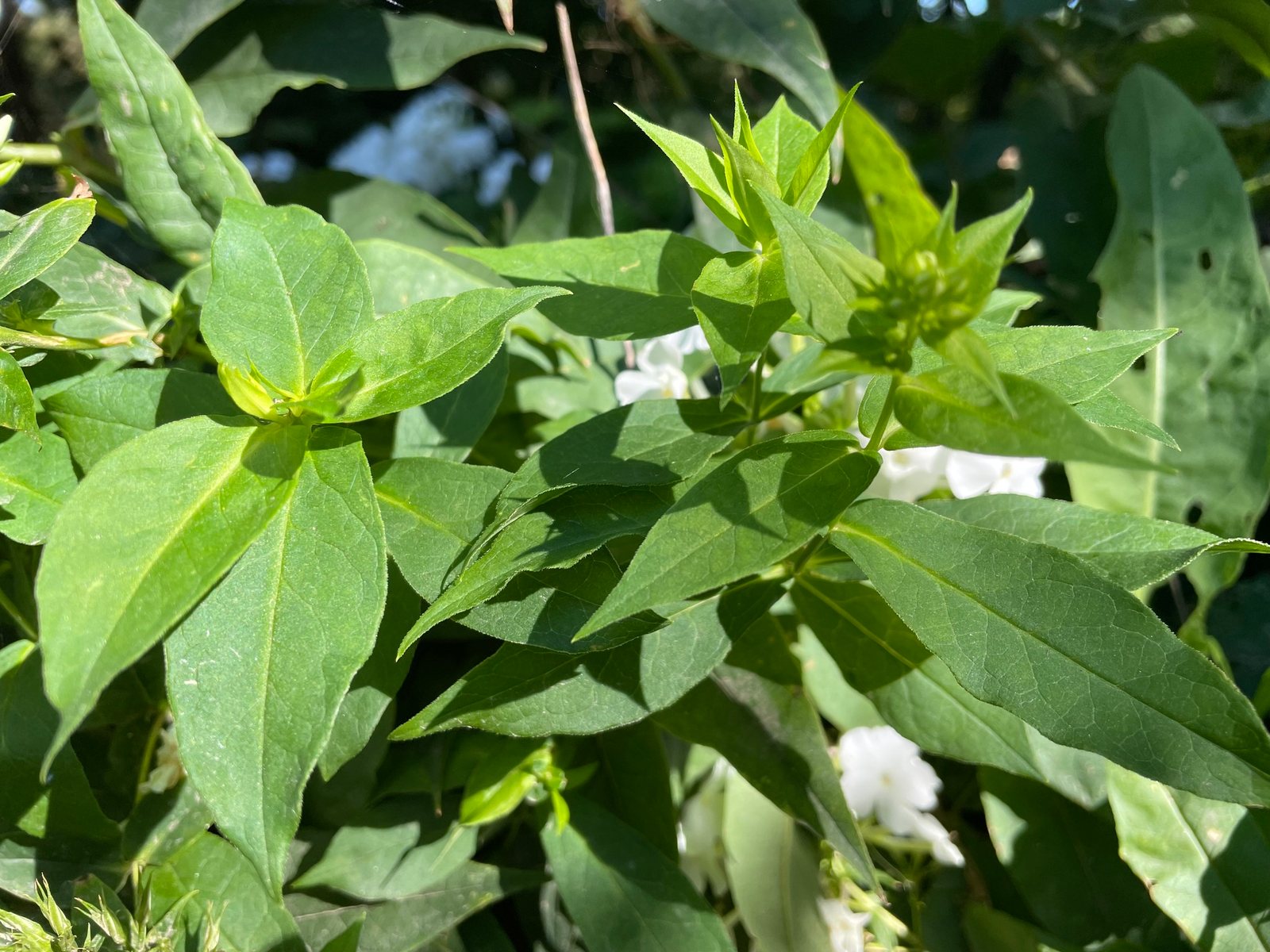
- Opposite pairs of pointed, lance-shaped green leaves on upright stems; dies back in winter.
- Growth
- Moderate; forms a substantial clump over two to three growing seasons.
- Care needed
- Medium
The year at a glance
- Pollinators
- Cold hardy
- Disease resistant
- Wildlife
- Low allergen
- Fragrant
| J | F | M | A | M | J | J | A | S | O | N | D | |
|---|---|---|---|---|---|---|---|---|---|---|---|---|
| Flowers | ||||||||||||
| Plant |
Northern hemisphere months. In Australia, shift them by six.
- Difficulty
- Moderate
- Toughness
- Fairly tough
Will it suit your garden?
Pick your zone, country, light and whether you have pets.
Full sun is 6 or more hours of direct sun a day, part shade 3 to 6 hours, shade under 3.
How it grows
Planting day
1 ft (0.3 m)
After 1 year
1.8 ft (0.55 m)
After 2 years
2.6 ft (0.8 m)
After 3 years
3 ft (1.1 m)
full size
About 3 years to full size.
From a typical nursery size, at an average rate for this kind of plant. A rule of thumb, not a forecast.
Good to know
- Cats and dogs
- Safe
- Native to
- the US
- Growth rate
- Moderate
Care
Jobs through the year
- WaterApr–May, Sep–Oct, every 14 days
- Water established clumps deeply when rain is insufficient; new plants need more frequent watering.
- WaterJun–Aug, every 7 days
- Soak the root zone during dry weather, keeping soil evenly moist and foliage dry.
- FeedMar–Apr
- Apply a modest dose of balanced fertiliser; avoid excessive nitrogen.
- MulchMar–Apr
- Apply compost and moisture-conserving mulch, keeping the crown clear.
- DivideMar–Apr
- Divide congested clumps every three to four years as growth begins.
- ProtectApr–May
- Install supports before stems become tall on exposed sites.
- DeadheadJul–Sep, every 7 days
- Cut faded clusters just above healthy paired leaves to encourage repeat flowers.
- PruneNov
- Cut dead stems to ground level and remove diseased plant material.
- Water deeply during dry spells, directing water onto the soil rather than the leaves.
- Apply compost and a modest amount of balanced fertiliser in spring; avoid excessive nitrogen.
- Mulch each spring to conserve moisture, keeping mulch clear of the crown.
- Space plants for airflow and keep neighbouring plants from crowding the stems.
- Support stems early with discreet stakes or a grow-through support in exposed sites.
- Divide congested clumps every three to four years in spring.
Pruning. Remove spent flower heads just above a healthy pair of leaves to encourage smaller repeat blooms and limit seedlings. Cut dead stems to ground level in late autumn or late winter; remove diseased foliage promptly.
Through the year
- Early spring
- Plant or divide clumps as growth begins, watering thoroughly afterwards.
- Spring
- Apply compost, fertiliser and mulch; set supports before stems become tall.
- Late spring
- Check that surrounding growth leaves enough airflow around the stems.
- Summer
- Water during dry weather and check lower leaves for mildew and spider mites.
- Late summer
- Deadhead faded flower clusters to extend the display and prevent unwanted seedlings.
- Late autumn
- Cut down dead stems if tidying now, and remove any diseased plant material.
In the garden
- Plant in repeated groups through the middle or back of a mixed border for upright white accents.
- Combine with purple coneflowers, salvias and ornamental grasses for a long summer display.
- Use in a white garden with white roses and silver-leaved plants.
- Place near a path or seating area where its fragrance and pale evening flowers can be enjoyed.
Garden styles it suits: Cottage garden, English country, White garden, Pollinator garden, Romantic rose garden and Moon garden.
Plant it with: Purple coneflower, Black-eyed Susan, Garden salvia, Switchgrass, Shasta daisy and Roses.
Wildlife: Flowers provide nectar for butterflies, moths and other pollinating insects. Deer and rabbits may browse the shoots.
Problems to watch for
- Powdery mildew: 'David' is resistant, not immune; maintain soil moisture, improve airflow and remove badly affected foliage.
- Spider mites in hot, dry weather: look for pale stippling and fine webbing; rinse leaf undersides with water and prevent drought stress.
- Root or crown rot: avoid waterlogged ground and improve drainage before planting.
- Flopping stems: provide early support, increase sunlight and avoid excessive nitrogen feeding.
Safety
Not known to be toxic to cats, dogs, horses or people; no part is recognised as poisonous. It is grown as an ornamental, not as a food plant.
Easily confused with
Dame's rocket (Hesperis matronalis)
Dame's rocket has four petals per flower and alternate leaves; phlox has five petals and opposite leaves. Dame's rocket usually flowers earlier.
Meadow phlox (Phlox maculata)
Meadow phlox usually has narrower, more cylindrical flower clusters and purple-spotted stems; 'David' has broader flower heads and generally unspotted stems.
The name
Phlox comes from the Greek word for flame, referring to the bright flowers of some species, while paniculata refers to its branched flower clusters.
Propagation. Divide established clumps in spring, or take basal cuttings in spring. Seedlings may differ from 'David'; use vegetative propagation to retain the cultivar.
Checked against open data
- Accepted botanical name
- Phlox paniculata
- In the US and Canada
- Native in the lower 48 states. Introduced in Canada.
- Native range
- Alabama, Arkansas, Connecticut, Delaware, District of Columbia, Georgia, Illinois, Indiana, Iowa, Kansas, Kentucky and Louisiana.
- Measured
- Average height 120 cm.
Sources: GBIF (CC BY 4.0), USDA PLANTS and Trefle (CC BY 4.0). The care and design notes are LandscapeGPT's own.
See it in your own yard.
Upload a photo of your yard and see it redesigned with plants that suit your climate, each checked against your zone.