Pineapple sage
Salvia elegans. Family Lamiaceae. Perennial.
Also called Tangerine sage.
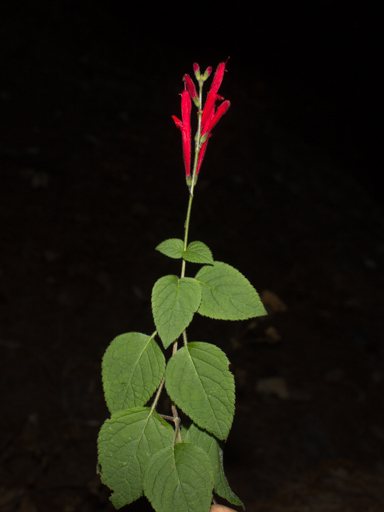
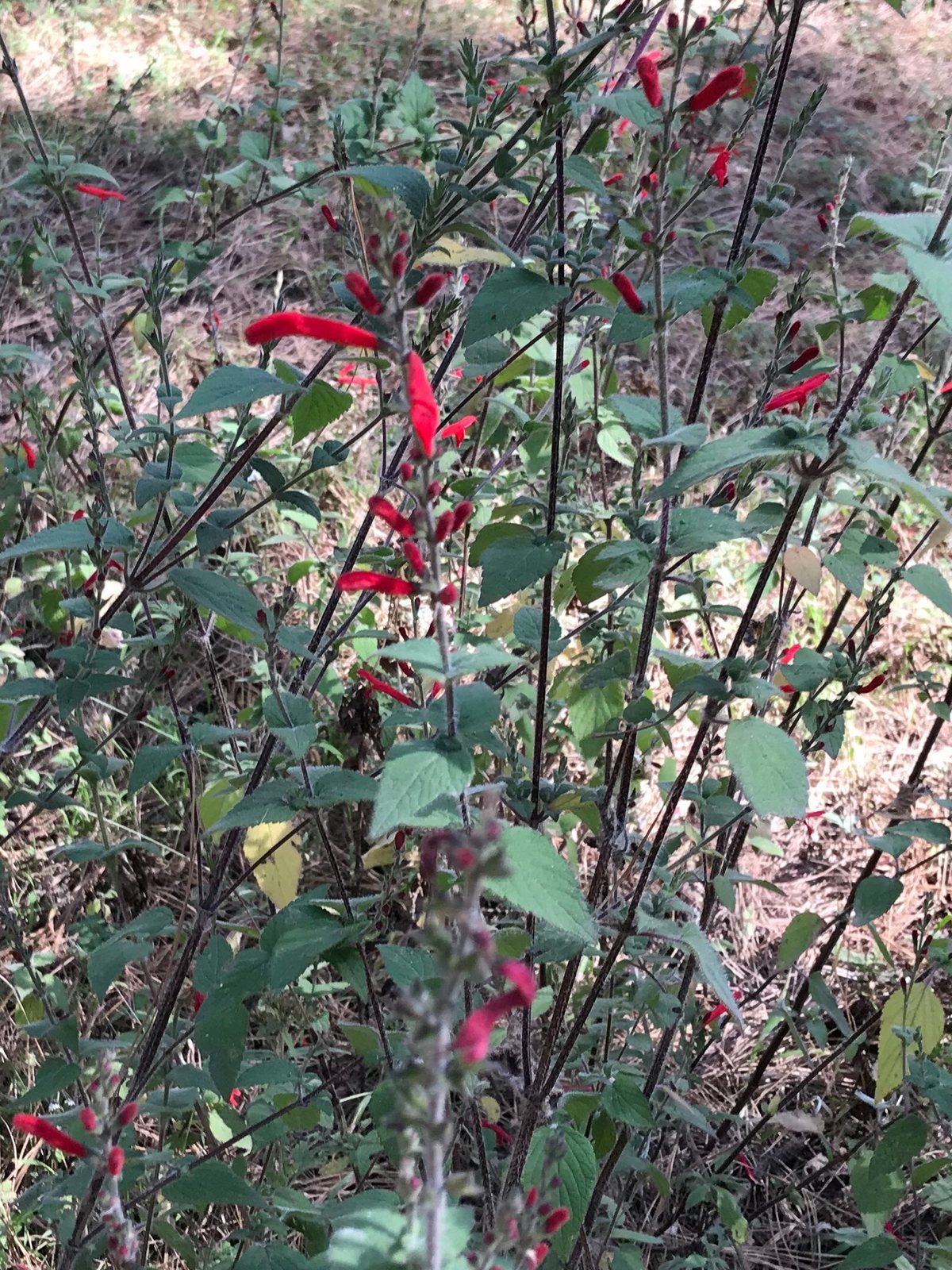
Pineapple sage is a tender, shrubby perennial grown for its pineapple-scented leaves and tubular scarlet flowers. It flowers mainly as days shorten, providing late colour and nectar, although early frost can cut the display short. In cold climates, grow it as an annual or overwinter a plant indoors.
At a glance
- Sun
- Full sun; light afternoon shade is helpful in very hot climates.
- Water
- Water regularly during active growth, allowing the surface soil to dry slightly between waterings. Avoid both prolonged drought and waterlogged roots.
- Soil
- Fertile, well-drained soil that retains some moisture; suitable for most soil pH levels.
- Height
- 3-5 ft (0.9-1.5 m)
- Spread
- 2-3 ft (0.6-0.9 m)
- Flowers
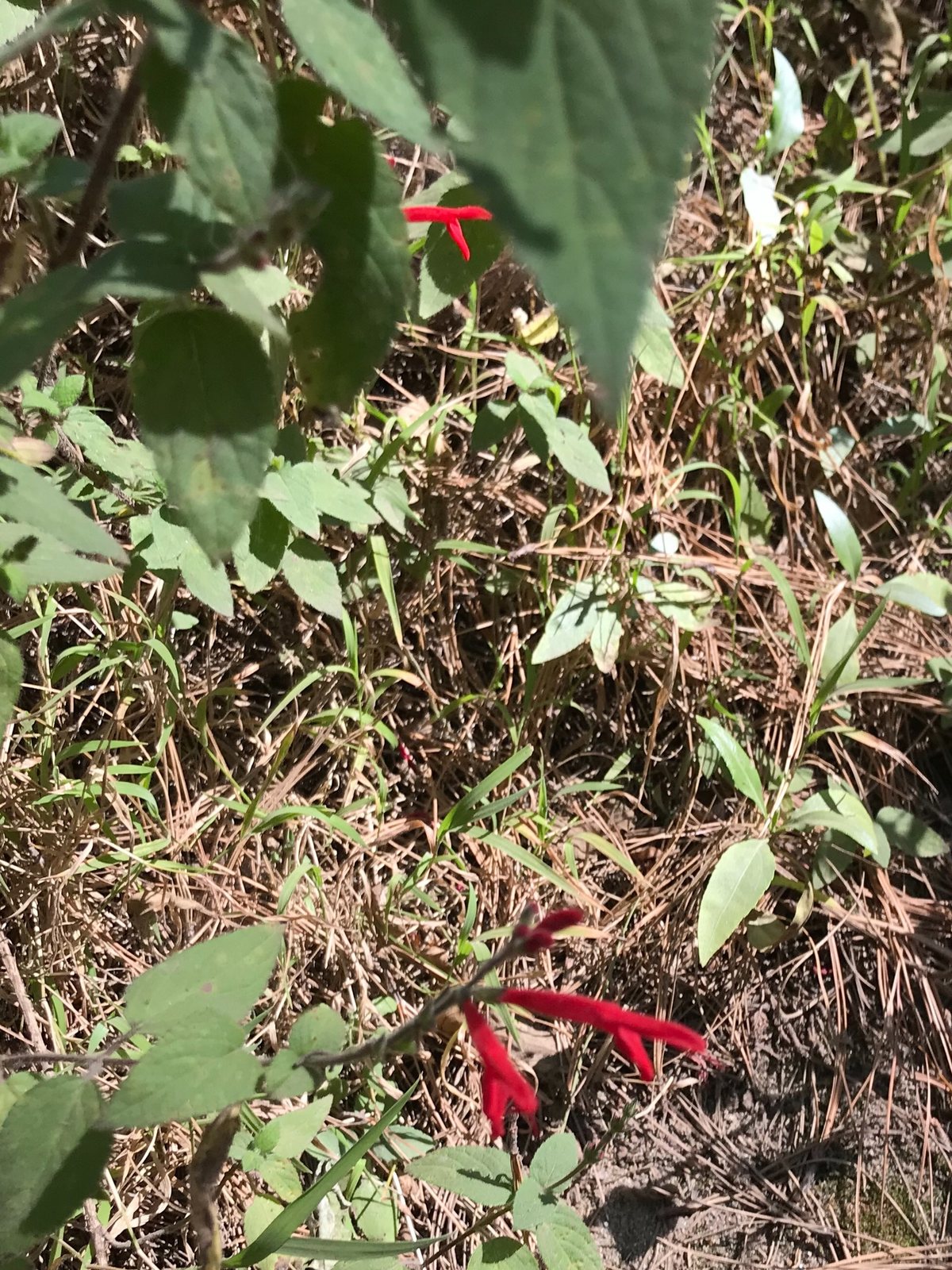
- Scarlet-red tubular flowers from late summer through autumn, sometimes continuing into winter in frost-free climates; flowering time varies with climate and selection.
- Foliage
- Soft, bright green, pointed oval leaves with toothed edges and a pineapple scent when rubbed. Evergreen in frost-free conditions, but loses its leaves or dies back in cold weather.
- Growth
- Fast
- Care needed
- Medium
The year at a glance
- Pollinators
- Deer resistant
- Heat tolerant
- Wildlife
- Low allergen
- Fragrant
- Edible
| J | F | M | A | M | J | J | A | S | O | N | D | |
|---|---|---|---|---|---|---|---|---|---|---|---|---|
| Flowers | ||||||||||||
| Fruit | ||||||||||||
| Plant |
Northern hemisphere months. In Australia, shift them by six.
- Difficulty
- Moderate
- Toughness
- Fairly tough
Will it suit your garden?
Pick your zone, country, light and whether you have pets.
Full sun is 6 or more hours of direct sun a day, part shade 3 to 6 hours, shade under 3.
How it grows
Planting day
1 ft (0.3 m)
After 1 year
2.5 ft (0.76 m)
After 2 years
4 ft (1.2 m)
full size
About 2 years to full size.
From a typical nursery size, at an average rate for this kind of plant. A rule of thumb, not a forecast.
Good to know
- Cats and dogs
- Safe
- Growth rate
- Fast
Care
Jobs through the year
- WaterMay, Sep–Oct, every 7 days
- Water established ground plants when surface soil dries; young plants and pots need closer checks.
- WaterJun–Aug, every 5 days
- Water established ground plants deeply in dry weather; allow the surface to dry slightly.
- WaterJan–Apr, Nov–Dec, every 14 days
- For frost-free overwintered pots only, check moisture and water sparingly, increasing as growth resumes.
- FeedApr–May
- Add compost in spring; container plants may also need light feeding during active growth.
- PruneApr–May
- Cut damaged stems to healthy growth and pinch young tips; avoid later pinching that delays flowers.
- MulchMay–Jun
- Mulch the root area to conserve moisture, keeping stems clear.
- HarvestMay–Oct, every 7 days
- Pick leaves as needed, taking no more than a third; pick flowers when fully open.
- ProtectJan–Apr, Oct–Dec
- In zones 6–7, overwinter a container or rooted cuttings in bright, frost-free shelter.
- Plant outdoors after frost danger has passed, in a warm, sheltered position.
- Water deeply during dry spells; check containers frequently in hot weather.
- Apply compost in spring; feed container plants lightly during active growth.
- Mulch the root area to conserve moisture, keeping mulch clear of the stems.
- In colder parts of its range, protect the crown with a loose winter mulch and ensure excellent drainage.
- Where winters are cold, bring a container plant or rooted cuttings into a bright, frost-free place.
Pruning. Pinch young shoots in spring to encourage branching, but avoid repeated trimming later in the growing season because it can delay flowering. Cut frost-damaged or old woody stems back to healthy growth in spring, once hard frosts have passed.
Harvest
Pick tender leaves and leafy shoot tips once the plant is established and growing strongly; ready leaves are green and smell of pineapple when gently rubbed. Snip just above a pair of leaves, taking no more than a third of the foliage at once, throughout the frost-free growing season. Pick the red flowers when fully open, usually from late summer through autumn, sometimes into winter in frost-free areas.
Through the year
- Early spring
- Check overwintered plants for pests and begin watering more as new growth appears.
- Spring
- Prune damaged stems, add compost and pinch young shoots for a bushier plant.
- Late spring
- Harden off indoor plants and plant outside after the last frost.
- Summer
- Water during dry weather and take non-flowering shoot cuttings as backup plants.
- Autumn
- Leave flowering stems intact for late colour and nectar.
- Before the first frost
- Move containers under cover in cold climates, or protect the root area where plants remain outdoors.
- Winter
- Keep sheltered plants frost-free and water sparingly, without allowing the root ball to dry out completely.
In the garden
- Place beside a path or seating area where you can brush the scented leaves.
- Use behind lower herbs in an edible border, allowing space for its spreading stems.
- Combine with ornamental grasses and autumn-flowering perennials for late-season colour.
- Grow in a large patio container that can be moved under cover for winter.
Garden styles it suits: Cottage garden, Potager (kitchen garden), Sensory garden, Edible landscape, Pollinator garden and Autumn colour.
Plant it with: Dahlias, Mexican bush sage, Purple coneflower, Switchgrass, Basil and French marigolds.
Wildlife: Flowers attract hummingbirds where they occur, especially in North America, and are visited by some bees and butterflies.
Problems to watch for
- Frost damage: stems and roots can be killed by cold, especially in wet soil; improve drainage and overwinter a backup plant under cover.
- Few or no flowers before frost: short days trigger flowering, so cold climates may have too short a season; choose a warm site and avoid late pinching.
- Whitefly or spider mites under cover: inspect leaf undersides, rinse pests off and use insecticidal soap if needed, following the label.
- Root rot: yellowing and collapse can follow prolonged waterlogging; improve drainage and never leave pots standing in water.
Safety
Not known to be toxic to people, cats, dogs or horses. The leaves and flowers are used as edible herbs; large amounts of any unfamiliar plant material may cause digestive upset.
Where it spreads. Can escape gardens in eastern Australia, including parts of New South Wales and Queensland. Check local weed advice before planting near bushland.
Easily confused with
Scarlet sage (Salvia coccinea)
Usually a smaller, shorter-lived plant with more heart-shaped leaves; its foliage lacks the distinctive pineapple scent.
Mexican bush sage (Salvia leucantha)
Has narrow, grey-green leaves and conspicuously velvety purple flower spikes rather than bright green, pineapple-scented foliage and scarlet flowers.
The name
The common name refers to the pineapple scent of the crushed leaves, while the Latin elegans means elegant.
Propagation. Take softwood or semi-ripe cuttings from non-flowering shoots in spring or summer and root them in a moist, free-draining medium. Seed is also possible, but named selections may not come true.
Checked against open data
- Accepted botanical name
- Salvia elegans
- Native range
- Mexico Central, Mexico Gulf, Mexico Northeast, Mexico Northwest and Mexico Southwest.
Sources: GBIF (CC BY 4.0) and Trefle (CC BY 4.0). The care and design notes are LandscapeGPT's own.
See it in your own yard.
Upload a photo of your yard and see it redesigned with plants that suit your climate, each checked against your zone.