Pink 'Doris'
Dianthus 'Doris'. Family Caryophyllaceae. Perennial.
Also called Dianthus 'Doris', Garden pink 'Doris'.
'Doris' is a compact, evergreen garden pink with narrow grey-green leaves and fragrant, double, salmon-pink flowers marked with a darker pink eye. Grow it beside paths, at the front of sunny borders or in containers where you can enjoy its clove-like scent; good drainage is essential for it to survive winter.
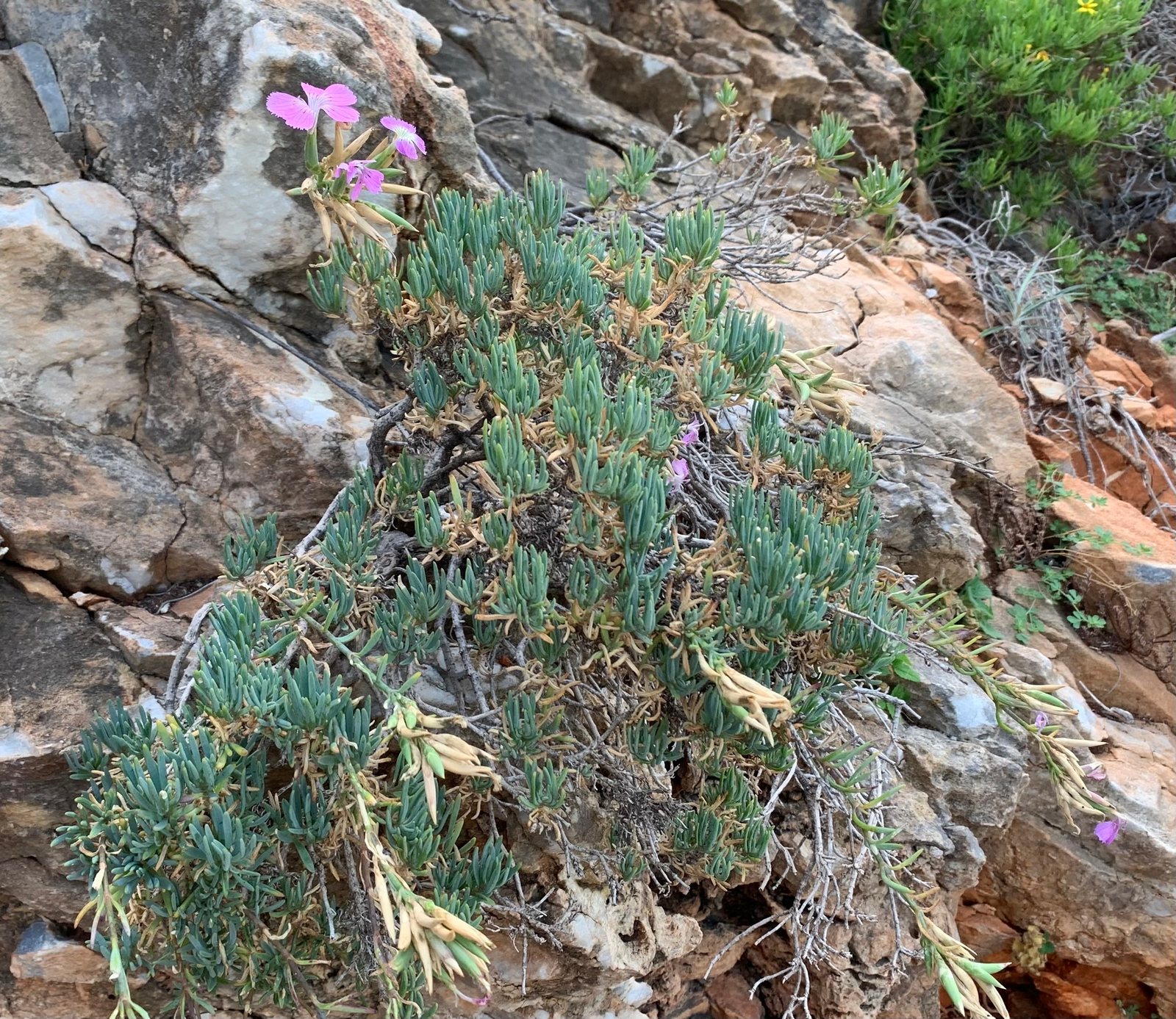
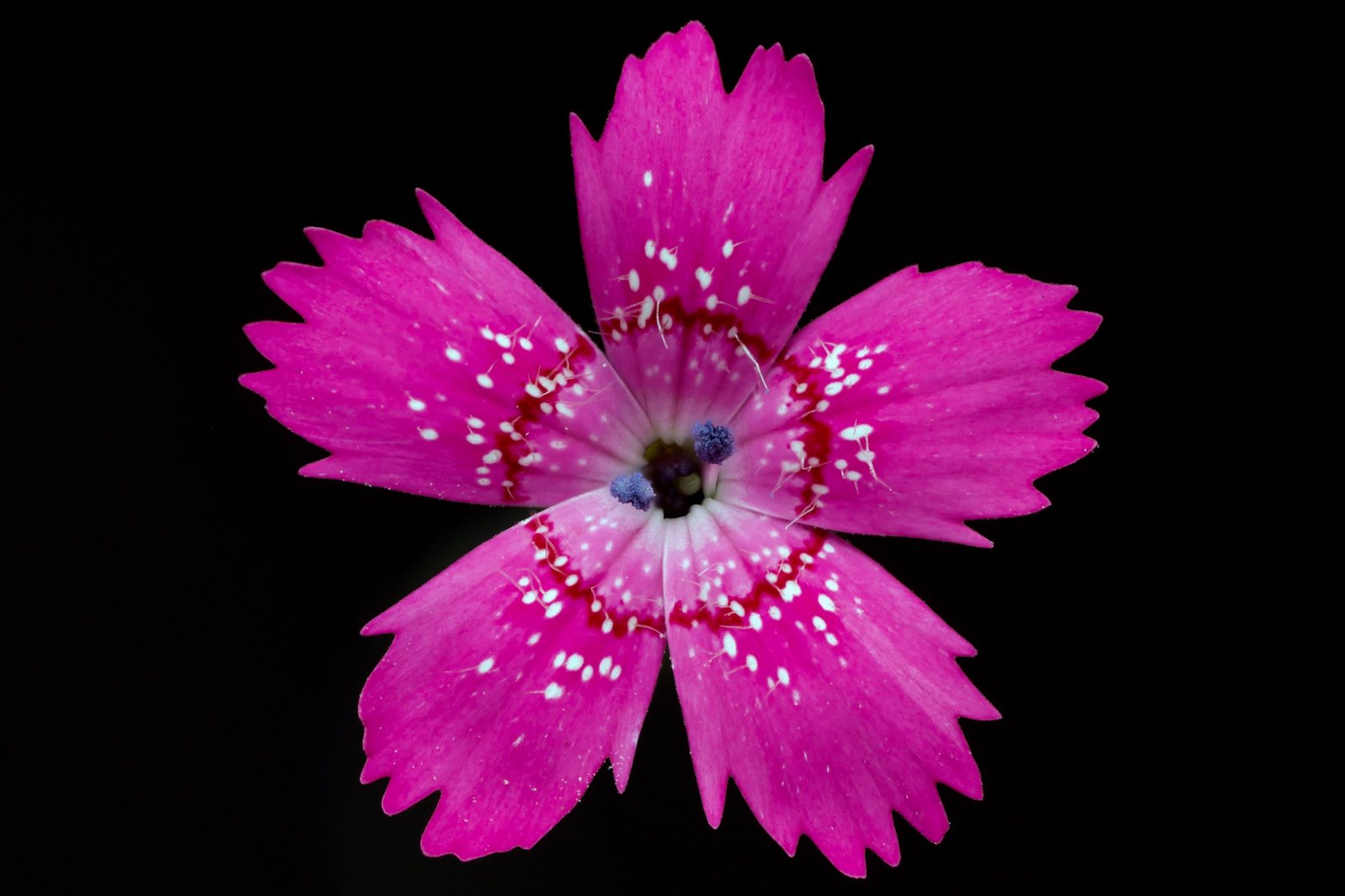
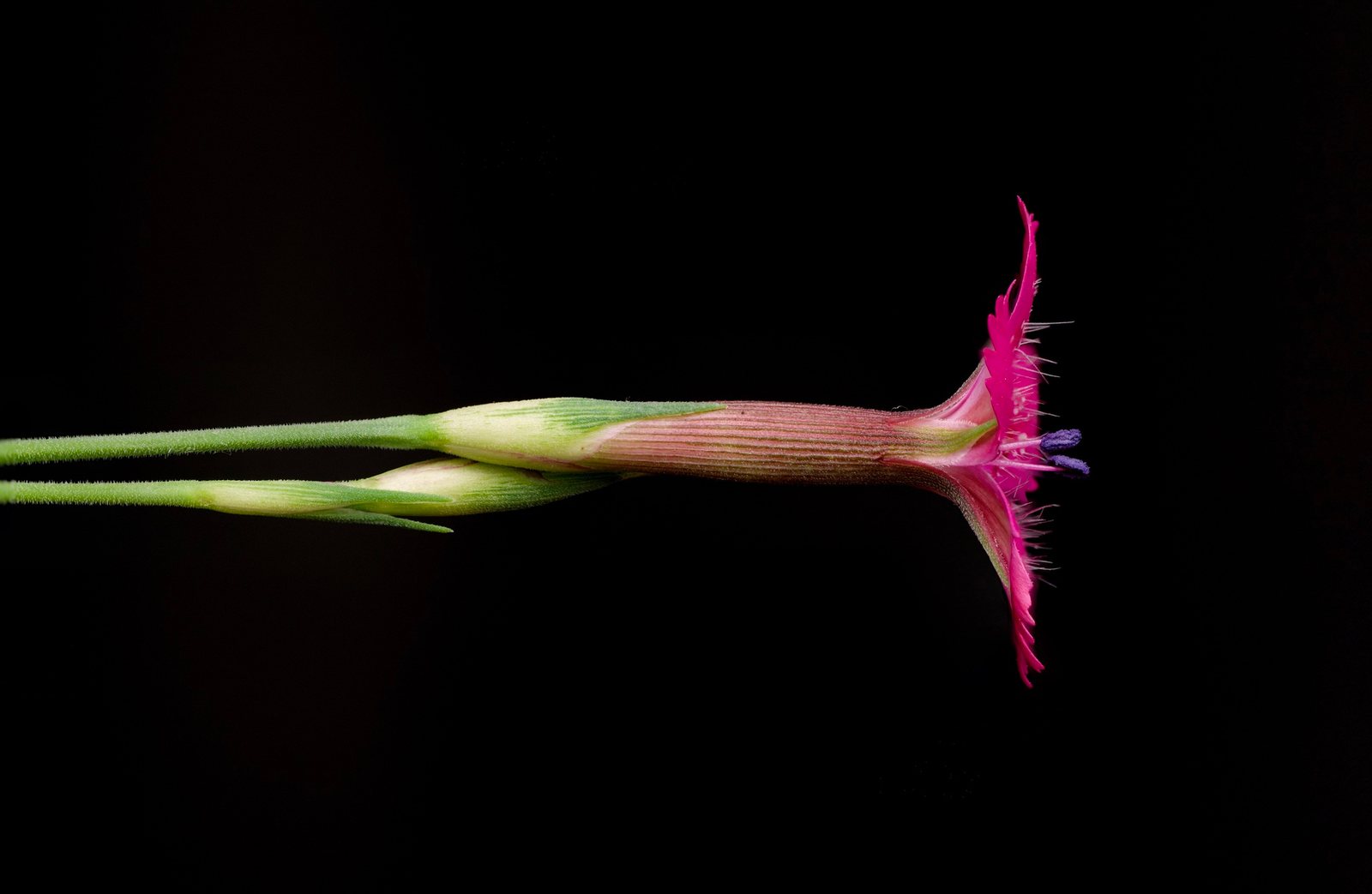
At a glance
- Sun
- Full sun; light afternoon shade can help in very hot climates, but too much shade reduces flowering.
- Water
- Water regularly while establishing, then during prolonged dry spells. Let the soil surface dry between waterings; avoid persistently wet roots.
- Soil
- Well-drained, neutral to alkaline soil, preferably sandy or gritty. Improve heavy soil with a raised planting area rather than relying on grit in the planting hole alone.
- Height
- 1-1.5 ft (0.3-0.45 m)
- Spread
- 1-1.5 ft (0.3-0.45 m)
- Flowers
- Salmon-pink, double flowers with a darker pink eye and fringed petals, mainly in late spring and early summer, with scattered repeat flowers into early autumn if deadheaded.
- Foliage
- Evergreen. Narrow, pointed, grey-green to blue-green leaves form a low cushion beneath the flower stems.
- Growth
- Moderate
- Care needed
- Low
The year at a glance
- Pollinators
- Deer resistant
- Drought tolerant
- Low allergen
- Fragrant
| J | F | M | A | M | J | J | A | S | O | N | D | |
|---|---|---|---|---|---|---|---|---|---|---|---|---|
| Flowers | ||||||||||||
| Plant |
Northern hemisphere months. In Australia, shift them by six.
- Difficulty
- Easy
- Toughness
- Fairly tough
Will it suit your garden?
Pick your zone, country, light and whether you have pets.
Full sun is 6 or more hours of direct sun a day, part shade 3 to 6 hours, shade under 3.
How it grows
Planting day
1 ft (0.3 m)
After 1 year
1.1 ft (0.32 m)
After 2 years
1.1 ft (0.35 m)
After 3 years
1.2 ft (0.38 m)
full size
About 3 years to full size.
From a typical nursery size, at an average rate for this kind of plant. A rule of thumb, not a forecast.
Good to know
- Cats and dogs
- Mildly toxic: may upset a stomach
- Growth rate
- Moderate
Care
Jobs through the year
- WaterApr–May, Sep–Oct, every 14 days
- Water established plants at the base only if dry; young plants need more frequent watering.
- WaterJun–Aug, every 10 days
- Water established plants during prolonged dry spells, letting the soil surface dry between soakings.
- FeedMar–Apr
- Apply one light spring dressing of balanced fertilizer; avoid heavy nitrogen feeding.
- MulchApr
- If needed, add a thin gravel mulch, keeping the crown clear.
- DeadheadMay–Sep, every 7 days
- Cut faded flower stems back to the leafy cushion to encourage repeat flowering.
- PruneMar
- Remove dead leaves and stems without cutting into bare woody growth.
- PruneJul
- Lightly trim after the main flowering flush, retaining leafy growth.
- ProtectJan–Feb, Oct–Dec
- Clear fallen leaves from the cushion and prevent standing water around the crown.
- Plant with the crown at soil level and keep surrounding plants from crowding it.
- Water at the base during dry spells, avoiding constant moisture around the crown.
- Apply a light dressing of balanced fertiliser in spring; avoid heavy feeding with nitrogen.
- Use a thin gravel mulch if needed, keeping compost and bark away from the crown.
- Take cuttings every few years to replace plants that become woody or open in the centre.
Pruning. Remove faded flower stems back to the leafy cushion to encourage repeat flowering. After the main flush, trim lightly to tidy the plant, but do not cut hard into bare, woody growth.
Through the year
- Early spring
- Remove dead leaves and stems, check drainage and apply a light feed.
- Spring
- Plant into well-drained soil once it is workable, and water until established.
- Late spring
- Cut newly opened flowers for small vases and remove fading blooms.
- Summer
- Deadhead regularly, water during prolonged drought and take non-flowering shoot cuttings.
- Early autumn
- Remove remaining spent flower stems and clear fallen leaves from the cushion.
- Winter
- Keep drainage holes clear in containers and protect plants from standing water rather than wrapping the foliage.
In the garden
- Edge a sunny path or seating area so the scented flowers are within easy reach.
- Repeat small groups along the front of a cottage border with lavender and catmint.
- Plant in a gravel garden with other low, sun-loving plants for contrasting foliage textures.
- Use in terracotta pots with free-draining compost near a doorway or patio.
Garden styles it suits: Cottage garden, English country, Sensory garden, Dry gravel garden, Pastel border and Small-space.
Plant it with: English lavender, Catmint, Creeping thyme, Lamb's ears, Rock rose and Dwarf bearded iris.
Wildlife: Flowers may attract bees and butterflies, although the double blooms offer less accessible nectar and pollen than single-flowered pinks.
Problems to watch for
- Crown or root rot in wet soil: improve drainage, keep mulch away from the crown and replace badly affected plants.
- Aphids on flower stems: rub off small colonies or wash them away with water; use insecticidal soap if necessary.
- Rust, showing as orange-brown pustules on leaves: remove affected foliage, improve air circulation and avoid wetting leaves.
- Woody, open-centred growth and fewer flowers: take healthy shoot cuttings to replace ageing plants and check that they receive enough sun.
Safety
Dianthus is mildly toxic to cats and dogs if eaten, potentially causing vomiting or diarrhoea; sap contact can also irritate skin. Leaves and stems should not be eaten by people, and handling may cause skin irritation in sensitive individuals. Toxicity to horses is not well documented, so keep it out of forage.
Easily confused with
Pink 'Mrs Sinkins' (Dianthus 'Mrs Sinkins')
It has strongly scented, deeply fringed double white flowers rather than salmon-pink flowers with a dark eye.
Maiden pink (Dianthus deltoides)
It forms a lower, spreading mat with smaller, usually single flowers and greener foliage.
Carnation (Dianthus caryophyllus)
Typical carnations have larger flowers on taller, more upright stems rather than the compact cushion and shorter stems of 'Doris'.
The name
Dianthus comes from Greek words meaning 'divine flower', while the common name pink refers to the petals' notched or fringed edges.
Propagation. Take short, non-flowering shoot cuttings in summer and root them in a gritty propagation mix. Seed will not reliably reproduce 'Doris' true to type.
Checked against open data
- Accepted botanical name
- Dianthus
Sources: GBIF (CC BY 4.0). The care and design notes are LandscapeGPT's own.
See it in your own yard.
Upload a photo of your yard and see it redesigned with plants that suit your climate, each checked against your zone.