Pink jasmine
Jasminum polyanthum. Family Oleaceae. Climber.
Also called Winter jasmine, Many-flowered jasmine.
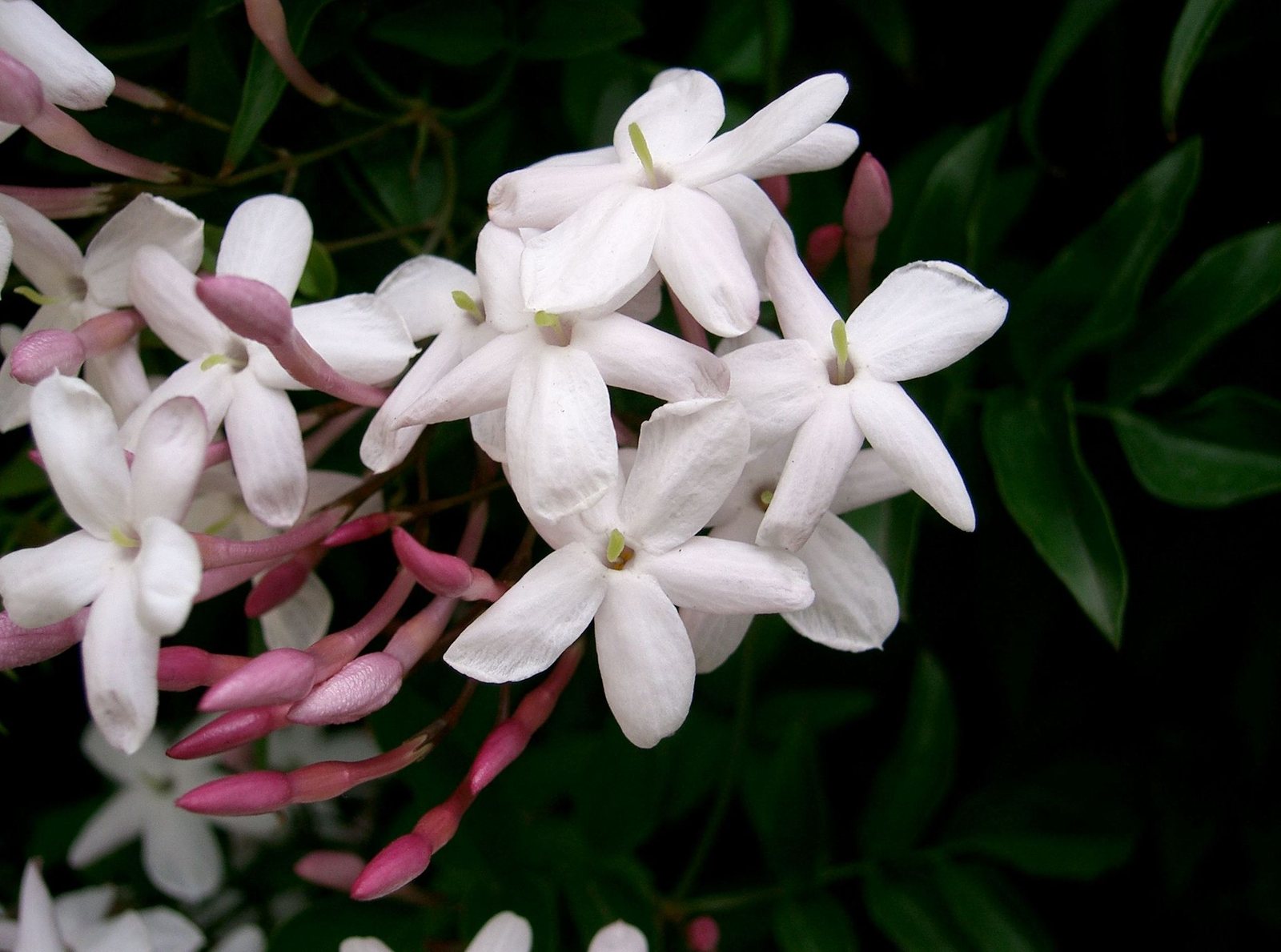
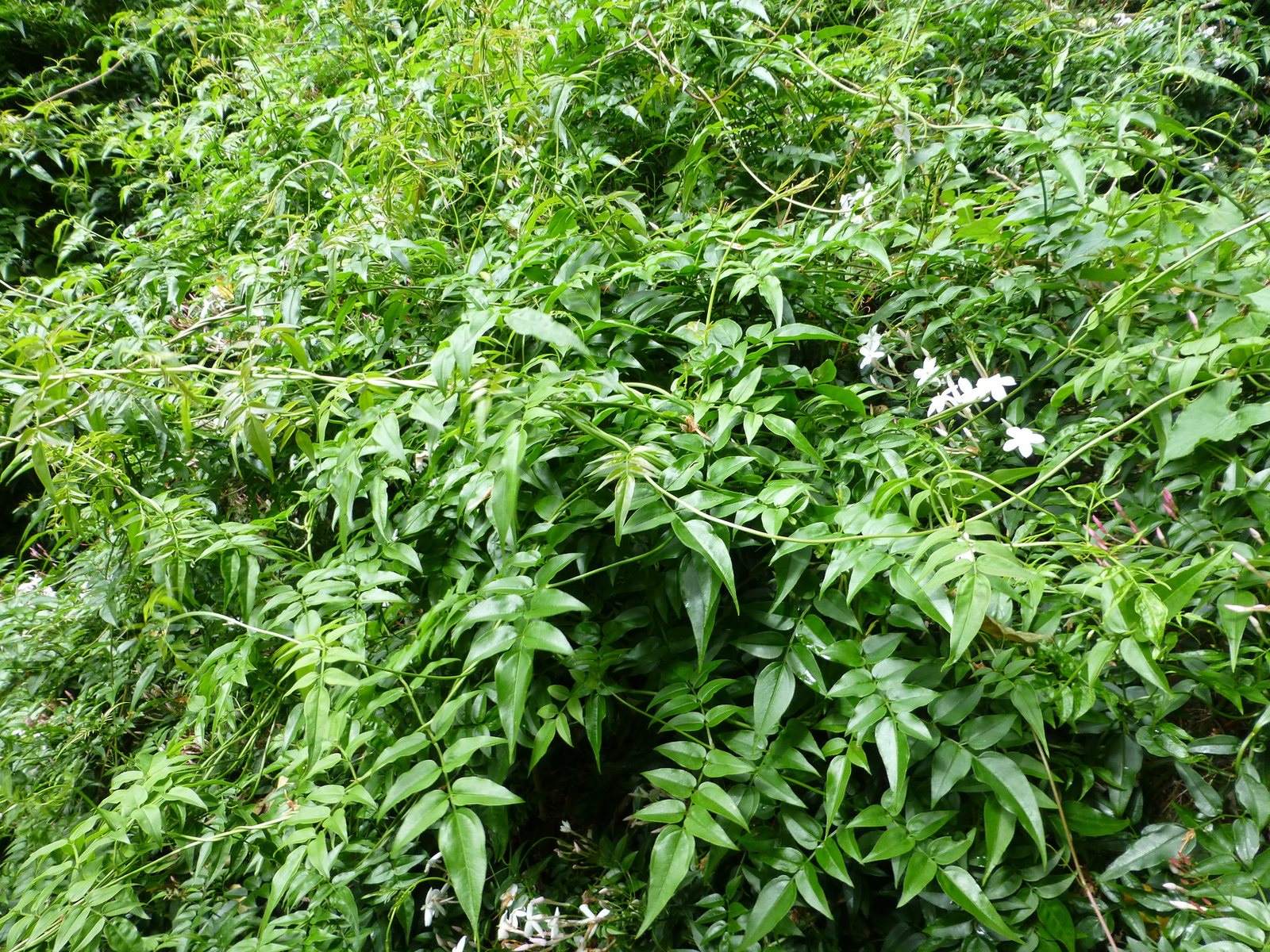
Pink jasmine is a vigorous, twining climber grown for masses of intensely fragrant white flowers opening from pink buds in late winter and spring. It covers trellises quickly in mild climates; in colder areas, grow it in a container and overwinter it somewhere bright, cool and frost-free. Check local weed guidance before planting, as it can escape and smother other vegetation.
At a glance
- Sun
- Full sun to partial shade; provide afternoon shade in hot, dry locations. Indoors, give it very bright light.
- Water
- Water regularly during active growth, allowing the surface soil to begin drying between waterings. Reduce watering in winter without letting the root ball dry out completely.
- Soil
- Fertile, moisture-retentive but well-drained soil. For containers, use a free-draining potting mix in a pot with drainage holes.
- Height
- 10-20 ft (3-6 m)
- Spread
- 6-10 ft (1.8-3 m), depending on training
- Flowers
- Late winter to spring; pink buds open into white, star-shaped, strongly scented flowers.
- Foliage
- Evergreen. Dark green leaves divided into usually five to seven pointed leaflets; foliage may thin or drop after cold weather.
- Growth
- Fast
- Care needed
- Medium
The year at a glance
- Pollinators
- Heat tolerant
- Low allergen
- Fragrant
| J | F | M | A | M | J | J | A | S | O | N | D | |
|---|---|---|---|---|---|---|---|---|---|---|---|---|
| Flowers | ||||||||||||
| Plant |
Northern hemisphere months. In Australia, shift them by six.
- Difficulty
- Moderate
- Toughness
- Fairly tough
Will it suit your garden?
Pick your zone, country, light and whether you have pets.
Full sun is 6 or more hours of direct sun a day, part shade 3 to 6 hours, shade under 3.
How it grows
Planting day
2 ft (0.6 m)
After 1 year
3 ft (1.1 m)
After 2 years
5 ft (1.5 m)
After 3 years
6 ft (1.8 m)
full size
About 3 years to full size.
From a typical nursery size, at an average rate for this kind of plant. A rule of thumb, not a forecast.
Good to know
- Cats and dogs
- Safe
- Invasive in
- Australia
- In the garden
- Spreads vigorously: plan to contain it.
- Growth rate
- Fast
Care
Jobs through the year
- WaterApr–May, Sep–Oct, every 7 days
- For established ground plants in frost-free sites, water if the surface dries; young plants and pots need more frequent checks.
- WaterJun–Aug, every 4 days
- Water during dry weather once the surface begins drying; check pots more often.
- WaterJan–Mar, Nov–Dec, every 14 days
- Under cool winter cover, water sparingly when the surface dries; never let the root ball dry completely.
- MulchApr
- Apply compost around outdoor plants, keeping it clear of stems.
- FeedApr–Aug, every 14 days
- Feed container plants with balanced liquid fertiliser at the label rate.
- PruneApr–May
- Immediately after flowering, shorten flowered shoots and remove tangled or unwanted growth.
- ProtectSep–Oct
- In zones 6–7, move pots into bright, cool, frost-free shelter before frost.
- ProtectMay–Aug, every 14 days
- Tie new stems loosely to a sturdy support and keep them off neighbouring plants.
- Provide a sturdy trellis or wires and tie young stems loosely into place; this climber does not attach itself to bare walls.
- Water newly planted vines regularly through their first growing season, and check containers frequently in warm weather.
- Apply compost around outdoor plants in spring, keeping it away from the stems.
- Feed container plants with a balanced liquid fertiliser during spring and summer, following the label rate.
- In cold regions, bring containers under cover before frost and provide a bright, cool winter position; warm rooms can reduce flowering.
- Keep stems off neighbouring shrubs and remove unwanted shoots before they root where they touch the ground.
Pruning. Prune immediately after flowering, shortening flowered shoots and removing tangled, damaged or unwanted stems. Avoid hard pruning in autumn or winter, when you may remove developing flower buds.
Through the year
- Late winter
- Enjoy flowering plants in a bright position; keep container compost lightly moist and protect plants from frost.
- Spring
- After flowering, prune to fit the support and remove dead or tangled growth.
- Spring
- Refresh container compost or repot if root-bound, then begin feeding as new growth starts.
- Summer
- Water during dry spells, tie in new stems and check foliage for mites and sap-sucking insects.
- Late summer
- Take semi-ripe cuttings from healthy, non-flowering shoots.
- Autumn
- Move pots under cover before frost. Give plants cool, bright conditions to encourage flower-bud formation.
In the garden
- Train over a pergola or arch near seating where the fragrance can be enjoyed without the stems spreading through nearby plants.
- Use on a sunny courtyard trellis to soften masonry and provide a seasonal screen.
- Grow in a large container with an obelisk for a patio display that can be moved under cover for winter.
- Pair with lavender, agapanthus and other sun-loving plants in a mild-climate border, keeping its roots watered separately where needed.
Garden styles it suits: Modern courtyard, Cottage garden, Romantic rose garden, Sensory garden, White garden and Mediterranean.
Plant it with: Agapanthus, Lavender, Rosemary, Climbing roses and Pelargoniums.
Wildlife: Flowers can provide nectar for visiting insects in mild weather. Dense growth offers cover, but escaped plants can smother habitat and outweigh these benefits.
Problems to watch for
- Few or no flowers: provide brighter light and a cool autumn period, avoid excessive nitrogen feeding, and prune after flowering rather than before it.
- Red spider mites, especially indoors: look for pale stippling and fine webbing; rinse foliage and use an appropriate labelled treatment if the infestation persists.
- Aphids or mealybugs: inspect shoot tips and leaf joints, wash off small colonies and treat persistent infestations with insecticidal soap where labelled.
- Root rot or yellowing in wet compost: improve drainage, empty standing water from saucers and allow the surface to begin drying before watering again.
Safety
True jasmines, including pink jasmine, are not known to be toxic to cats, dogs, horses or people. No part is recognised as seriously poisonous, but eating plant material may cause stomach upset; do not confuse it with poisonous plants also called jasmine.
Where it spreads. Invasive in New Zealand, where sale and distribution are prohibited under the National Pest Plant Accord. It is an environmental weed in parts of Australia, particularly coastal New South Wales and southeastern Queensland, and has naturalised in coastal California. Stems root where they touch soil and can form dense growth that smothers shrubs and young trees;
Easily confused with
Common jasmine (Jasminum officinale)
Also has divided leaves and fragrant white flowers, but flowers mainly in summer rather than producing the characteristic mass of pink buds in late winter and spring.
Star jasmine (Trachelospermum jasminoides)
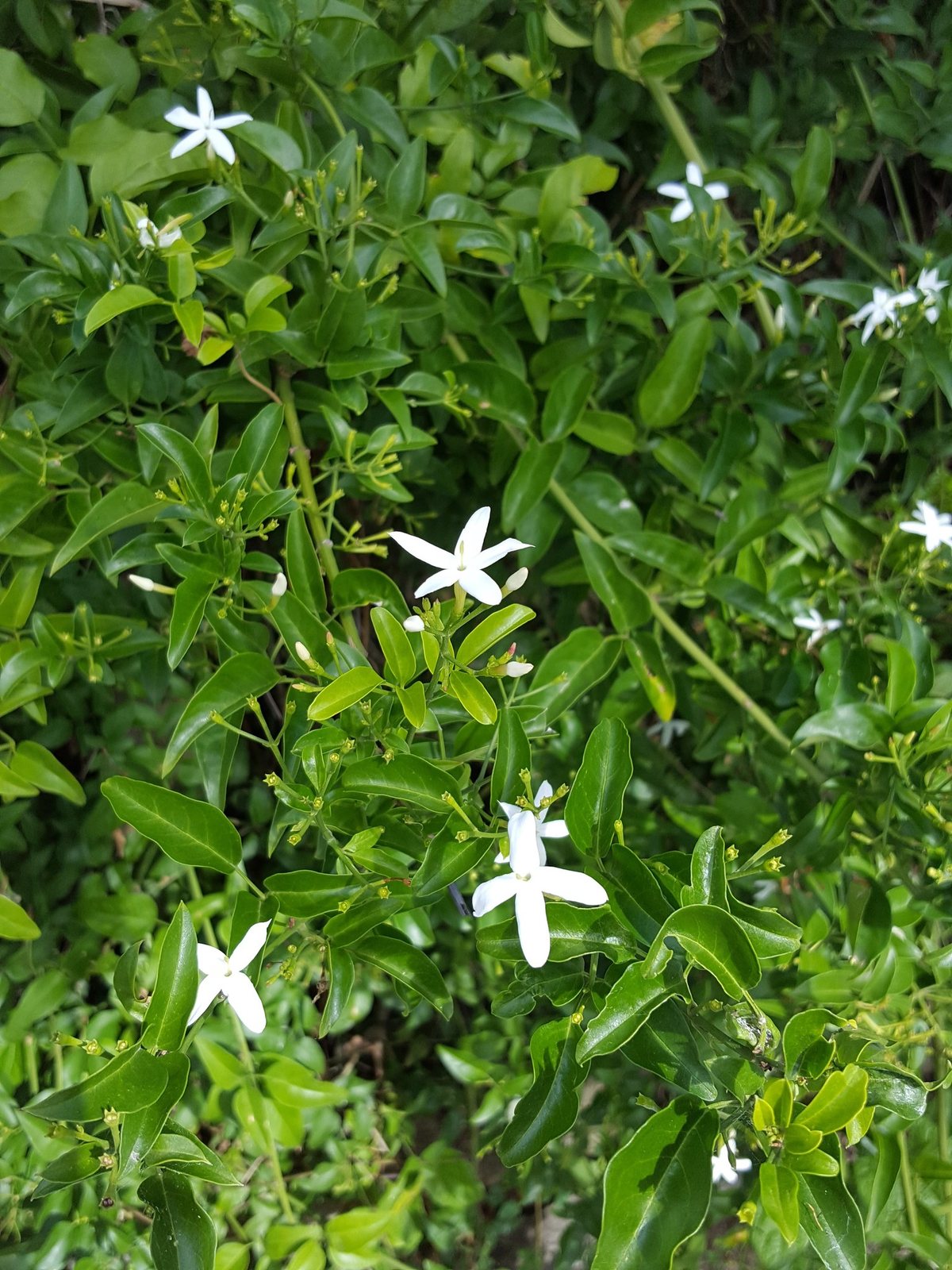
Has thick, glossy, undivided leaves and pinwheel-shaped white flowers, usually in late spring and summer; cut stems release milky sap.
Winter jasmine (Jasminum nudiflorum)
Has yellow, unscented flowers on mostly bare green stems in winter, with leaves divided into three leaflets rather than five to seven.
The name
The species name polyanthum means many-flowered, while pink jasmine refers to its conspicuous pink flower buds rather than the open white flowers.
Propagation. Take semi-ripe cuttings in late summer and root them in a moist, free-draining medium under cover. Layering a low stem also works, but detach and contain rooted plants promptly where escape is a concern.
Checked against open data
- Accepted botanical name
- Jasminum polyanthum
- In the US and Canada
- Introduced in Hawaii.
- Native range
- China South-Central and Myanmar.
Sources: GBIF (CC BY 4.0), USDA PLANTS and Trefle (CC BY 4.0). The care and design notes are LandscapeGPT's own.
See it in your own yard.
Upload a photo of your yard and see it redesigned with plants that suit your climate, each checked against your zone.