Pink Knock Out rose
Rosa 'Radcon'. Family Rosaceae. Shrub.
Also called Rosa 'Radcon', Pink Knock Out shrub rose.
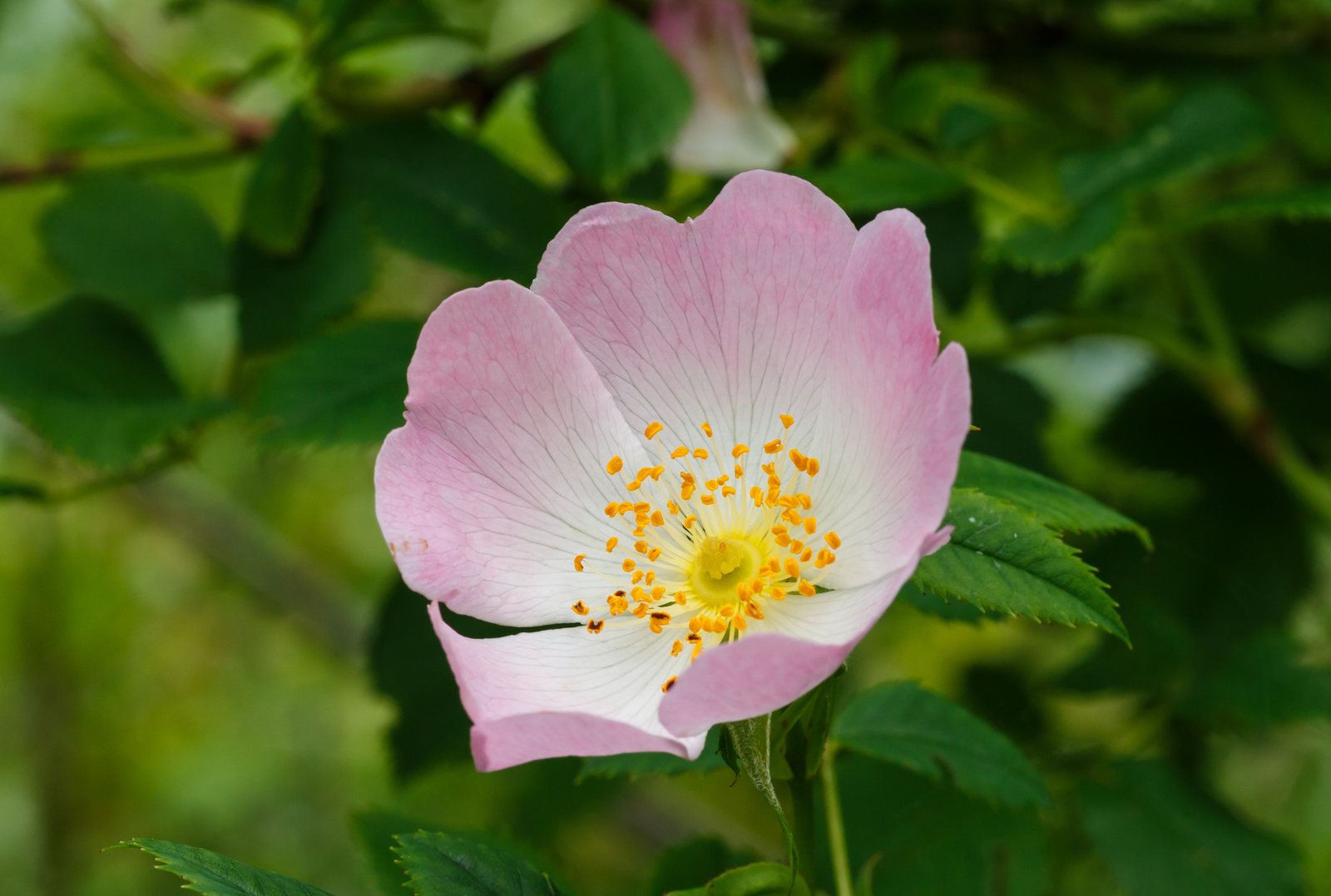
Pink Knock Out is a repeat-flowering shrub rose with single, clear pink flowers and a rounded, bushy habit. Gardeners grow it for a long flowering season and good resistance to black spot, although it is not immune to rose diseases.
At a glance
- Sun
- Full sun, ideally at least 6 hours of direct sunlight daily. Light afternoon shade can help in very hot climates, but too much shade reduces flowering.
- Water
- Water deeply when the soil begins to dry below the surface. Established plants tolerate brief dry spells, but flower best with regular moisture; containers need more frequent watering.
- Soil
- Well-drained loam or improved clay, preferably slightly acidic to neutral. Avoid waterlogged ground.
- Height
- 3-4 ft (0.9-1.2 m), sometimes taller in warm climates
- Spread
- 3-4 ft (0.9-1.2 m)
- Flowers
- Single, clear pink flowers with yellow stamens, produced in repeated flushes from late spring into autumn, often until frost.
- Foliage
- Dark green, divided leaves with toothed leaflets; young growth may be reddish.
- Growth
- Moderate to fast
- Care needed
- Low
The year at a glance
- Pollinators
- Heat tolerant
- Disease resistant
- Low allergen
| J | F | M | A | M | J | J | A | S | O | N | D | |
|---|---|---|---|---|---|---|---|---|---|---|---|---|
| Flowers | ||||||||||||
| Plant |
Northern hemisphere months. In Australia, shift them by six.
- Difficulty
- Easy
- Toughness
- Very tough
Will it suit your garden?
Pick your zone, country, light and whether you have pets.
Full sun is 6 or more hours of direct sun a day, part shade 3 to 6 hours, shade under 3.
How it grows
Planting day
1.6 ft (0.5 m)
After 1 year
2.1 ft (0.64 m)
After 2 years
2.5 ft (0.78 m)
After 3 years
3 ft (0.91 m)
After 5 years
3 ft (1.1 m)
full size
About 4 years to full size.
From a typical nursery size, at an average rate for this kind of plant. A rule of thumb, not a forecast.
Good to know
- Cats and dogs
- Safe
- Growth rate
- Fast
Care
Jobs through the year
- WaterApr–May, Sep–Oct, every 14 days
- Deeply water established shrubs during dry spells; water new shrubs more often.
- WaterJun–Aug, every 7 days
- Soak the root zone during dry weather, keeping foliage dry.
- FeedApr
- Apply balanced rose fertilizer as spring growth starts, following the label.
- MulchMar–Apr
- Spread 5–8 cm of organic mulch over the roots, clear of stems.
- PruneMar
- As buds swell, remove damaged or crossing stems and shorten remaining growth if needed.
- ProtectNov
- In exposed cold sites, mound mulch over the crown after the soil cools.
- Water at soil level during dry weather, soaking the root zone rather than wetting the leaves.
- Apply a balanced rose fertilizer as spring growth begins, following the label; avoid late-season nitrogen feeding in cold climates.
- Spread 2-3 in (5-8 cm) of organic mulch over the roots, keeping it clear of the stems.
- Leave room between shrubs for air circulation and remove fallen diseased leaves.
- In zone 5 and exposed cold sites, protect the crown with mulch after the ground cools in late autumn.
Pruning. In late winter or early spring, as buds begin to swell, remove dead, damaged and crossing stems, then shorten healthy growth by about one-third to one-half if needed. Deadheading is optional because the shrub repeat-flowers without it.
Through the year
- Late winter
- In mild climates, prune before strong new growth starts; delay in colder areas until severe cold has passed.
- Early spring
- Plant container-grown shrubs when the soil is workable, water thoroughly and mulch the root zone.
- Spring
- Feed as new growth develops and check soft shoots for aphids.
- Summer
- Water deeply during dry spells and check leaves and flowers for local rose pests.
- Early autumn
- Stop nitrogen feeding in cold climates and remove diseased fallen leaves.
- Late autumn
- In cold regions, protect the crown with mulch once the soil has cooled; avoid heavy pruning before winter.
In the garden
- Plant in groups along a sunny boundary for a long-flowering, informal hedge.
- Use in mixed borders with catmint, salvia and ornamental grasses to soften its rounded outline.
- Repeat shrubs through foundation beds to provide consistent pink colour without formal clipping.
- Grow in a large, well-drained container beside a sunny patio, allowing space away from its prickly stems.
Garden styles it suits: Cottage garden, Traditional, English country, Romantic rose garden, Low-maintenance and Pollinator garden.
Plant it with: Catmint, Perennial salvia, Hardy geranium, Lavender, Lady's mantle and Feather reed grass.
Wildlife: The open, single flowers provide accessible pollen for bees and other insects. Dense stems can offer shelter, but this cultivated rose is not a substitute for locally native shrubs in wildlife planting.
Problems to watch for
- Black spot: resistance is good but infection can occur, especially in humid weather. Remove affected fallen leaves, water at ground level and improve airflow; use a locally approved rose fungicide only if needed.
- Aphids: colonies gather on tender shoots and buds. Wash them off with water and encourage ladybirds and other predators; use insecticidal soap for persistent infestations, following the label.
- Japanese beetles, where present in North America: adults chew flowers and skeletonize leaves. Hand-pick into soapy water; avoid placing beetle traps beside the roses.
- Rose rosette disease, especially in affected parts of the United States: excessive thorniness, distorted red growth and clustered shoots are warning signs. Have suspicious growth assessed, then remove the entire infected plant, including roots, because there is no cure.
Safety
Not known to be toxic to cats, dogs, horses or people. Leaves, petals and hips are not considered poisonous, although eating plant material may cause mild stomach upset. Prickles can injure skin, eyes or mouths, and garden roses treated with pesticides should not be eaten.
Easily confused with
Pink Double Knock Out rose (Rosa 'Radtkopink')
Its pink flowers have many more petals and a fuller outline; 'Radcon' has open, single flowers with clearly visible stamens.
Blushing Knock Out rose (Rosa 'Radyod')
Its single flowers are much paler blush pink, often fading toward nearly white; 'Radcon' is a stronger pink.
Knock Out rose (Rosa 'Radrazz')
The original Knock Out has cherry-red to deep reddish-pink flowers rather than the clearer pink flowers of 'Radcon'.
The name
Pink Knock Out names the pink-flowered member of the Knock Out rose series, while 'Radcon' is its cultivar denomination.
Propagation. Propagate by softwood or semi-ripe cuttings to retain the cultivar's characteristics; seedlings will not reliably come true. Check local plant breeders' rights before propagating for distribution or sale.
Checked against open data
- Accepted botanical name
- Rosa
Sources: GBIF (CC BY 4.0). The care and design notes are LandscapeGPT's own.
See it in your own yard.
Upload a photo of your yard and see it redesigned with plants that suit your climate, each checked against your zone.