Pink spider flower
Grevillea sericea. Family Proteaceae. Shrub.
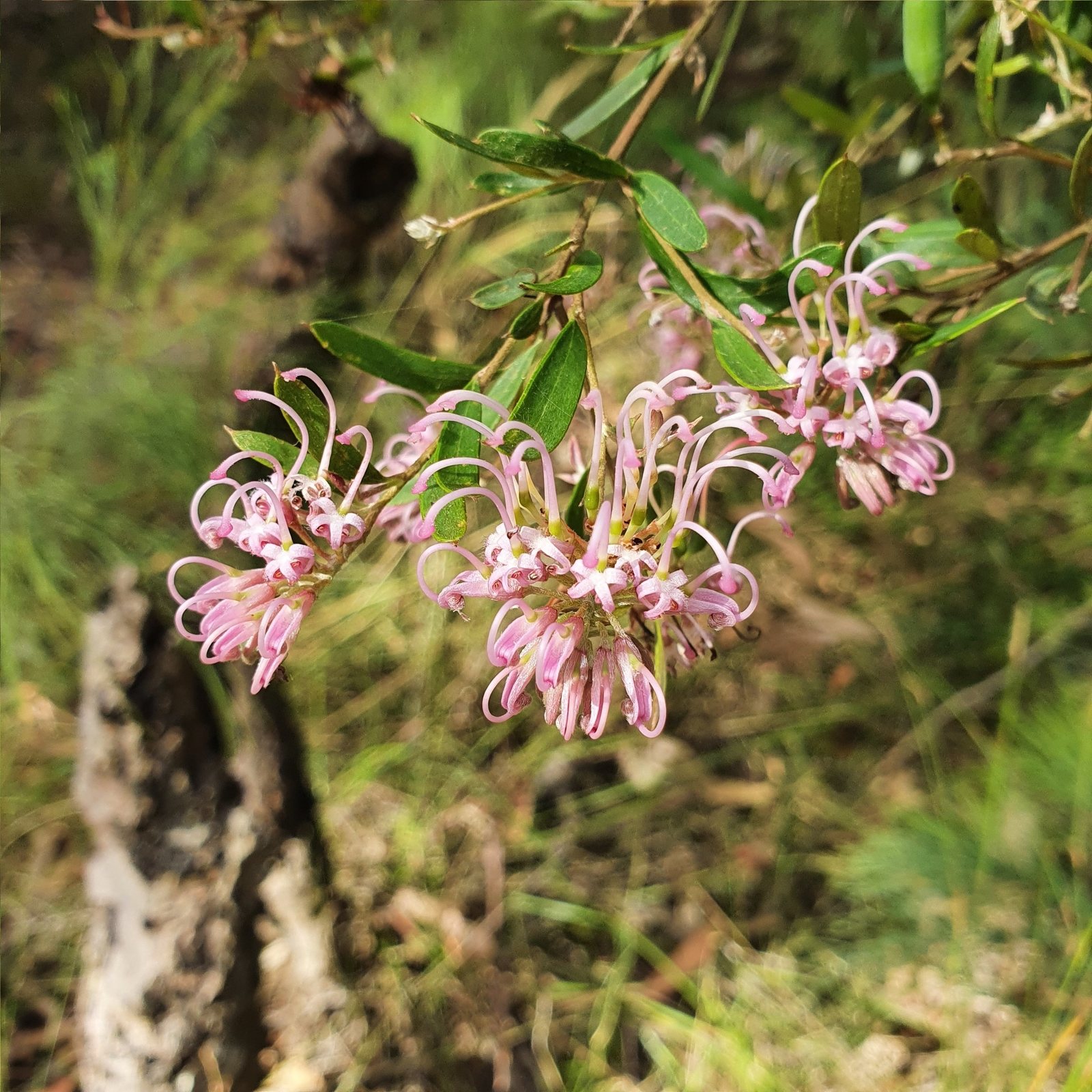
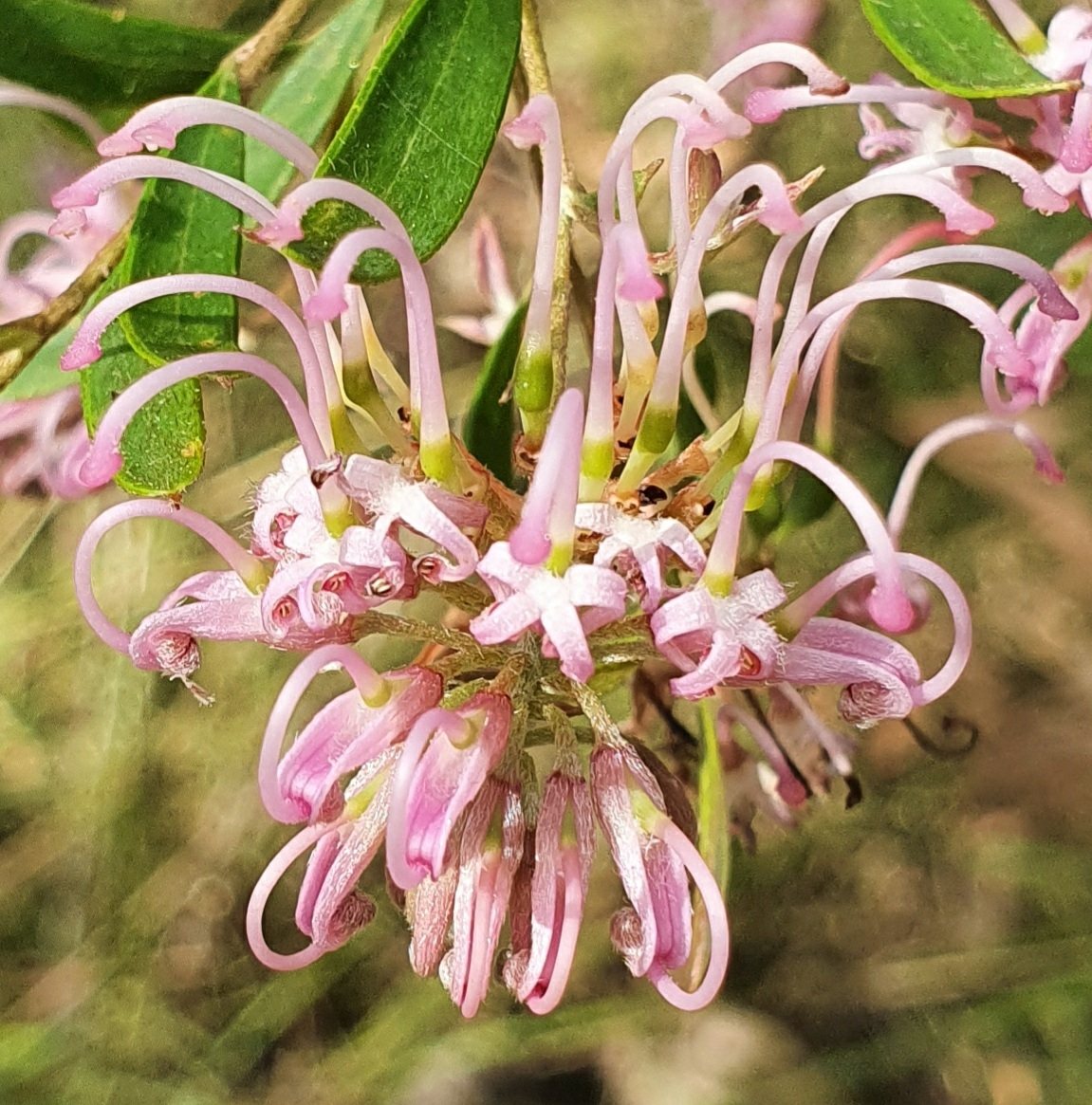
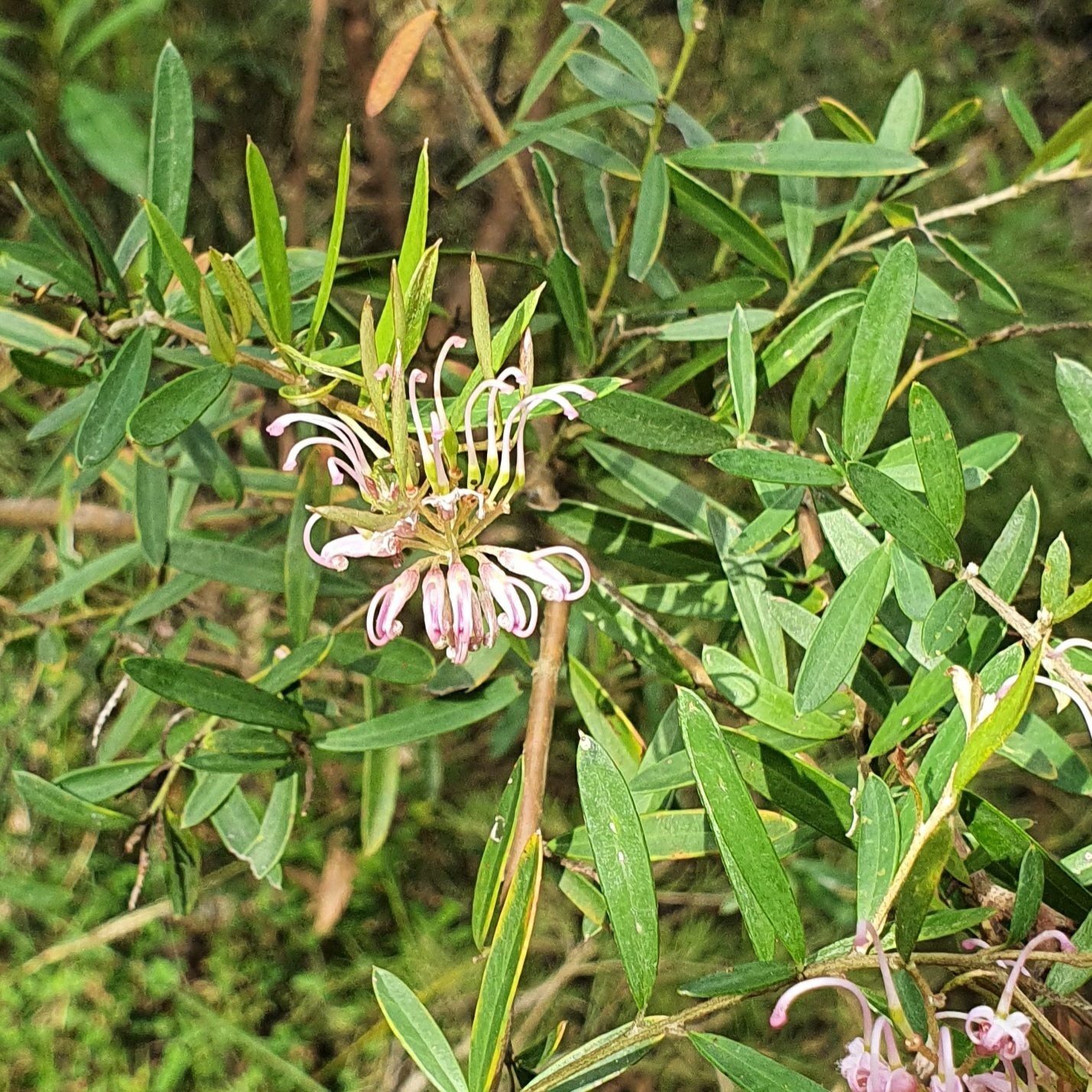
An evergreen shrub from eastern New South Wales, pink spider flower bears clusters of pink flowers with long, curved styles. Gardeners grow it for its long flowering season, fine-textured foliage and nectar for birds; it needs excellent drainage and a mild climate.
At a glance
- Sun
- Full sun to light partial shade; flowering is best with plenty of sun. Shelter from cold, drying winds.
- Water
- Water regularly while establishing, allowing the surface soil to dry between waterings. Once established, water during prolonged dry spells; avoid persistently wet roots.
- Soil
- Well-drained, acidic to neutral sandy or gravelly soil, naturally low in phosphorus. Avoid heavy, waterlogged soil and rich manure.
- Height
- 3-7 ft (0.9-2.1 m)
- Spread
- 3-6 ft (0.9-1.8 m)
- Flowers
- Pink spider-like flower clusters, mainly in winter and spring, with scattered flowers at other times in mild climates.
- Foliage
- Evergreen. Narrow, grey-green to green leaves with silky hairs, particularly on the undersides and young growth.
- Growth
- Moderate
- Care needed
- Low
The year at a glance
- Pollinators
- Drought tolerant
- Heat tolerant
- Wildlife
- Low allergen
| J | F | M | A | M | J | J | A | S | O | N | D | |
|---|---|---|---|---|---|---|---|---|---|---|---|---|
| Flowers | ||||||||||||
| Plant |
Northern hemisphere months. In Australia, shift them by six.
- Difficulty
- Moderate
- Toughness
- Fairly tough
Will it suit your garden?
Pick your zone, country, light and whether you have pets.
Full sun is 6 or more hours of direct sun a day, part shade 3 to 6 hours, shade under 3.
How it grows
Planting day
1.6 ft (0.5 m)
After 1 year
2.3 ft (0.7 m)
After 2 years
3 ft (0.9 m)
After 3 years
4 ft (1.1 m)
After 5 years
5 ft (1.5 m)
full size
About 5 years to full size.
From a typical nursery size, at an average rate for this kind of plant. A rule of thumb, not a forecast.
Good to know
- Cats and dogs
- Safe
- Native to
- Australia
- Growth rate
- Moderate
Care
Jobs through the year
- WaterApr–May, Sep–Oct, every 21 days
- For established ground plants in mild sites, water only if dry; new plants and pots need more.
- WaterJun–Aug, every 14 days
- Water established ground plants deeply during prolonged drought; check containers more often.
- WaterJan–Mar, Nov–Dec, every 14 days
- In frost-free container shelter, water sparingly when the surface dries; never leave pots standing in water.
- FeedApr–May
- Feed only if needed with a low-phosphorus fertiliser suitable for Australian natives.
- MulchMay
- Apply a light coarse-bark or gravel mulch, clear of the stems.
- PruneMay–Jun
- Lightly trim after the main flowering flush without cutting into bare wood.
- ProtectJan–Apr, Oct–Dec
- Grow in a container in zones 6–7 and move to bright, frost-free shelter before frost.
- Plant with the root crown at soil level in freely draining ground; use a broad raised bed if drainage is doubtful.
- Water deeply through the first growing season, then reduce watering as roots establish.
- If feeding is needed, use a low-phosphorus fertiliser labelled for Australian native plants at the recommended rate.
- Apply a light mulch of coarse bark or gravel, keeping it clear of the stems.
- In colder regions, grow in a container with a free-draining mix and move it to a bright, frost-free place for winter.
Pruning. Lightly trim after the main flowering flush to encourage branching and keep the shrub compact. Keep cuts within leafy growth rather than cutting hard into old, bare wood.
Through the year
- Spring
- Plant after damaging frosts have passed, and water thoroughly to settle the roots.
- Late spring
- Lightly prune after the main flowering flush, leaving foliage below each cut.
- Summer
- Check new plants for dry soil and water deeply when needed; avoid frequent shallow watering.
- Late summer
- Take semi-ripe cuttings from healthy, non-flowering shoots.
- Autumn
- Check drainage before wetter weather and move container plants under cover where winter frosts are likely.
- Winter
- Enjoy the flowers in mild areas; keep sheltered container plants bright and only lightly moist.
In the garden
- Use in an Australian native shrub border with plants that share its low-phosphorus soil requirements.
- Plant beside an informal path where the fine foliage and intricate flowers can be seen closely.
- Include in a sunny wildlife garden to provide nectar during the cooler months.
- Grow in a large, well-drained container on a sheltered terrace where winter protection is practical.
Garden styles it suits: Australian native, Wildlife garden, Coastal, Dry gravel garden, Low-maintenance and Small-space.
Plant it with: Coastal rosemary, Waxflower, Small-leaved mint bush, Spiny-headed mat-rush and Kangaroo paw.
Wildlife: Nectar-rich flowers attract honeyeaters in Australia and may attract hummingbirds where grown in suitable parts of North America. Bees and other flower-visiting insects also use the flowers.
Problems to watch for
- Root rot in wet soil: improve drainage before planting, keep mulch away from stems and avoid watering already damp ground.
- Phosphorus injury from unsuitable fertiliser: stop high-phosphorus feeds and use only products suitable for phosphorus-sensitive Australian natives.
- Yellow leaves on alkaline soil: check soil pH and drainage; use an appropriate container mix if the garden soil is strongly alkaline.
- Frost damage to shoots: choose a sheltered site, protect young plants during cold snaps and wait until spring before removing damaged growth.
Safety
Not known to be poisonous to people, cats, dogs or horses, but species-specific ingestion data are limited. Grevillea foliage and sap can cause contact dermatitis in susceptible people; wear gloves if handling causes irritation and do not treat any part as edible.
Easily confused with
Linear-leaf grevillea (Grevillea linearifolia)
Usually has white rather than pink flowers and narrower, more distinctly linear leaves.
Red spider flower (Grevillea speciosa)
Usually has bright red flowers and broader, oval leaves with conspicuously rolled-under edges.
The name
Grevillea honours Charles Francis Greville, a British plant collector, while sericea means silky, referring to the plant's silky hairs.
Propagation. Take semi-ripe cuttings in late summer and root them in a free-draining propagation mix with gentle humidity. Seed propagation is possible, but germination can be slow and uneven.
Checked against open data
- Accepted botanical name
- Grevillea sericea
- Native range
- New South Wales.
- Measured
- Average height 200 cm.
Sources: GBIF (CC BY 4.0) and Trefle (CC BY 4.0). The care and design notes are LandscapeGPT's own.
See it in your own yard.
Upload a photo of your yard and see it redesigned with plants that suit your climate, each checked against your zone.