Pinky Winky hydrangea
Hydrangea paniculata 'DVPpinky'. Family Hydrangeaceae. Shrub.
Also called Hydrangea paniculata 'DVPpinky', Pinky Winky panicle hydrangea.
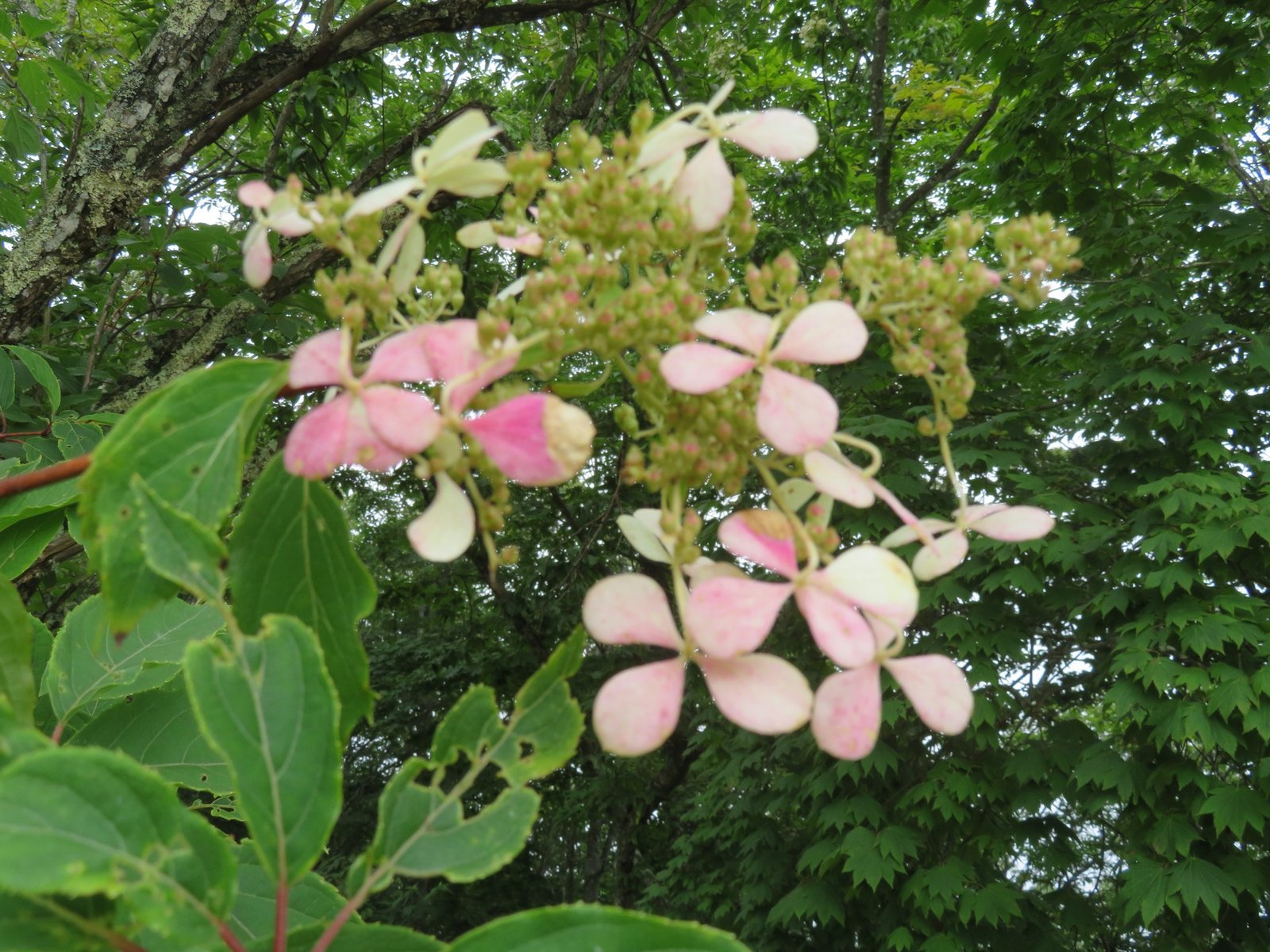
Pinky Winky is a large, deciduous hydrangea with upright stems and pointed flower clusters that open white and gradually turn deep pink from the base upward. Gardeners grow it for its long summer-to-autumn display, often with white tips above pink lower flowers, and its dried winter flower heads.
At a glance
- Sun
- Full sun to partial shade; give it afternoon shade in hot climates. Deep shade reduces flowering.
- Water
- Keep the root zone evenly moist but not waterlogged. Water deeply during dry spells, especially during its first two growing seasons.
- Soil
- Moist, well-drained soil enriched with organic matter; tolerates clay if drainage is adequate. Grows in acidic to moderately alkaline soil, and soil pH does not turn its flowers blue.
- Height
- 6-8 ft (1.8-2.4 m)
- Spread
- 6-8 ft (1.8-2.4 m)
- Flowers
- Mid-summer to autumn; pointed clusters open creamy white, then develop pink to deep rose tones from the base. Colour intensity varies with climate and weather.
- Foliage
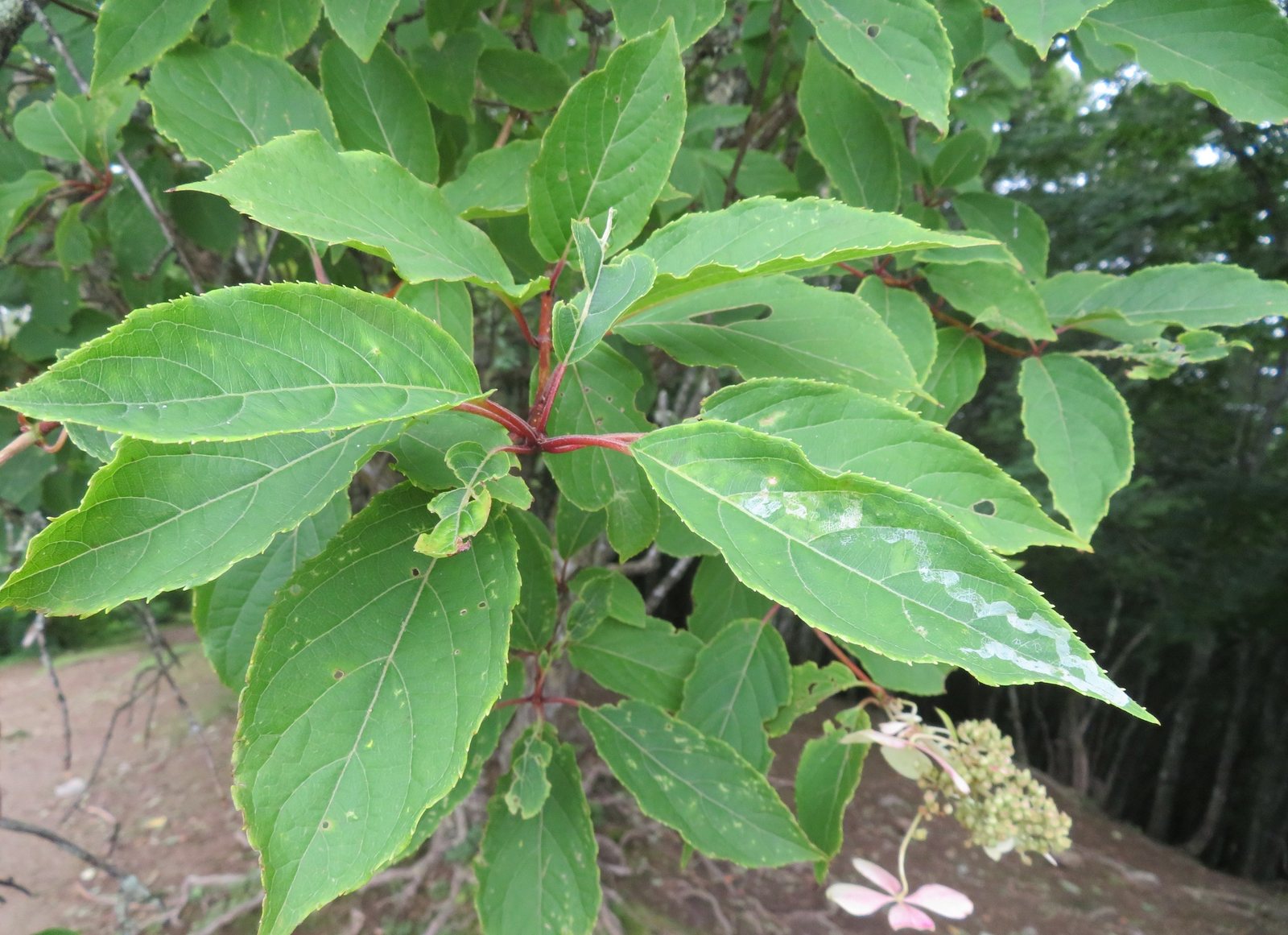
- Oval, pointed, toothed green leaves; autumn colour is usually modest, sometimes yellow.
- Growth
- Moderate to fast once established.
- Care needed
- Low
The year at a glance
- Pollinators
- Cold hardy
- Low allergen
| J | F | M | A | M | J | J | A | S | O | N | D | |
|---|---|---|---|---|---|---|---|---|---|---|---|---|
| Flowers | ||||||||||||
| Fruit | ||||||||||||
| Plant |
Northern hemisphere months. In Australia, shift them by six.
- Difficulty
- Easy
- Toughness
- Fairly tough
Will it suit your garden?
Pick your zone, country, light and whether you have pets.
Full sun is 6 or more hours of direct sun a day, part shade 3 to 6 hours, shade under 3.
How it grows
Planting day
1.6 ft (0.5 m)
After 1 year
3 ft (0.9 m)
After 2 years
4 ft (1.3 m)
After 3 years
6 ft (1.7 m)
After 5 years
7 ft (2.1 m)
full size
About 4 years to full size.
From a typical nursery size, at an average rate for this kind of plant. A rule of thumb, not a forecast.
Good to know
- Cats and dogs
- Toxic
- Growth rate
- Fast
Care
Jobs through the year
- WaterJun–Aug, every 7 days
- Soak established roots when soil begins drying; check more often during the first two growing seasons.
- WaterApr–May, Sep–Oct, every 14 days
- Water established plants deeply during dry spells; skip when rainfall maintains moisture.
- FeedApr
- Apply balanced slow-release shrub fertiliser lightly only if growth is weak.
- MulchMar–Apr
- Spread 5-8 cm of organic mulch, keeping it clear of stems.
- PruneFeb–Mar
- Remove damaged and crossing wood; shorten last year's shoots by about one-third if shaping is needed.
- ProtectNov–Dec
- Remove dried heads where heavy snow regularly bends branches; otherwise leave for winter interest.
- Water deeply when the soil beneath the surface begins to dry; do not rely on brief sprinkling.
- Spread 2-3 in (5-8 cm) of organic mulch over the root zone, keeping it clear of the stems.
- Apply a balanced slow-release shrub fertiliser in spring if growth is weak; avoid heavy nitrogen feeding.
- Allow room for its mature width rather than repeatedly cutting it back to fit a narrow bed.
- In hot, dry locations, protect it from strong afternoon sun and drying winds.
Pruning. In late winter or early spring, remove dead, damaged and crossing stems, then shorten last year's shoots by about one-third if shaping is needed. It flowers on new growth; avoid severe annual cutting, which can produce oversized flower heads on weaker shoots.
Through the year
- Late winter
- Remove damaged or crossing stems and lightly shorten shoots before new growth starts.
- Spring
- Plant while conditions are cool, water thoroughly and mulch the root zone.
- Spring
- Feed lightly if needed, following the fertiliser label.
- Summer
- Check soil moisture during dry weather and water deeply before prolonged wilting develops.
- Late summer
- Enjoy the white-to-pink flower display; cut a few mature heads for indoor drying if wanted.
- Autumn
- Leave sound flower heads for winter structure, or remove them where heavy snow regularly bends the branches.
In the garden
- Plant as a specimen in a lawn or broad border where its full outline can develop.
- Repeat along a boundary as an informal flowering hedge, allowing space between plants for their mature spread.
- Place behind catmint, hardy geraniums or coneflowers for contrasting flower shapes and a long seasonal display.
- Combine with ornamental grasses for pink flower heads above fine-textured autumn foliage.
- Use near a terrace or seating area where the changing flower colours and dried winter heads are easy to see.
Garden styles it suits: English country, Cottage garden, Traditional, Modern rustic, Autumn colour and Winter interest.
Plant it with: Catmint, Hardy geranium, Purple coneflower, Feather reed grass, Japanese anemone and Hosta.
Wildlife: The small fertile flowers among the showy sterile florets can attract bees and other insects. It is not a native shrub in the United States, United Kingdom, Canada or Australia, and deer may browse it.
Problems to watch for
- Wilting or scorched leaf edges: check soil moisture, water deeply and mulch; provide afternoon shade in hot sites.
- Poor flowering: move out of deep shade, avoid excess nitrogen and do not prune after spring shoots have developed.
- Powdery mildew or leaf spots: improve air circulation, water at soil level and clear fallen affected leaves.
- Aphids on young shoots: wash off small colonies with water and encourage natural predators; use insecticidal soap if infestation persists.
Safety
Toxic if eaten by cats, dogs, horses or people. All parts contain cyanogenic compounds, with leaves and flower buds a particular concern; ingestion usually causes digestive upset, but large amounts can be more serious. Seek veterinary or medical advice after significant ingestion.
Easily confused with
Limelight hydrangea (Hydrangea paniculata 'Limelight')
Its flower heads have a conspicuous lime-green stage before becoming cream and later pink; Pinky Winky opens creamy white and often shows a strong pink base beneath a white tip.
Vanille Fraise hydrangea (Hydrangea paniculata 'Renhy')
Also changes from white to pink, but usually has fuller, denser flower heads and more arching stems. Pinky Winky generally has more open, sharply pointed panicles on upright stems; check the label when plants are young.
Annabelle hydrangea (Hydrangea arborescens 'Annabelle')
Has rounded, ball-shaped white flower heads rather than pointed panicles, and its flowers age greenish or tan rather than developing Pinky Winky's deep pink base.
The name
Hydrangea comes from Greek words meaning water vessel, referring to the seed capsules, while paniculata describes the branched flower clusters.
Propagation. Take softwood cuttings in late spring or early summer, or layer a low branch. Seedlings will not reliably retain the cultivar's characteristics; check local plant breeders' rights before propagating for distribution or sale.
Checked against open data
- Accepted botanical name
- Hydrangea paniculata
- In the US and Canada
- Introduced in Canada and the lower 48 states.
- Native range
- China North-Central, China South-Central, China Southeast, Japan, Kuril Is., Sakhalin and Taiwan.
- Measured
- Average height 580 cm.
Sources: GBIF (CC BY 4.0), USDA PLANTS and Trefle (CC BY 4.0). The care and design notes are LandscapeGPT's own.
See it in your own yard.
Upload a photo of your yard and see it redesigned with plants that suit your climate, each checked against your zone.