Pohutukawa
Metrosideros excelsa. Family Myrtaceae. Tree.
Also called Pōhutukawa, New Zealand Christmas tree.
A large evergreen tree from coastal New Zealand, grown for its spreading crown, leathery leaves and summer flowers made up of bright red stamens. It tolerates salt spray and coastal wind, but needs ample space and a mild climate; in most of the UK and Canada, it needs frost-free shelter.
At a glance
- Sun
- Full sun; tolerates light shade but flowers less freely.
- Water
- Water regularly while establishing; established trees tolerate dry spells. Avoid persistently wet soil.
- Soil
- Well-drained sandy, loamy or rocky soil; tolerates coastal soils and a fairly wide pH range.
- Height
- 30-65 ft (9-20 m)
- Spread
- 30-65 ft (9-20 m)
- Flowers
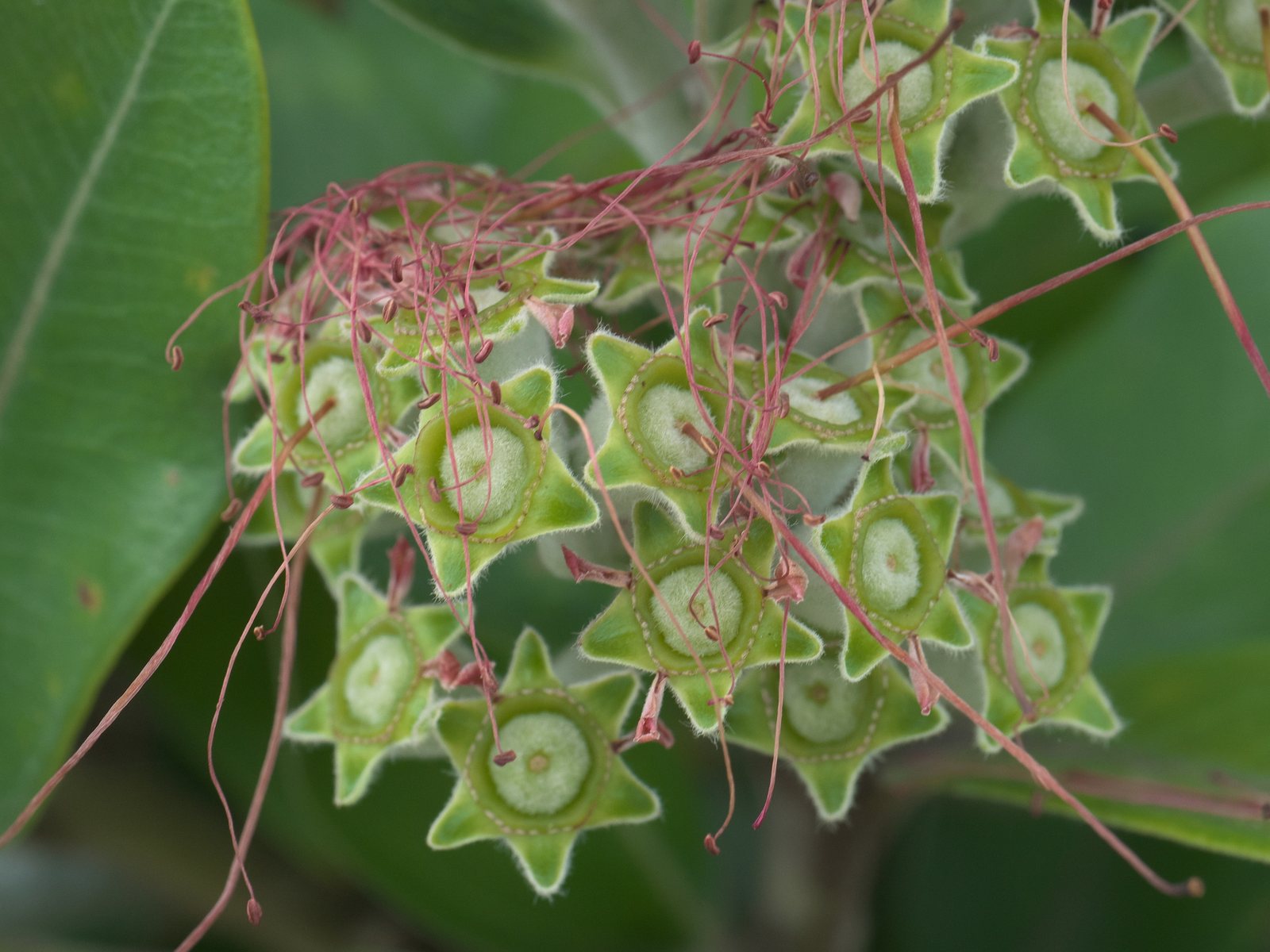
- Early to midsummer, usually June-July in the Northern Hemisphere and December-January in the Southern Hemisphere; dense clusters of scarlet-red stamens.
- Foliage
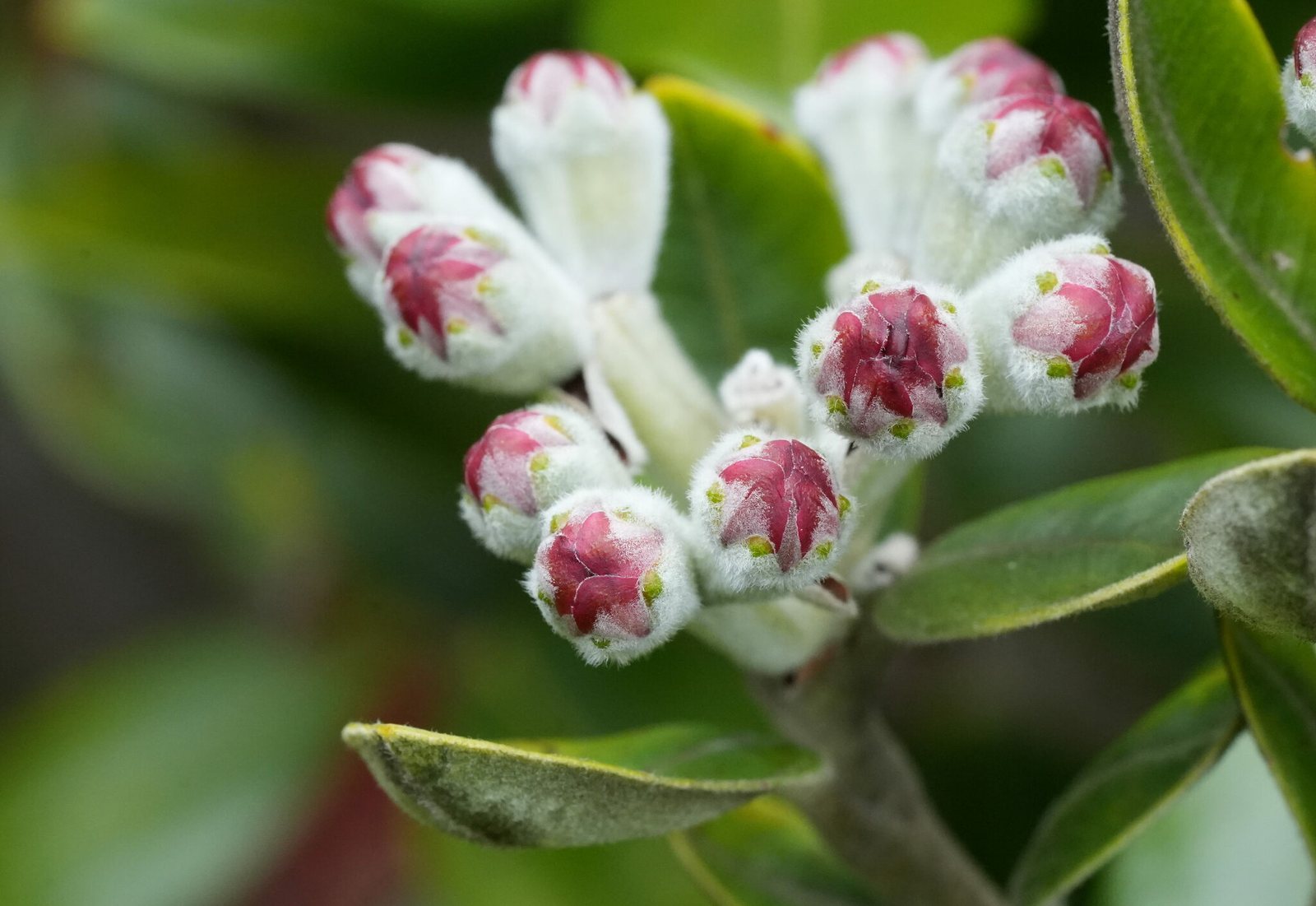
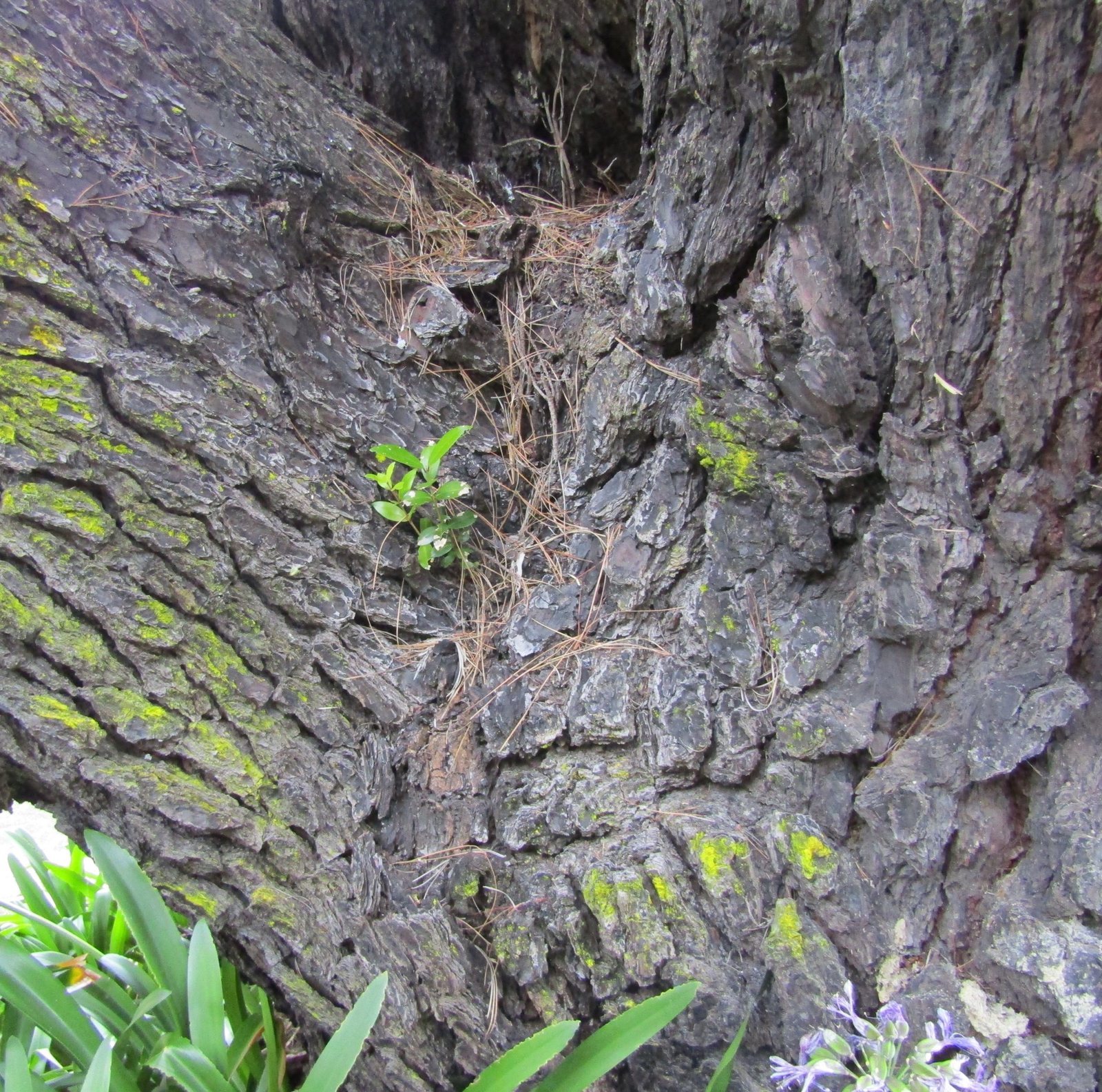
- Evergreen. Thick, oval, dark green leaves with densely felted, silvery-white undersides; older trees develop gnarled branches and sometimes hanging aerial roots.
- Growth
- Moderate; faster in warm conditions with adequate moisture.
- Care needed
- Medium
The year at a glance
- Pollinators
- Drought tolerant
- Heat tolerant
- Wildlife
- Low allergen
| J | F | M | A | M | J | J | A | S | O | N | D | |
|---|---|---|---|---|---|---|---|---|---|---|---|---|
| Flowers | ||||||||||||
| Plant |
Northern hemisphere months. In Australia, shift them by six.
- Difficulty
- Hard
- Toughness
- Fairly tough
Will it suit your garden?
Pick your zone, country, light and whether you have pets.
Full sun is 6 or more hours of direct sun a day, part shade 3 to 6 hours, shade under 3.
How it grows
Planting day
7 ft (2 m)
After 1 year
9 ft (2.8 m)
After 2 years
12 ft (3.6 m)
After 3 years
14 ft (4.3 m)
After 5 years
19 ft (5.9 m)
About 16 years to full size.
From a typical nursery size, at an average rate for this kind of plant. A rule of thumb, not a forecast.
Good to know
- Cats and dogs
- Safe
- Invasive in
- Australia
- Growth rate
- Fast
Care
Jobs through the year
- WaterApr–May, Sep–Oct, every 21 days
- Water established ground plants only when soil is dry; young trees and containers need more frequent watering.
- WaterJun–Aug, every 14 days
- Deep-water established ground plants during prolonged dry spells; water regularly through the first two growing seasons.
- WaterJan–Mar, Nov–Dec, every 21 days
- Check sheltered pots and water only enough to keep the root ball slightly moist.
- FeedApr–May
- Feed lightly only if growth is poor; avoid high-nitrogen feeding.
- MulchMay
- Spread 5–8 cm of organic mulch over the roots, keeping it clear of the trunk.
- PruneJul–Aug
- After flowering, remove small damaged or poorly placed branches; never top the crown.
- ProtectJan–Apr, Oct–Dec
- Cannot overwinter outdoors in zones 6–7; keep container plants in spacious, bright, frost-free shelter.
- Plant in spring after frost risk has passed, allowing room for a broad crown and extensive roots away from drains, paving and buildings.
- Water deeply during dry weather for the first two growing seasons; let the soil surface dry between waterings.
- Apply a 2-3 in (5-8 cm) mulch over the root area, keeping it clear of the trunk.
- Feed lightly in spring only if growth is poor; avoid heavy nitrogen feeding.
- Protect young trees from frost; move container plants into bright, frost-free shelter before freezing weather.
Pruning. Prune lightly just after flowering to remove dead, damaged or poorly placed branches and establish a sound framework while young. Avoid topping or repeatedly cutting back a mature crown; use a qualified arborist for large limbs.
Through the year
- Spring
- Plant after frost risk has passed, refresh mulch and check young trees for frost damage.
- Late spring
- Check soil moisture around newly planted trees and begin deep watering during dry spells.
- Summer
- Enjoy flowering and water establishing trees during prolonged dry weather.
- Late summer
- After flowering, carry out light formative pruning if needed.
- Autumn
- Reduce watering as growth slows and prepare frost protection for young or container-grown plants.
- Winter
- Keep sheltered container plants bright and only slightly moist; check outdoor trees after storms.
In the garden
- Use as a specimen shade tree in a large, frost-mild coastal garden.
- Plant as an informal coastal screen or windbreak where its eventual width can be accommodated.
- Underplant with New Zealand flax, lomandra and agapanthus for contrasting leaf shapes.
- Use a young container-grown tree on a sunny terrace, with provision for winter shelter and eventual larger accommodation.
Garden styles it suits: Coastal, Mediterranean, Architectural minimal, Wildlife garden, Modern tropical and Luxury resort.
Plant it with: New Zealand flax, Cabbage tree, Lomandra, Agapanthus and Rosemary.
Wildlife: Nectar-rich flowers attract bees and nectar-feeding birds. The dense evergreen crown provides shelter and potential nesting sites.
Problems to watch for
- Frost can scorch foliage and kill young shoots: choose a sheltered, mild site and protect young plants during cold spells.
- Waterlogged soil can cause root rot and decline: improve drainage before planting and avoid frequent shallow watering.
- Scale insects can cause sticky honeydew and sooty mould: inspect stems and leaf undersides, and treat small infestations with a labelled horticultural oil.
- Myrtle rust can damage soft new growth in affected regions: avoid moving suspect plants, follow local reporting advice and seek locally approved treatment.
Safety
Not known to be toxic to people, cats, dogs or horses. Species-specific information, especially for horses, is limited; it is not an edible plant, and chewing leaves or bark may cause stomach upset.
Where it spreads. Can spread into native coastal vegetation in parts of southwestern Western Australia and South Africa's Cape region, where it is treated as invasive. Check local planting restrictions and remove unwanted seedlings.
Easily confused with
Northern rata (Metrosideros robusta)
Adult leaves are generally smaller, often notched at the tip, and lack the thick white felt covering the undersides of pohutukawa leaves.
Kermadec pohutukawa (Metrosideros kermadecensis)
Usually has smaller, rounder leaves and flowers intermittently over a longer season rather than producing one main summer display.
Southern rata (Metrosideros umbellata)
Has narrower, pointed leaves with green rather than densely white-felted undersides.
The name
Pōhutukawa is its Māori name, while Metrosideros refers to the hard, iron-like heartwood and excelsa means tall or lofty.
Propagation. Sow fresh, fine seed on the surface of a well-drained seed compost and keep warm and moist without waterlogging. Semi-ripe cuttings can be taken in summer; named cultivars need vegetative propagation to retain their characteristics.
Checked against open data
- Accepted botanical name
- Metrosideros excelsa
- Native range
- New Zealand North.
Sources: GBIF (CC BY 4.0) and Trefle (CC BY 4.0). The care and design notes are LandscapeGPT's own.
See it in your own yard.
Upload a photo of your yard and see it redesigned with plants that suit your climate, each checked against your zone.