Polyanthus
Primula × polyantha. Family Primulaceae. Perennial.
Also called Polyanthus primrose, Garden polyanthus.
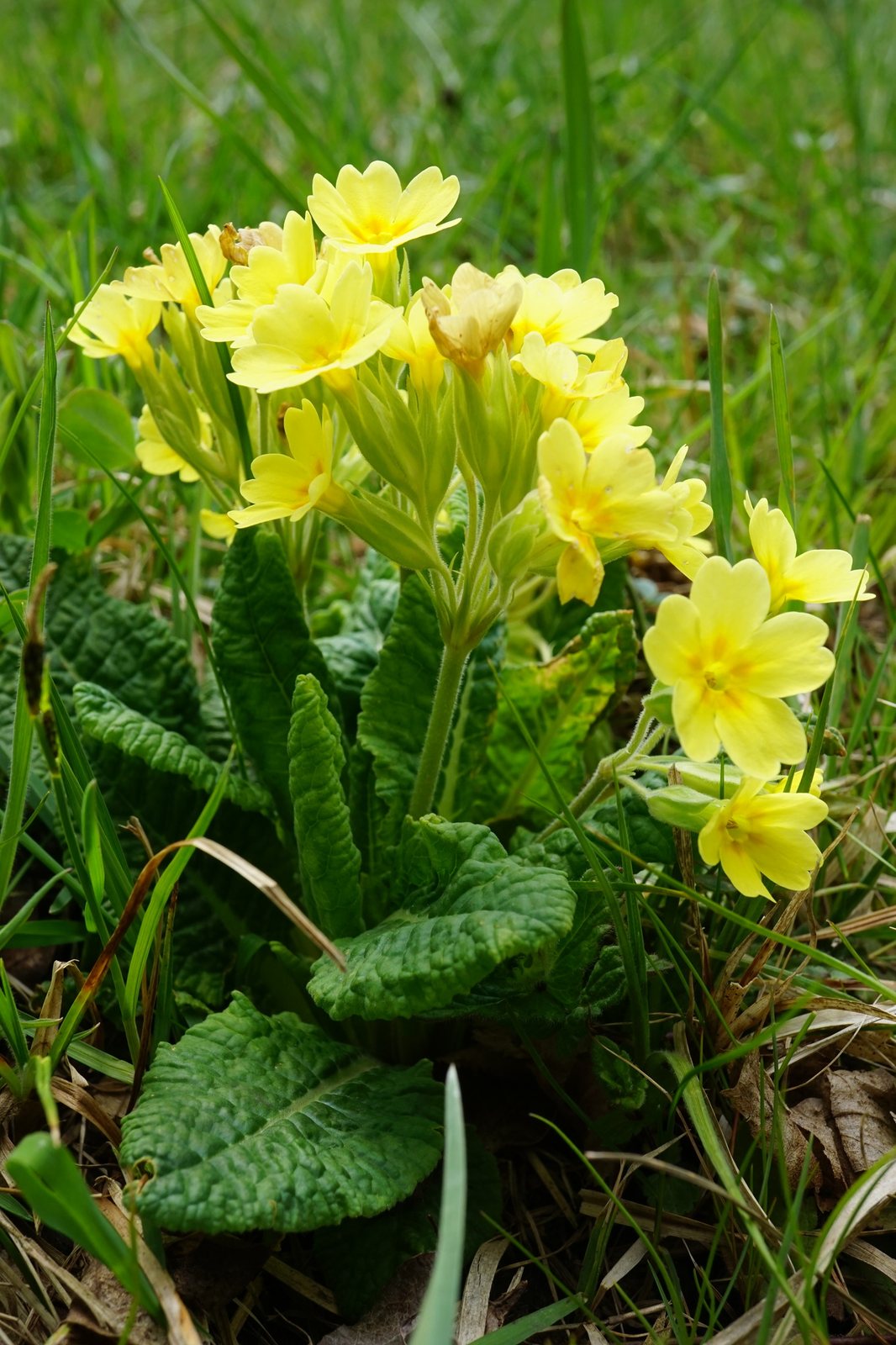
Polyanthus is a short-lived perennial with clusters of colourful flowers held above rosettes of crinkled leaves. Gardeners grow it for late-winter and spring colour in borders, pots and window boxes. It lasts best in cool, moist conditions and is often treated as seasonal bedding where summers are hot.
At a glance
- Sun
- Partial shade, especially afternoon shade; tolerates full sun in cool climates if the soil stays moist.
- Water
- Keep the root zone evenly moist but not waterlogged; check pots frequently during flowering and dry weather.
- Soil
- Humus-rich, moisture-retentive soil with good drainage; slightly acidic to neutral soil is ideal.
- Height
- 0.5-1 ft (0.15-0.3 m)
- Spread
- 0.5-1 ft (0.15-0.3 m)
- Flowers
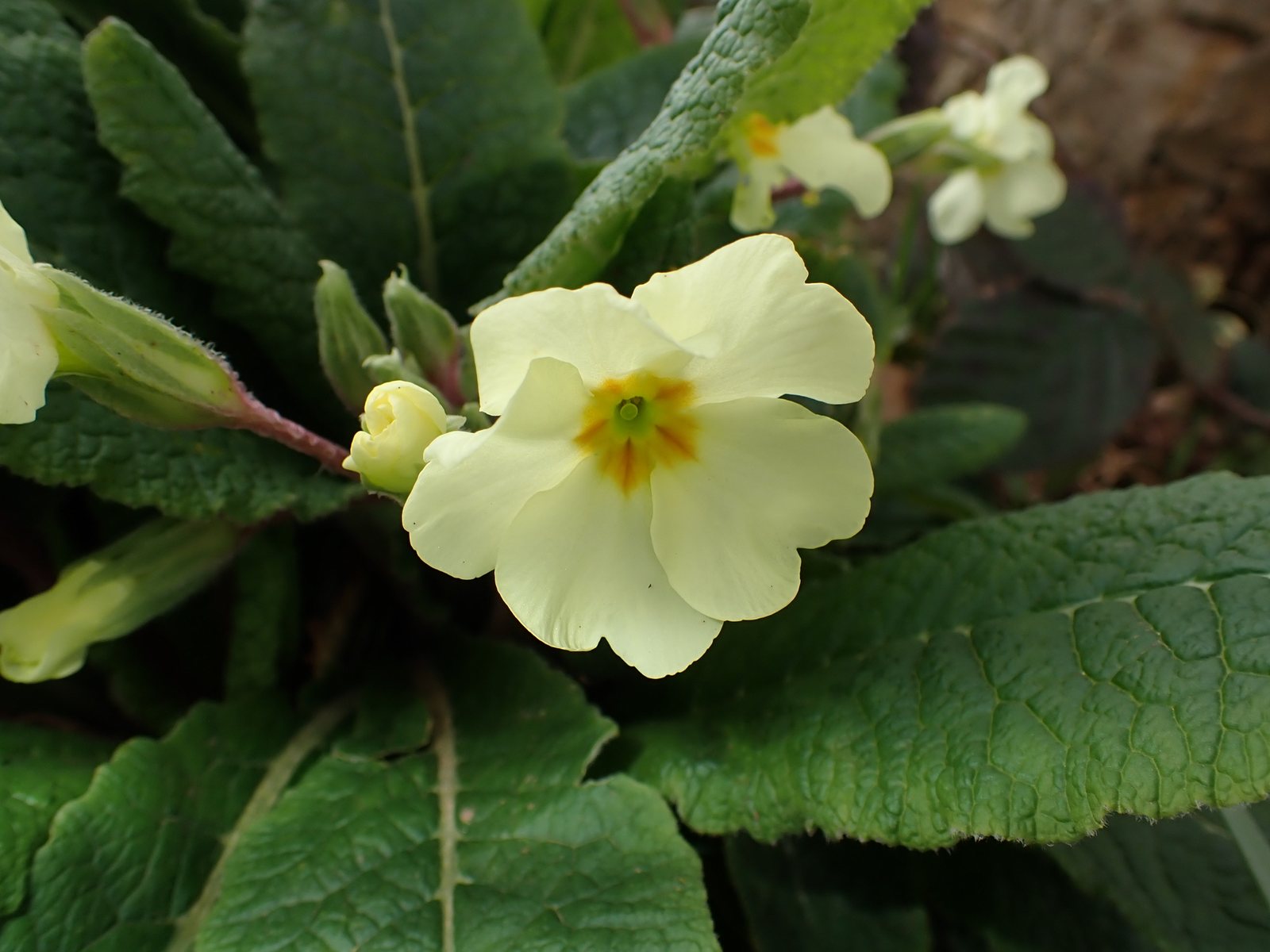
- Late winter to spring, depending on climate and cultivar; yellow, white, pink, red, orange, blue or purple, often with contrasting eyes.
- Foliage
- Evergreen. Wrinkled green leaves form a low basal rosette; foliage may decline in summer heat or severe winter cold.
- Growth
- Moderate; young plants can reach flowering size within one growing season.
- Care needed
- Medium
The year at a glance
- Pollinators
- Low allergen
| J | F | M | A | M | J | J | A | S | O | N | D | |
|---|---|---|---|---|---|---|---|---|---|---|---|---|
| Flowers | ||||||||||||
| Plant |
Northern hemisphere months. In Australia, shift them by six.
- Difficulty
- Moderate
- Toughness
- Needs looking after
Will it suit your garden?
Pick your zone, country, light and whether you have pets.
Full sun is 6 or more hours of direct sun a day, part shade 3 to 6 hours, shade under 3.
How it grows
Planting day
0.7 ft (0.22 m)
full size
About 3 years to full size.
From a typical nursery size, at an average rate for this kind of plant. A rule of thumb, not a forecast.
Good to know
- Cats and dogs
- Toxic
- Growth rate
- Moderate
Care
Jobs through the year
- WaterMar–May, Sep–Oct, every 7 days
- Check established plants and water if the surface is drying; young plants need more frequent checks.
- WaterJun–Aug, every 3 days
- Check soil moisture and water as needed to keep roots evenly moist, never saturated.
- FeedMar
- Apply a light balanced feed as spring growth starts.
- MulchMar, Oct
- Apply a thin layer of leaf mould or compost, keeping crowns exposed.
- DeadheadFeb–May, every 7 days
- Remove faded flower stems at their bases.
- DivideMay–Jun
- Divide crowded clumps after flowering every two or three years.
- PruneFeb–Mar
- Remove dead or damaged leaves without cutting healthy foliage.
- ProtectJun–Aug
- Provide afternoon shade during hot weather.
- Water at soil level when the surface starts to dry; do not let flowering pots dry out completely.
- Mix compost into the planting area and keep the crown level with the soil surface.
- Apply a balanced fertiliser at the label rate as spring growth begins; avoid heavy feeding.
- Mulch lightly with leaf mould or compost, keeping it away from the crown.
- Divide crowded clumps after flowering, usually every two or three years.
Pruning. Remove spent flower stems at their base to keep plants tidy and limit seed production. Remove dead or damaged leaves as needed, but leave healthy foliage intact.
Through the year
- Late winter
- Clear dead leaves from established plants and check for slugs around emerging flower buds.
- Spring
- Plant hardened-off specimens in moist, well-drained soil and water them in thoroughly.
- Spring
- Feed lightly as growth starts and remove faded flower stems throughout flowering.
- Late spring
- Divide crowded clumps after flowering and keep divisions moist while they establish.
- Summer
- Provide afternoon shade and water during dry spells; avoid keeping heat-stressed plants waterlogged.
- Autumn
- Plant in mild-winter areas and add a thin mulch around established clumps without covering their crowns.
In the garden
- Edge a partly shaded path with repeated groups for a low ribbon of spring colour.
- Plant beneath deciduous shrubs, where spring light gives way to summer shade.
- Combine with small daffodils and grape hyacinths in spring pots or window boxes.
- Use restrained colour groups beside ferns and hellebores in a woodland-style border.
Garden styles it suits: Cottage garden, English country, Traditional, Woodland, Small-space and Blues and silvers.
Plant it with: Snowdrops, Dwarf daffodils, Grape hyacinths, Hellebores, Ferns and Forget-me-nots.
Wildlife: Open, single flowers can provide early nectar and pollen for visiting insects. Double flowers are generally less accessible.
Problems to watch for
- Slugs and snails chew leaves and buds: remove hiding places, hand-pick after dark or use a labelled iron-phosphate bait.
- Vine weevil larvae eat roots, especially in pots: inspect failing plants and use suitable biological nematodes when soil temperatures permit.
- Crown and root rot develop in saturated soil: improve drainage, keep crowns exposed and discard badly rotted plants.
- Summer heat and drought cause wilting and decline: provide afternoon shade, maintain even moisture and accept that some bedding strains are short-lived.
Safety
Primulas are considered toxic to cats and dogs if eaten, usually causing vomiting or other stomach upset; keep leaves and flowers out of reach. In people, ingestion may cause stomach upset, and contact with leaves or sap can irritate sensitive skin. Serious poisoning is uncommon. Toxicity to horses is not well documented.
Easily confused with
Common primrose (Primula vulgaris)
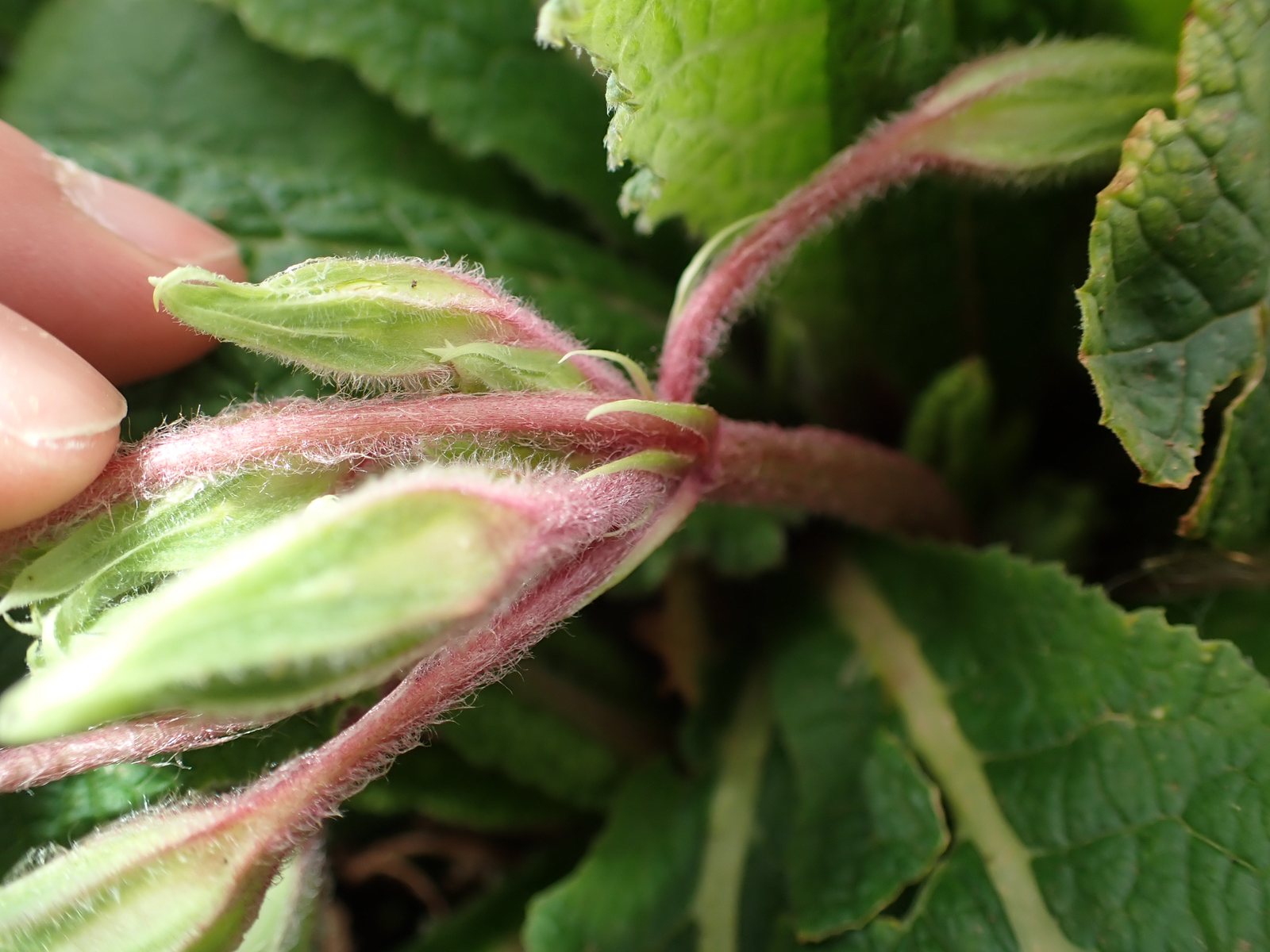
Typically carries individual flowers on separate short stalks arising from the leaf rosette, rather than a cluster on one raised stem.
Cowslip (Primula veris)
Has clusters of small, nodding, usually yellow flowers with orange markings and noticeably inflated calyces; polyanthus flowers are generally larger and more outward-facing.
Florist's primrose (Primula obconica)
Has broader, rounder leaves and loose clusters of flowers on tall stems; it is frost-tender and is usually grown indoors or as protected seasonal bedding.
The name
Primula comes from the Latin for 'first', referring to early flowering, while polyantha comes from Greek words meaning 'many-flowered'.
Propagation. Divide healthy clumps after flowering to preserve their flower colour and form. Seed-grown plants may differ from their parents; sow fresh seed on the surface of seed compost and keep it cool and moist, following the seed supplier's temperature guidance.
Checked against open data
- Accepted botanical name
- Primula polyantha
Sources: GBIF (CC BY 4.0). The care and design notes are LandscapeGPT's own.
See it in your own yard.
Upload a photo of your yard and see it redesigned with plants that suit your climate, each checked against your zone.