Poorinda Royal Mantle grevillea
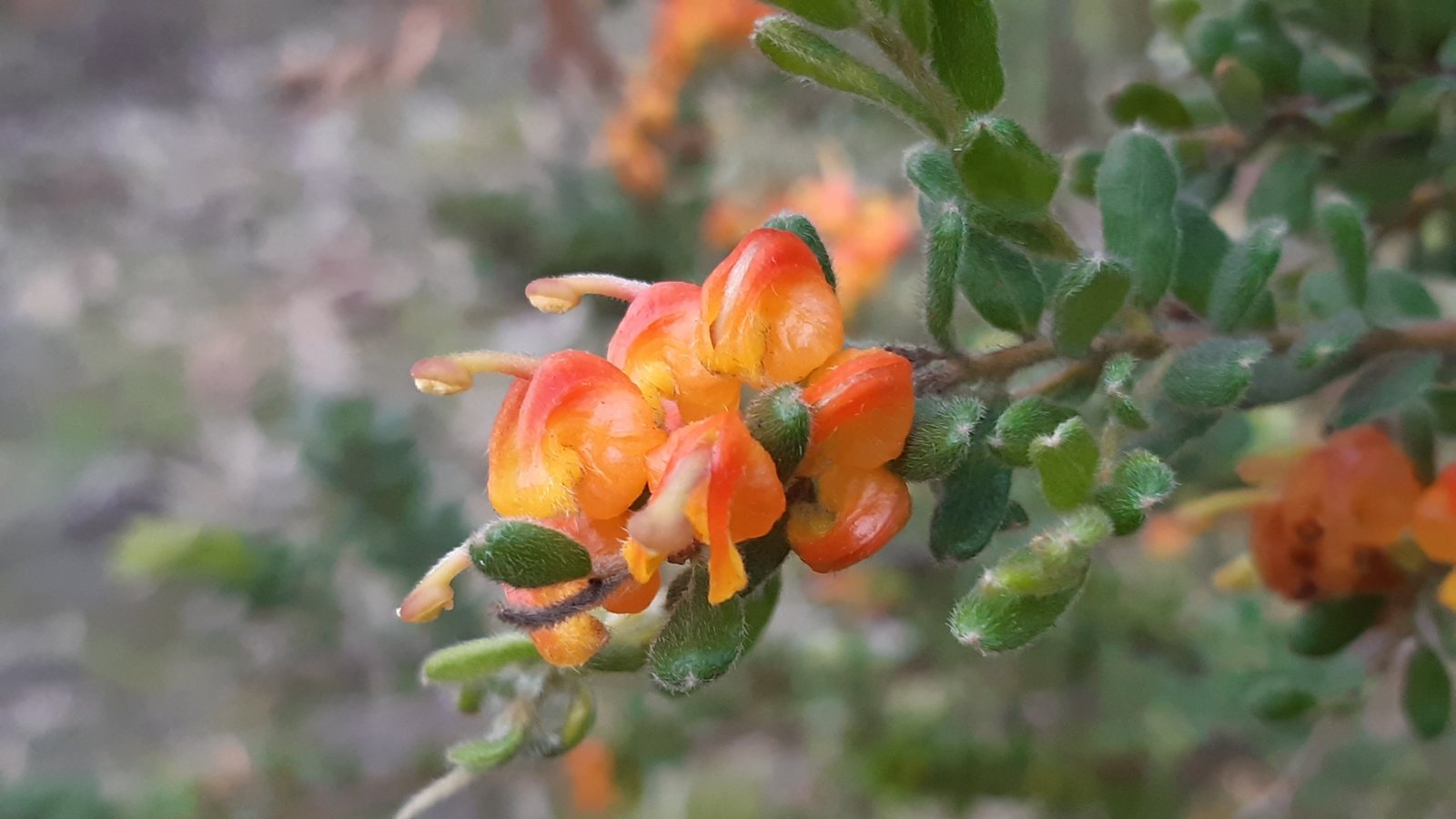
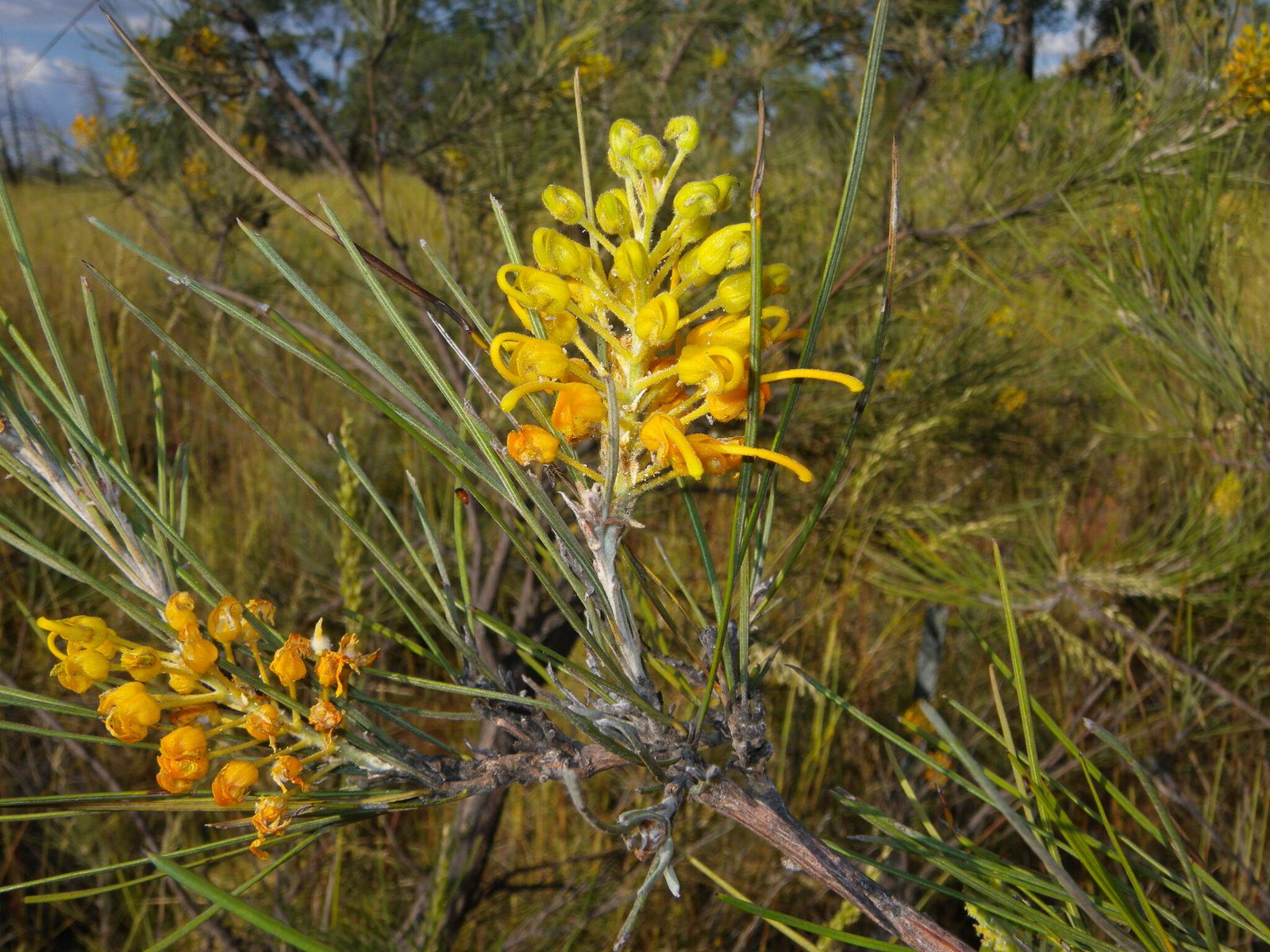
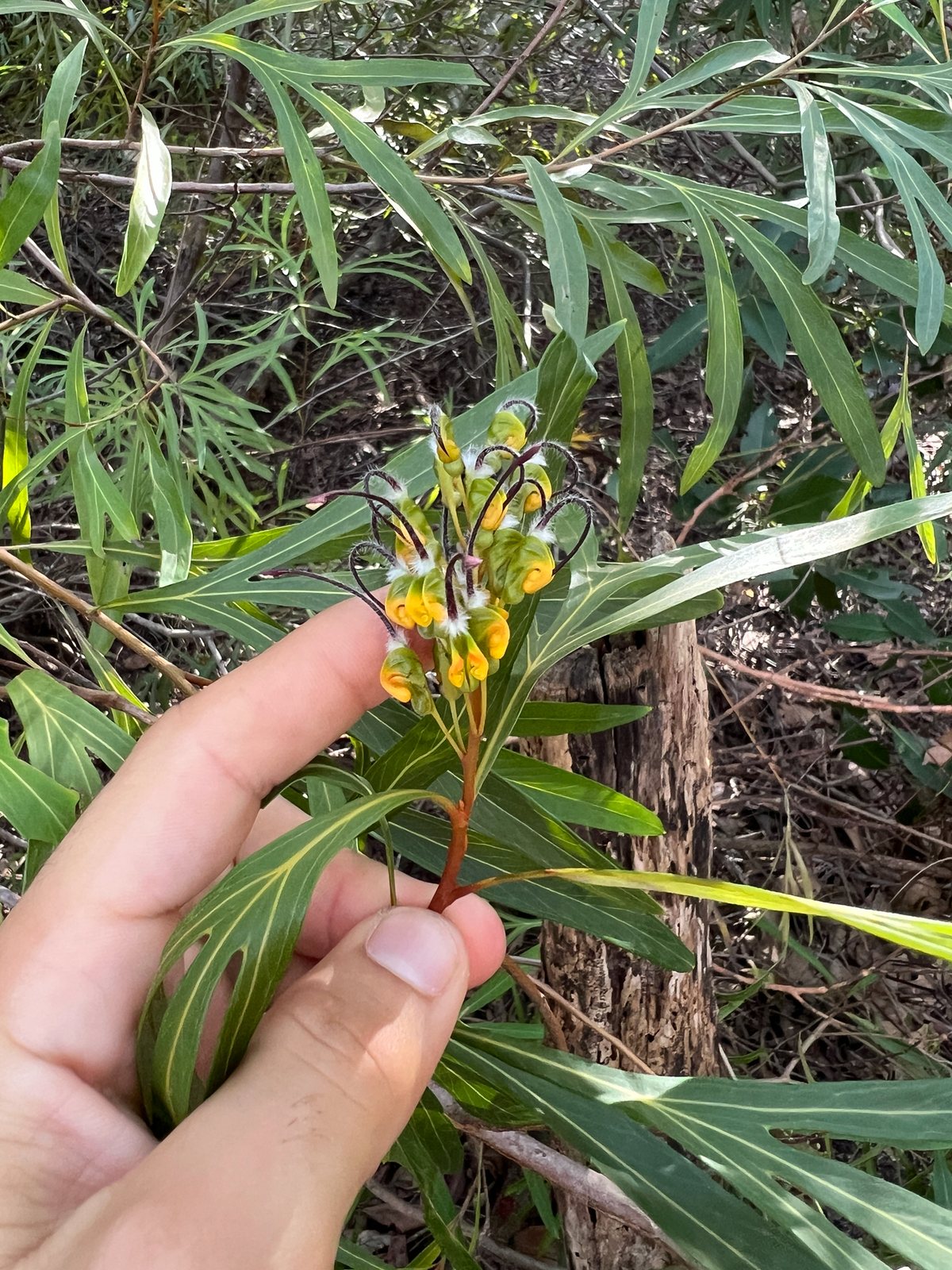
Grevillea 'Poorinda Royal Mantle'. Family Proteaceae. Groundcover.
Also called Royal Mantle grevillea.
Grevillea 'Poorinda Royal Mantle' is a vigorous, evergreen Australian groundcover with spreading branches, bronze-red new growth and red toothbrush-shaped flowers. Gardeners grow it to cover sunny banks, soften retaining walls and provide nectar for birds. It needs excellent drainage and a mild climate; it is not reliably hardy through most British or Canadian winters.
At a glance
- Sun
- Full sun to light partial shade; flowers most freely in full sun.
- Water
- Water regularly while establishing, then deeply during prolonged dry spells. Let the soil drain and begin drying between waterings.
- Soil
- Well-drained sandy or loamy soil, preferably slightly acidic to neutral. Avoid waterlogged ground, heavily enriched beds and high-phosphorus fertilizers.
- Height
- 6-12 in (0.15-0.3 m)
- Spread
- 10-20 ft (3-6 m)
- Flowers
- Red toothbrush-shaped flower clusters, mainly in winter and spring, with scattered flowers at other times in mild climates.
- Foliage
- Evergreen. Leathery green leaves, variable from mostly entire to lobed, with conspicuous bronze-red young growth.
- Growth
- Fast once established.
- Care needed
- Low
The year at a glance
- Pollinators
- Drought tolerant
- Heat tolerant
- Wildlife
- Low allergen
| J | F | M | A | M | J | J | A | S | O | N | D | |
|---|---|---|---|---|---|---|---|---|---|---|---|---|
| Flowers | ||||||||||||
| Plant |
Northern hemisphere months. In Australia, shift them by six.
- Difficulty
- Hard
- Toughness
- Fairly tough
Will it suit your garden?
Pick your zone, country, light and whether you have pets.
Full sun is 6 or more hours of direct sun a day, part shade 3 to 6 hours, shade under 3.
How it grows
Planting day
0.2 ft (0.06 m)
After 1 year
0.5 ft (0.16 m)
After 2 years
0.7 ft (0.22 m)
full size
About 2 years to full size.
From a typical nursery size, at an average rate for this kind of plant. A rule of thumb, not a forecast.
Good to know
- Cats and dogs
- Safe
- Growth rate
- Fast
Care
Jobs through the year
- WaterApr–May, Sep–Oct, every 14 days
- Locally grow in a movable container; water only when the root zone begins drying.
- WaterJun–Aug, every 7 days
- Water containers deeply once the root zone starts drying; young plants may need more frequent checks.
- WaterJan–Mar, Nov–Dec, every 21 days
- Under bright frost-free cover, water only as the root zone dries; never leave it saturated.
- FeedApr
- Feed sparingly with a low-phosphorus fertilizer specifically suitable for grevilleas.
- PruneMay–Jun
- After the main flowering flush, lightly shorten spreading shoots without cutting into bare old wood.
- MulchMay
- Apply a light mulch, keeping the main stem and crown clear.
- ProtectSep–Oct
- Move into a bright frost-free greenhouse before frost; ordinary outdoor protection is insufficient locally.
- ProtectMay–Jun
- Return outdoors gradually after frost risk passes, allowing ample spreading room.
- Water deeply through the first growing season, allowing excess water to drain away.
- Plant on a bank or raised mound if your soil drains slowly.
- Feed sparingly, using only a low-phosphorus fertilizer suitable for Australian native plants.
- Apply a light mulch, keeping it clear of the main stem.
- Allow several metres of spreading room and keep branches off paths.
- Protect young plants from hard frost and cold, drying winds.
Pruning. Lightly trim spreading shoots after the main flowering flush to encourage dense growth and keep the plant within bounds. Avoid hard cuts into old, bare wood, which may not regrow reliably.
Through the year
- Spring
- Plant after damaging frosts have passed, especially in cooler districts.
- After the main flowering flush
- Lightly shorten long shoots and remove dead or damaged branches.
- Summer
- Check newly planted specimens regularly and water deeply when the root zone starts to dry.
- Early autumn
- Plant in mild, frost-light districts so roots can establish before summer heat.
- Autumn
- Clear blocked drainage and keep fallen leaves from accumulating around the crown.
- Winter
- Protect young plants during hard frosts and avoid watering already wet soil.
In the garden
- Cover broad sunny banks with a low evergreen carpet.
- Let branches cascade over retaining walls and terrace edges.
- Use beneath widely spaced shrubs in an Australian native planting.
- Combine with upright grasses and strappy-leaved plants for contrasting shapes.
- Use as a broad foreground plant in mild-climate coastal gardens away from direct salt spray.
Garden styles it suits: Australian native, Coastal, Wildlife garden, Low-maintenance, Dry gravel garden and Mediterranean.
Plant it with: Lomandra, Flax lily, Kangaroo paw, Westringia, Bottlebrush and Correa.
Wildlife: Nectar-rich flowers attract honeyeaters in Australia and other nectar-feeding birds where present, as well as visiting insects. The dense mat offers low cover for small animals.
Problems to watch for
- Root rot in wet soil: improve drainage before planting, keep the crown above surrounding soil level and avoid frequent irrigation.
- Yellowing or damaged foliage after feeding: stop high-phosphorus fertilizers and use a formulation intended for phosphorus-sensitive Australian natives.
- Frost damage: shelter young plants and wait until spring growth begins before removing damaged shoots.
- Excessive spread: allow adequate space and trim young extension growth before it overruns neighbouring plants or paths.
Safety
Not known to be poisonous to cats, dogs, horses or people, although ingestion data for this cultivar are limited. Grevillea foliage and sap can cause contact dermatitis in sensitive people; wear gloves when pruning and do not treat any part as edible.
Easily confused with
Laurel-leaf grevillea (Grevillea laurifolia)
Also forms a trailing groundcover with red toothbrush flowers, but generally has broader, mostly unlobed leaves; Royal Mantle commonly carries a mixture of entire and lobed leaves.
Mount Tamboritha woolly grevillea (Grevillea lanigera 'Mount Tamboritha')
Has much smaller, narrow, grey-green hairy leaves and pink-and-cream flowers, rather than Royal Mantle's larger green leaves and red toothbrush flower clusters.
The name
Grevillea honours Charles Francis Greville, an English plant collector and patron of botany.
Propagation. Take semi-ripe cuttings from healthy, non-flowering shoots in late summer or early autumn. Cuttings preserve the cultivar; seed will not reliably produce the same plant.
Checked against open data
- Accepted botanical name
- Grevillea
Sources: GBIF (CC BY 4.0). The care and design notes are LandscapeGPT's own.
See it in your own yard.
Upload a photo of your yard and see it redesigned with plants that suit your climate, each checked against your zone.