Poppy anemone
Anemone coronaria. Family Ranunculaceae. Bulb.
Also called Crown anemone, Florist's anemone, Windflower.
Poppy anemone is a tuberous perennial with bright, poppy-like flowers above finely divided leaves. Gardeners grow it for spring colour and cut flowers; in colder regions it is commonly grown as an annual from spring-planted tubers or lifted for frost-free storage. It grows during cool weather and usually becomes dormant in summer.
At a glance
- Sun
- Full sun; light afternoon shade helps flowers last in warmer climates.
- Water
- Keep evenly moist while leaves and flowers are growing, but never waterlogged. Keep dormant tubers relatively dry.
- Soil
- Fertile, well-drained soil, preferably sandy or loamy. Heavy, wet winter soil often causes tuber rot.
- Height
- 0.75-1.5 ft (0.23-0.45 m)
- Spread
- 0.5-0.75 ft (0.15-0.23 m)
- Flowers
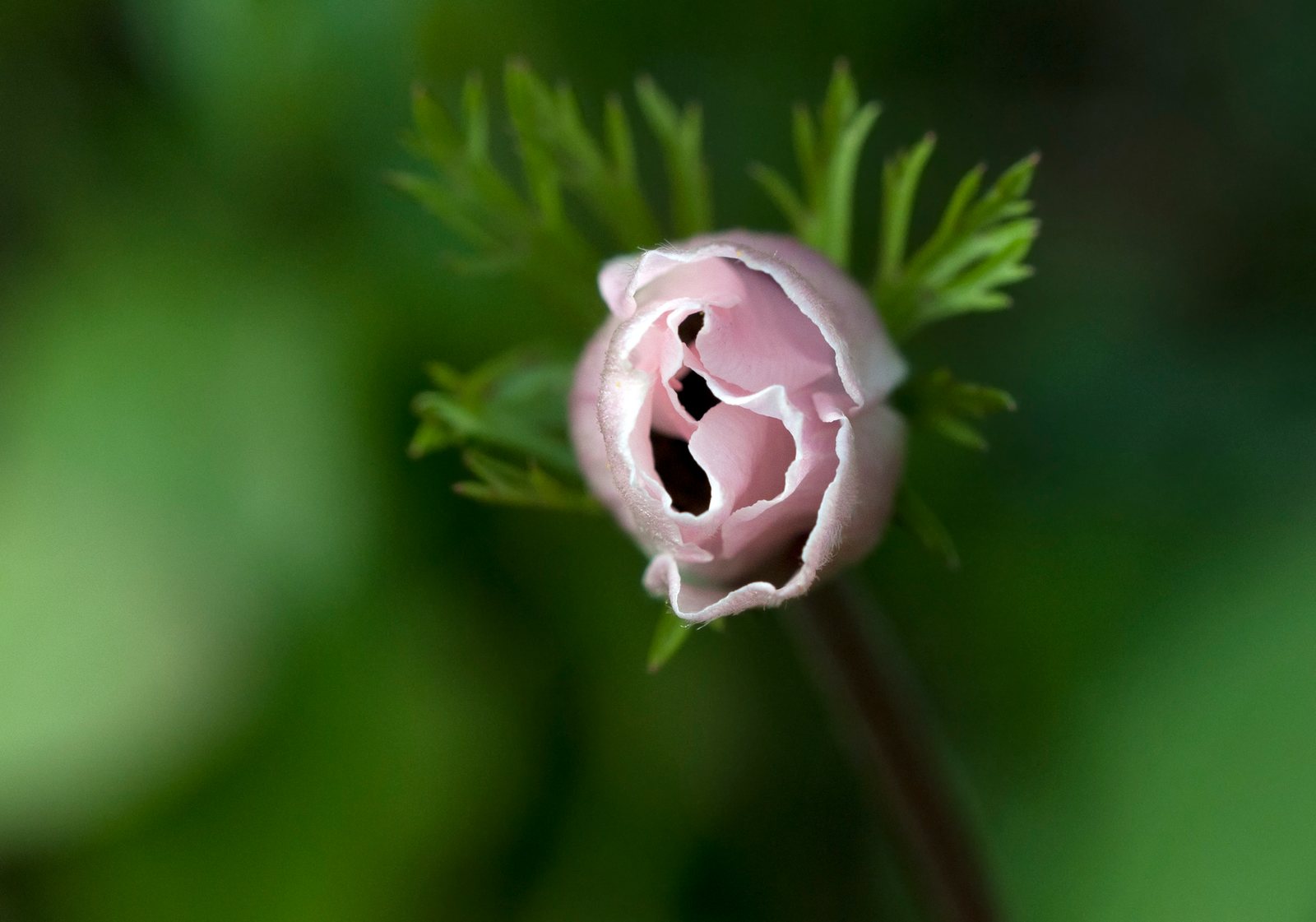
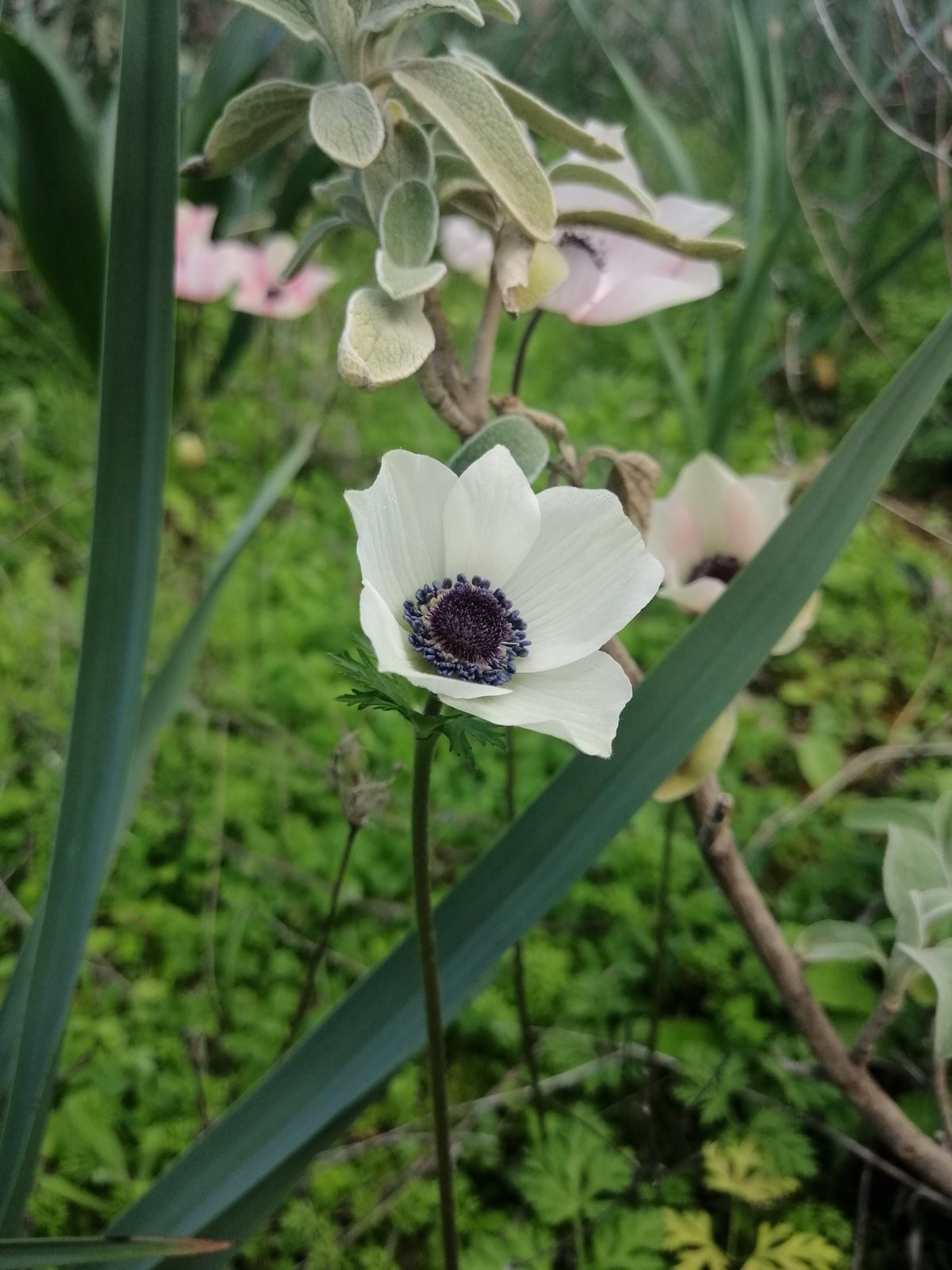
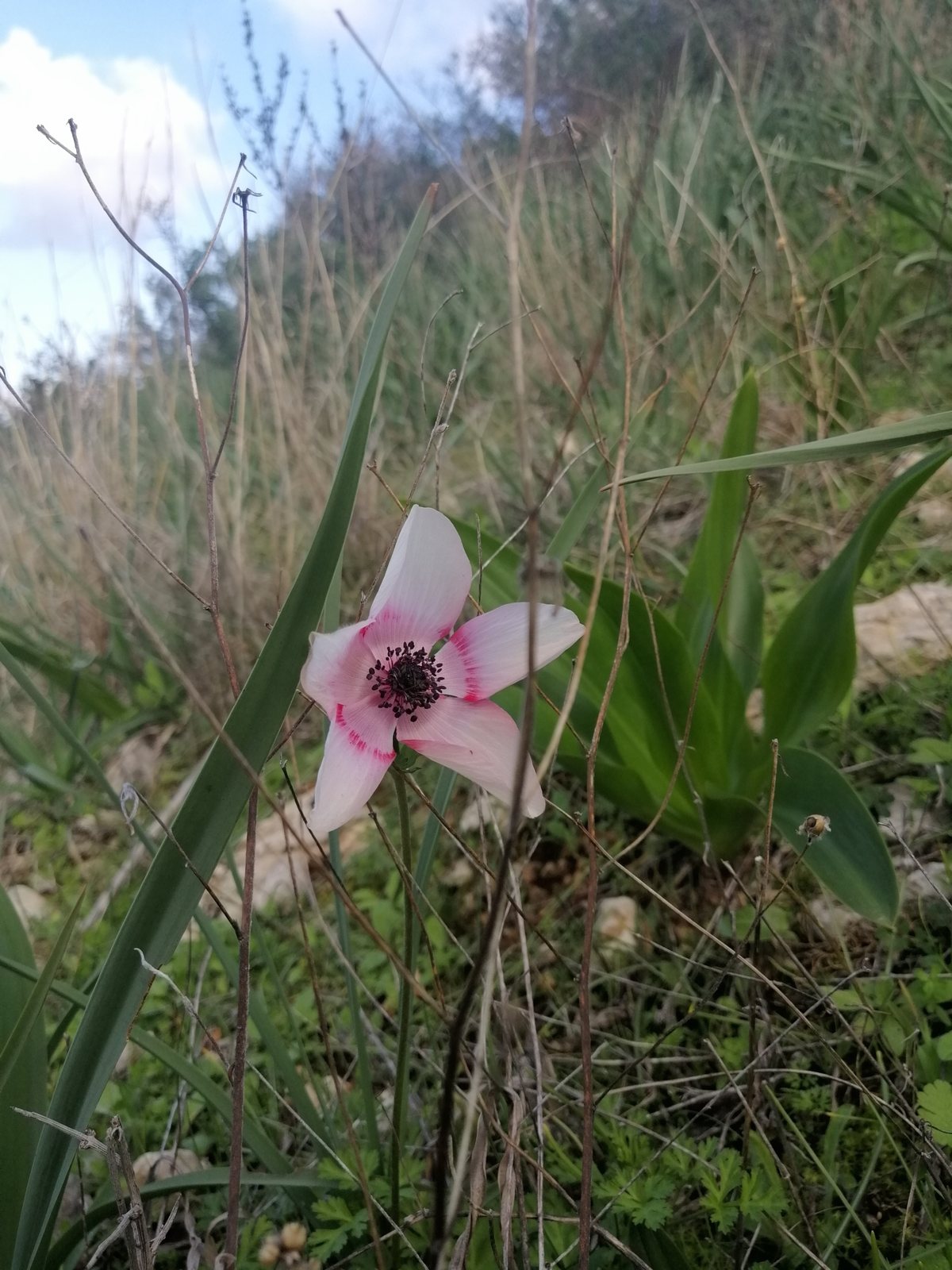
- Spring after autumn planting, or late spring to early summer after spring planting; red, blue, violet, pink or white, often with dark centres. Flowers may be single or double.
- Foliage
- Soft green, deeply divided basal leaves that yellow and die back as the plant enters dormancy.
- Growth
- Moderate; spring-planted tubers can flower in their first growing season.
- Care needed
- Medium
The year at a glance
- Pollinators
- Deer resistant
- Low allergen
| J | F | M | A | M | J | J | A | S | O | N | D | |
|---|---|---|---|---|---|---|---|---|---|---|---|---|
| Flowers | ||||||||||||
| Plant |
Northern hemisphere months. In Australia, shift them by six.
- Difficulty
- Moderate
- Toughness
- Fairly tough
Will it suit your garden?
Pick your zone, country, light and whether you have pets.
Full sun is 6 or more hours of direct sun a day, part shade 3 to 6 hours, shade under 3.
How it grows
Planting day
0.5 ft (0.15 m)
After 1 year
1.1 ft (0.34 m)
full size
About 1 years to full size.
From a typical nursery size, at an average rate for this kind of plant. A rule of thumb, not a forecast.
Good to know
- Cats and dogs
- Toxic
- Growth rate
- Moderate
Care
Jobs through the year
- WaterMar–May, every 7 days
- Water established growing plants when the surface dries, allowing for rainfall.
- WaterJun–Jul, every 4 days
- Keep active growth evenly moist; stop routine watering when foliage dies back.
- MulchMar–Apr
- Add mature compost around emerging plants without covering their crowns.
- FeedApr–May
- Use a light balanced feed only if soil is poor.
- ProtectMar–Apr
- Protect emerging growth from severe frost and slugs.
- DeadheadApr–Jul, every 7 days
- Cut faded flower stalks near the base, retaining healthy foliage.
- PruneJul–Aug
- Remove leaves only after they have yellowed completely.
- ProtectJul–Aug
- Lift dormant tubers where freezing or winter wet makes survival unreliable; store dry and frost-free.
- MulchNov
- If leaving tubers outdoors in sheltered zone 7 sites, apply light mulch without trapping wetness.
- ProtectJan–Mar, Nov–Dec, every 30 days
- Check stored tubers for rot and keep them dry and frost-free.
- Soak dry tubers in room-temperature water for 3-4 hours before planting.
- Plant about 2-3 in (5-8 cm) deep and 4-6 in (10-15 cm) apart in freely draining soil.
- Water during active growth whenever the surface soil starts to dry; stop routine watering once foliage dies back.
- Work in mature compost before planting; use a balanced liquid feed during growth if soil is poor or plants are in pots.
- In colder gardens, plant in spring after severe frost, or lift dormant tubers and store them dry and frost-free.
- Where tubers remain outdoors, use a light winter mulch after the soil cools, without trapping wet material over the crowns.
Pruning. Remove faded flowers unless you want seed, cutting each stalk near its base. Leave the foliage until it has yellowed completely, then remove it.
Through the year
- Autumn
- In mild-winter regions, soak and plant tubers for spring flowering; avoid sites that stay wet through winter.
- Winter
- Check outdoor pots for good drainage and shelter them from prolonged hard freezes.
- Early spring
- In cold-winter regions, plant tubers once soil is workable and severe frost has passed.
- Spring
- Water during dry spells and feed container plants while they are actively growing.
- Spring to early summer
- Cut flowers or remove spent blooms regularly, leaving healthy foliage intact.
- Summer
- Allow leaves to die back naturally, then reduce watering; lift dormant tubers if winter cold or wet soil makes outdoor survival unreliable.
In the garden
- Plant small groups near the front of sunny borders for clear spring colour.
- Grow in well-drained containers beside paths or seating areas where the flowers are easy to see.
- Combine with tulips, grape hyacinths and forget-me-nots in spring bedding.
- Use in cutting beds for long-stemmed flowers, with later-growing plants nearby to fill the summer gap.
Garden styles it suits: Cottage garden, Mediterranean, Romantic rose garden, Modern courtyard, Small-space and Blues and silvers.
Plant it with: Tulips, Grape hyacinths, Forget-me-nots, Pansies, Sweet alyssum and Catmint.
Wildlife: Single flowers provide pollen for visiting bees; densely double forms offer less accessible pollen. This is not a native plant in the United States, United Kingdom, Canada or Australia.
Problems to watch for
- Tuber rot: cold, saturated soil can destroy tubers; improve drainage, grow in pots or lift them during dormancy.
- Slugs and snails: protect emerging shoots with barriers, hand-picking or an approved iron-phosphate bait.
- Aphids: check buds and young shoots; wash off small colonies or use insecticidal soap according to the label.
- Powdery mildew: space plants for airflow, water the soil rather than foliage and remove badly affected leaves.
Safety
Toxic to people, cats, dogs and horses if eaten. All fresh parts, including tubers, contain irritating compounds that can cause mouth irritation, drooling, vomiting and diarrhoea; large amounts can cause serious poisoning. Sap may irritate or blister skin, so wear gloves when handling damaged plants.
Easily confused with
Persian buttercup (Ranunculus asiaticus)
Common garden forms have densely layered, rose-like flowers rather than the broad, open petals and exposed dark centre typical of single poppy anemones.
Common poppy (Papaver rhoeas)
Common poppy has hairy stems, crumpled-looking petals and distinctive seed capsules capped by a flat disc; poppy anemone produces a fluffy seed head instead.
Grecian windflower (Anemone blanda)
Grecian windflower is shorter and has smaller, daisy-like flowers with numerous narrow petals around a yellow centre.
The name
The Latin epithet coronaria means 'used for crowns or garlands', while poppy anemone describes the resemblance of its flowers to poppies.
Propagation. Separate tuber offsets during summer dormancy, keeping only firm, healthy pieces. Sow fresh seed in cool conditions; germination can be uneven, and seedlings may not match named varieties.
Checked against open data
- Accepted botanical name
- Anemone coronaria
- Native range
- Algeria, Baleares, Bulgaria, Corse, Cyprus, East Aegean Is., Egypt, France, Greece, Iran, Iraq and Italy.
- Measured
- Average height 15 cm.
Sources: GBIF (CC BY 4.0) and Trefle (CC BY 4.0). The care and design notes are LandscapeGPT's own.
See it in your own yard.
Upload a photo of your yard and see it redesigned with plants that suit your climate, each checked against your zone.