Portugal laurel
Prunus lusitanica. Family Rosaceae. Tree.
Also called Portuguese laurel.
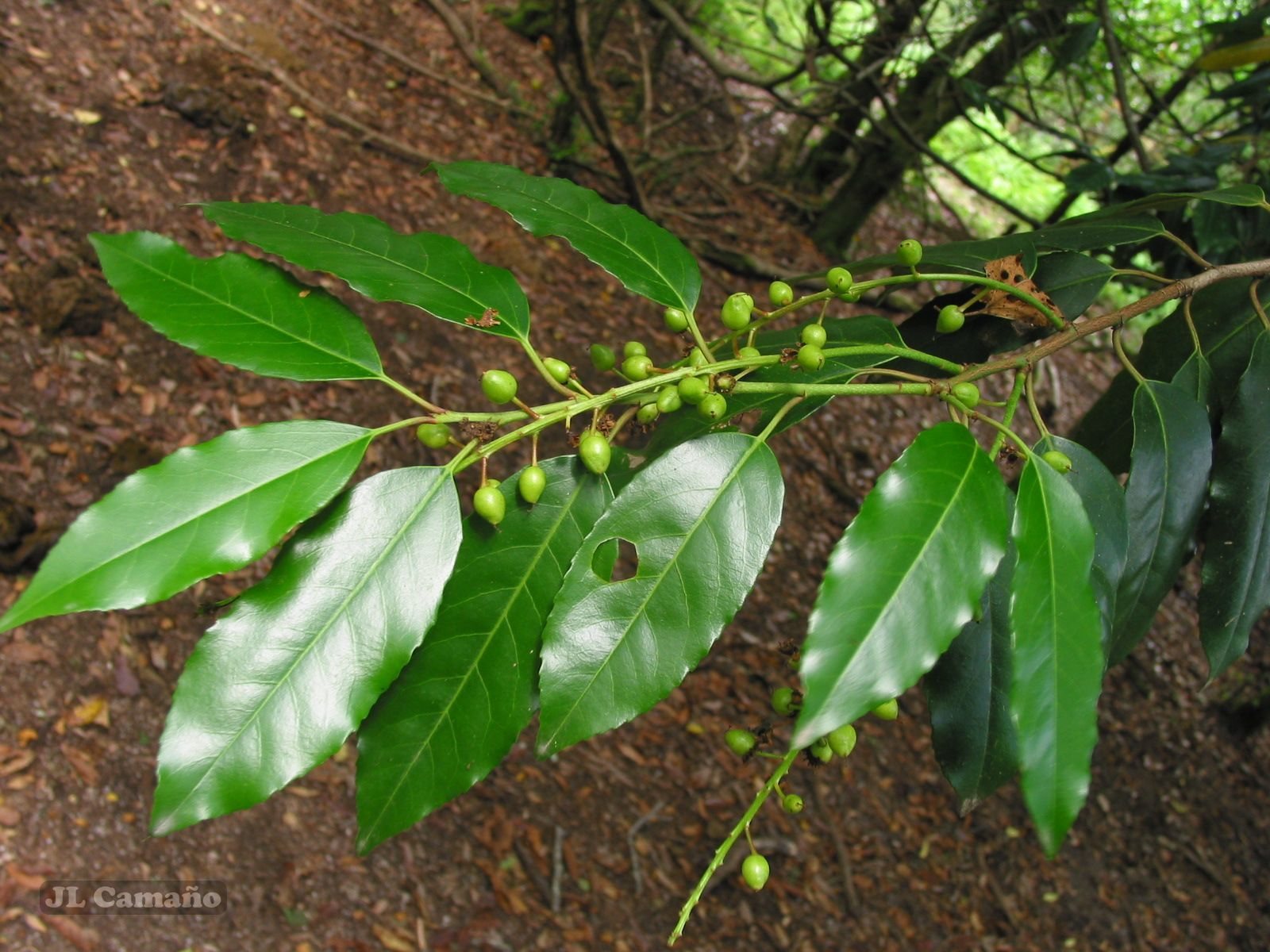
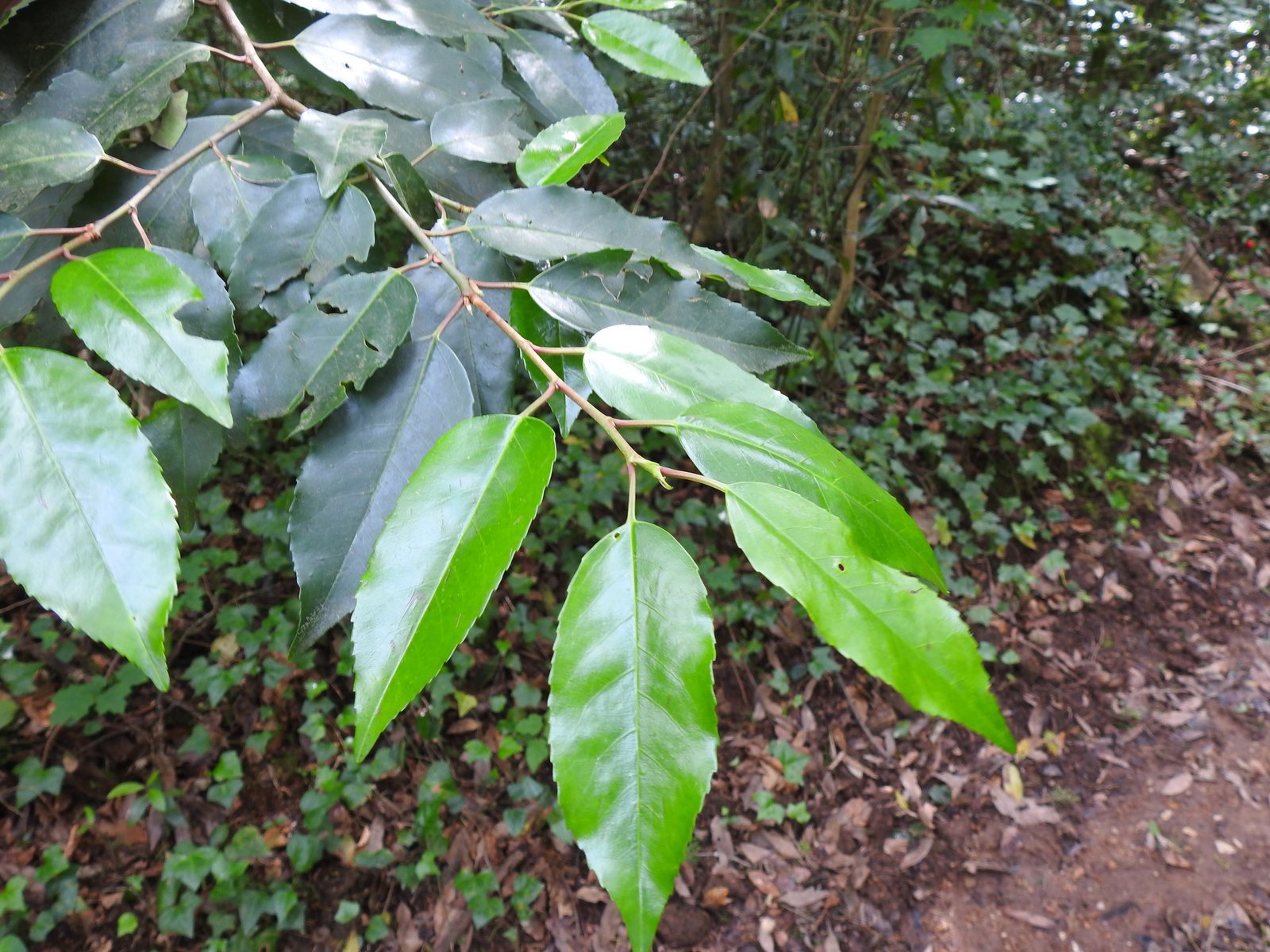
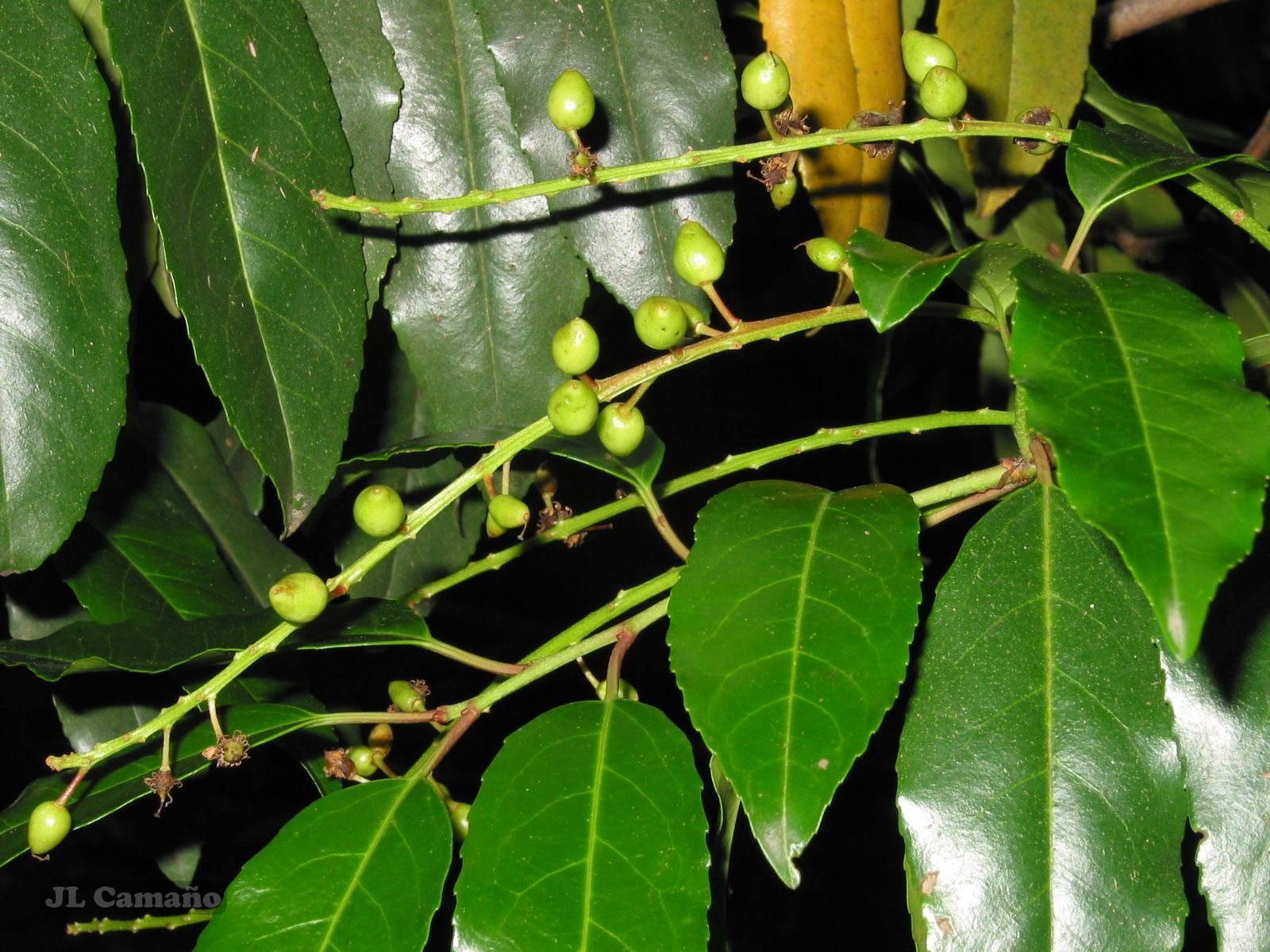
Portugal laurel is an evergreen small tree or large shrub with glossy leaves, reddish young stems and fragrant white flower spikes. Gardeners grow it as a dense hedge, clipped screen or specimen tree; left untrimmed, it needs substantial space.
At a glance
- Sun
- Full sun to partial shade; tolerates deeper shade but grows less densely.
- Water
- Water regularly while establishing. Established plants tolerate some drought, but benefit from deep watering during prolonged dry weather.
- Soil
- Well-drained soil, including clay, loam, sand and chalk; tolerates acidic to alkaline conditions. Avoid persistently waterlogged ground.
- Height
- 20-40 ft (6-12 m) unpruned
- Spread
- 15-30 ft (4.5-9 m) unpruned
- Flowers
- Late spring to early summer; small, fragrant white flowers in upright, slender clusters.
- Foliage
- Evergreen. Glossy, dark green, narrowly oval leaves with finely toothed edges; leaf stalks and young stems are often red.
- Growth
- Moderate; usually slower and more compact than cherry laurel.
- Care needed
- Medium
The year at a glance
- Pollinators
- Deer resistant
- Drought tolerant
- Heat tolerant
- Wildlife
- Fragrant
| J | F | M | A | M | J | J | A | S | O | N | D | |
|---|---|---|---|---|---|---|---|---|---|---|---|---|
| Flowers | ||||||||||||
| Fruit | ||||||||||||
| Plant |
Northern hemisphere months. In Australia, shift them by six.
- Difficulty
- Moderate
- Toughness
- Very tough
Will it suit your garden?
Pick your zone, country, light and whether you have pets.
Full sun is 6 or more hours of direct sun a day, part shade 3 to 6 hours, shade under 3.
How it grows
Planting day
7 ft (2 m)
After 1 year
7 ft (2.3 m)
After 2 years
8 ft (2.5 m)
After 3 years
9 ft (2.8 m)
After 5 years
11 ft (3.3 m)
About 26 years to full size.
From a typical nursery size, at an average rate for this kind of plant. A rule of thumb, not a forecast.
Good to know
- Cats and dogs
- Toxic
- Invasive in
- the US and Australia
- In the garden
- Spreads vigorously: plan to contain it.
- Growth rate
- Slow
Care
Jobs through the year
- WaterApr–May, Sep–Oct, every 21 days
- Water established plants during prolonged dry weather; young plants need more frequent watering.
- WaterJun–Aug, every 14 days
- Soak established roots during prolonged drought; check plants in their first two years weekly.
- MulchMar–Apr
- Spread 5–8 cm of organic mulch over the root area, leaving the trunk clear.
- FeedMar–Apr
- Apply balanced slow-release fertilizer only if growth is weak or soil is poor.
- PruneJun–Aug
- Trim after flowering or prune specimen branches in dry weather; never disturb active bird nests.
- ProtectJan–Feb, Nov–Dec
- Shelter young plants from drying winds and brush off heavy snow; exposed zone 6 sites are unsuitable.
- Water deeply during dry spells for the first two growing seasons.
- Spread 2-3 in (5-8 cm) of organic mulch over the root area, keeping it clear of the trunk.
- Apply a balanced slow-release fertilizer in spring only if growth is weak or the soil is poor.
- Keep grass and weeds away from newly planted roots.
- Pull up unwanted seedlings while small, especially near woodland.
Pruning. Trim hedges in late spring or early summer after flowering, checking first for active bird nests; hand shears or secateurs leave fewer torn leaves than powered trimmers. For a specimen tree, remove dead, crossing or badly placed branches in summer during dry weather.
Through the year
- Spring
- Plant in colder areas once the soil is workable, then water thoroughly.
- Spring
- Renew mulch and feed only if growth or soil conditions justify it.
- Late spring to early summer
- After flowering, trim hedges and topiary once active bird nests are no longer present.
- Summer
- Water young plants deeply during dry spells and inspect leaves for pests or spotting.
- Autumn
- Plant in mild regions while soil is warm and moist; remove unwanted seedlings.
- Winter
- Check exposed plants for wind scorch and gently brush off heavy snow before branches bend.
In the garden
- Clip into a tall evergreen hedge to screen neighbouring buildings and define boundaries.
- Train as a clear-stemmed small tree to provide a leafy canopy over shade-tolerant planting.
- Use cones, domes or standards to frame an entrance or anchor a formal garden.
- Plant behind hydrangeas, ferns and pale-flowered perennials as a dark evergreen backdrop.
Garden styles it suits: Formal, Topiary garden, Traditional, English country, Architectural minimal and Green on green.
Plant it with: Hydrangeas, Hellebores, Japanese anemones, Hardy geraniums, Foxgloves and Soft shield ferns.
Wildlife: Flowers attract bees and other insects. Birds eat the ripe fruits and can spread the seeds; dense growth provides nesting cover. Frequent clipping reduces flowering and fruiting.
Problems to watch for
- Shot-hole symptoms: spots die and fall out, leaving holes in leaves. Remove fallen affected foliage, improve airflow and avoid overhead watering; several fungal and bacterial causes can look alike.
- Vine weevil: adults notch leaf edges and larvae damage roots, especially in containers. Check root balls and use appropriate biological nematodes when soil temperatures suit the product.
- Root rot: waterlogged soil causes yellowing, wilting and root decline. Improve drainage and avoid overwatering; severely affected plants may need replacing.
- Winter scorch: cold, drying wind browns foliage. Choose a sheltered position, keep roots moist before freezing weather and wait until spring growth reveals the extent of damage.
Safety
Toxic to people, cats, dogs and horses. Leaves, stems and seed kernels contain cyanogenic compounds that can cause serious, potentially fatal poisoning if eaten. Do not eat the berries, and keep hedge clippings away from pets and livestock, especially horses.
Where it spreads. Escapes cultivation and can spread into woodland through bird-dispersed seed in the US Pacific Northwest, New Zealand and parts of southeastern Australia, including Victoria. Check local invasive-plant guidance before planting near natural areas.
Easily confused with
Cherry laurel (Prunus laurocerasus)
Usually has much larger, broader leaves and green rather than conspicuously red leaf stalks and young stems.
Bay laurel (Laurus nobilis)
Has aromatic leaves with smooth, often wavy margins rather than finely toothed edges, and lacks the long white flower clusters. Never identify edible bay by general appearance alone.
The name
The species name lusitanica means 'of Lusitania', the Roman region covering much of present-day Portugal, which also explains the common name.
Propagation. Take semi-ripe cuttings in mid- to late summer and root them in a moist, free-draining medium under cover. Seed can also be used, but germination is slow and variable, and named forms may not come true.
Checked against open data
- Accepted botanical name
- Prunus lusitanica
- In the US and Canada
- Introduced in the lower 48 states.
- Native range
- Azores, Canary Is., France, Madeira, Morocco, Portugal and Spain.
- Measured
- Soil pH 5.5 to 6.5. Average height 800 cm.
Sources: GBIF (CC BY 4.0), USDA PLANTS and Trefle (CC BY 4.0). The care and design notes are LandscapeGPT's own.
See it in your own yard.
Upload a photo of your yard and see it redesigned with plants that suit your climate, each checked against your zone.