Prairie sage
Artemisia ludoviciana. Family Asteraceae. Perennial.
Also called White sagebrush, Western mugwort, Silver wormwood, Louisiana sagewort.
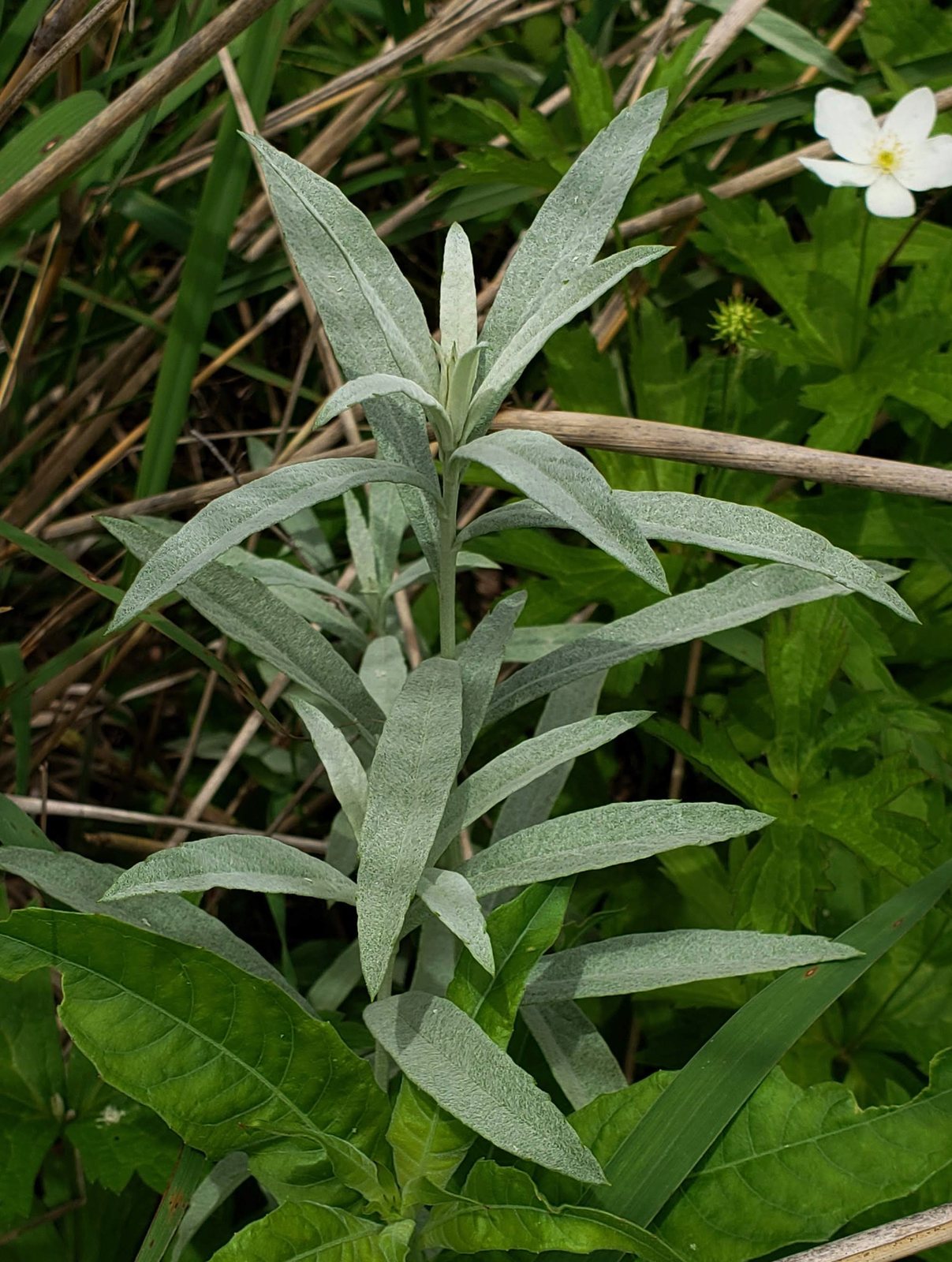
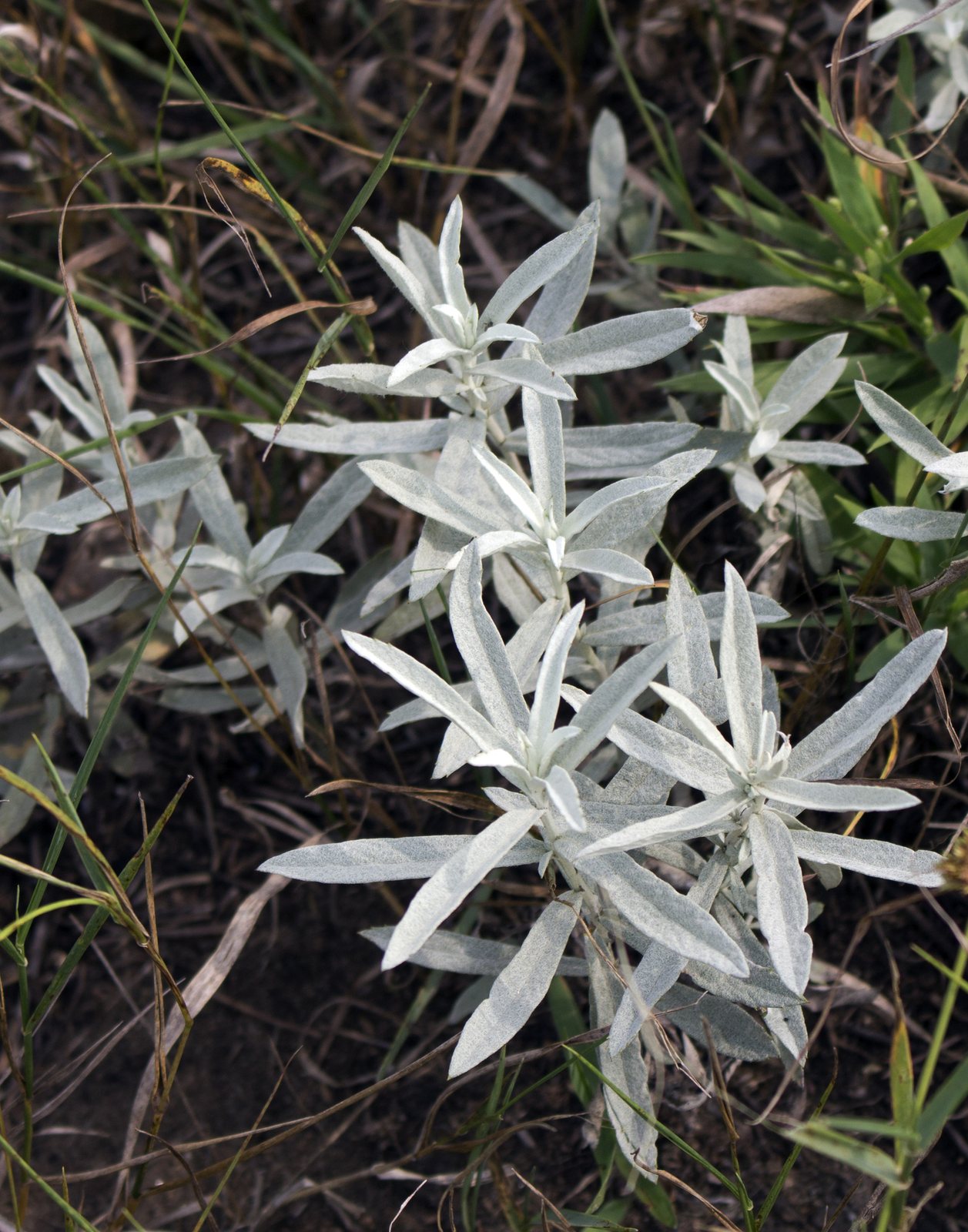
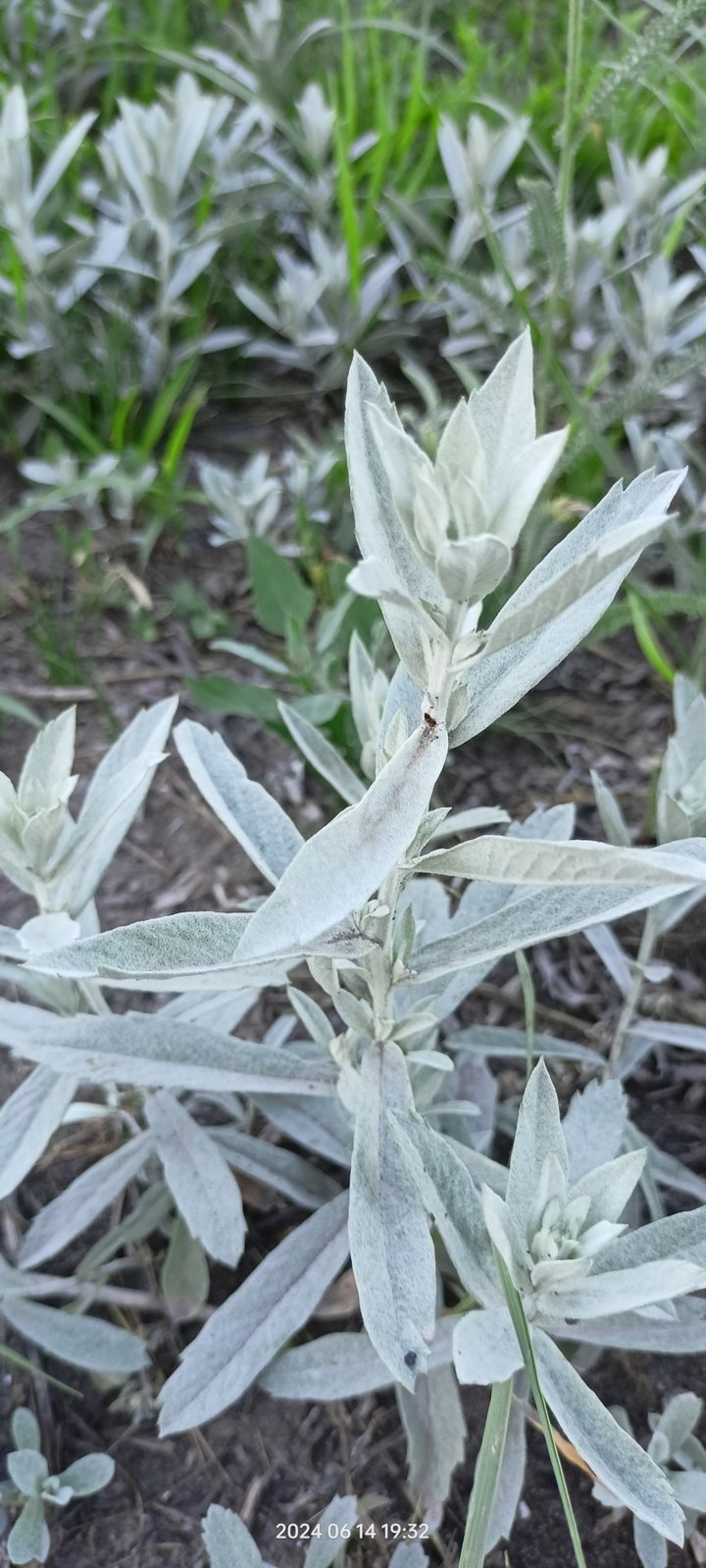
Prairie sage is a North American perennial grown for its aromatic, silver-grey foliage rather than its small flowers. It makes a strong contrast with grasses and colourful perennials in sunny, dry borders, but its spreading underground stems need room or regular control. Despite its common name, it is not a culinary sage.
At a glance
- Sun
- Full sun; shade makes stems looser and more likely to flop.
- Water
- Water regularly while establishing; once rooted, water only during prolonged dry spells. Avoid persistently wet soil.
- Soil
- Well-drained, dry to moderately moist soil, including sandy, gravelly or rocky ground. Avoid rich, heavily fertilised soil and wet winter conditions.
- Height
- 2-3 ft (0.6-0.9 m)
- Spread
- 2-3 ft (0.6-0.9 m) initially; underground stems can spread considerably farther.
- Flowers
- Small, inconspicuous yellowish flower heads in summer to early autumn.
- Foliage
- Aromatic, narrow to lance-shaped leaves covered in silvery-white hairs; leaf margins vary from entire to shallowly lobed.
- Growth
- Fast, especially in loose soil with regular moisture.
- Care needed
- Medium
The year at a glance
- Deer resistant
- Drought tolerant
- Cold hardy
- Heat tolerant
- Wildlife
- Fragrant
| J | F | M | A | M | J | J | A | S | O | N | D | |
|---|---|---|---|---|---|---|---|---|---|---|---|---|
| Plant |
Northern hemisphere months. In Australia, shift them by six.
- Difficulty
- Moderate
- Toughness
- Very tough
Will it suit your garden?
Pick your zone, country, light and whether you have pets.
Full sun is 6 or more hours of direct sun a day, part shade 3 to 6 hours, shade under 3.
How it grows
Planting day
1 ft (0.3 m)
After 1 year
1.7 ft (0.53 m)
After 2 years
2.5 ft (0.75 m)
full size
About 2 years to full size.
From a typical nursery size, at an average rate for this kind of plant. A rule of thumb, not a forecast.
Good to know
- Cats and dogs
- Toxic
- Native to
- the US and Canada
- In the garden
- Spreads vigorously: plan to contain it.
- Growth rate
- Fast
Care
Jobs through the year
- WaterApr–May, Sep, every 28 days
- Water established plants only during prolonged drought; water new plants when their root zone dries.
- WaterJun–Aug, every 21 days
- Deep-water only during prolonged dry spells; avoid routine irrigation that encourages flopping.
- PruneFeb–Mar
- Cut dead stems to just above ground before new growth starts.
- DivideMar–Apr
- Divide congested or oversized patches as needed, replanting vigorous sections.
- PruneApr–Sep, every 30 days
- Lift unwanted shoots with attached underground stems to contain spreading.
- PruneJun–Jul
- Trim lax growth and remove flower stems if maintaining a foliage-only display.
- ProtectOct–Nov
- Clear wet leaves from the crown and correct drainage before winter.
- Water new plants when the root zone dries; reduce watering once established.
- Do not routinely feed; rich soil encourages floppy growth.
- Keep organic mulch away from the crown, especially where winters are wet.
- Remove unwanted shoots with their attached underground stems before they enter neighbouring plants.
- Divide congested or oversized patches in spring, replanting only the strongest sections.
Pruning. Cut dead stems back to just above ground level in late winter or early spring before new growth develops. Trim back lax growth in early summer if needed, or remove flower stems to keep the planting focused on foliage.
Through the year
- Late winter
- Cut down dead stems and clear debris from around the crown.
- Spring
- Plant in full sun in freely draining soil; water new plants thoroughly.
- Spring
- Divide established patches and remove runners outside the intended planting area.
- Early summer
- Trim lax stems if necessary and check that neighbouring plants are not being crowded.
- Summer
- Water established plants only during prolonged drought; remove flower stems if you prefer a foliage-only display.
- Autumn
- Check drainage and remove fallen leaves that trap moisture around the crown.
In the garden
- Plant in broad drifts among prairie grasses for a silver contrast to upright green foliage.
- Use beside purple coneflowers, salvias or other strong-coloured flowers to soften the colour scheme.
- Repeat through a sunny gravel garden to link separate groups of drought-tolerant plants.
- Grow in a large container where its spreading roots cannot overwhelm smaller neighbours.
Garden styles it suits: Midwest prairie, Native meadow, New perennial (prairie), Dry gravel garden, Desert / xeriscape and Moon garden.
Plant it with: Little bluestem, Prairie dropseed, Purple coneflower, Butterfly weed, Yarrow and Perennial salvia.
Wildlife: Foliage and stems provide shelter for small insects. The wind-pollinated flowers are not a significant nectar source, and deer usually avoid the aromatic foliage, although browsing is still possible.
Problems to watch for
- Aggressive spreading: lift unwanted shoots with their underground stems, or grow in a large container.
- Flopping stems: provide full sun, stop feeding and reduce unnecessary watering; trim lax stems in early summer.
- Root or crown rot: improve drainage, keep mulch clear of the crown and move plants out of winter-wet ground.
- Powdery mildew: improve airflow, thin crowded growth and avoid planting in shade.
Safety
Do not eat it or use it as a substitute for culinary sage. The foliage and concentrated oil contain compounds that can be harmful if swallowed, particularly in large or repeated doses; concentrated oil presents the greatest concern. Species-specific poisoning information for cats, dogs and horses is limited, so keep pets and grazing animals from eating it and seek veterinary advice after substantial ingestion.
Where it spreads. Spreads aggressively by underground stems in gardens across its growing range, including the United States, Canada, the United Kingdom and Australia. It is native across much of North America; garden spread alone does not mean it is a regionally listed invasive species.
Easily confused with
White sage (Salvia apiana)
A woody shrub with opposite leaves and tall spikes of white flowers; prairie sage has alternate leaves and small, inconspicuous flower heads.
Common mugwort (Artemisia vulgaris)
Leaves are usually deeply divided, dark green above and white beneath; prairie sage generally has narrower leaves that are silvery on both surfaces.
Wormwood (Artemisia absinthium)
Has much more finely divided, fern-like silver leaves and often a woody base; prairie sage usually has simple or shallowly lobed leaves.
The name
The epithet ludoviciana means 'of Louisiana', referring to the historical Louisiana region of North America.
Propagation. Divide rooted sections in spring, ensuring each piece has roots and healthy shoots. Seed can also be sown in spring, but named cultivars should be propagated by division or cuttings to preserve their characteristics.
Checked against open data
- Accepted botanical name
- Artemisia ludoviciana
- In the US and Canada
- Native in Canada and the lower 48 states. Introduced in the lower 48 states.
- Native range
- Alabama, Alberta, Arizona, Arkansas, Belize, British Columbia, California, Colorado, Connecticut, Delaware, El Salvador and Georgia.
- Measured
- Soil pH 6 to 7.5. Average height 27 cm.
Sources: GBIF (CC BY 4.0), USDA PLANTS and Trefle (CC BY 4.0). The care and design notes are LandscapeGPT's own.
See it in your own yard.
Upload a photo of your yard and see it redesigned with plants that suit your climate, each checked against your zone.