Primrose jasmine
Jasminum mesnyi. Family Oleaceae. Shrub.
Also called Japanese jasmine, Yellow jasmine.
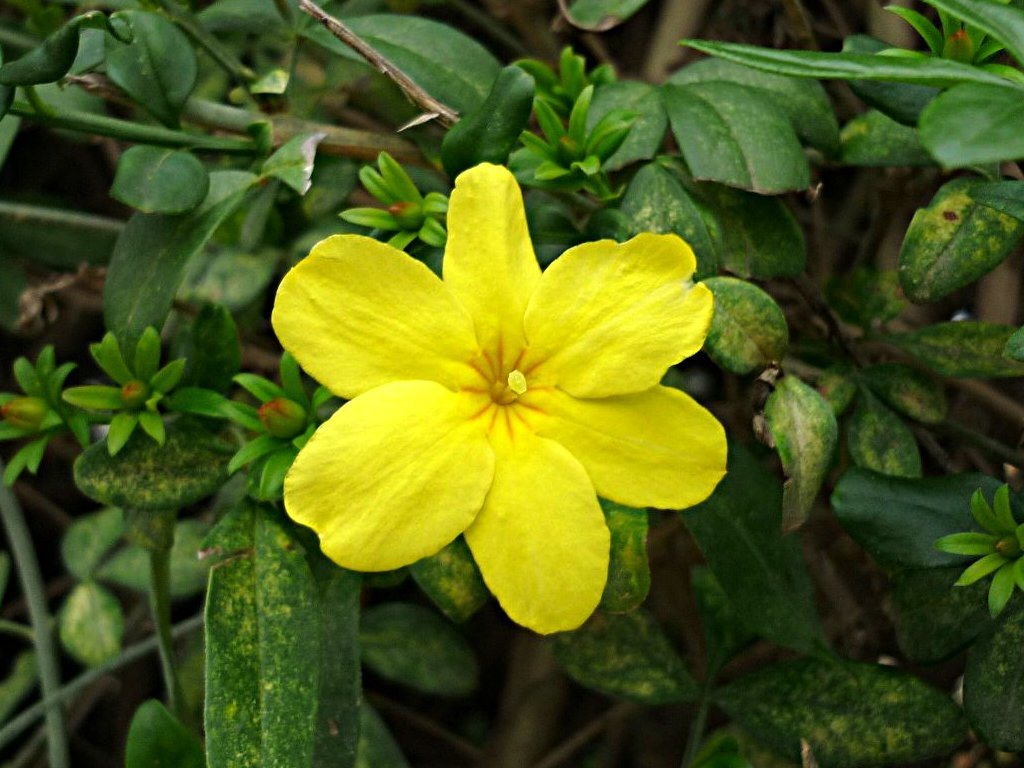
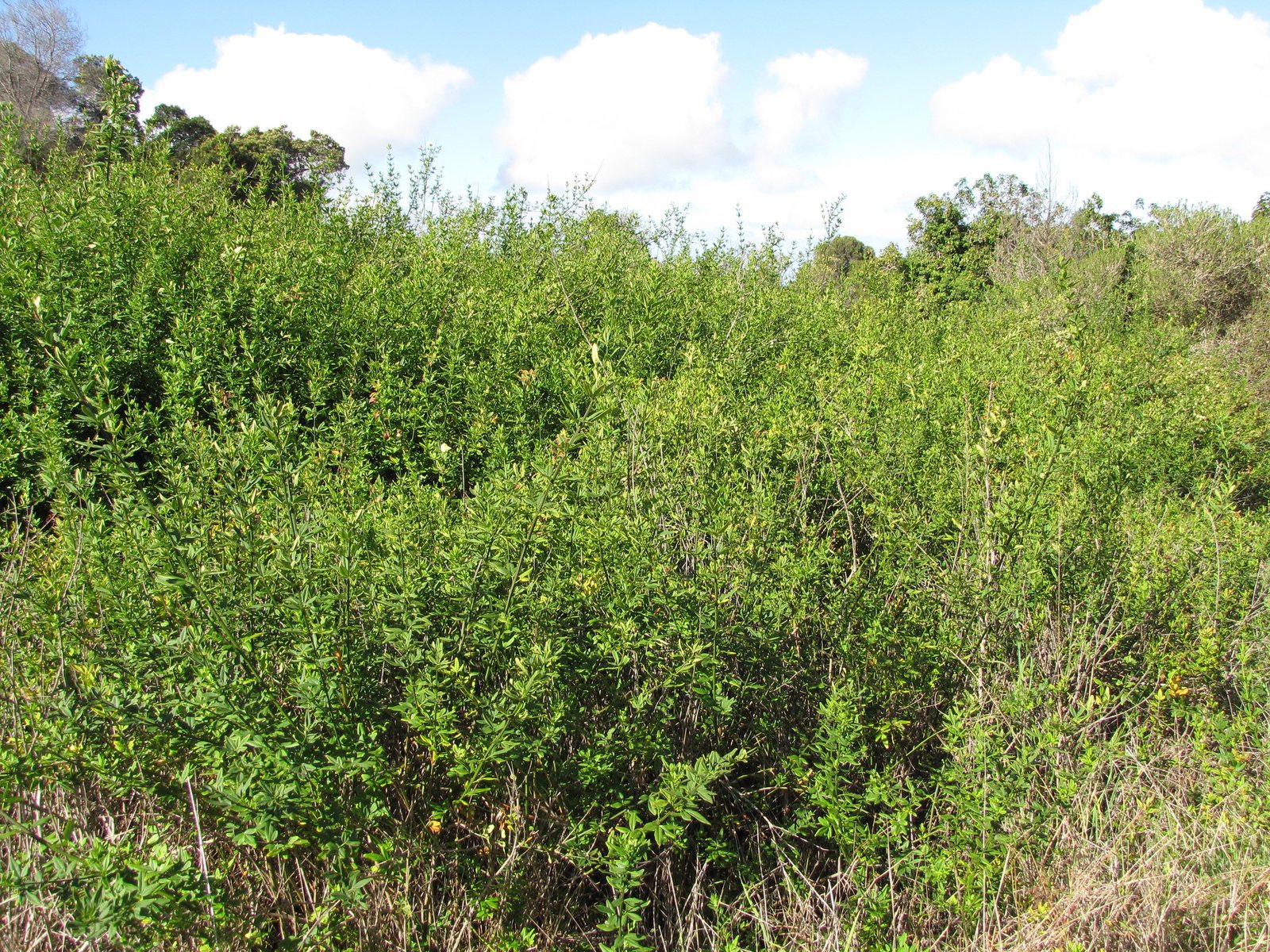
Primrose jasmine is a sprawling, evergreen shrub grown for its yellow flowers in late winter and spring. Its long, arching stems can cascade over a wall or be tied to supports, but they do not climb unaided. It needs a warm, sheltered position and can lose leaves or suffer stem damage in hard frost.
At a glance
- Sun
- Full sun to partial shade; flowering is usually best with plenty of sun.
- Water
- Water regularly during establishment; once established, water deeply during prolonged dry spells. Avoid persistently wet soil.
- Soil
- Well-drained soil, preferably moderately fertile; tolerates sandy, loamy or clay soils provided drainage is good.
- Height
- 6-10 ft (1.8-3 m)
- Spread
- 6-15 ft (1.8-4.6 m), potentially wider where stems root into the ground
- Flowers
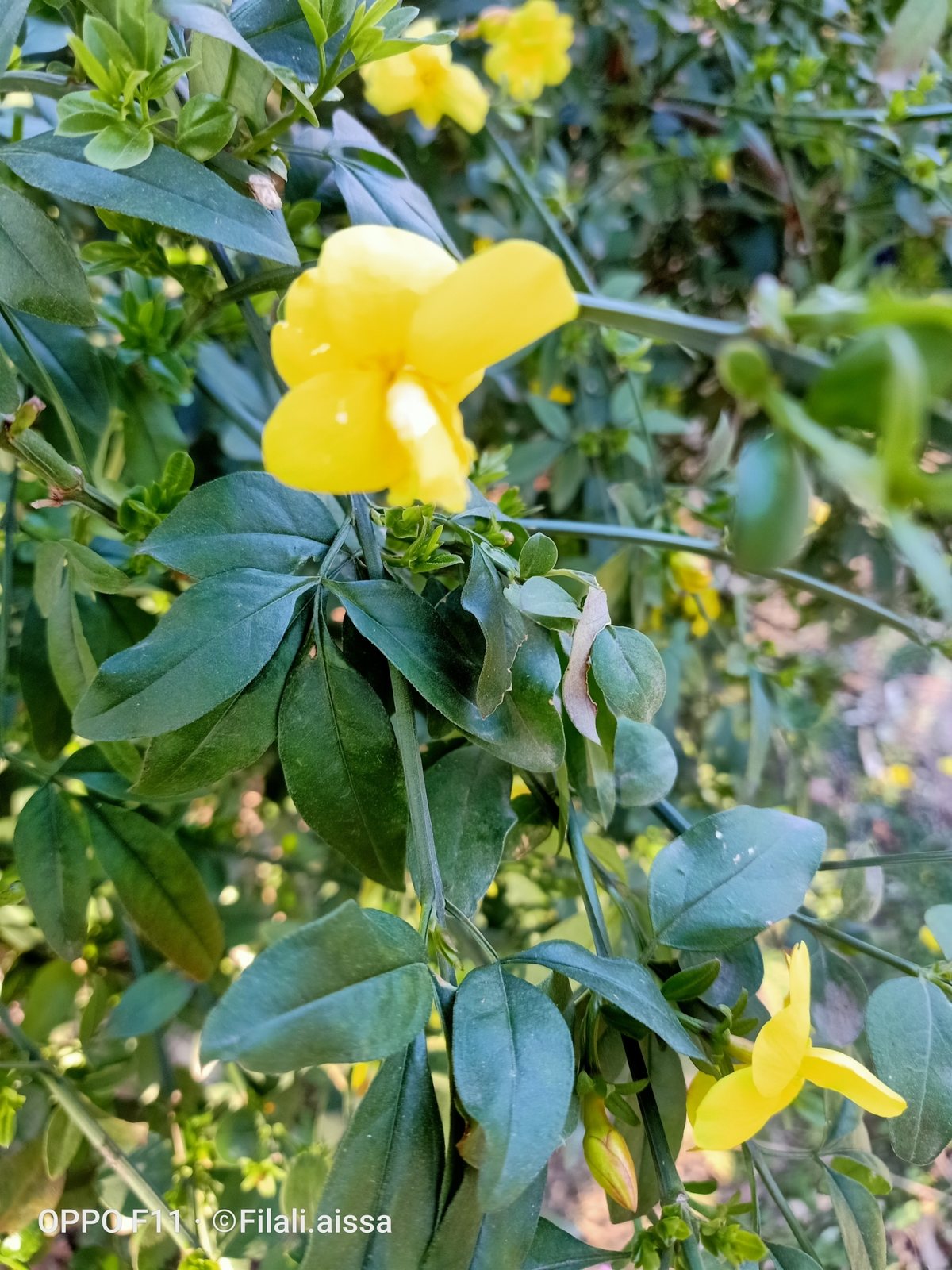
- Late winter to spring; bright yellow, usually semi-double flowers with little or no fragrance.
- Foliage
- Evergreen. Glossy green leaves divided into three leaflets, carried on long, angular green stems.
- Growth
- Fast in warm climates
- Care needed
- Medium
The year at a glance
- Drought tolerant
- Heat tolerant
- Wildlife
- Low allergen
| J | F | M | A | M | J | J | A | S | O | N | D | |
|---|---|---|---|---|---|---|---|---|---|---|---|---|
| Flowers | ||||||||||||
| Plant |
Northern hemisphere months. In Australia, shift them by six.
- Difficulty
- Hard
- Toughness
- Fairly tough
Will it suit your garden?
Pick your zone, country, light and whether you have pets.
Full sun is 6 or more hours of direct sun a day, part shade 3 to 6 hours, shade under 3.
How it grows
Planting day
1.6 ft (0.5 m)
After 1 year
4 ft (1.1 m)
After 2 years
5 ft (1.7 m)
After 3 years
7 ft (2.3 m)
After 5 years
8 ft (2.4 m)
full size
About 3 years to full size.
From a typical nursery size, at an average rate for this kind of plant. A rule of thumb, not a forecast.
Good to know
- Cats and dogs
- Safe
- Invasive in
- Australia
- In the garden
- Spreads vigorously: plan to contain it.
- Growth rate
- Fast
Care
Jobs through the year
- WaterApr–May, Sep–Oct, every 14 days
- Check established plants; water deeply only if soil is dry. Young plants need more frequent watering.
- WaterJun–Aug, every 7 days
- Water established plants only during prolonged dry weather; let the surface dry between soakings.
- FeedApr–May
- Apply a light balanced feed only if growth is weak.
- PruneApr–May
- After flowering, shorten flowered shoots and remove dead, crowded or oldest stems.
- PruneJun–Oct, every 30 days
- Remove unwanted rooted stem tips and redirect spreading shoots.
- MulchMay
- Mulch the root area, keeping material clear of stem bases.
- ProtectJan–Apr, Oct–Dec
- Not reliably hardy in zones 6–7; overwinter containers frost-free rather than relying on fleece.
- ProtectMay–Sep, every 30 days
- Tie new stems loosely to sturdy supports and check ties for rubbing.
- Water deeply during the first growing season, allowing the soil surface to dry slightly between waterings.
- Apply a light dressing of balanced fertiliser in spring if growth is weak; avoid heavy nitrogen feeding.
- Mulch the root area, keeping mulch clear of the stem bases.
- Tie stems loosely to wires or a trellis if growing it against a wall.
- Lift or cut back stems touching the ground if you do not want them to root and spread.
Pruning. Prune just after flowering, shortening flowered shoots and removing dead, crowded or badly placed stems. Remove some of the oldest stems at the base to renew an overgrown shrub; avoid routine winter pruning, which removes developing flowers.
Through the year
- Late winter
- Protect young plants from forecast hard frost with horticultural fleece.
- Spring
- After flowering, prune to control spread and remove frost-damaged stems.
- Spring
- Plant once severe frosts have passed; water well and mulch.
- Summer
- Water during prolonged drought and tie new stems to supports.
- Summer
- Take semi-ripe cuttings from healthy, non-flowering shoots.
- Autumn
- Check for rooted stem tips and remove unwanted new plants before they establish.
In the garden
- Let stems cascade over a retaining wall where there is room below for their full length.
- Train against a sunny, sheltered wall for early flowers and evergreen cover.
- Use as an informal screen on a support, with regular pruning to keep paths clear.
- Combine with blue-flowered agapanthus or rosemary in a well-drained, warm-climate border.
Garden styles it suits: Mediterranean, Cottage garden, Traditional, Chinese scholar garden, Winter interest and Romantic rose garden.
Plant it with: Agapanthus, Rosemary, Rockrose, Daffodils and Mock orange.
Wildlife: Dense stems can provide shelter for small birds. Open flowers may attract insects, but the commonly grown semi-double form is not a particularly dependable nectar plant.
Problems to watch for
- Frost damage: leaves and shoot tips may brown or die back; use a sheltered site and remove damaged growth after the risk of hard frost has passed.
- Poor flowering: deep shade, excessive nitrogen or pruning before bloom can reduce flowers; provide more sun, feed lightly and prune after flowering.
- Scale insects: inspect stems and leaf undersides; remove small infestations by hand or use a labelled horticultural oil according to its instructions.
- Root rot: yellowing and dieback can follow waterlogging; improve drainage and avoid frequent watering in already damp soil.
Safety
Not known to be toxic to people, cats, dogs or horses. No part is recognised as a serious poisoning hazard, but it is an ornamental plant rather than a food plant; eating plant material may still cause stomach upset.
Where it spreads. It can spread aggressively by rooting wherever arching stems touch soil. It is naturalised and regarded as an environmental weed in parts of eastern Australia, including Queensland and New South Wales; avoid planting near bushland and do not dump prunings.
Easily confused with
Winter jasmine (Jasminum nudiflorum)
Winter jasmine is deciduous and usually bears smaller, single yellow flowers on bare stems; primrose jasmine normally flowers among evergreen leaves and commonly has semi-double blooms.
Italian jasmine (Jasminum humile)
Italian jasmine has leaves with several leaflets, commonly five to seven, and clusters of smaller, single yellow flowers; primrose jasmine has three leaflets and larger flowers.
Carolina jessamine (Gelsemium sempervirens)
Carolina jessamine is a twining climber with simple, undivided leaves and trumpet-shaped yellow flowers. It is highly poisonous, unlike true jasmines.
The name
The species name mesnyi honours William Mesny, a collector associated with China, while primrose jasmine refers to its primrose-like yellow flowers.
Propagation. Root semi-ripe cuttings in summer, or layer a low stem into soil and separate it once well rooted. Naturally rooted stems can also be lifted and replanted where local weed guidance permits.
Checked against open data
- Accepted botanical name
- Jasminum mesnyi
- In the US and Canada
- Introduced in the lower 48 states.
- Native range
- China South-Central and Vietnam.
Sources: GBIF (CC BY 4.0), USDA PLANTS and Trefle (CC BY 4.0). The care and design notes are LandscapeGPT's own.
See it in your own yard.
Upload a photo of your yard and see it redesigned with plants that suit your climate, each checked against your zone.