Primrose
Primula vulgaris. Family Primulaceae. Perennial.
Also called Common primrose, English primrose.
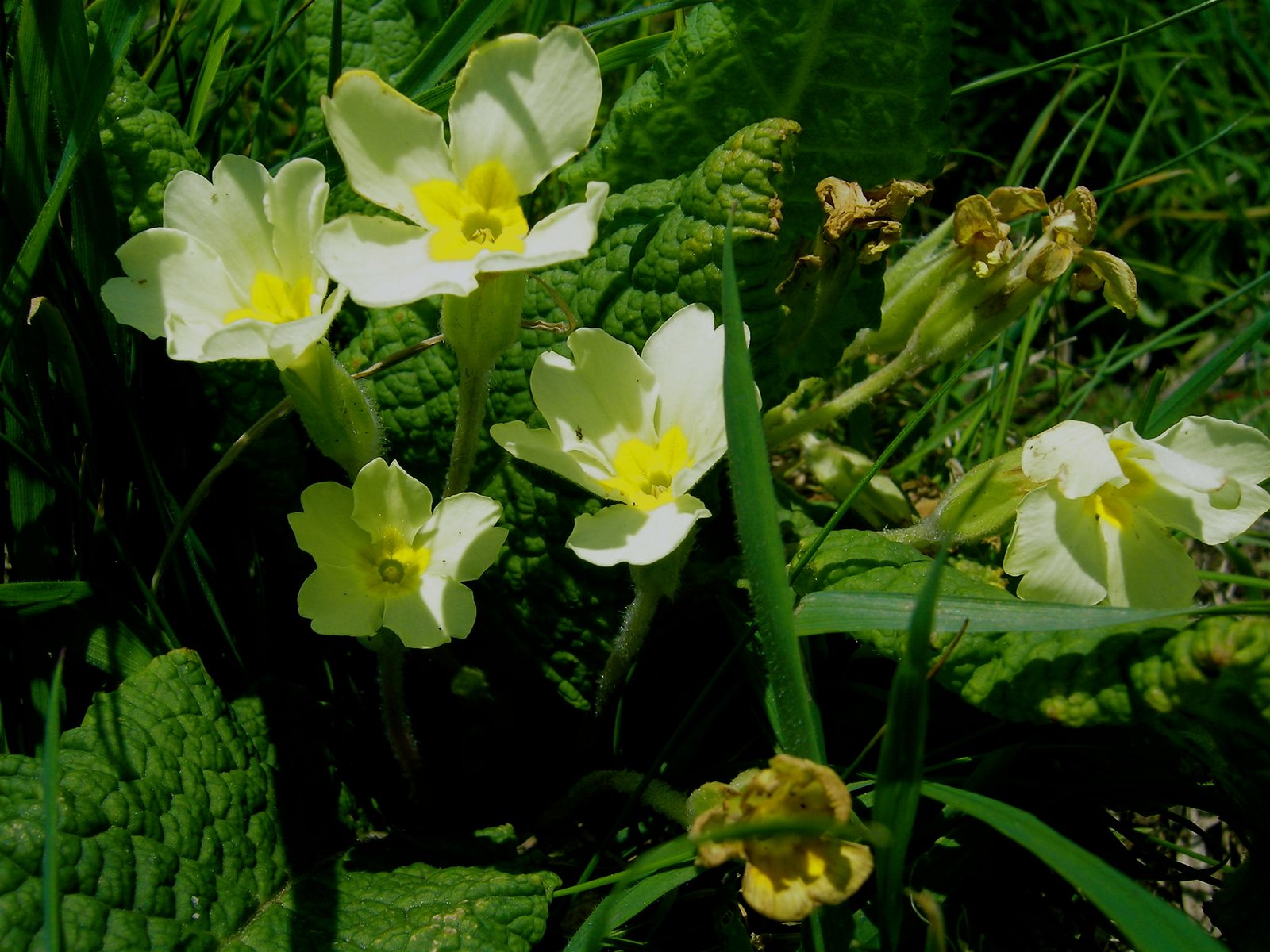
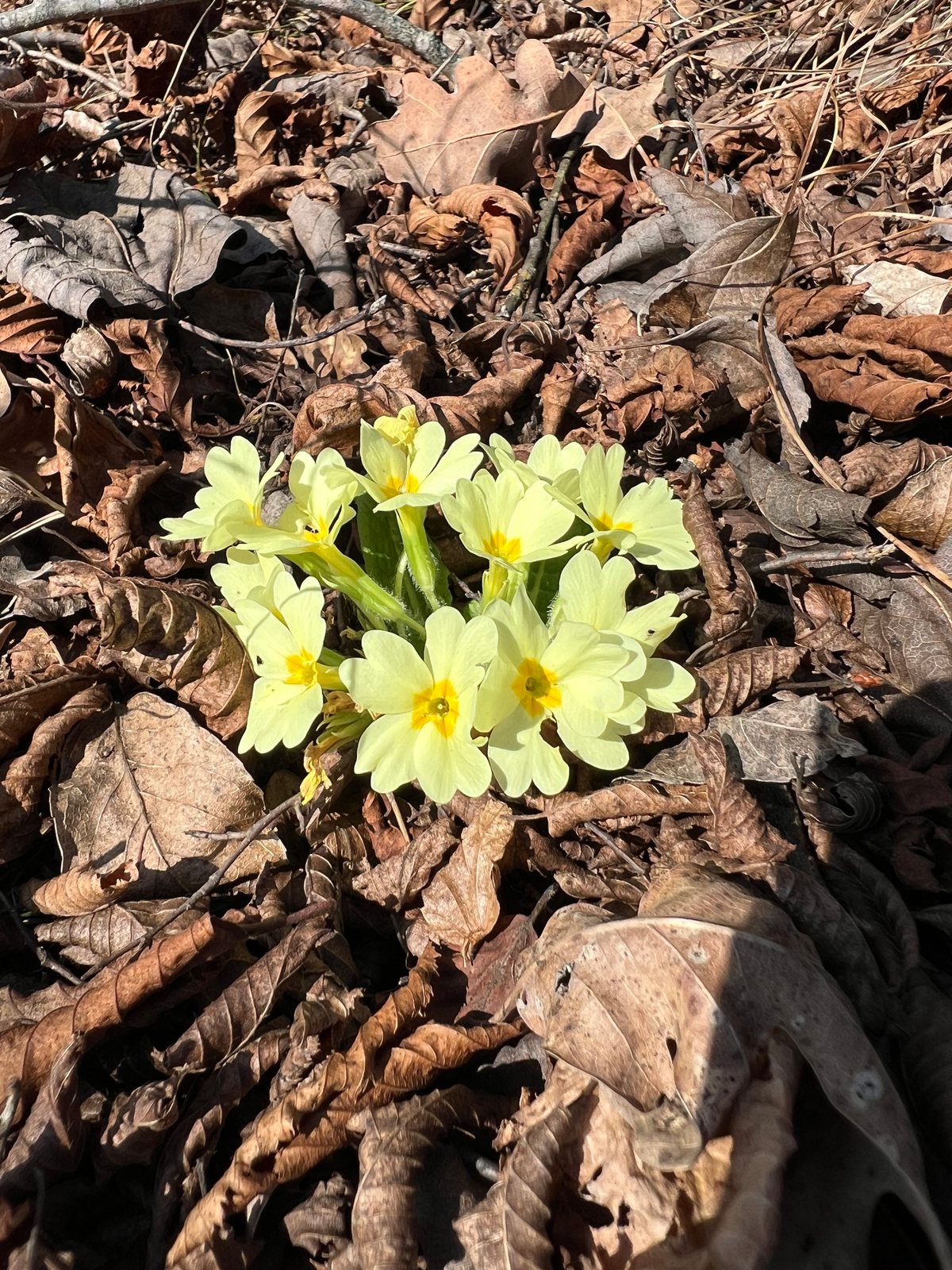
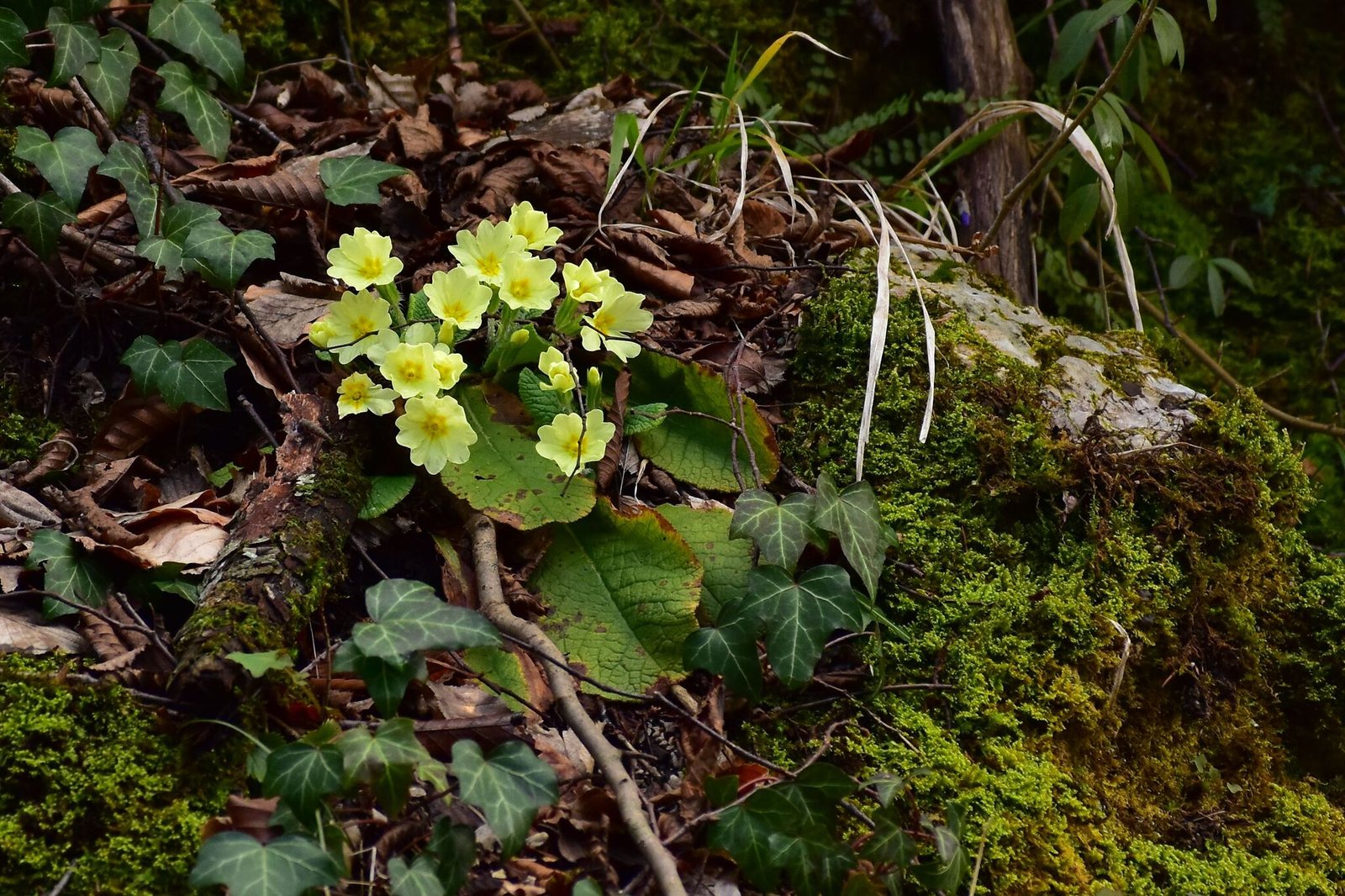
Primrose is a low, clump-forming perennial grown for its pale yellow flowers in late winter and spring. It suits cool, partly shaded gardens, especially beneath deciduous trees, where the soil stays moist but drains freely. Hot, dry summers shorten its flowering season and can cause summer dormancy or plant loss.
At a glance
- Sun
- Partial shade, ideally with morning sun and afternoon shade; tolerates more sun in cool climates if the soil stays moist.
- Water
- Keep evenly moist during growth and flowering; water during dry spells without leaving the roots waterlogged.
- Soil
- Humus-rich, moisture-retentive but well-drained soil; tolerates mildly acidic to alkaline conditions.
- Height
- 0.3-0.7 ft (0.1-0.2 m)
- Spread
- 0.5-1 ft (0.15-0.3 m)
- Flowers
- Late winter to mid-spring, sometimes later in cold climates; the wild species has pale yellow flowers with deeper yellow centres.
- Foliage
- Wrinkled, spoon-shaped green leaves form a low rosette. Foliage often persists through mild winters but may die back in severe cold or summer heat.
- Growth
- Moderate
- Care needed
- Low
The year at a glance
- Pollinators
- Cold hardy
- Low allergen
| J | F | M | A | M | J | J | A | S | O | N | D | |
|---|---|---|---|---|---|---|---|---|---|---|---|---|
| Flowers | ||||||||||||
| Plant |
Northern hemisphere months. In Australia, shift them by six.
- Difficulty
- Easy
- Toughness
- Fairly tough
Will it suit your garden?
Pick your zone, country, light and whether you have pets.
Full sun is 6 or more hours of direct sun a day, part shade 3 to 6 hours, shade under 3.
How it grows
Planting day
0.5 ft (0.15 m)
full size
About 3 years to full size.
From a typical nursery size, at an average rate for this kind of plant. A rule of thumb, not a forecast.
Good to know
- Cats and dogs
- Mildly toxic: may upset a stomach
- Native to
- the UK
- Growth rate
- Moderate
Care
Jobs through the year
- WaterFeb–May, Sep–Oct, every 7 days
- Water established plants at soil level if rainfall is insufficient; keep moist but not waterlogged.
- WaterJun–Aug, every 7 days
- Water during dry spells and maintain afternoon shade; newly divided plants need closer checks.
- MulchMar
- Apply leaf mould or compost around plants without covering their crowns.
- FeedMar–Apr
- Use a light balanced feed only on poor soil or weak growth; do not feed heat-stressed plants.
- DeadheadMar–May, every 7 days
- Remove faded flowers unless retaining some for self-seeding.
- PruneMay–Jun
- Trim dead or badly damaged leaves after flowering without cutting the central crown.
- DivideMay–Jun
- Divide crowded clumps after flowering every three to four years and replant at the same depth.
- ProtectFeb–Apr
- Check young leaves and flowers for slugs; hand-pick or use labelled iron-phosphate bait if needed.
- ProtectJan, Oct–Dec
- Remove heavy leaf litter and debris that could smother or rot the crowns.
- Water at soil level during dry spells, especially while plants are flowering.
- Apply leaf mould or compost around the plants each spring, keeping the crown uncovered.
- Use a light balanced feed in spring only if growth is weak or the soil is poor.
- Divide crowded clumps after flowering, usually every three to four years.
- Keep fallen leaves and thick mulch from smothering the crowns.
Pruning. Remove faded flowers if you do not want seedlings, or leave some to set seed. Trim away dead or badly damaged leaves after flowering without cutting into the central crown.
Through the year
- Late winter
- Clear debris from crowns and check emerging growth for slug damage.
- Early spring
- Top-dress with compost or leaf mould and water if rainfall is low.
- Late spring
- After flowering, divide crowded clumps and replant at their original depth.
- Early summer
- Collect seed as capsules ripen and sow fresh on the surface of seed compost.
- Summer
- Maintain light shade and water during drought; avoid feeding heat-stressed or dormant plants.
- Autumn
- Plant new specimens while the soil is moist and keep heavy leaf litter off their crowns.
In the garden
- Plant in loose drifts beneath deciduous trees for early colour before the canopy closes.
- Edge shaded paths with small groups where the flowers can be seen close up.
- Combine with snowdrops, lungwort and small ferns in a woodland border.
- Use in cool, shaded containers for spring display, then move into the garden after flowering.
Garden styles it suits: Woodland, Cottage garden, English country, Wildlife garden, Romantic rose garden and Pastel border.
Plant it with: Snowdrops, Lungwort, Hellebores, Brunnera, Hardy geraniums and Hart's-tongue fern.
Wildlife: Early flowers provide nectar and pollen for visiting insects, including long-tongued bees. Seedlings can establish in suitable moist, lightly shaded ground.
Problems to watch for
- Slugs and snails chew young leaves and flowers: remove hiding places, hand-pick after dark or use an iron phosphate bait according to its label.
- Vine weevil larvae eat roots, particularly in containers: inspect failing plants and use suitable beneficial nematodes when soil temperatures allow.
- Crown and root rot develop in saturated soil: improve drainage, keep crowns at soil level and remove rotten plants.
- Summer scorch or collapse occurs in hot, dry sites: provide afternoon shade, mulch lightly and maintain soil moisture without waterlogging.
Safety
Toxic to cats and dogs if eaten, usually causing mild vomiting or digestive upset; keep pets from chewing any part. It is not generally considered poisonous to people, though contact may irritate sensitive skin. Toxicity to horses is not well established, so do not offer it as feed.
Easily confused with
Cowslip (Primula veris)
Cowslip carries clusters of small, deep yellow, often nodding flowers on a tall shared stalk; primrose usually bears larger, open flowers singly on separate stalks close to the leaves.
Oxlip (Primula elatior)
Oxlip has a cluster of pale yellow flowers at the top of a shared upright stalk, rather than the separate flower stalks of primrose.
Polyanthus (Primula × polyantha)
Polyanthus hybrids usually carry several flowers together on a stout stem above the foliage and come in many strong colours; wild primrose has single pale yellow flowers on individual stalks.
The name
Primula comes from the Latin for 'first', referring to its early flowers, while vulgaris means 'common'.
Propagation. Divide established clumps after flowering and water divisions until rooted. Sow fresh seed on the surface of moist seed compost; germination can be slow and may require a period of natural winter cold. Garden seedlings may hybridise with nearby primulas and differ from the parent.
Checked against open data
- Accepted botanical name
- Primula vulgaris
- Native range
- Albania, Algeria, Austria, Baleares, Belgium, Bulgaria, Central European Rus, Corse, Cyprus, Czechoslovakia, Denmark and East Aegean Is..
- Measured
- Soil pH 5.5 to 6.5. Average height 9 cm.
Sources: GBIF (CC BY 4.0) and Trefle (CC BY 4.0). The care and design notes are LandscapeGPT's own.
See it in your own yard.
Upload a photo of your yard and see it redesigned with plants that suit your climate, each checked against your zone.