Princess Anne rose
Rosa 'Auskitchen'. Family Rosaceae. Shrub.
Also called Rosa 'Auskitchen', Princess Anne English shrub rose.
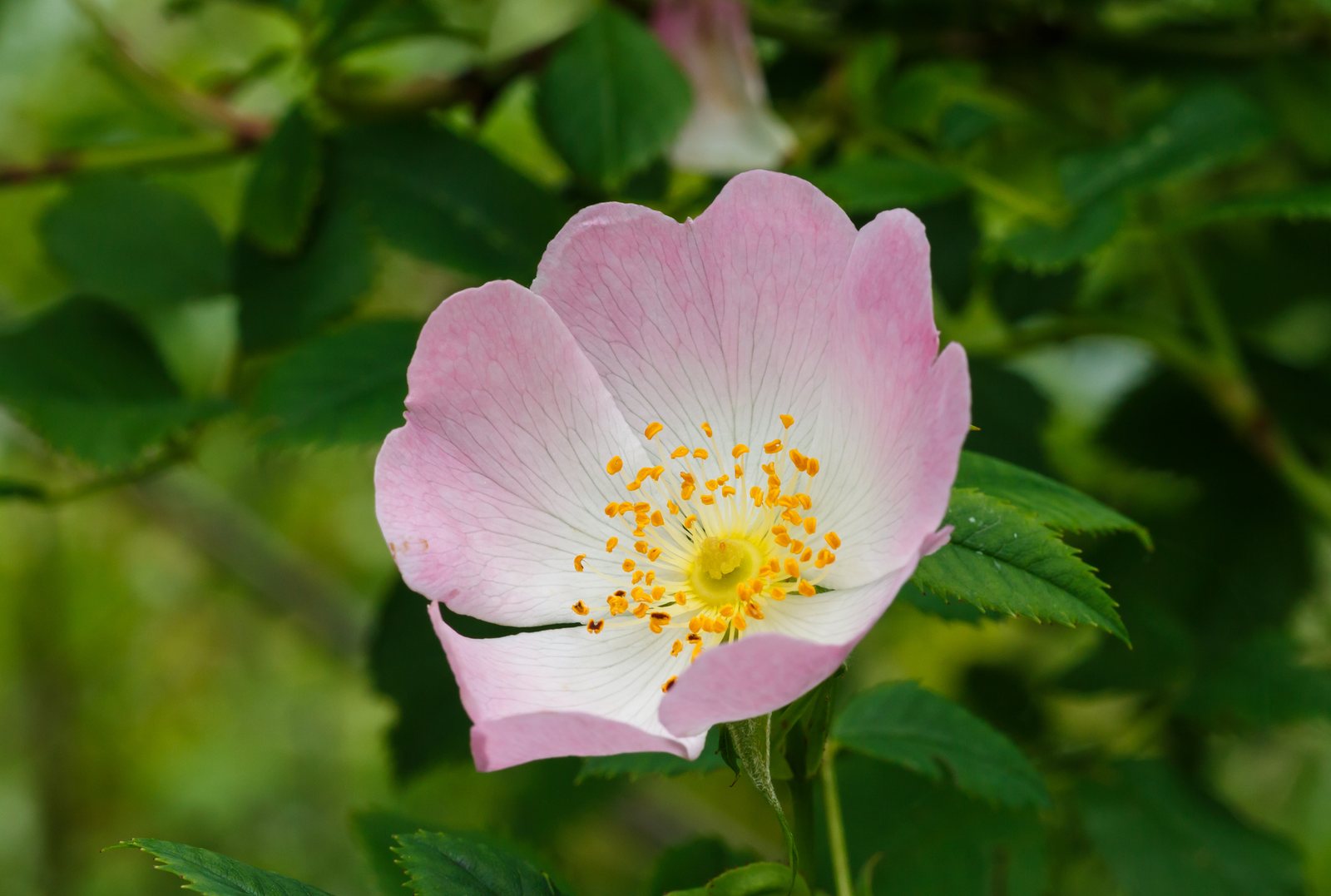
Princess Anne is a compact, repeat-flowering English shrub rose grown for its densely petalled pink flowers and light-to-medium tea fragrance. The blooms open deep pink and soften as they age, standing above glossy green foliage on a bushy, upright plant.
At a glance
- Sun
- Full sun, ideally at least 6 hours daily; light afternoon shade is helpful in very hot climates.
- Water
- Water deeply during establishment and dry spells, keeping the root zone moist but not waterlogged. Established plants tolerate brief dry periods, but flowering suffers in prolonged drought.
- Soil
- Fertile, moisture-retentive, well-drained soil; slightly acidic to neutral is ideal. Improve sandy or heavy soils with organic matter.
- Height
- 3-4 ft (0.9-1.2 m)
- Spread
- 3-4 ft (0.9-1.2 m)
- Flowers
- Repeat flushes from late spring or early summer into autumn; deep pink flowers soften to clearer pink, with occasional yellow tones on the petal undersides.
- Foliage
- Glossy, mid- to dark-green leaves with toothed leaflets; young growth may be bronze-tinted.
- Growth
- Moderate
- Care needed
- Medium
The year at a glance
- Disease resistant
- Wildlife
- Low allergen
- Fragrant
| J | F | M | A | M | J | J | A | S | O | N | D | |
|---|---|---|---|---|---|---|---|---|---|---|---|---|
| Flowers | ||||||||||||
| Plant |
Northern hemisphere months. In Australia, shift them by six.
- Difficulty
- Moderate
- Toughness
- Fairly tough
Will it suit your garden?
Pick your zone, country, light and whether you have pets.
Full sun is 6 or more hours of direct sun a day, part shade 3 to 6 hours, shade under 3.
How it grows
Planting day
1.6 ft (0.5 m)
After 1 year
2 ft (0.61 m)
After 2 years
2.4 ft (0.72 m)
After 3 years
2.7 ft (0.83 m)
After 5 years
3 ft (1.1 m)
full size
About 5 years to full size.
From a typical nursery size, at an average rate for this kind of plant. A rule of thumb, not a forecast.
Good to know
- Cats and dogs
- Safe
- Growth rate
- Moderate
Care
Jobs through the year
- WaterApr–May, Sep–Oct, every 14 days
- Deep-water established plants when rainfall is insufficient; newly planted roses need more frequent watering.
- WaterJun–Aug, every 7 days
- During dry spells, soak established roots at soil level to maintain flowering.
- FeedMar–Apr
- Apply rose fertiliser as spring growth starts, following label rates.
- FeedJun–Jul
- Feed once after the first main flush; avoid late-season nitrogen.
- MulchMar–Apr
- Apply 5–8 cm of organic mulch, keeping it away from the stems.
- PruneFeb–Mar
- After severe freezes, remove damaged and crossing stems and shorten remaining growth by one-third to one-half.
- DeadheadMay–Oct, every 7 days
- Remove spent flower clusters back to a strong leaf.
- ProtectOct–Nov
- Collect and discard diseased fallen leaves to reduce overwintering infection.
- ProtectNov–Dec
- In cold, exposed gardens, mound loose soil over the crown or graft union after dormancy.
- ProtectMar
- Remove the winter soil mound as spring growth begins.
- Water at soil level, soaking the root zone rather than frequently wetting the surface.
- Feed with a rose fertiliser in spring and again after the first main flowering flush, following the label; avoid late-season nitrogen in cold climates.
- Apply 2-3 in (5-8 cm) of organic mulch in spring, keeping it clear of the stems.
- Remove spent flower clusters back to a strong leaf to encourage repeat flowering.
- In cold, exposed gardens, protect the crown or graft union with a loose mound of soil after the plant becomes dormant.
Pruning. In late winter or early spring, after the worst freezes and as buds begin to swell, remove dead, damaged and crossing stems, then shorten the remaining growth by roughly one-third to one-half. Aim for an open, balanced framework and use clean, sharp secateurs.
Through the year
- Late autumn
- Plant bare-root roses where the ground is workable; in very cold regions, wait until spring.
- Winter
- Check that winter protection remains in place in cold regions and that roots are not sitting in water.
- Late winter to early spring
- Prune as buds begin to swell, adjusting the timing to local frost conditions.
- Spring
- Feed, water if needed and replenish mulch before strong growth begins.
- Summer
- Deadhead spent clusters, water deeply during dry spells and feed after the first main flush.
- Autumn
- Collect fallen diseased leaves and stop feeding; avoid hard pruning before winter.
In the garden
- Plant near the front or middle of a sunny mixed border, with catmint or hardy geraniums softening the base.
- Repeat several shrubs along a path to create a low, flowering boundary without formal clipping.
- Use in a traditional rose bed with pale pink, purple or white companions.
- Grow in a large, well-drained container near a seating area where the flowers and fragrance can be enjoyed.
Garden styles it suits: English country, Cottage garden, Romantic rose garden, Traditional, Sensory garden and Modern courtyard.
Plant it with: Catmint, Hardy geranium, Salvia, Lady's mantle, Allium and Lavender.
Wildlife: The densely double flowers offer less accessible pollen than single roses. The shrub can provide shelter for small garden wildlife, and aphids on its shoots support predatory insects.
Problems to watch for
- Black spot: remove affected fallen leaves, water at soil level and maintain airflow; use a locally approved rose fungicide if persistent disease warrants treatment.
- Powdery mildew: avoid drought stress and overcrowding, and remove badly affected shoots.
- Aphids: wash small colonies off young shoots with water and encourage ladybirds and other predators.
- Poor flowering: check for insufficient sun, drought or excess nitrogen; improve light and watering, and use a balanced rose feed rather than lawn fertiliser.
Safety
Not known to be toxic to cats, dogs, horses or people. Thorns can puncture skin or injure mouths, and swallowing plant material may cause mild stomach upset; hairs inside rose hips can irritate the mouth and digestive tract.
Easily confused with
Gertrude Jekyll rose (Rosa 'Ausbord')
Gertrude Jekyll usually grows taller, with larger, more classically quartered pink rosettes and a strong old-rose fragrance; Princess Anne is more compact, with narrower petals and a tea fragrance.
The name
Bred by David Austin, Princess Anne was named in honour of Anne, the Princess Royal.
Propagation. Softwood or semi-ripe cuttings can produce plants true to the cultivar, although rooting success varies. Seedlings will not come true; check local plant breeders' rights or patent restrictions before propagating.
Checked against open data
- Accepted botanical name
- Rosa
Sources: GBIF (CC BY 4.0). The care and design notes are LandscapeGPT's own.
See it in your own yard.
Upload a photo of your yard and see it redesigned with plants that suit your climate, each checked against your zone.