Purple basil
Ocimum basilicum 'Purple Ruffles'. Family Lamiaceae. Annual.
Also called Purple Ruffles basil.
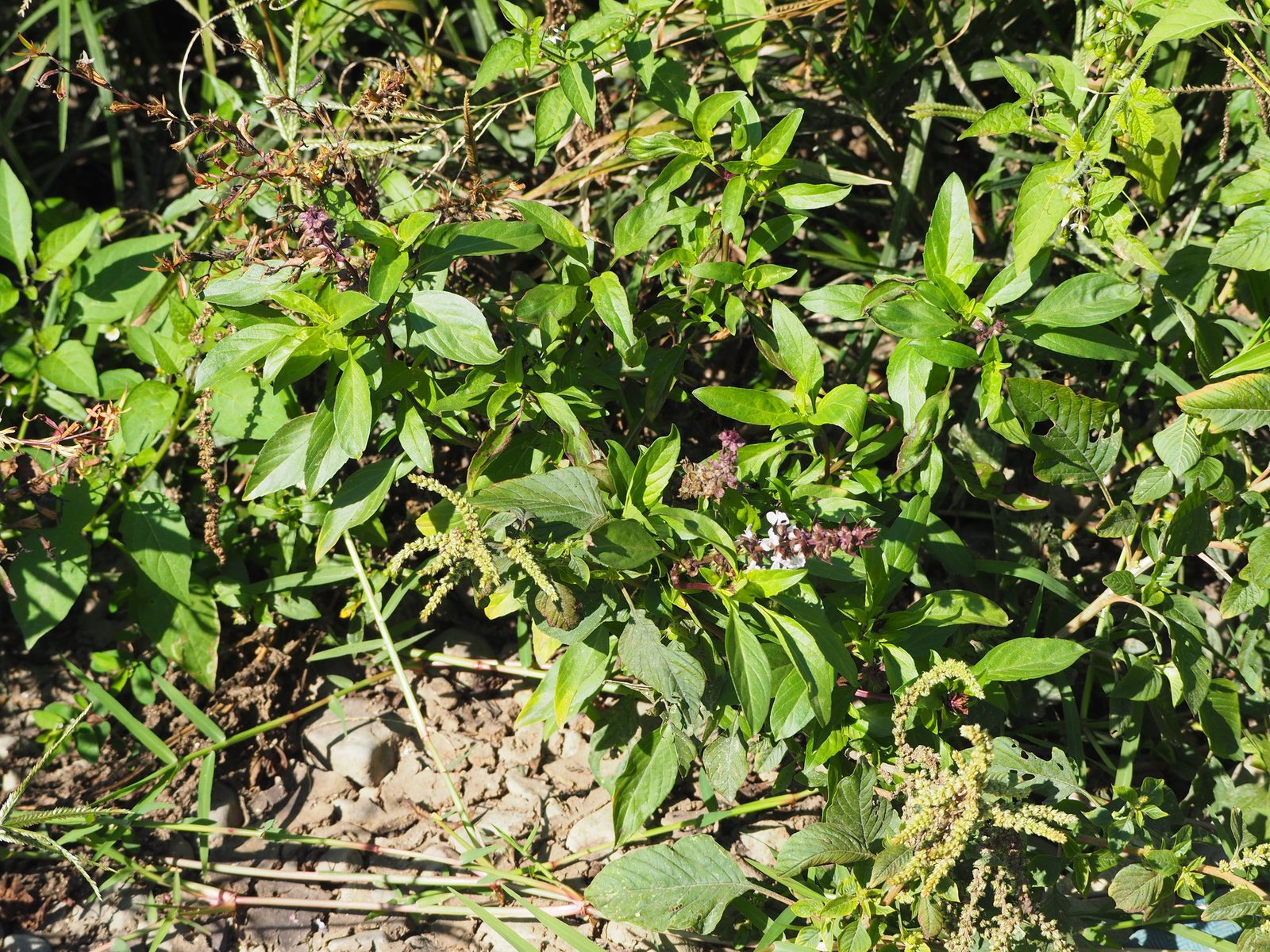
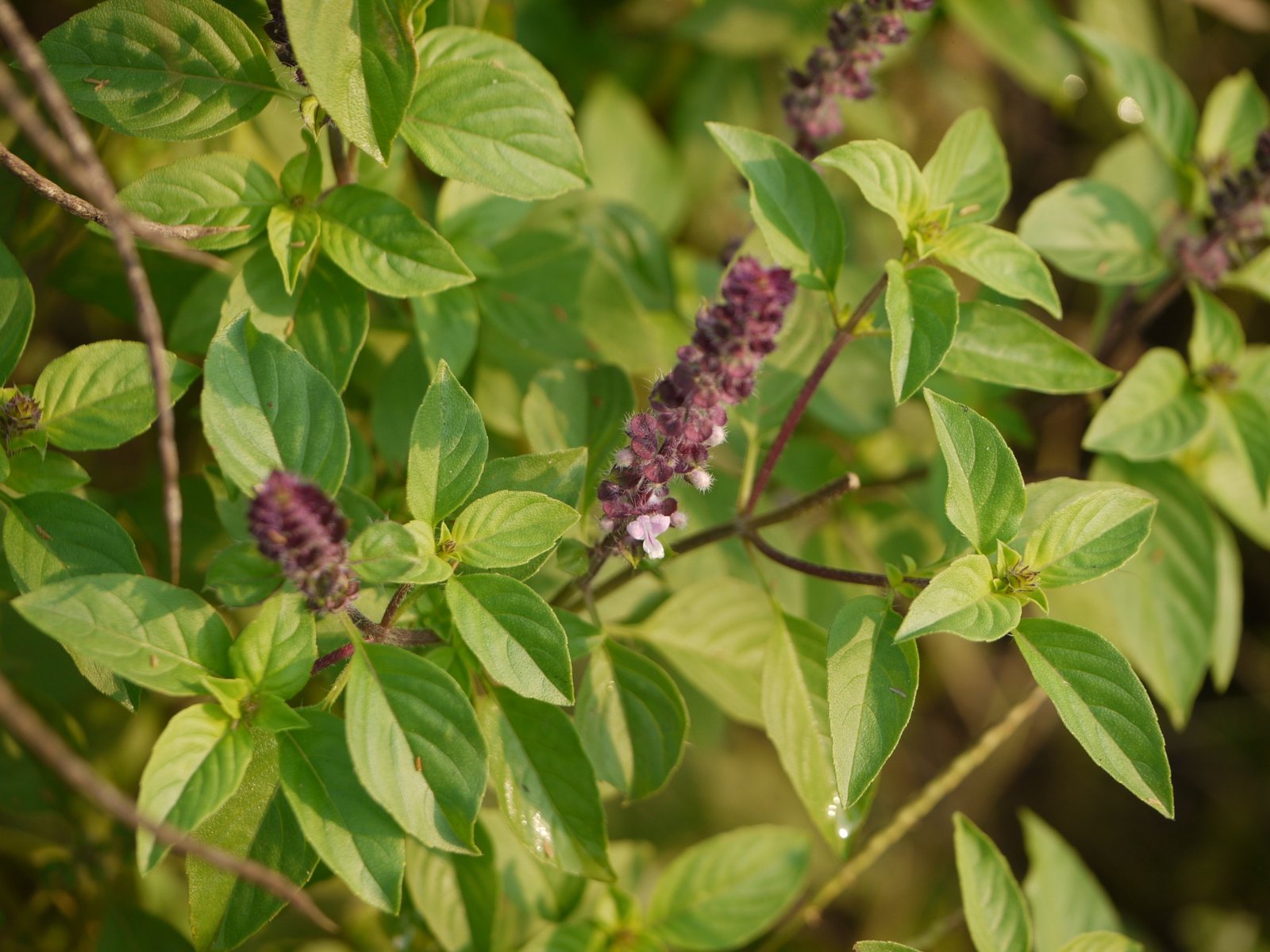
Purple Ruffles is a sweet basil cultivar with deeply crinkled, fringed purple leaves, grown as an annual. Its edible, aromatic foliage adds colour to herb beds, mixed borders and containers, and can be used fresh in salads or as a garnish.
At a glance
- Sun
- Full sun, ideally at least 6 hours daily; light afternoon shade can help in very hot climates.
- Water
- Keep evenly moist but not waterlogged. Water when the soil surface begins to dry; containers may need daily checking in hot weather.
- Soil
- Fertile, well-drained soil enriched with compost; avoid cold, wet ground.
- Height
- 1-2 ft (0.3-0.6 m)
- Spread
- 1-1.5 ft (0.3-0.45 m)
- Flowers
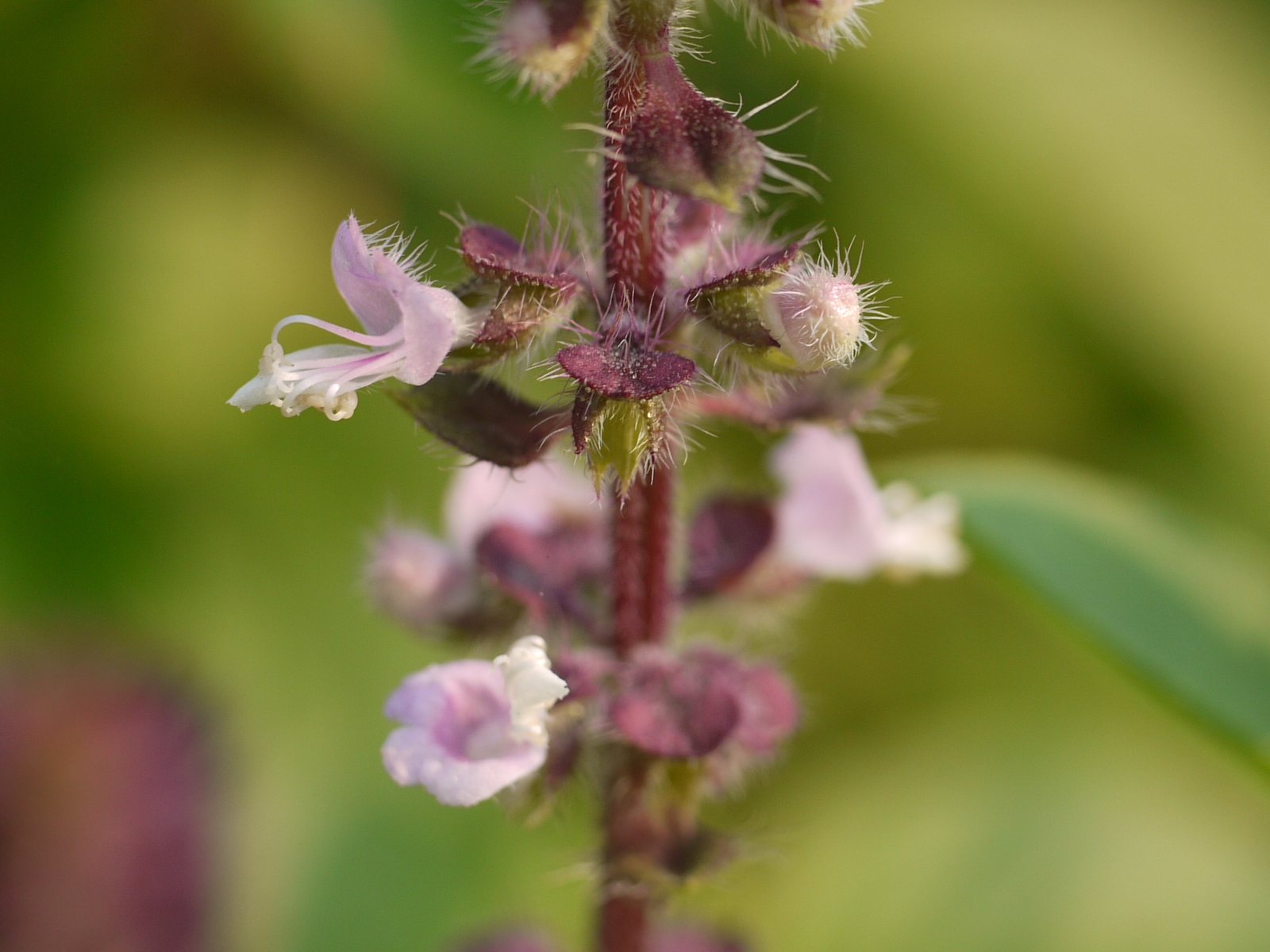
- Spikes of small pale pink to lavender flowers in summer and early autumn if shoots are not regularly pinched.
- Foliage
- Broad, aromatic, dark purple leaves with deeply puckered surfaces and strongly toothed, ruffled edges; some green colouring can occur.
- Growth
- Fast in warm weather.
- Care needed
- Medium
The year at a glance
- Pollinators
- Heat tolerant
- Low allergen
- Fragrant
- Edible
| J | F | M | A | M | J | J | A | S | O | N | D | |
|---|---|---|---|---|---|---|---|---|---|---|---|---|
| Flowers | ||||||||||||
| Fruit | ||||||||||||
| Plant |
Northern hemisphere months. In Australia, shift them by six.
- Difficulty
- Moderate
- Toughness
- Needs looking after
Will it suit your garden?
Pick your zone, country, light and whether you have pets.
Full sun is 6 or more hours of direct sun a day, part shade 3 to 6 hours, shade under 3.
How it grows
Planting day
0.5 ft (0.15 m)
After 1 year
1.5 ft (0.45 m)
full size
Full size in one season.
From a typical nursery size, at an average rate for this kind of plant. A rule of thumb, not a forecast.
Good to know
- Cats and dogs
- Safe
- Native to
- Australia
- Growth rate
- Fast
Care
Jobs through the year
- WaterMay, Sep–Oct, every 7 days
- Water at soil level when the surface begins to dry; seedlings need closer attention.
- WaterJun–Aug, every 3 days
- Keep soil evenly moist, adjusting for rain and heat; containers may need daily checks.
- MulchMay–Jun
- Once soil is warm, apply a thin organic mulch without covering stems.
- PruneJun
- Pinch tips above a pair of leaves once plants have several healthy leaf pairs.
- DeadheadJul–Sep, every 7 days
- Remove flower spikes for leaf production, or leave a few for pollinators.
- ProtectMay–Jun
- Plant out only after frost risk passes and nights stay above 10°C; protect from slugs.
- HarvestJun–Oct, every 7 days
- Snip tips above leaf pairs, taking no more than one-third; gather remaining leaves before frost.
- Plant out after frost danger has passed and nights are consistently above 10°C (50°F); protect from cold winds.
- Space plants about 1-1.5 ft (0.3-0.45 m) apart so air can move between them.
- Water at soil level, preferably in the morning, without leaving pots standing in water.
- Mix compost into beds before planting; feed container plants lightly with a balanced liquid fertiliser according to its label.
- Apply a thin organic mulch once the soil is warm, keeping it clear of the stems.
Pruning. Once plants have several pairs of leaves, pinch out shoot tips just above a pair of leaves to encourage branching. Harvest this way throughout summer and remove flower spikes promptly if leaf production is the priority.
Harvest
Start harvesting once plants are 15–20 cm (6–8 in) tall with several pairs of healthy, fully opened leaves, usually in late spring or summer after warm weather arrives. Pick individual leaves or snip shoot tips just above a pair of leaves, taking no more than one-third of the plant at a time.
Through the year
- Early spring
- Sow indoors in a bright, warm position, about 6 weeks before your expected last frost.
- Late spring
- Harden plants off gradually and plant outside once nights are reliably warm.
- Early summer
- Pinch growing tips to build bushy plants and begin light harvesting.
- Summer
- Check moisture frequently, harvest regularly and remove flower spikes unless wanted for pollinators.
- Late summer
- Take cuttings from healthy, non-flowering shoots if you want young plants for a bright indoor position.
- Autumn
- Harvest remaining usable leaves before cold weather; remove plants killed by frost.
In the garden
- Edge vegetable beds with purple foliage that contrasts with green lettuces and herbs.
- Use in sunny patio pots with green basil or compact marigolds for contrasting colour and texture.
- Repeat small groups near the front of a summer border among pale flowers.
- Plant in a geometric herb parterre, pinching regularly to keep the outlines compact.
Garden styles it suits: Potager (kitchen garden), Herb parterre, Edible landscape, Cottage garden, Sensory garden and Small-space.
Plant it with: Tomatoes, Sweet peppers, Green sweet basil, French marigolds, Dwarf zinnias and Lettuce.
Wildlife: Flowers provide nectar and pollen for bees and other visiting insects. Leave a few plants or shoots unpinched if you want them to flower.
Problems to watch for
- Slugs and snails can strip young plants: check after dark, remove them by hand and protect new transplants.
- Aphids gather on tender shoots: rinse off small colonies with water and check growing tips regularly.
- Basil downy mildew causes yellowing or pale patches above and grey-purple growth beneath leaves: remove affected plants, improve spacing and avoid wetting foliage.
- Cold or waterlogged soil causes stalled growth, blackened leaves or root rot: delay planting until warm weather and use freely draining soil or containers.
Safety
Sweet basil is not known to be toxic to cats, dogs, horses or people. Its leaves and flowers are edible; eating large quantities may cause digestive upset. Concentrated basil essential oil is not equivalent to the fresh plant and should not be given to pets.
Easily confused with
Dark Opal basil (Ocimum basilicum 'Dark Opal')
Also has purple, basil-scented leaves, but they are much flatter and less deeply fringed than those of Purple Ruffles.
Purple shiso (Perilla frutescens)
Can have similarly crinkled purple leaves, but they are generally broader and more sharply saw-toothed, with a distinct shiso aroma rather than sweet basil's scent. Do not identify edible plants by colour alone.
The name
The name basil comes from a Greek word meaning royal, while 'Purple Ruffles' describes the cultivar's purple, heavily ruffled leaves.
Propagation. Sow named seed indoors in warmth, around 20-25°C (68-77°F), covering lightly. Non-flowering stem cuttings root readily in water or moist potting mix. Home-saved seed may not match the parent because basil cultivars can cross-pollinate; remove green off-types if maintaining purple foliage.
Checked against open data
- Accepted botanical name
- Ocimum basilicum
- In the US and Canada
- Introduced in Hawaii, the lower 48 states and Puerto Rico.
- Native range
- Andaman Is., Assam, Bangladesh, Bismarck Archipelago, Borneo, Cambodia, China South-Central, China Southeast, East Himalaya, India, Jawa and Laos.
- Measured
- Soil pH 6.5 to 7. Average height 36 cm.
Sources: GBIF (CC BY 4.0), USDA PLANTS and Trefle (CC BY 4.0). The care and design notes are LandscapeGPT's own.
See it in your own yard.
Upload a photo of your yard and see it redesigned with plants that suit your climate, each checked against your zone.