Purple cranesbill
Geranium × magnificum. Family Geraniaceae. Perennial.
Also called Showy cranesbill, Magnificent cranesbill.
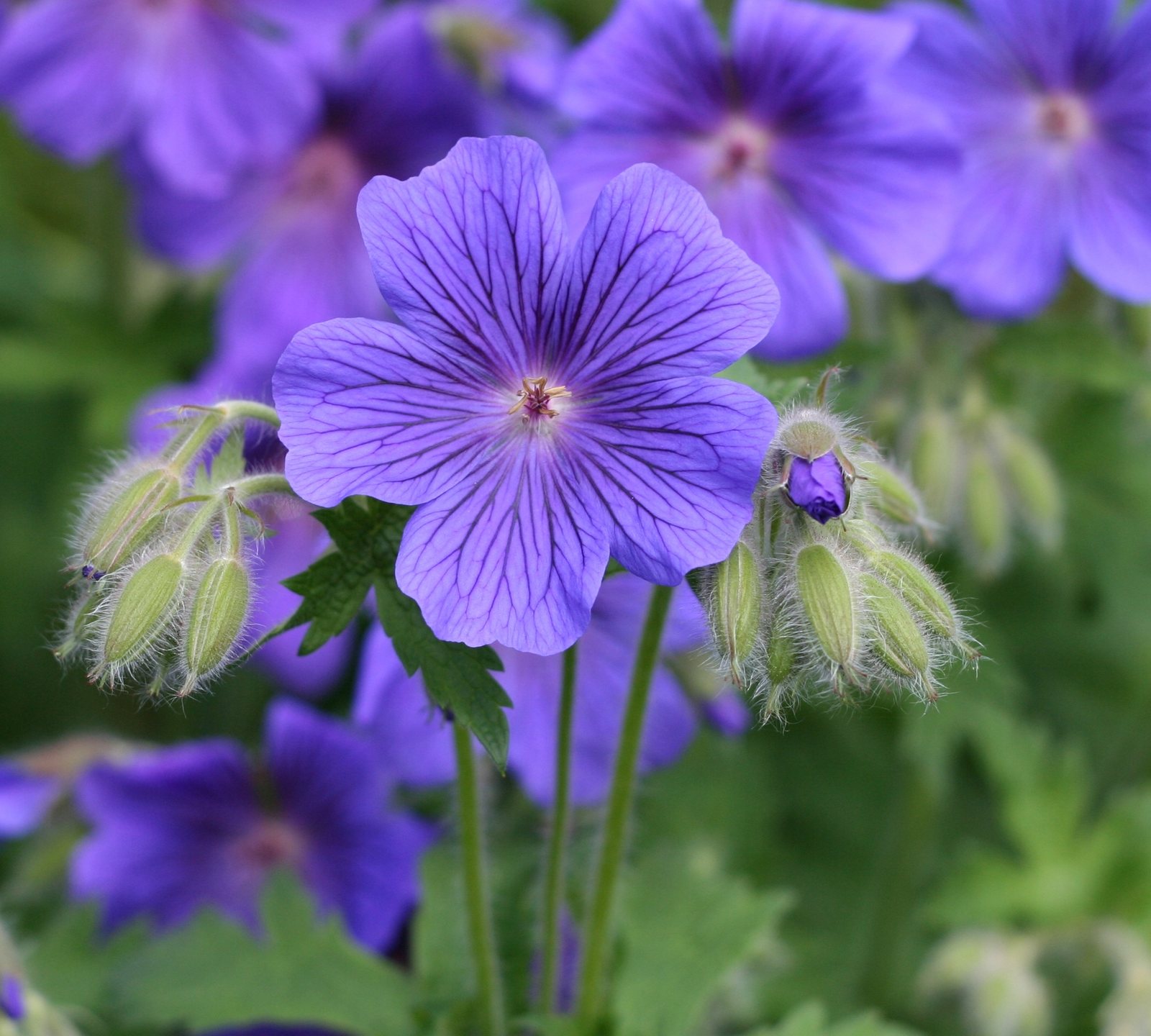
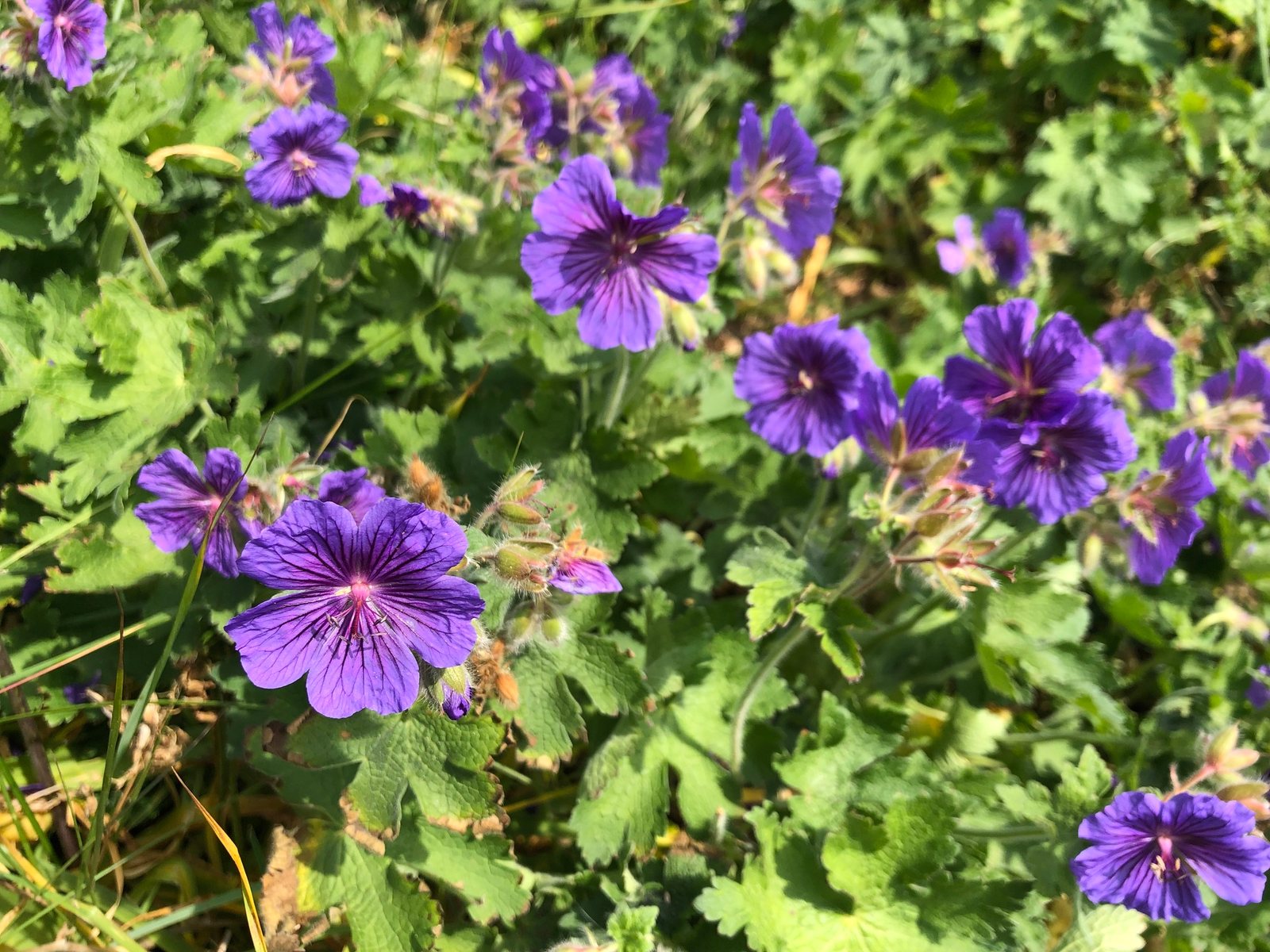
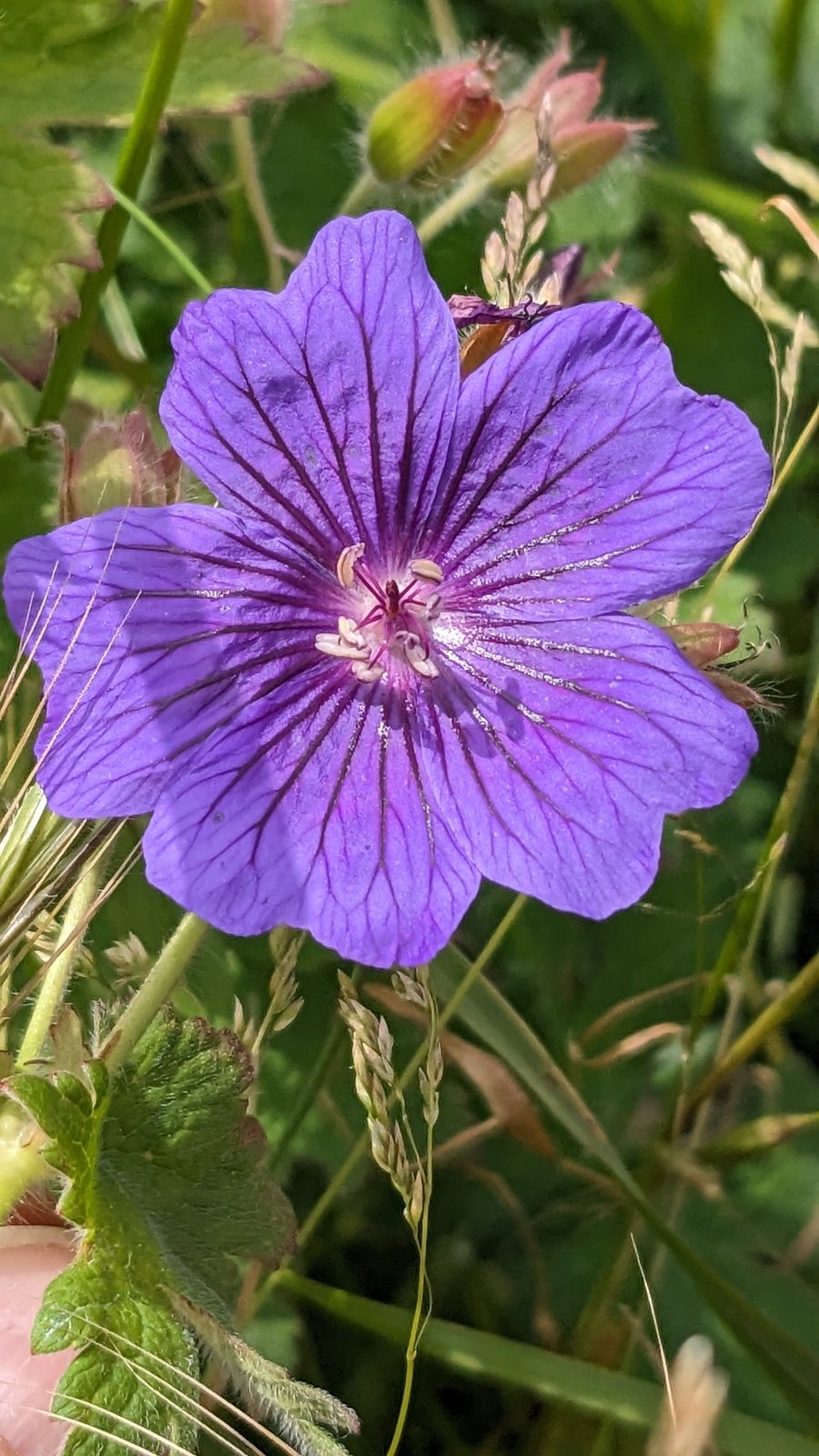
Purple cranesbill forms a broad clump of lobed leaves topped with large, violet-blue flowers with darker veins. Grow it for its concentrated display in late spring and early summer, its useful ground-covering foliage and its often colourful autumn leaves. This sterile hybrid does not spread by seed.
At a glance
- Sun
- Full sun to partial shade; afternoon shade helps in hot summers.
- Water
- Moderate; water regularly while establishing, then during prolonged dry spells. Established clumps tolerate some drought but flower and retain their foliage better with even moisture.
- Soil
- Well-drained soil with moderate fertility; tolerates clay, loam and sandy soil if drainage is adequate. Avoid persistently wet ground.
- Height
- 1.5-2.5 ft (0.45-0.75 m)
- Spread
- 2-3 ft (0.6-0.9 m)
- Flowers
- Violet-blue to purple flowers with dark purple veins, mainly in late spring and early summer; the main display lasts several weeks.
- Foliage
- Rounded, deeply lobed, softly hairy green leaves; often turns red or orange in autumn before dying back.
- Growth
- Moderate; develops into a substantial clump over several growing seasons.
- Care needed
- Low
The year at a glance
- Pollinators
- Deer resistant
- Drought tolerant
- Cold hardy
- Low allergen
| J | F | M | A | M | J | J | A | S | O | N | D | |
|---|---|---|---|---|---|---|---|---|---|---|---|---|
| Flowers | ||||||||||||
| Plant |
Northern hemisphere months. In Australia, shift them by six.
- Difficulty
- Easy
- Toughness
- Very tough
Will it suit your garden?
Pick your zone, country, light and whether you have pets.
Full sun is 6 or more hours of direct sun a day, part shade 3 to 6 hours, shade under 3.
How it grows
Planting day
1 ft (0.3 m)
After 1 year
1.3 ft (0.4 m)
After 2 years
1.6 ft (0.5 m)
After 3 years
2 ft (0.6 m)
full size
About 3 years to full size.
From a typical nursery size, at an average rate for this kind of plant. A rule of thumb, not a forecast.
Good to know
- Cats and dogs
- Safe
- Growth rate
- Moderate
Care
Jobs through the year
- WaterApr–May, Sep–Oct, every 14 days
- Water established clumps if soil is dry; newly planted clumps need more frequent watering.
- WaterJun–Aug, every 7 days
- Water deeply during prolonged drought to preserve foliage; young plants need closer checks.
- MulchMar–Apr
- Spread a thin compost mulch around, not over, the crown.
- DivideMar–Apr, Sep
- Divide crowded clumps when growth or flowering declines.
- PruneFeb–Mar
- Remove remaining dead growth before new shoots emerge.
- PruneJun–Jul
- After flowering, shear spent stems and tired foliage to encourage fresh leaves, not repeat flowers.
- ProtectMar–May
- Inspect emerging shoots for slugs and protect them if damage occurs.
- Water deeply during the first growing season whenever the soil begins to dry.
- Spread a thin layer of compost around the clump in spring; avoid heavy nitrogen feeding.
- Mulch to conserve moisture, keeping mulch away from the crown.
- Water during extended summer drought if leaves begin to wilt or brown.
- Divide crowded clumps in spring or early autumn when growth or flowering declines.
Pruning. After flowering, shear off spent stems and tired foliage to encourage fresh leaves; a substantial second flush of flowers is unlikely. Remove remaining dead growth in late winter or early spring before new shoots develop.
Through the year
- Early spring
- Remove dead foliage and apply a thin layer of compost around established clumps.
- Spring
- Plant or divide clumps and water thoroughly.
- Late spring
- Check moisture during dry weather as flower stems develop.
- Early summer
- Shear back spent flower stems and untidy leaves after the main display.
- Summer
- Water during prolonged drought to support fresh foliage.
- Early autumn
- Divide or transplant if needed, allowing time for roots to establish before freezing weather.
In the garden
- Plant in groups along the front or middle of a mixed border for a broad sweep of violet-blue flowers.
- Use beneath roses to cover bare lower stems without climbing into the shrubs.
- Combine with upright salvias and catmint for contrasting flower shapes and a longer seasonal display.
- Edge lightly shaded paths or deciduous shrub borders with its mounds of lobed foliage.
Garden styles it suits: English country, Cottage garden, Arts and Crafts, Romantic rose garden, Blues and silvers and Low-maintenance.
Plant it with: Roses, Catmint, Woodland sage, Lady's mantle, Bearded iris and Ornamental onions.
Wildlife: The open flowers provide forage for visiting bees. Although the hybrid is sterile and produces no useful seed crop, its flowers still attract pollinators.
Problems to watch for
- Powdery mildew can coat leaves in dry, crowded conditions; improve airflow, water the soil during drought and remove badly affected foliage.
- Slugs and snails may damage emerging shoots; check young growth and use barriers or an approved iron-phosphate bait where needed.
- Crown rot can occur in waterlogged soil; improve drainage or move the plant to a better-drained position.
- Leaves may scorch or collapse in hot, dry weather; provide afternoon shade, water deeply and trim away damaged growth.
Safety
Not known to be toxic to people, cats, dogs or horses; no part is recognised as a significant poisoning hazard. It is not an edible plant, and eating garden foliage can still cause digestive upset.
Easily confused with
Rozanne cranesbill (Geranium 'Gerwat')
Usually sold as Rozanne, it has violet-blue flowers with conspicuous pale centres and a long flowering season extending into autumn, rather than a short, concentrated early-summer display.
Meadow cranesbill (Geranium pratense)
Typically has more finely divided leaves and a taller, more open habit; fertile plants develop the pointed seed capsules absent from sterile purple cranesbill.
The name
Geranium comes from the Greek word for crane, referring to the beak-shaped fruits of the genus, while magnificum means magnificent or splendid.
Propagation. Divide established clumps in spring or early autumn, retaining healthy roots and shoots on each section. This sterile hybrid cannot be reliably propagated from seed.
Checked against open data
- Accepted botanical name
- Geranium magnificum
Sources: GBIF (CC BY 4.0). The care and design notes are LandscapeGPT's own.
See it in your own yard.
Upload a photo of your yard and see it redesigned with plants that suit your climate, each checked against your zone.