Purple Diamond loropetalum
Loropetalum chinense 'Shang-hi'. Family Hamamelidaceae. Shrub.
Also called Purple Diamond Chinese fringe flower, Loropetalum chinense 'Shang-hi'.
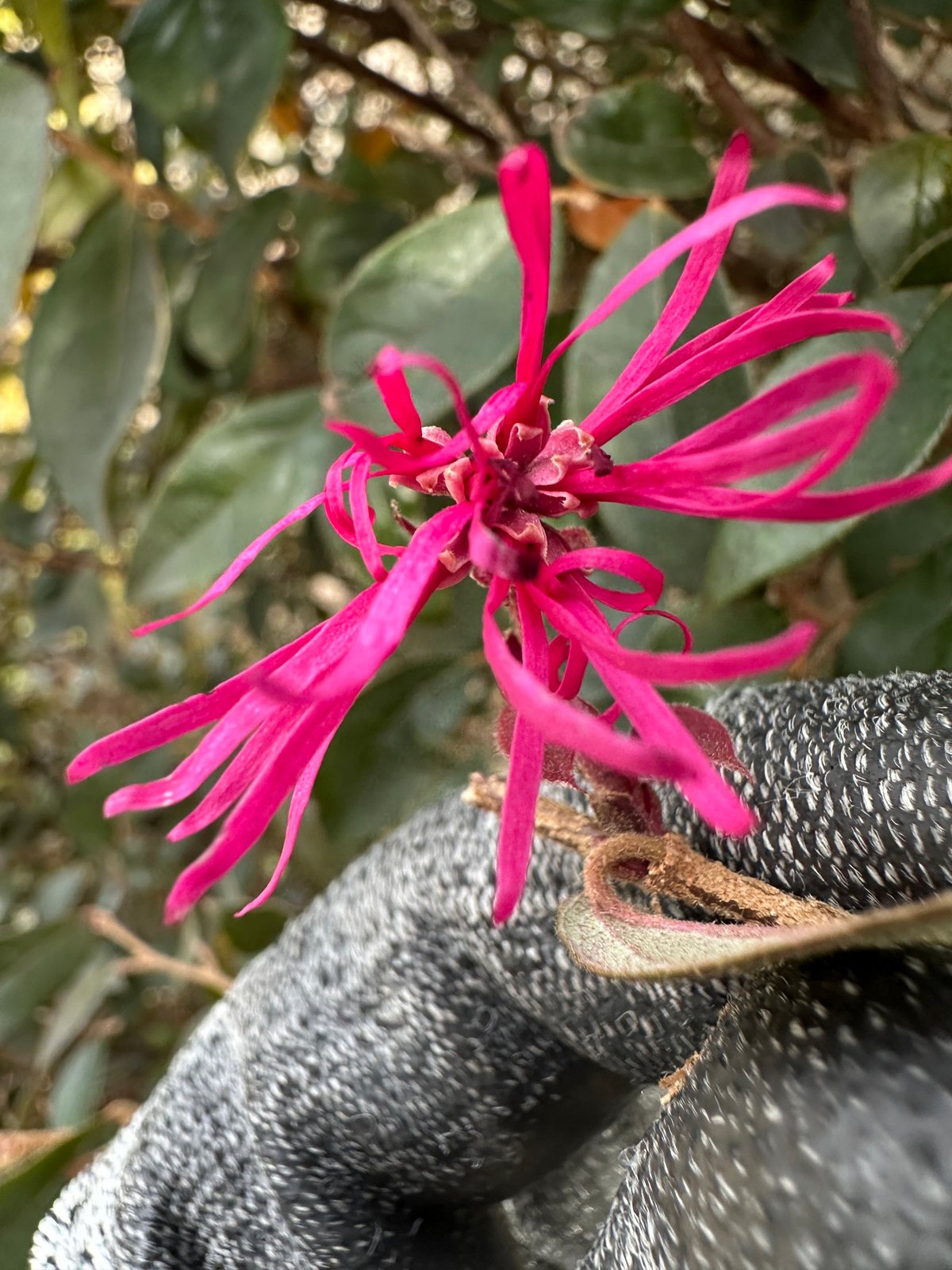
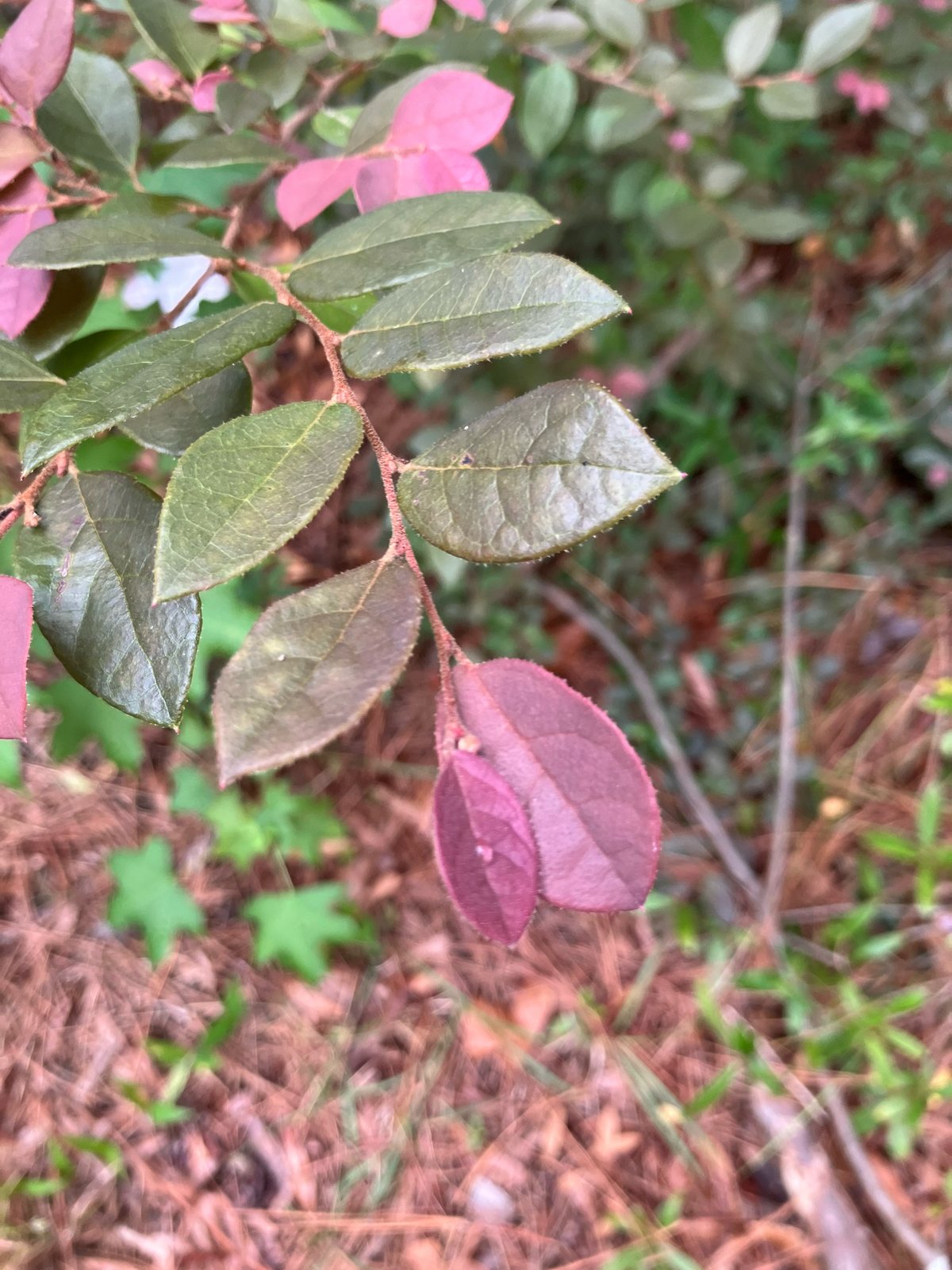
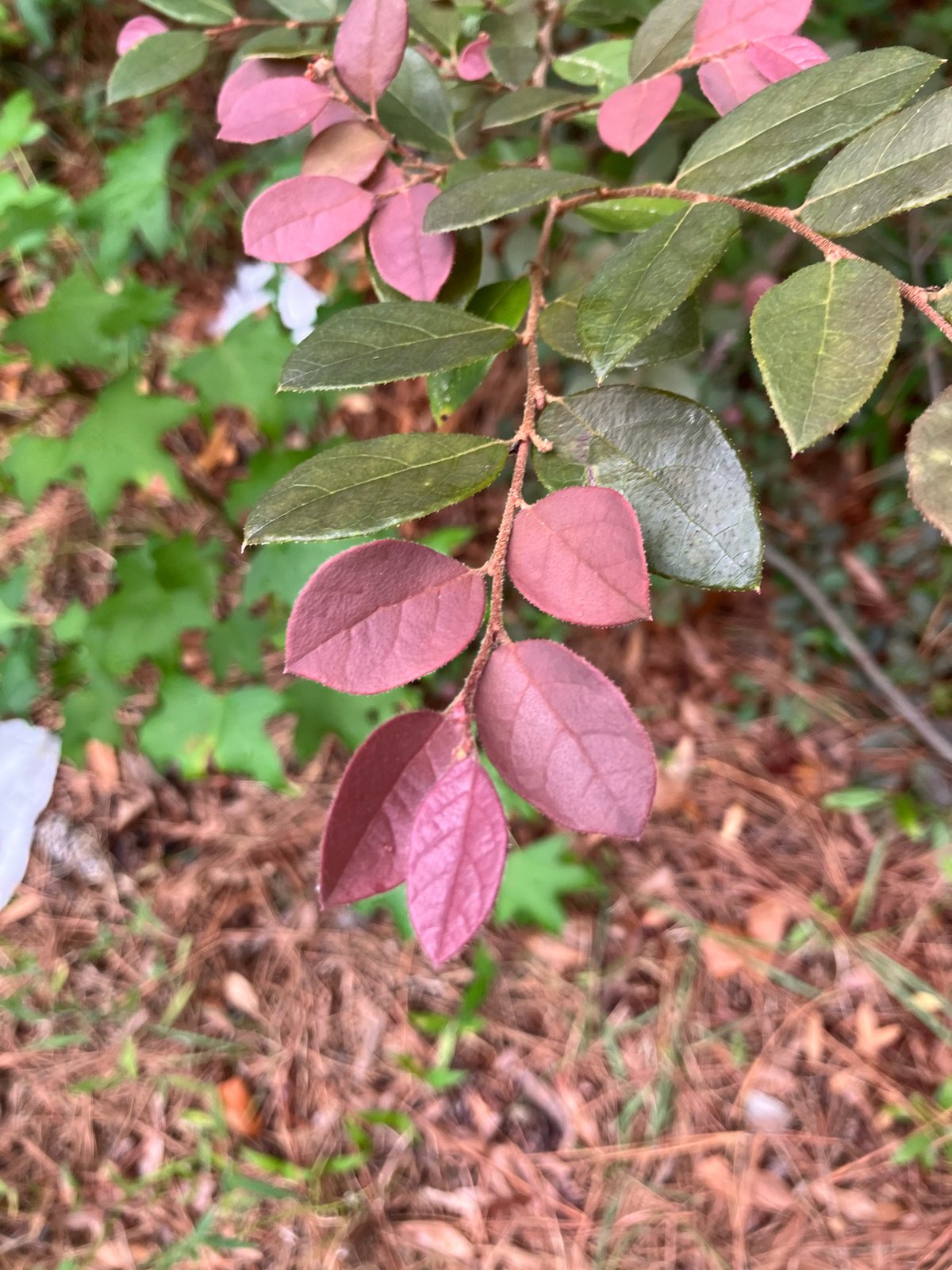
Purple Diamond is a compact evergreen shrub grown for its purple leaves and bright pink, ribbon-like spring flowers. It makes a colourful hedge or foundation shrub in mild climates, but needs acidic, well-drained soil and shelter from cold, drying winds.
At a glance
- Sun
- Full sun to partial shade. Sun gives the strongest purple colour; afternoon shade helps in very hot climates.
- Water
- Water regularly while establishing, then during prolonged dry spells. Keep the root zone moist but never waterlogged.
- Soil
- Humus-rich, well-drained, acidic soil, ideally pH 5.0-6.5. Chalky or alkaline soil often causes yellowing.
- Height
- 4-6 ft (1.2-1.8 m)
- Spread
- 4-6 ft (1.2-1.8 m)
- Flowers
- Bright pink, narrow-petalled flowers in spring, sometimes followed by scattered flowers in summer or autumn.
- Foliage
- Evergreen. Small, oval, burgundy-purple leaves on densely branching stems. Colour is strongest with good light and may become greener in shade.
- Growth
- Moderate
- Care needed
- Low
The year at a glance
- Pollinators
- Deer resistant
- Heat tolerant
- Wildlife
- Low allergen
| J | F | M | A | M | J | J | A | S | O | N | D | |
|---|---|---|---|---|---|---|---|---|---|---|---|---|
| Flowers | ||||||||||||
| Plant |
Northern hemisphere months. In Australia, shift them by six.
- Difficulty
- Moderate
- Toughness
- Fairly tough
Will it suit your garden?
Pick your zone, country, light and whether you have pets.
Full sun is 6 or more hours of direct sun a day, part shade 3 to 6 hours, shade under 3.
How it grows
Planting day
1.6 ft (0.5 m)
After 1 year
2.3 ft (0.7 m)
After 2 years
3 ft (0.9 m)
After 3 years
4 ft (1.1 m)
After 5 years
5 ft (1.5 m)
full size
About 5 years to full size.
From a typical nursery size, at an average rate for this kind of plant. A rule of thumb, not a forecast.
Good to know
- Cats and dogs
- Safe
- Growth rate
- Moderate
Care
Jobs through the year
- WaterApr–May, Sep–Oct, every 14 days
- Water established plants deeply if soil is drying; young plants need more frequent watering.
- WaterJun–Aug, every 7 days
- Water established plants deeply during dry weather; skip when rain keeps the root zone moist.
- FeedApr
- Use a light feed for acid-loving shrubs only if growth is weak; investigate yellow leaves before feeding.
- MulchMar–Apr
- Maintain 5–8 cm of organic mulch over the roots, clear of the stems.
- PruneMay–Jun
- After the main spring flowers, shorten stray shoots and remove confirmed dead wood; avoid shearing.
- ProtectJan–Mar, Nov–Dec
- Shield young plants during hard freezes; in zone 6, overwinter containers in a bright frost-free place.
- Plant with the top of the root ball level with, or slightly above, the surrounding soil.
- Water deeply during the first growing season whenever the upper soil begins to dry.
- Apply 2-3 in (5-8 cm) of organic mulch, keeping it clear of the stems.
- If growth is weak, feed lightly in spring with a fertiliser for acid-loving shrubs; avoid heavy feeding.
- In colder gardens, choose a sheltered site and protect young plants during severe freezes.
Pruning. Prune just after the main spring flowering, shortening stray shoots and removing dead or damaged wood. Avoid repeated shearing or late-season pruning, which spoils the natural shape and can reduce the next spring's flowers.
Through the year
- Early spring
- Check for winter damage and remove clearly dead or broken stems once severe frost has passed.
- Spring
- Refresh mulch and feed lightly if growth or leaf colour suggests a need.
- Late spring
- After the main flowers fade, lightly shape the shrub if necessary.
- Summer
- Water during prolonged dry weather, especially newly planted shrubs and those in containers.
- Autumn
- Plant in mild climates while the soil is warm; avoid feeding that encourages soft new growth.
- Winter
- Protect exposed young plants during severe cold and keep container drainage holes clear.
In the garden
- Plant as a loose evergreen hedge for a burgundy backdrop to green foliage.
- Use beneath windows where its mature size leaves enough clearance without constant clipping.
- Combine with white flowers and silver or lime-green foliage for clear contrast.
- Grow in a large, well-drained container with acidic potting mix on a sheltered patio.
- Place along a woodland edge where it receives several hours of sun.
Garden styles it suits: Southern, Traditional, Modern courtyard, Woodland, Low-maintenance and Small-space.
Plant it with: Azaleas, Camellias, Japanese forest grass, Lilyturf, Hostas and Japanese pieris.
Wildlife: Flowers provide some food for visiting insects, and dense foliage offers shelter for small birds. It is not a native habitat plant in the United States, United Kingdom, Canada or Australia.
Problems to watch for
- Yellow leaves with greener veins usually indicate iron deficiency in alkaline soil: test the soil, use an appropriate chelated iron treatment, and consider a raised bed or container with acidic soil.
- Root rot causes decline in persistently wet ground: improve drainage and avoid planting too deeply or watering already wet soil.
- Scale insects can weaken stems and leave sticky honeydew: inspect shoots and treat active infestations with a suitable horticultural oil according to the label.
- Cold or drying winds can scorch leaves and kill shoot tips: provide shelter, protect young plants during hard freezes, and prune dead growth after frost risk has passed.
Safety
Not known to be toxic to people, cats, dogs or horses. No poisonous part is established, but species-specific evidence is limited, especially for horses; it is not an edible plant.
Easily confused with
Chinese fringe flower (Loropetalum chinense)
Typical green-leaved forms have white flowers and can become much larger; Purple Diamond has purple foliage and pink flowers.
Purple Pixie loropetalum (Loropetalum chinense 'Shang-lo')
It has similar purple foliage and pink flowers but forms a much lower, spreading shrub with cascading branches.
Chinese fringe tree (Chionanthus retusus)
This is a deciduous tree with green leaves and clusters of white, fringed flowers, rather than a purple-leaved evergreen shrub.
The name
Loropetalum comes from Greek words meaning strap and petal, referring to the narrow flowers, while chinense means from China.
Propagation. Root semi-ripe cuttings in summer using a free-draining medium and humid conditions. Seedlings will not reliably retain the cultivar's purple foliage and compact habit; check applicable plant breeders' rights before propagating.
Checked against open data
- Accepted botanical name
- Loropetalum chinense
- Native range
- Assam, China South-Central, China Southeast, Japan, Taiwan and Thailand.
- Measured
- Average height 820 cm.
Sources: GBIF (CC BY 4.0) and Trefle (CC BY 4.0). The care and design notes are LandscapeGPT's own.
See it in your own yard.
Upload a photo of your yard and see it redesigned with plants that suit your climate, each checked against your zone.