Purple Dome New England aster
Symphyotrichum novae-angliae 'Purple Dome'. Family Asteraceae. Perennial.
Also called Aster novae-angliae 'Purple Dome', Purple Dome Michaelmas daisy.
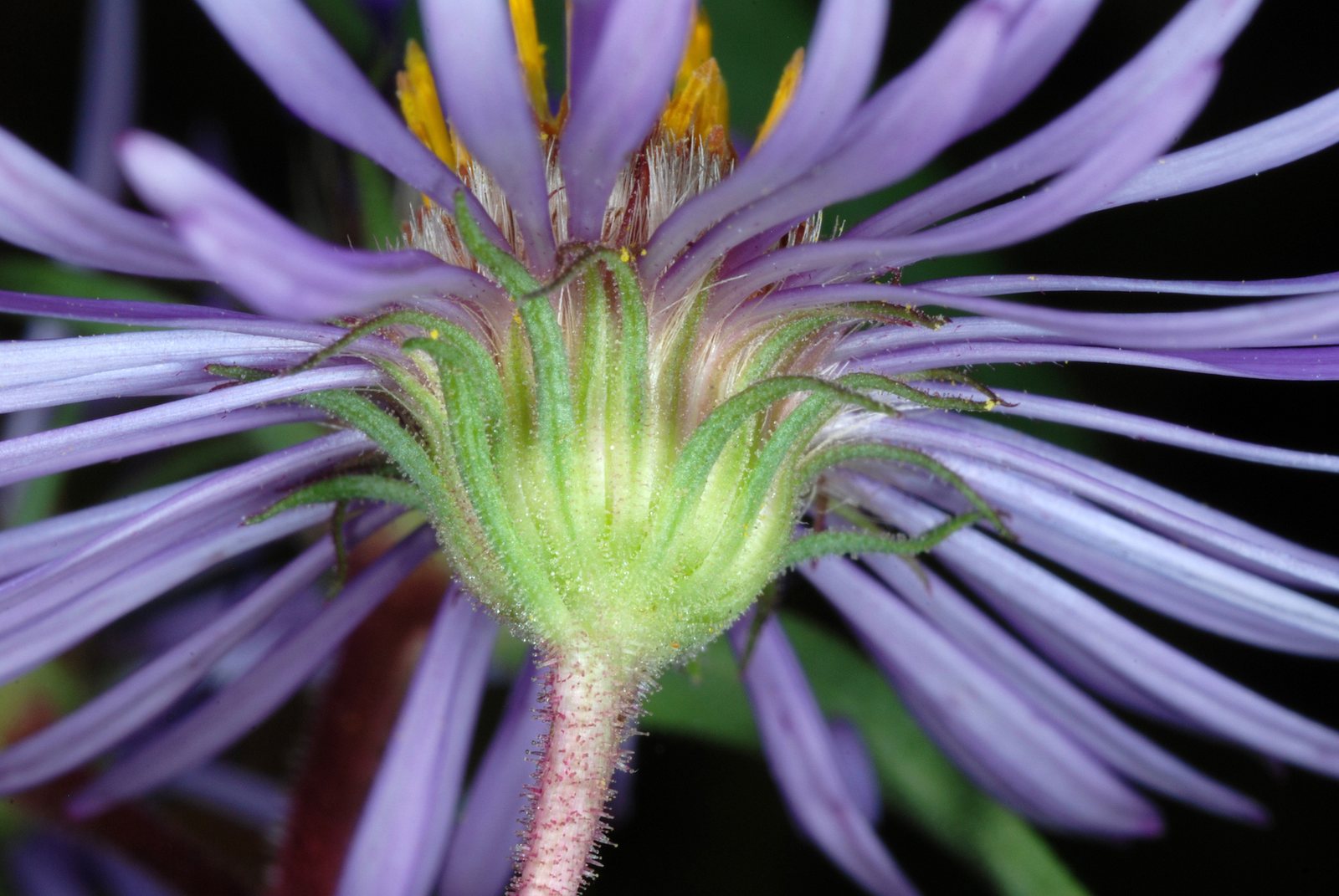
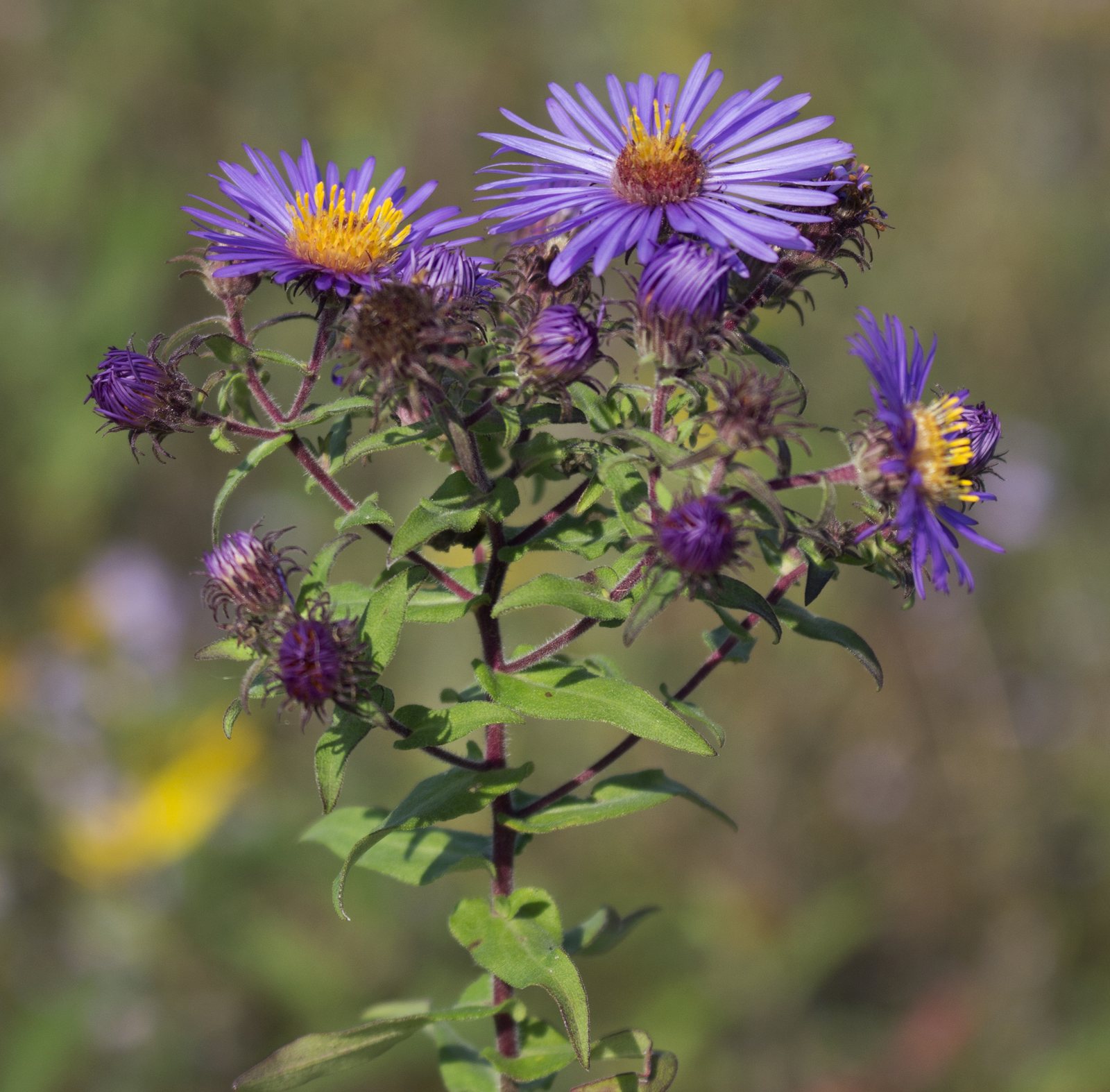
A compact, clump-forming perennial with a rounded mound of deep violet-purple daisies in late summer and autumn. It brings late colour to sunny borders and provides nectar and pollen when many summer flowers have finished.
At a glance
- Sun
- Full sun is best; tolerates light shade but may flower less and grow more loosely.
- Water
- Keep the soil moderately moist, watering deeply during dry spells. Avoid prolonged drought and waterlogged ground.
- Soil
- Fertile, moisture-retentive but well-drained soil; tolerates clay if it does not remain waterlogged. Suitable for slightly acidic to slightly alkaline soil.
- Height
- 1.5-2 ft (0.45-0.6 m)
- Spread
- 2-3 ft (0.6-0.9 m)
- Flowers
- Late summer through autumn; deep violet-purple daisies with yellow centres that darken as they age.
- Foliage
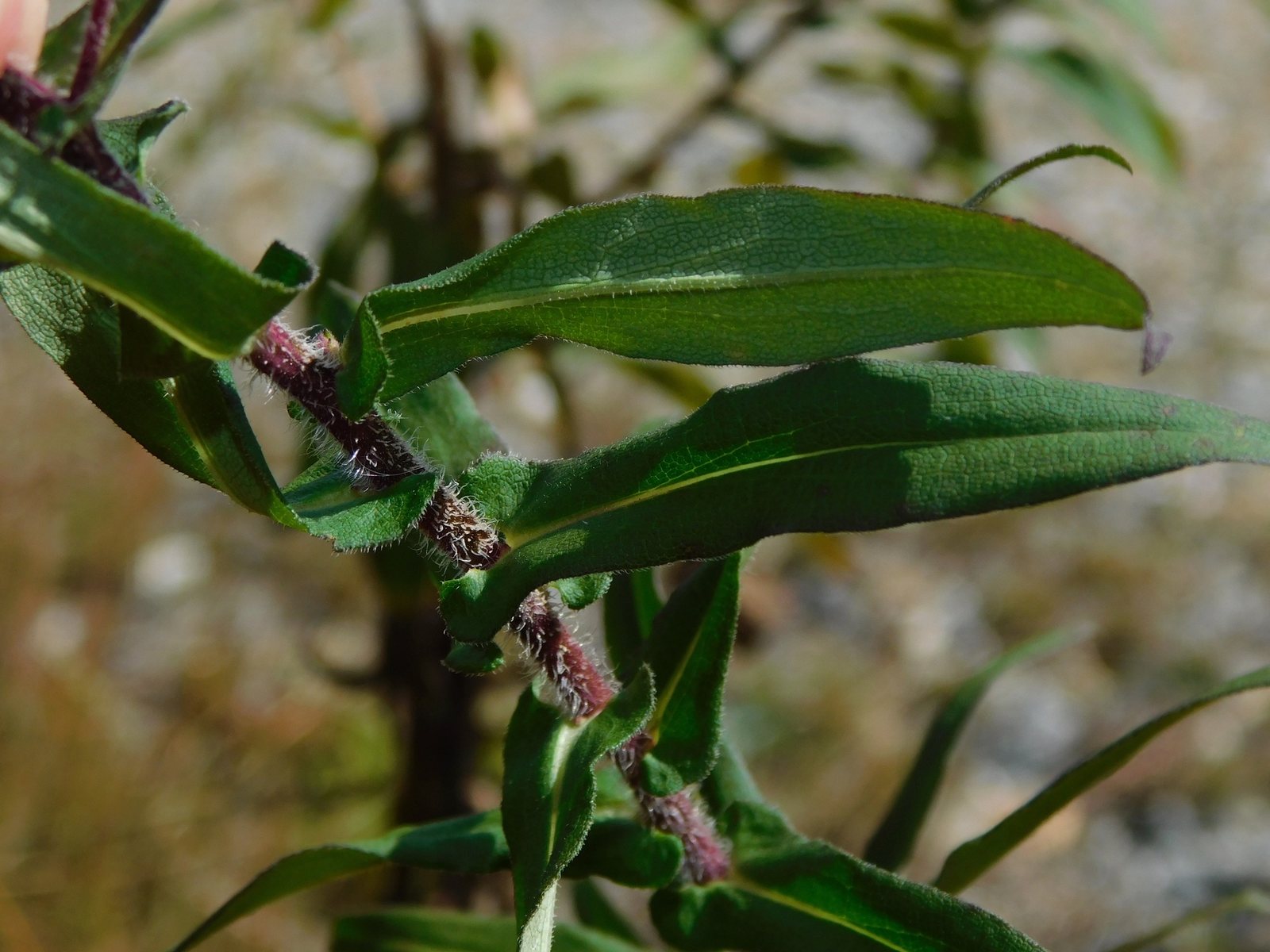
- Narrow, green, somewhat hairy leaves on branching stems; lower leaves may brown or drop before flowering ends.
- Growth
- Moderate; forms a substantial clump over two to three growing seasons.
- Care needed
- Low
The year at a glance
- Pollinators
- Cold hardy
- Wildlife
- Low allergen
| J | F | M | A | M | J | J | A | S | O | N | D | |
|---|---|---|---|---|---|---|---|---|---|---|---|---|
| Flowers | ||||||||||||
| Fruit | ||||||||||||
| Plant |
Northern hemisphere months. In Australia, shift them by six.
- Difficulty
- Easy
- Toughness
- Fairly tough
Will it suit your garden?
Pick your zone, country, light and whether you have pets.
Full sun is 6 or more hours of direct sun a day, part shade 3 to 6 hours, shade under 3.
How it grows
Planting day
1 ft (0.3 m)
After 1 year
1.2 ft (0.37 m)
After 2 years
1.5 ft (0.45 m)
After 3 years
1.7 ft (0.53 m)
full size
About 3 years to full size.
From a typical nursery size, at an average rate for this kind of plant. A rule of thumb, not a forecast.
Good to know
- Cats and dogs
- Safe
- Native to
- the US and Canada
- Growth rate
- Moderate
Care
Jobs through the year
- WaterApr–May, Oct, every 10 days
- Water established clumps when rainfall is insufficient to keep soil moderately moist; new plants need closer attention.
- WaterJun–Sep, every 7 days
- Water deeply at soil level during dry spells, especially while buds form and flowers open.
- FeedMar–Apr
- Apply a thin compost dressing and avoid heavy nitrogen feeding.
- MulchApr–May
- Apply organic mulch to conserve moisture, keeping the crown clear.
- DivideMar–Apr
- Divide congested clumps every 3–4 years and replant healthy sections.
- PruneFeb–Mar
- Cut old stems just above ground before new shoots develop; summer pinching is unnecessary.
- ProtectMar–May
- Inspect emerging shoots for slugs and snails; hand-pick or use labelled iron-phosphate bait if needed.
- DeadheadSep–Oct, every 14 days
- Remove spent flowers only to prevent seedlings; otherwise retain seedheads for birds and winter interest.
- Water at soil level during dry weather, especially while buds form.
- Apply a thin layer of compost in spring; avoid heavy nitrogen feeding.
- Mulch to conserve moisture, keeping mulch clear of the crown.
- Allow space between plants for air circulation; this compact cultivar rarely needs staking.
- Divide congested clumps every three to four years in spring.
Pruning. Leave stems standing through winter if you want seedheads and shelter for insects, then cut them to just above ground in late winter or early spring. Routine summer pinching is unnecessary for this naturally compact cultivar.
Through the year
- Late winter
- Cut down old stems before new shoots become established.
- Spring
- Plant or divide clumps, water them in and add compost around the plants.
- Late spring
- Apply mulch and check young shoots for slugs and snails.
- Summer
- Water deeply during dry spells and check foliage for mildew.
- Late summer
- Keep the root zone moist as buds open; avoid overhead watering.
- Autumn
- Leave seedheads for wildlife, or remove spent flowers before seed ripens if unwanted seedlings are a concern.
In the garden
- Plant in groups near the front or middle of a sunny border for a low mound of autumn colour.
- Combine with goldenrod and black-eyed Susan for strong purple-and-yellow contrast.
- Set among short ornamental grasses so fine-textured foliage softens the dense flower display.
- Use beside paths or seating areas where late-season bees and butterflies can be watched.
Garden styles it suits: Cottage garden, New perennial (prairie), Pollinator garden, Autumn colour, New England and Small-space.
Plant it with: Black-eyed Susan, Goldenrod, Purple coneflower, Little bluestem, Autumn stonecrop and Prairie dropseed.
Wildlife: Flowers attract bees, butterflies and other pollinating insects. In its native North American range, New England aster also supports several moth and butterfly larvae; retained seedheads may feed small birds.
Problems to watch for
- Powdery mildew: allow good air circulation, water at soil level and remove badly affected fallen foliage.
- Dry, bare lower stems: prevent prolonged drought and use low-growing companions to screen the base; some lower-leaf loss is normal.
- Slugs and snails on emerging shoots: inspect after dark, remove pests and use iron phosphate bait according to the label if needed.
- Crown or root rot in wet soil: improve drainage or move the plant to a better-drained position; avoid burying the crown.
Safety
Not known to be toxic to people, cats, dogs or horses; no part is recognised as a significant poisoning hazard. It is not grown as food, and handling may irritate sensitive skin.
Easily confused with
New York aster (Symphyotrichum novi-belgii)
Often has smoother, less hairy stems and leaves; New England aster typically feels noticeably hairy. Compact cultivars of both can look very similar in flower.
Bushy aster (Symphyotrichum dumosum)
Usually has finer branching and smaller, narrower leaves. Many garden plants sold under this name are hybrids, so a reliable label may be needed.
The name
New England aster refers to its occurrence in northeastern North America, while 'Purple Dome' describes this cultivar's purple flowers and rounded habit.
Propagation. Divide clumps in spring or take basal cuttings from young spring shoots. These methods preserve 'Purple Dome'; seedlings may differ in height, habit and flower colour.
Checked against open data
- Accepted botanical name
- Symphyotrichum novae-angliae
- In the US and Canada
- Native in Canada and the lower 48 states.
- Native range
- Alabama, Arkansas, Colorado, Connecticut, Delaware, District of Columbia, Georgia, Illinois, Indiana, Iowa, Kansas and Kentucky.
- Measured
- Soil pH 7 to 7.5. Average height 104 cm.
Sources: GBIF (CC BY 4.0), USDA PLANTS and Trefle (CC BY 4.0). The care and design notes are LandscapeGPT's own.
See it in your own yard.
Upload a photo of your yard and see it redesigned with plants that suit your climate, each checked against your zone.