Purple fountain grass
Cenchrus setaceus 'Rubrum'. Family Poaceae. Ornamental grass.
Also called Red fountain grass, Pennisetum setaceum 'Rubrum', Cenchrus advena 'Rubrum'.
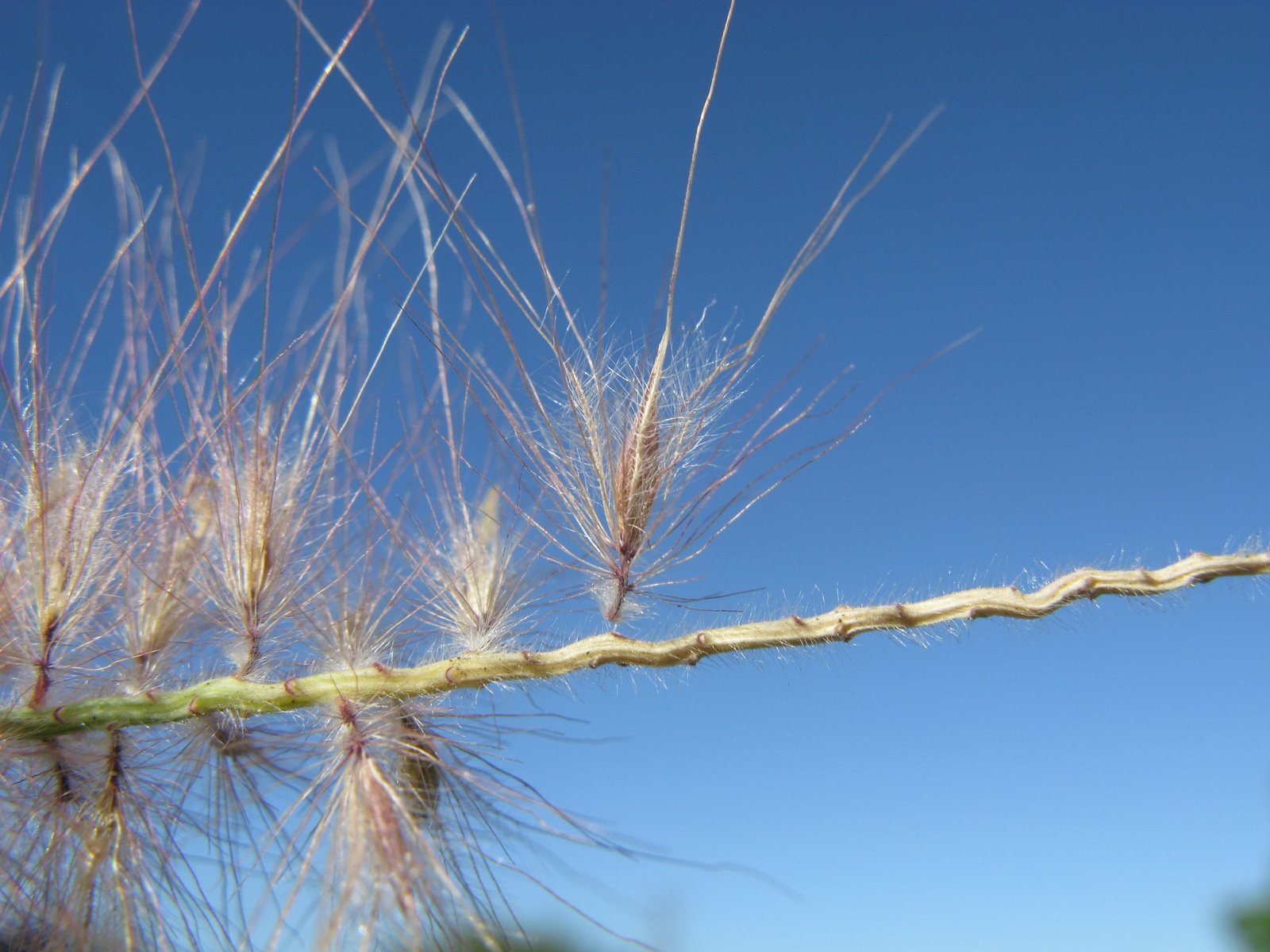
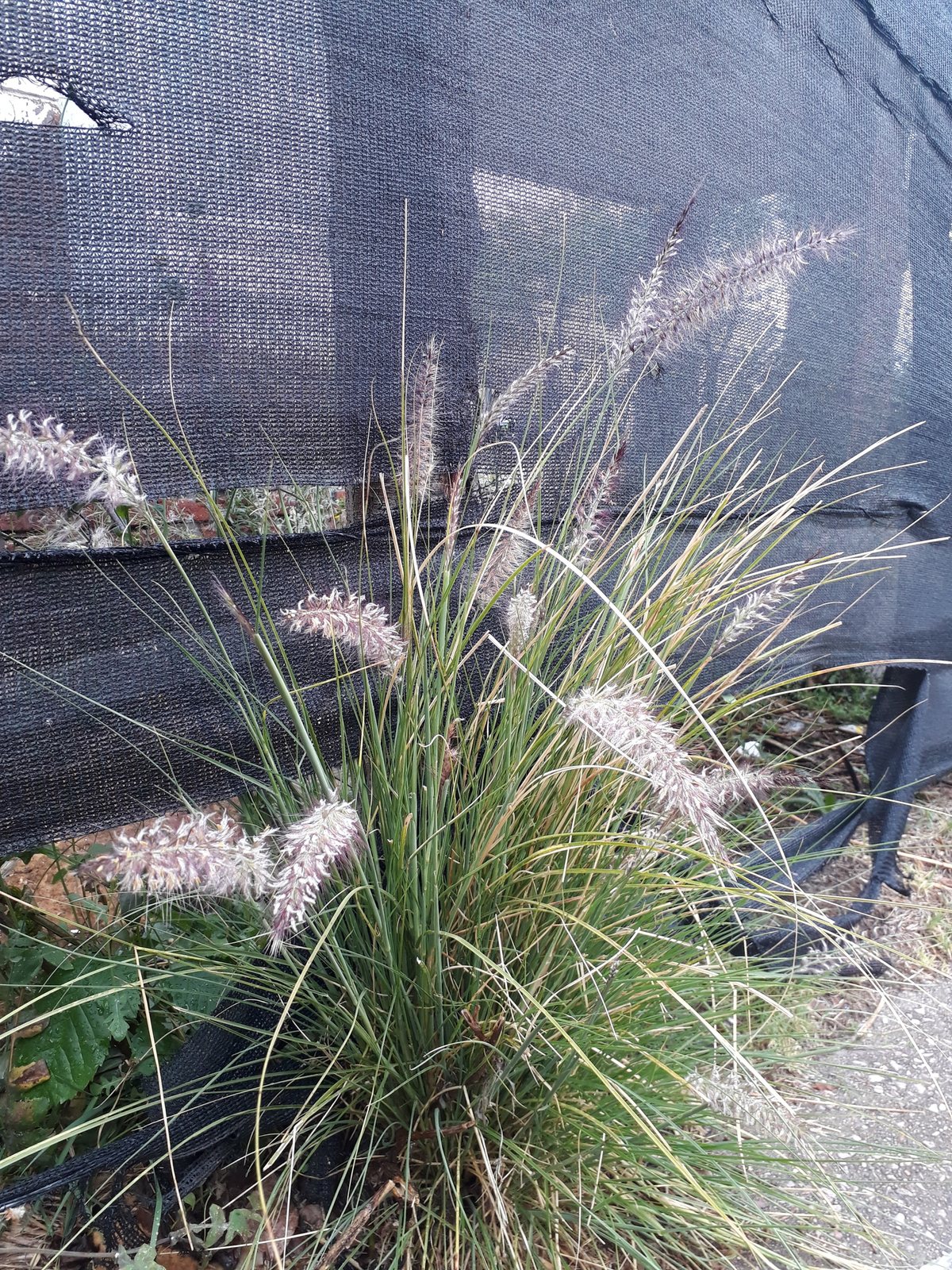
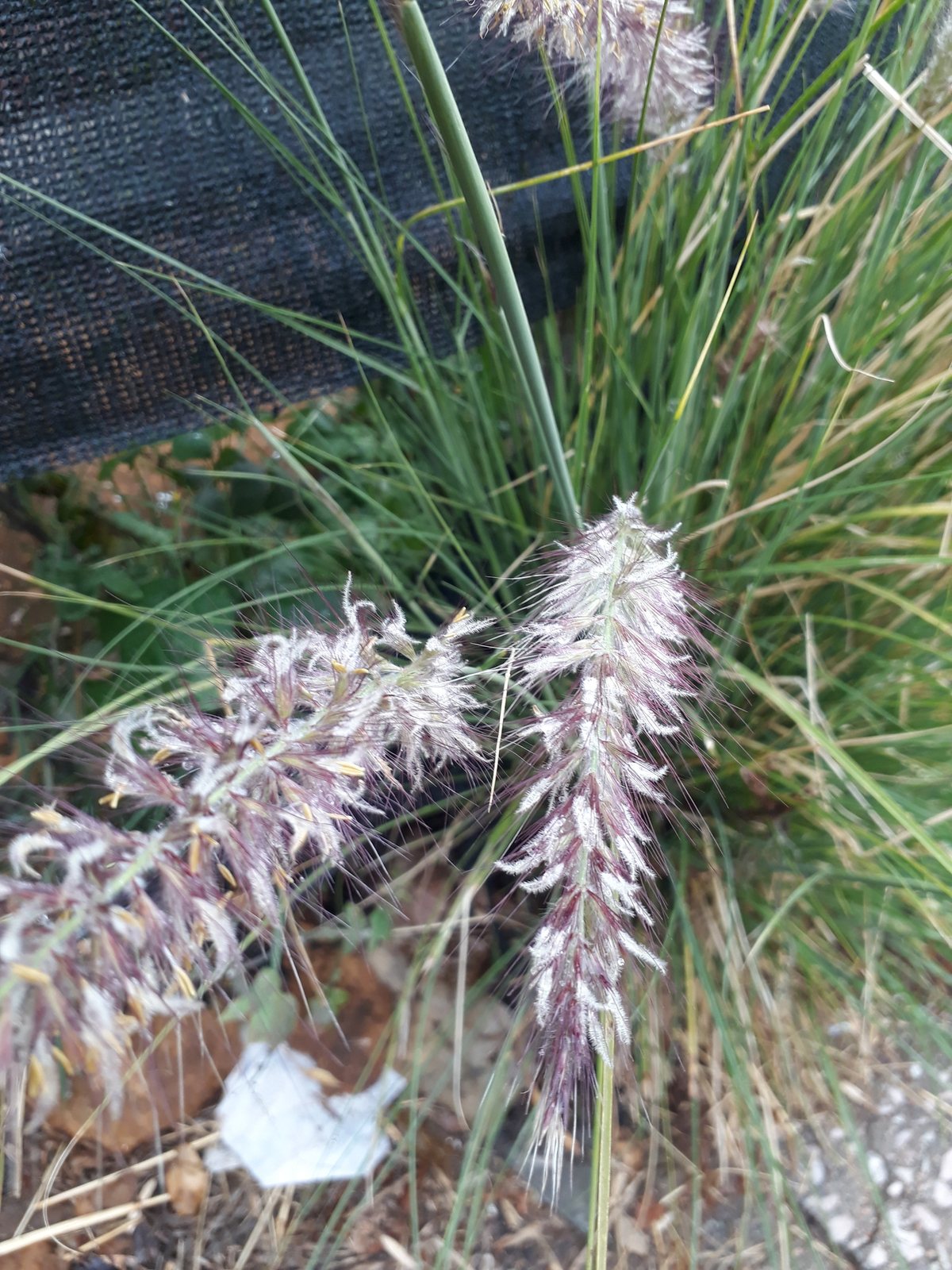
Purple fountain grass is a tender, clump-forming grass grown for arching burgundy leaves and soft, pink-purple flower plumes. It is grown as an annual in most of the United States, Canada and the United Kingdom, but can survive as a perennial in warm, largely frost-free gardens. Commonly sold as Cenchrus setaceus 'Rubrum', it is also classified as Cenchrus advena 'Rubrum'.
At a glance
- Sun
- Full sun gives the strongest leaf colour and best flowering; light shade produces greener, looser growth.
- Water
- Water regularly while establishing, then when the soil begins to dry. Established plants tolerate short dry spells, but containers need more frequent watering.
- Soil
- Well-drained soil of average fertility; tolerates sandy or loamy ground but dislikes waterlogged clay, especially in winter.
- Height
- 3-5 ft (0.9-1.5 m), including flower plumes
- Spread
- 2-3 ft (0.6-0.9 m)
- Flowers
- Summer to autumn; pink-purple, bristly plumes fade to buff as they age.
- Foliage
- Narrow, arching burgundy to reddish-purple blades; colour is strongest in sun. Foliage may persist in frost-free climates but dies back or is killed by frost.
- Growth
- Fast in warm weather; can reach flowering size in one growing season.
- Care needed
- Low
The year at a glance
- Deer resistant
- Drought tolerant
- Heat tolerant
| J | F | M | A | M | J | J | A | S | O | N | D | |
|---|---|---|---|---|---|---|---|---|---|---|---|---|
| Flowers | ||||||||||||
| Fruit | ||||||||||||
| Plant |
Northern hemisphere months. In Australia, shift them by six.
- Difficulty
- Easy
- Toughness
- Fairly tough
Will it suit your garden?
Pick your zone, country, light and whether you have pets.
Full sun is 6 or more hours of direct sun a day, part shade 3 to 6 hours, shade under 3.
How it grows
Planting day
1.1 ft (0.35 m)
After 1 year
2.9 ft (0.87 m)
After 2 years
4 ft (1.2 m)
full size
About 2 years to full size.
From a typical nursery size, at an average rate for this kind of plant. A rule of thumb, not a forecast.
Good to know
- Cats and dogs
- Safe
- Growth rate
- Fast
Care
Jobs through the year
- WaterMay–Jun, every 7 days
- Water rooted plants in the ground when upper soil dries; newly planted clumps need closer checks.
- WaterJul–Aug, every 7 days
- Water established clumps deeply during dry weather; pots need more frequent watering.
- WaterSep–Oct, every 14 days
- Water established outdoor clumps only if soil is drying, until frost ends growth.
- FeedMay–Jun
- Apply one light balanced feed at planting; avoid excess nitrogen.
- ProtectSep–Oct
- Grow as an annual, or lift and pot a clump before frost for bright, frost-free overwintering.
- Plant after frost danger has passed and the soil has warmed.
- Water new plants deeply when the upper soil begins to dry; check pots frequently during hot weather.
- Apply a light feed in spring; avoid heavy nitrogen feeding, which encourages floppy growth.
- Use containers with drainage holes and keep the crown out of standing water.
- Where winters are cold, replace plants annually or move a potted plant into a bright, frost-free place before frost.
Pruning. Where plants survive winter, cut old foliage to 4-6 in (10-15 cm) above ground in late winter or early spring, before new shoots lengthen. In cold climates, remove frost-killed plants unless you are overwintering them indoors.
Through the year
- Early spring
- Cut back overwintered outdoor clumps before new growth starts; keep sheltered plants bright and only lightly watered.
- Late spring
- Plant out after the last frost once the soil is warm, gradually acclimatising plants raised under cover.
- Early summer
- Water developing clumps during dry spells and give container plants a light feed.
- Summer
- Check pots frequently for drying and leave developing plumes for their colour and movement.
- Early autumn
- Move any plants you want to save into bright, frost-free shelter before cold nights arrive.
- Late autumn
- Remove frost-killed annual plants, or leave standing foliage on surviving outdoor clumps until late winter.
In the garden
- Use as the tall centrepiece in a large sunny container, with trailing plants around the rim.
- Repeat clumps through a hot-coloured border with orange, red or yellow flowers.
- Plant against pale paving or walls to show off the dark foliage and arching outline.
- Combine with broad-leaved cannas for a contrast of fine and bold textures.
Garden styles it suits: Modern, Architectural minimal, Hot border, Tropical, Modern courtyard and Sensory garden.
Plant it with: Canna, Dahlia, Zinnia, Verbena, Sweet potato vine and Angelonia.
Wildlife: The clump can shelter small invertebrates, but its wind-pollinated flowers provide little nectar value. The normally sterile 'Rubrum' offers little seed for birds.
Problems to watch for
- Winter death: frost and cold, wet soil commonly kill plants; grow as an annual or overwinter under bright, frost-free cover.
- Crown or root rot: improve drainage, avoid burying the crown and do not leave pots standing in water.
- Greenish foliage and weak flowering: move to full sun and avoid excessive nitrogen fertiliser.
- Spider mites under cover: inspect for fine webbing and stippled leaves; rinse foliage and use insecticidal soap labelled for the pest if needed.
Safety
Not known to be toxic to cats, dogs, horses or people. The leaves and bristly flower heads can cause minor mechanical irritation, and swallowing coarse grass may cause digestive upset.
Where it spreads. 'Rubrum' is generally sterile and is not known for aggressive self-seeding. Do not confuse it with fertile green fountain grass, Cenchrus setaceus, which is invasive in Hawaii, California, Arizona and parts of Australia. Restrictions may depend on the botanical identity and local law; check local rules before buying or moving plants, particularly in Australia.
Easily confused with
Green fountain grass (Cenchrus setaceus)
Usually has green foliage rather than burgundy leaves and produces viable seed freely; it is the invasive plant in many warm regions.
Swamp fountain grass (Cenchrus alopecuroides)
Usually has green leaves and shorter, denser bottlebrush flower heads; it is substantially more cold-hardy.
Purple-leaved pearl millet (Cenchrus americanus)
Has much broader leaves, more upright stems and thick, dense flower spikes rather than airy, arching plumes.
The name
The common name describes the purple foliage and fountain-like spray of arching leaves and flower stems.
Propagation. Divide healthy overwintered clumps in spring as growth resumes, keeping roots and growing shoots on each section. 'Rubrum' is normally sterile and must be propagated vegetatively to retain its characteristics.
Checked against open data
- Accepted botanical name
- Cenchrus setaceus
- Native range
- Afghanistan, Algeria, Chad, Djibouti, Egypt, Eritrea, Ethiopia, Kenya, Lebanon-Syria, Libya, Morocco and Oman.
Sources: GBIF (CC BY 4.0) and Trefle (CC BY 4.0). The care and design notes are LandscapeGPT's own.
See it in your own yard.
Upload a photo of your yard and see it redesigned with plants that suit your climate, each checked against your zone.