Purple hop bush
Dodonaea viscosa 'Purpurea'. Family Sapindaceae. Shrub.
Also called Purple hopseed bush, Purple akeake, Purple hopbush.
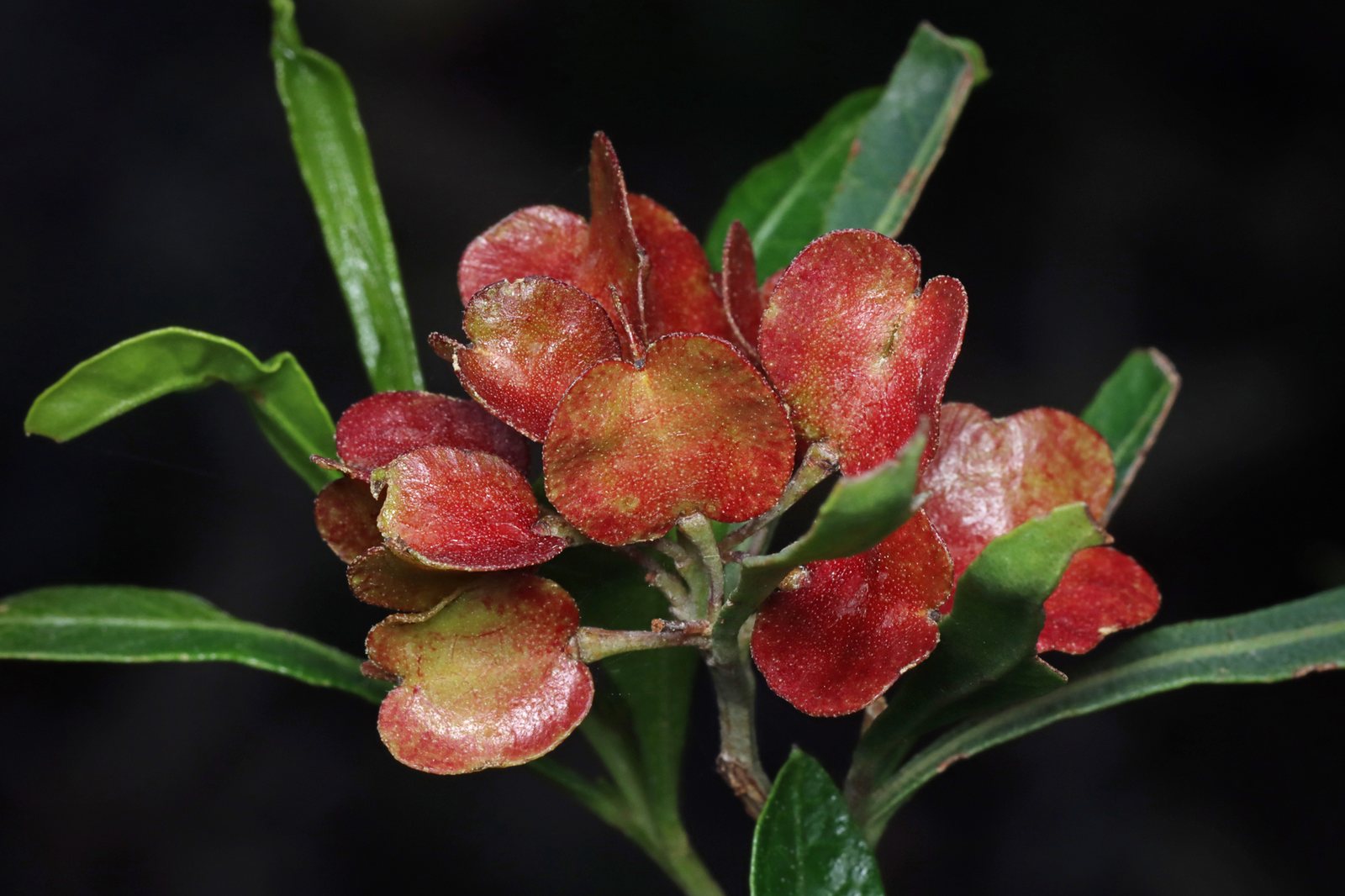
Purple hop bush is a fast-growing evergreen shrub or small tree grown for its narrow, bronze-purple leaves and airy branching. It makes a useful screen or foliage backdrop in warm, dry gardens, but needs shelter from hard frost and freely draining soil.
At a glance
- Sun
- Full sun gives the strongest purple colour; tolerates light shade but becomes greener and less dense.
- Water
- Water regularly while establishing; once established, water deeply during prolonged dry spells. Avoid persistently wet roots.
- Soil
- Well-drained sandy, gravelly or loamy soil; tolerates relatively poor soil and a broad pH range.
- Height
- 10-15 ft (3-4.5 m), occasionally taller
- Spread
- 6-12 ft (1.8-3.7 m)
- Foliage
- Evergreen. Narrow, leathery leaves turn bronze-purple, often becoming darker in cool weather; shaded growth may be olive-green.
- Growth
- Fast in warm conditions with adequate moisture.
- Care needed
- Low
The year at a glance
- Drought tolerant
- Heat tolerant
- Wildlife
| J | F | M | A | M | J | J | A | S | O | N | D | |
|---|---|---|---|---|---|---|---|---|---|---|---|---|
| Fruit | ||||||||||||
| Plant |
Northern hemisphere months. In Australia, shift them by six.
- Difficulty
- Moderate
- Toughness
- Fairly tough
Will it suit your garden?
Pick your zone, country, light and whether you have pets.
Full sun is 6 or more hours of direct sun a day, part shade 3 to 6 hours, shade under 3.
How it grows
Planting day
1.6 ft (0.5 m)
After 1 year
5 ft (1.5 m)
After 2 years
8 ft (2.5 m)
After 3 years
11 ft (3.5 m)
After 5 years
12 ft (3.8 m)
full size
About 3 years to full size.
From a typical nursery size, at an average rate for this kind of plant. A rule of thumb, not a forecast.
Good to know
- Cats and dogs
- Mildly toxic: may upset a stomach
- Native to
- the US and Australia
- Growth rate
- Fast
Care
Jobs through the year
- WaterApr–May, Sep–Oct, every 21 days
- Water established ground plants only when dry; water young plants and pots more often.
- WaterJun–Aug, every 14 days
- Water established plants deeply during prolonged drought, letting the surface dry between soakings.
- WaterJan–Mar, Nov–Dec, every 21 days
- Under frost-free cover, water sparingly once the surface has dried.
- MulchMay
- Apply a light mulch over the root zone, keeping it clear of the trunk.
- FeedApr–May
- Feed lightly only if growth is weak; avoid heavy nitrogen feeding.
- PruneMay–Jun
- Remove winter damage and shorten young shoots after frost risk passes; avoid bare old wood.
- ProtectJan–Apr, Sep–Dec
- Not hardy outdoors locally; overwinter a movable container in bright, frost-free shelter.
- Water deeply through the first growing season, allowing the soil surface to dry between waterings.
- Apply a light mulch over the root zone, keeping it clear of the trunk.
- Feed lightly in spring only if growth is weak; avoid heavy nitrogen feeding.
- Plant in a sheltered position where severe frost is possible.
- Use a freely draining potting mix for containers and protect pots from freezing.
Pruning. Prune in spring after frost risk has passed, removing dead or damaged branches and shortening young shoots to encourage density. Trim hedges lightly during active growth rather than cutting hard into old, bare wood.
Through the year
- Spring
- Plant after frost risk has passed and water thoroughly.
- Spring
- Remove winter damage and lightly shape established plants.
- Early summer
- Trim young shoots if a dense hedge or screen is wanted.
- Summer
- Check new plants and containers regularly; water deeply when the root zone begins to dry.
- Late summer
- Take semi-ripe cuttings to preserve the purple foliage.
- Autumn
- Stop trimming before cold weather so new growth has time to harden.
- Winter
- Protect young plants during frosts and keep container roots from becoming waterlogged.
In the garden
- Plant as an informal screen, allowing room for its broad mature spread.
- Use behind silver-leaved shrubs and pale grasses to create foliage contrast.
- Train as a small, multi-stemmed tree in a sunny courtyard.
- Include in dry coastal planting where drainage is good.
- Use as a clipped hedge where winters are mild.
Garden styles it suits: Australian native, Mediterranean, Coastal, Desert / xeriscape, Modern and Low-maintenance.
Plant it with: Lavender, Rosemary, Westringia, Lomandra, Kangaroo paw and Blue fescue.
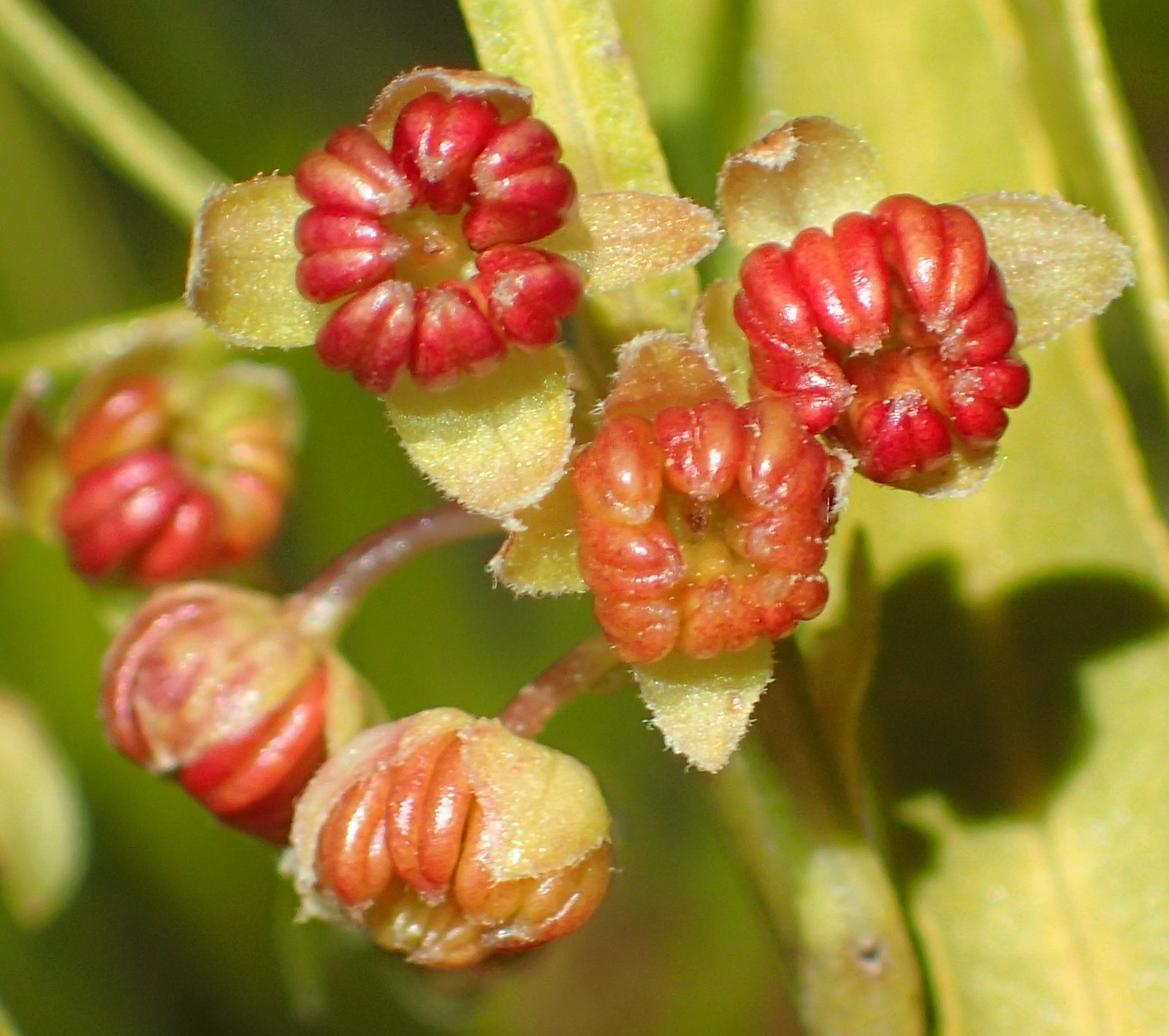
Wildlife: Dense growth provides shelter and potential nesting cover for small birds. Its small, mainly wind-pollinated flowers offer less value to pollinators than nectar-rich flowering shrubs.
Problems to watch for
- Frost damage: foliage and shoot tips may blacken; protect young plants and wait until spring to remove damaged growth.
- Root rot in wet soil: improve drainage, reduce watering and avoid sites that remain saturated.
- Scale insects: inspect stems and leaf undersides; remove small infestations or use horticultural oil according to the label.
- Sparse or green growth in shade: provide more sunlight and lightly prune young growth to encourage branching.
Safety
Leaves and seeds contain saponins and should not be eaten; ingestion may cause digestive upset. Reliable information on the severity of poisoning in people, cats, dogs and horses is limited, so do not treat it as a confirmed non-toxic plant or allow pets and grazing animals to browse it.
Easily confused with
Purple-leaved smoke bush (Cotinus coggygria)
Smoke bush has broad, rounded leaves, loses its foliage in winter and produces conspicuous smoky flower plumes.
Purple-leaved New Zealand flax (Phormium tenax)
New Zealand flax forms basal fans of long, strap-shaped leaves rather than a woody shrub with small leaves along branching stems.
Purple-leaved kōhūhū (Pittosporum tenuifolium)
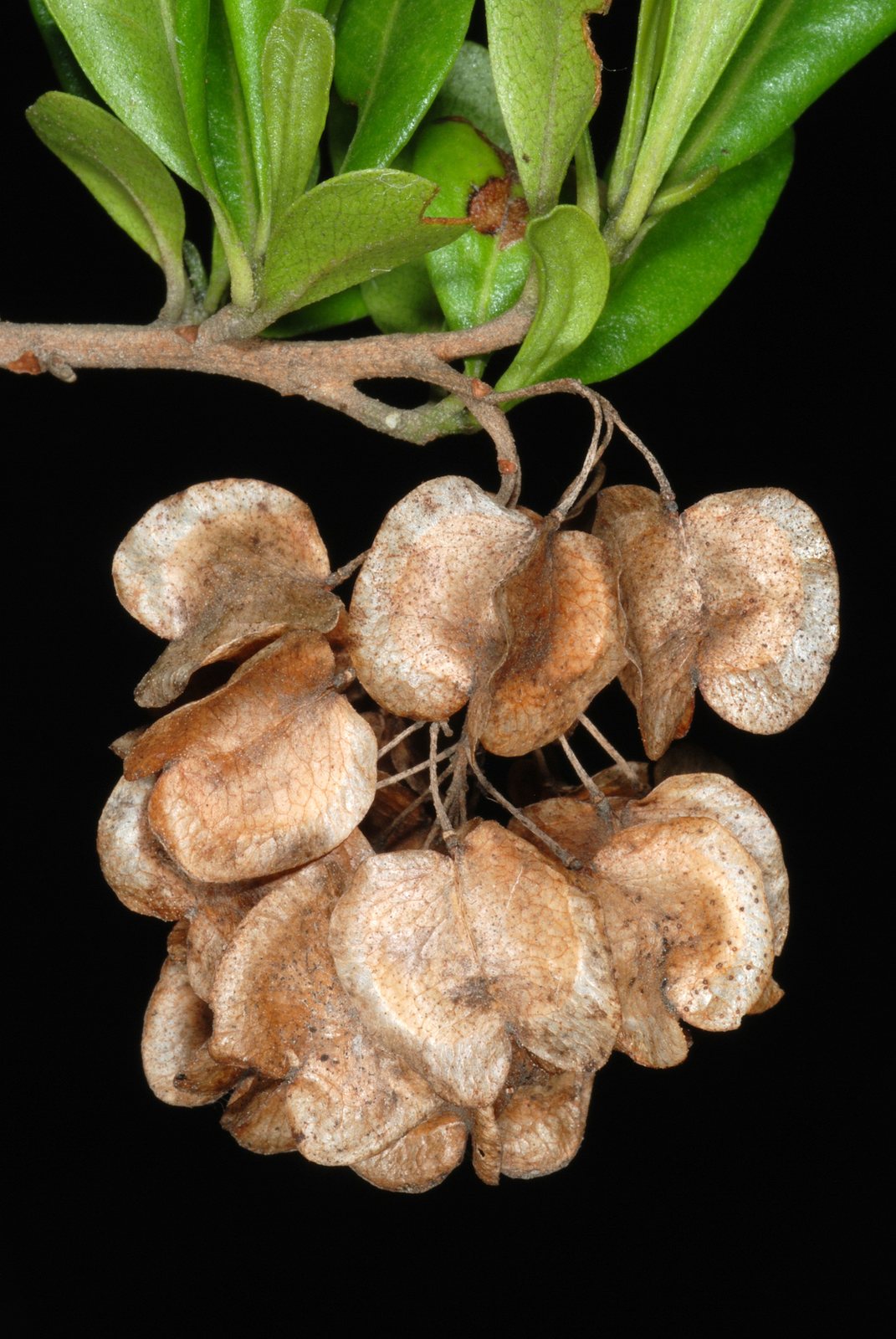
Kōhūhū usually has smaller, broader leaves with distinctly wavy edges and dark stems; hop bush has narrower leaves and papery, winged seed capsules.
The name
Dodonaea honours the Flemish botanist Rembert Dodoens, viscosa means sticky, and the common name refers to the hop-like papery seed capsules.
Propagation. Take semi-ripe cuttings in summer using a freely draining propagation mix. Seedlings vary in foliage colour and do not reliably reproduce 'Purpurea'.
Checked against open data
- Accepted botanical name
- Dodonaea viscosa
- In the US and Canada
- Native in the lower 48 states, Pacific Basin, Puerto Rico and US Virgin Islands. Introduced in Hawaii.
- Native range
- Afghanistan, Aldabra, Andaman Is., Angola, Argentina Northeast, Argentina Northwest, Arizona, Assam, Bahamas, Bangladesh, Belize and Benin.
- Measured
- Soil pH 6.5 to 9.2. Average height 228 cm.
Sources: GBIF (CC BY 4.0), USDA PLANTS and Trefle (CC BY 4.0). The care and design notes are LandscapeGPT's own.
See it in your own yard.
Upload a photo of your yard and see it redesigned with plants that suit your climate, each checked against your zone.