Purple ice plant
Delosperma 'Fire Spinner'. Family Aizoaceae. Succulent.
Also called Fire Spinner ice plant, Hardy ice plant.
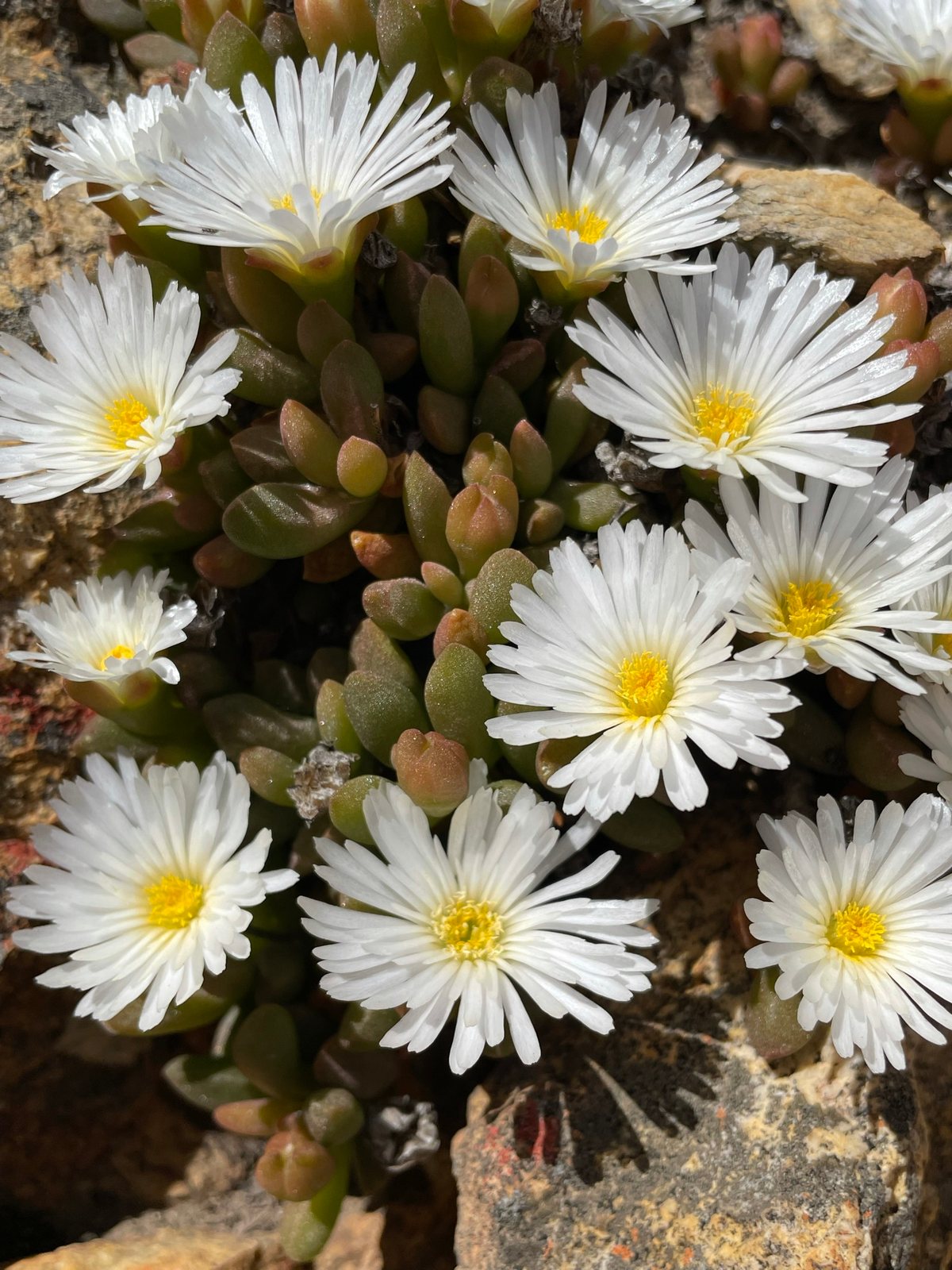
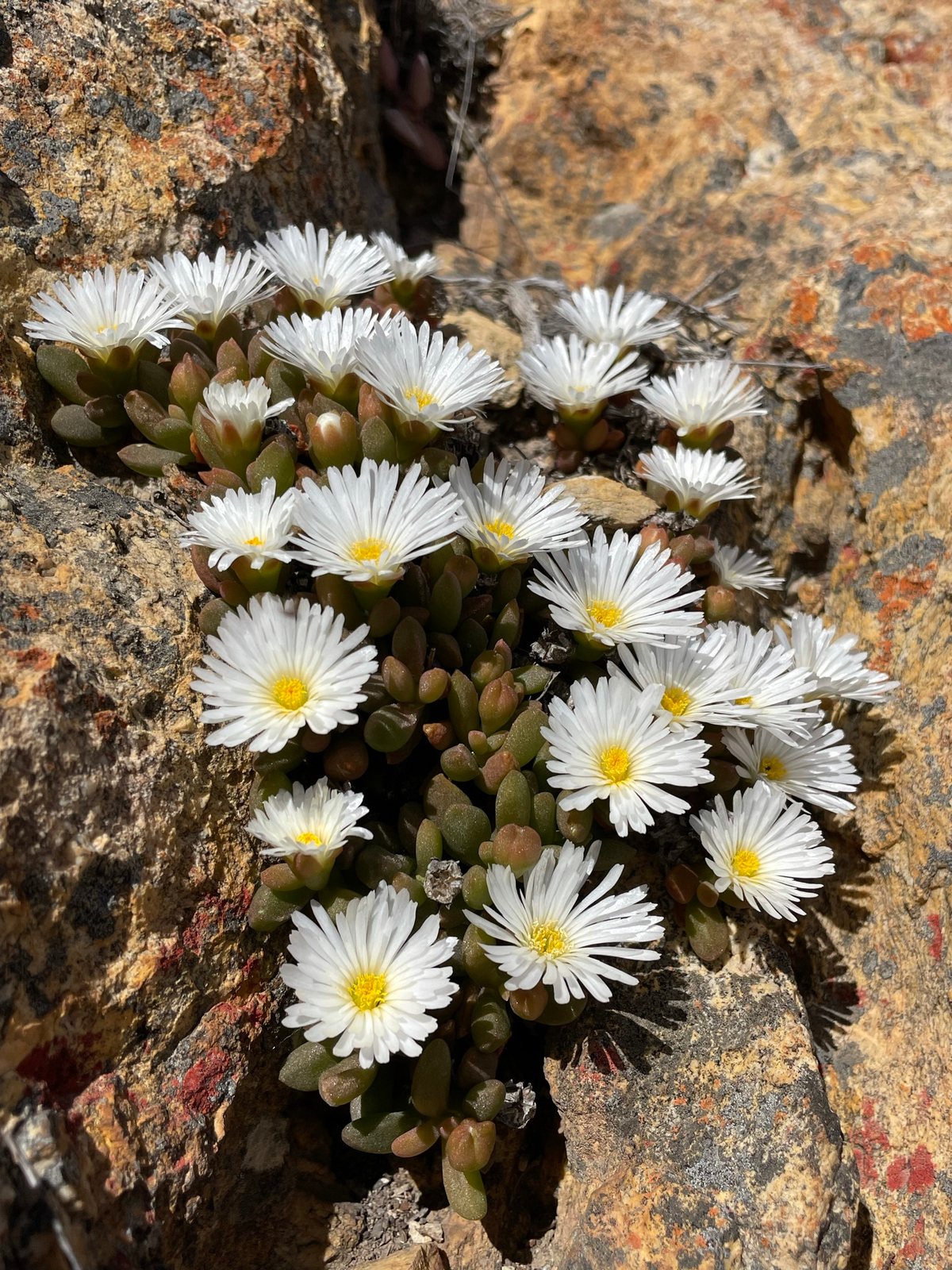
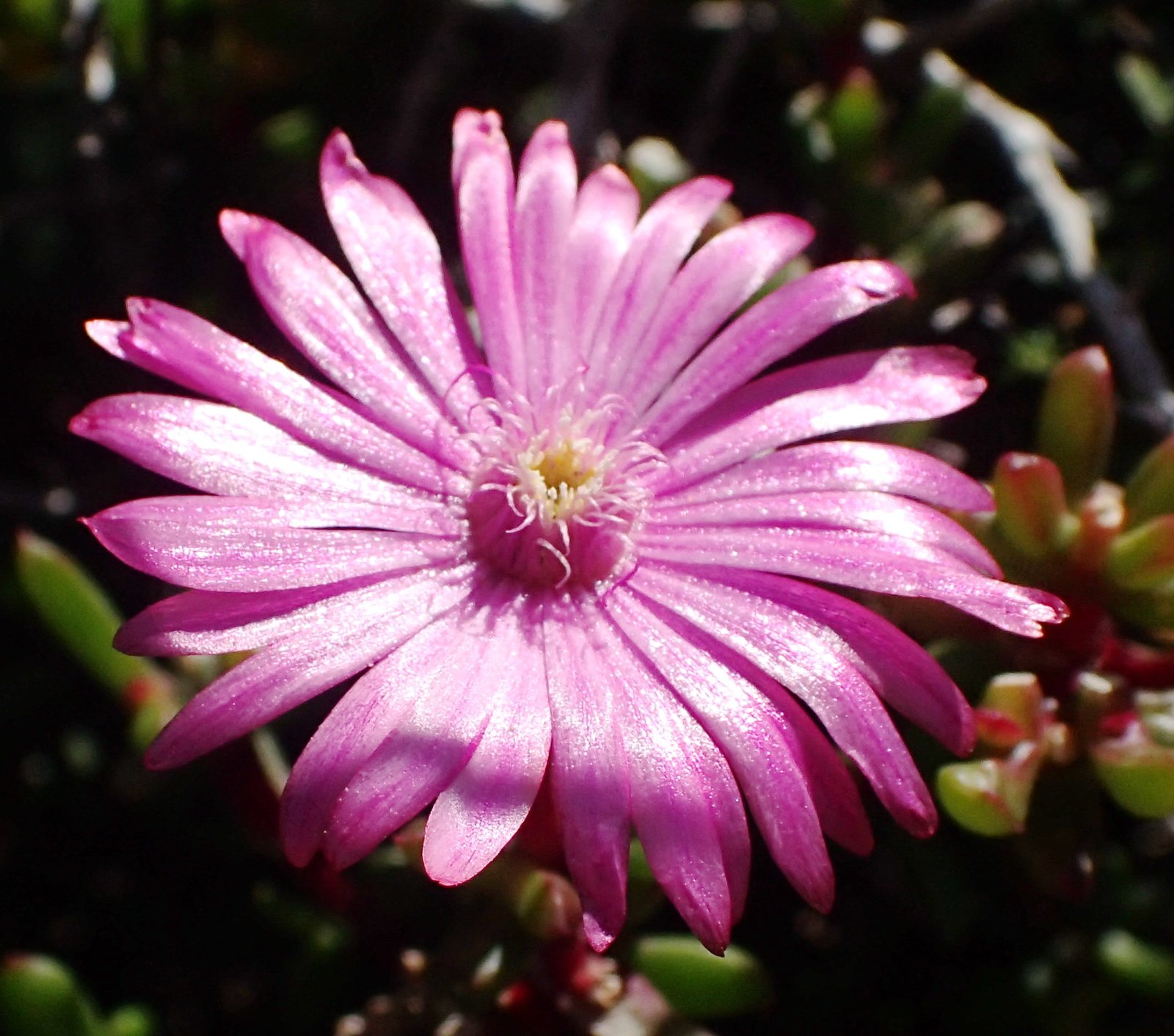
Delosperma 'Fire Spinner' is a low, spreading succulent grown for its vivid orange flowers with magenta rings and pale centres, rather than the plain purple flowers its common name suggests. It makes a flowering carpet in sunny rock gardens, gravel beds and containers, provided its roots stay well drained, especially in winter.
At a glance
- Sun
- Full sun; flowers open best in bright sunshine.
- Water
- Water regularly while establishing, allowing the soil to dry between waterings. Once established, water during prolonged drought; avoid persistently damp soil.
- Soil
- Lean, sharply drained sandy or gravelly soil. Use a raised bed or a gritty container mix where soil is heavy or winters are wet.
- Height
- 0.2-0.3 ft (0.05-0.09 m)
- Spread
- 1.5-2 ft (0.45-0.6 m)
- Flowers
- Late spring to early summer, with occasional later flowers; orange petals surround a magenta ring and pale centre.
- Foliage
- Small, fleshy green leaves form a dense mat; foliage may turn reddish or bronze in cold weather. Evergreen in mild climates, but may die back partly in colder winters.
- Growth
- Moderate to fast in warm, sunny, well-drained conditions.
- Care needed
- Low
The year at a glance
- Pollinators
- Deer resistant
- Drought tolerant
- Heat tolerant
- Low allergen
| J | F | M | A | M | J | J | A | S | O | N | D | |
|---|---|---|---|---|---|---|---|---|---|---|---|---|
| Flowers | ||||||||||||
| Plant |
Northern hemisphere months. In Australia, shift them by six.
- Difficulty
- Easy
- Toughness
- Fairly tough
Will it suit your garden?
Pick your zone, country, light and whether you have pets.
Full sun is 6 or more hours of direct sun a day, part shade 3 to 6 hours, shade under 3.
How it grows
Planting day
0.2 ft (0.07 m)
full size
About 5 years to full size.
From a typical nursery size, at an average rate for this kind of plant. A rule of thumb, not a forecast.
Good to know
- Cats and dogs
- Safe
- Growth rate
- Fast
Care
Jobs through the year
- WaterApr–May, Sep, every 21 days
- Water established mats only during prolonged drought; new plants need water when the root zone dries.
- WaterJun–Aug, every 14 days
- Water established plants only in prolonged drought, allowing soil to dry thoroughly between waterings.
- PruneApr
- Once fresh growth appears, trim away dead or frost-damaged shoots.
- PruneJun–Jul
- Lightly shorten straggling stems after the main flowering flush.
- MulchApr–May
- Use a light gravel mulch around the crown, not moisture-holding bark.
- ProtectJan–Feb, Oct–Dec
- Clear wet leaves from the mat and maintain sharp drainage; shelter containers from persistent rain.
- Plant with the crown at soil level, not buried.
- Water new plants when the root zone dries; reduce watering once established.
- Use gravel around the crown rather than moisture-holding bark mulch.
- Avoid rich manure and heavy feeding; lean soil helps keep growth compact.
- Keep fallen leaves and wet debris off the mat during winter.
Pruning. In spring, trim away dead or frost-damaged shoots once new growth shows. Lightly shorten straggling stems after the main flowering flush; routine deadheading is unnecessary.
Through the year
- Spring
- Remove winter debris and trim dead shoots when fresh growth appears.
- Spring
- Plant after severe frosts have passed, choosing a sunny position with sharp drainage.
- Late spring
- Check newly planted roots for moisture and water when dry.
- Summer
- Lightly trim straggling stems after flowering and water established plants only during prolonged drought.
- Autumn
- Clear fallen leaves and check that water drains freely from beds and pots.
- Winter
- Keep containers out of standing water; shelter them from persistent rain in wet climates.
In the garden
- Plant between rocks on sunny slopes, where its mat softens hard edges.
- Edge gravel paths with bright flowers and low foliage, keeping plants clear of foot traffic.
- Let it trail over raised-bed edges or shallow containers.
- Combine with small sedums, thymes and compact grasses in a dry, open planting.
Garden styles it suits: Dry gravel garden, Desert / xeriscape, Alpine rock garden, Mediterranean, Low-maintenance and Small-space.
Plant it with: Creeping thyme, Stonecrop, Hens and chicks, Blue fescue and Dwarf bearded iris.
Wildlife: Open flowers attract bees and other pollinating insects. The low mat provides little food or shelter for larger wildlife.
Problems to watch for
- Root or crown rot in wet soil: improve drainage, reduce watering and replace badly rotted plants.
- Winter losses in cold, wet sites: use raised gravel beds and protect containers from prolonged rain.
- Sparse flowering or loose growth in shade: move to full sun and avoid heavy feeding.
- Mealybugs, especially under cover: remove visible insects and treat persistent infestations with a product labelled for succulents.
Safety
Not known to be toxic to people, cats, dogs or horses. Cultivar-specific safety information is limited, and no part should be treated as edible; eating it may cause stomach upset.
Easily confused with
Cooper's ice plant (Delosperma cooperi)
Usually has uniformly bright magenta-purple flowers rather than orange petals with a contrasting magenta ring.
Hottentot fig (Carpobrotus edulis)
Much larger, with long, thick, triangular leaves and larger yellow or pink flowers; invasive in several coastal regions.
The name
Delosperma comes from Greek words meaning 'visible seed', referring to the exposed seeds in open capsules.
Propagation. Root stem cuttings during warm weather, where local plant-variety rights permit. Seedlings will not reliably reproduce this cultivar's flower colours.
Checked against open data
- Accepted botanical name
- Delosperma
Sources: GBIF (CC BY 4.0). The care and design notes are LandscapeGPT's own.
See it in your own yard.
Upload a photo of your yard and see it redesigned with plants that suit your climate, each checked against your zone.