Purple-leaf plum
Prunus cerasifera 'Thundercloud'. Family Rosaceae. Tree.
Also called Thundercloud flowering plum, Thundercloud cherry plum.
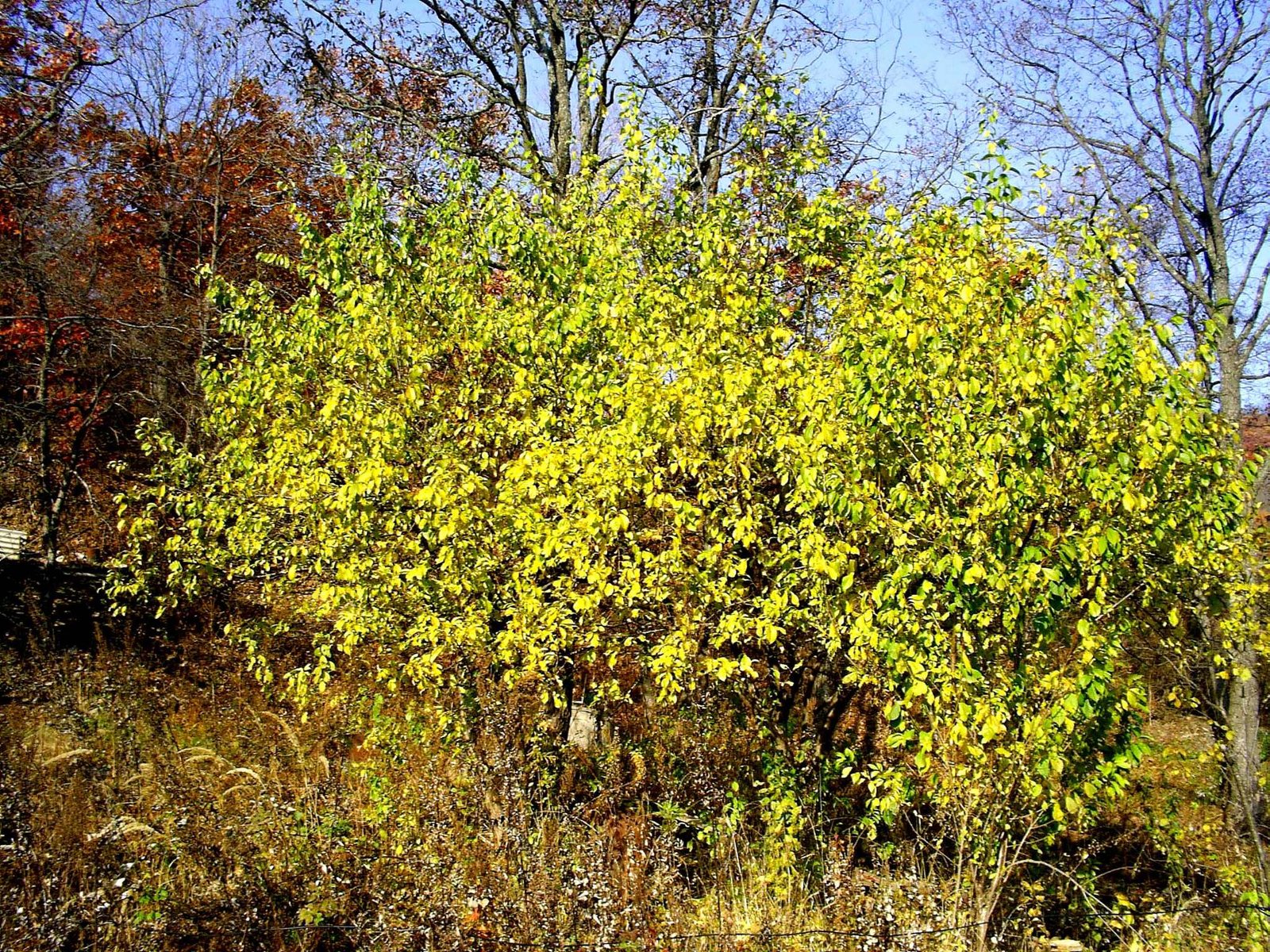
A small deciduous tree grown for its deep purple leaves and pale pink flowers, which open before or with the new foliage. It makes a strong colour accent in a lawn or mixed border, but can suffer from plum diseases and sometimes drops small fruits.
At a glance
- Sun
- Full sun gives the darkest leaf colour and best flowering; tolerates light partial shade.
- Water
- Water regularly while establishing. Once established, water deeply during prolonged dry spells; avoid persistently wet soil.
- Soil
- Well-drained loam, clay or sandy soil of moderate fertility; tolerates a broad pH range but dislikes waterlogging.
- Height
- 15-25 ft (4.5-7.6 m)
- Spread
- 15-25 ft (4.5-7.6 m)
- Flowers
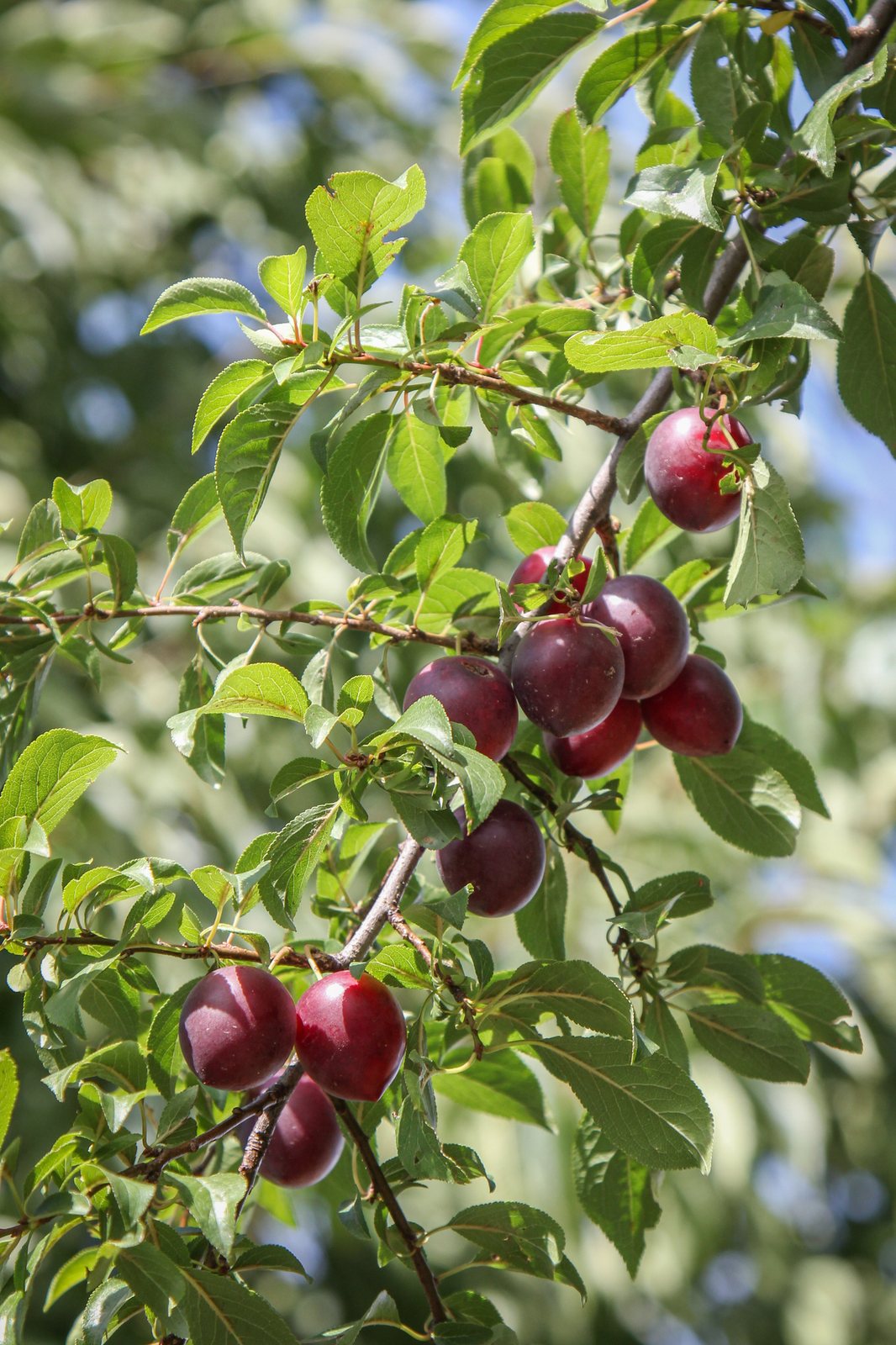
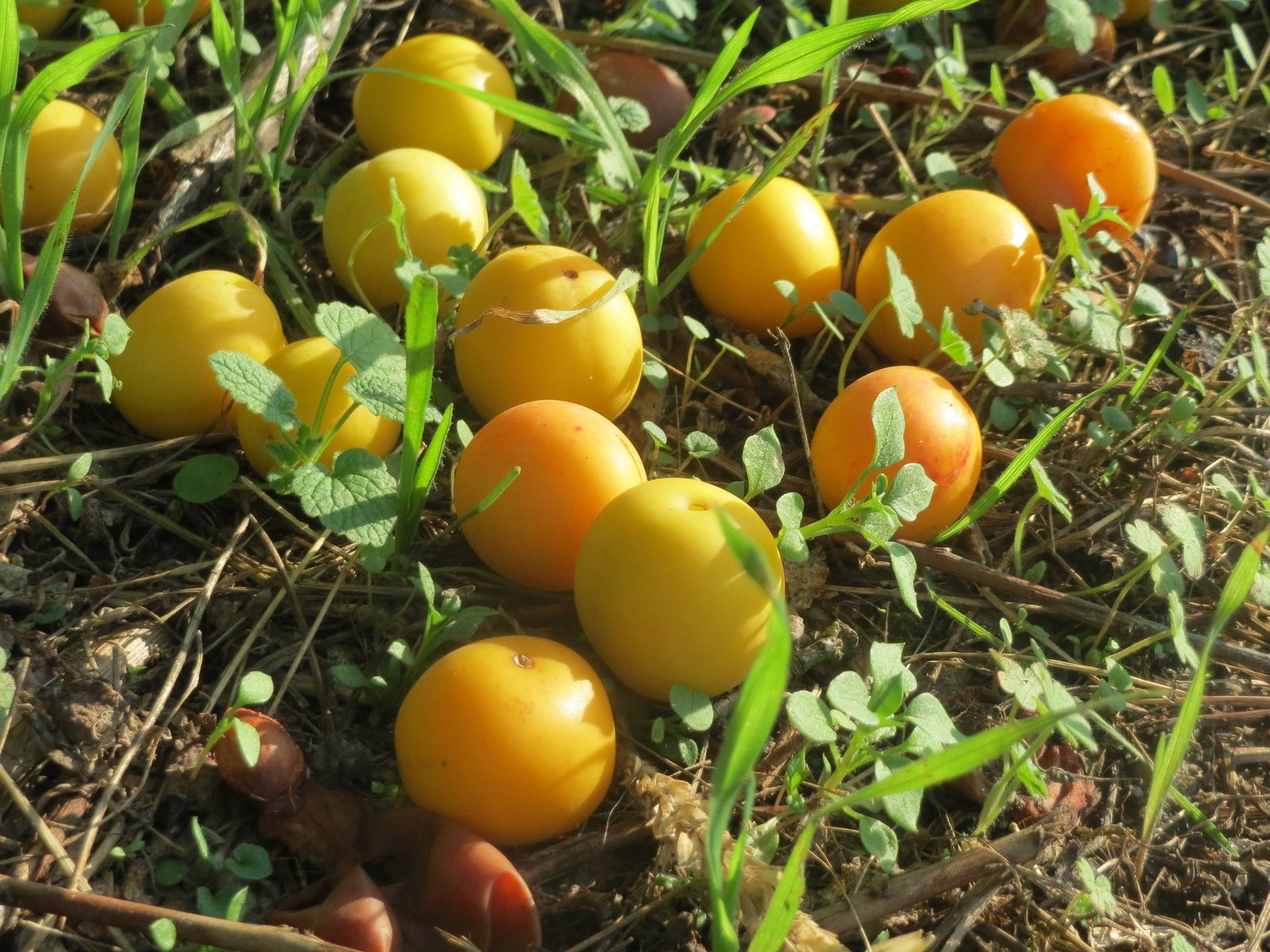
- Early spring; pale pink flowers on bare or newly leafing branches. Occasional small reddish-purple plums may follow.
- Foliage
- Oval, finely toothed leaves emerge reddish purple and mature to deep burgundy-purple; colour is strongest in full sun.
- Growth
- Moderate
- Care needed
- Medium
The year at a glance
- Pollinators
- Wildlife
- Low allergen
| J | F | M | A | M | J | J | A | S | O | N | D | |
|---|---|---|---|---|---|---|---|---|---|---|---|---|
| Flowers | ||||||||||||
| Fruit | ||||||||||||
| Plant |
Northern hemisphere months. In Australia, shift them by six.
- Difficulty
- Moderate
- Toughness
- Fairly tough
Will it suit your garden?
Pick your zone, country, light and whether you have pets.
Full sun is 6 or more hours of direct sun a day, part shade 3 to 6 hours, shade under 3.
How it grows
Planting day
7 ft (2 m)
After 1 year
7 ft (2.2 m)
After 2 years
8 ft (2.4 m)
After 3 years
9 ft (2.6 m)
After 5 years
10 ft (3 m)
About 20 years to full size.
From a typical nursery size, at an average rate for this kind of plant. A rule of thumb, not a forecast.
Good to know
- Cats and dogs
- Toxic
- Invasive in
- the US and Australia
- Growth rate
- Moderate
Care
Jobs through the year
- WaterApr–May, Sep–Oct, every 14 days
- Water established trees only during prolonged dry spells; young trees need regular deep watering for two seasons.
- WaterJun–Aug, every 10 days
- During prolonged drought, soak the established root zone deeply; skip watering when soil remains moist.
- MulchMar
- Refresh a 5–8 cm organic mulch, keeping the trunk and root flare exposed.
- PruneMay–Sep, every 30 days
- Remove root suckers and shoots below the graft promptly.
- PruneJul–Aug
- Prune only as necessary in dry weather, removing dead or crossing branches with small cuts.
- ProtectOct–Nov
- Collect diseased fallen leaves and rotting fruit to reduce infection carryover.
- Plant with the root flare at soil level and any graft union above the soil.
- Water deeply during dry weather for the first two growing seasons, wetting the whole root ball and surrounding soil.
- Apply 2-3 in (5-8 cm) of organic mulch over the root area, keeping it clear of the trunk.
- Feed in spring only if growth is weak or a soil test indicates a deficiency; avoid heavy nitrogen feeding.
- Remove shoots growing below the graft and root suckers promptly.
- Stake only on exposed sites or if the root ball moves; remove supports once the tree is firmly rooted.
Pruning. Prune lightly in dry weather in midsummer, removing dead, damaged or crossing branches and preserving the natural crown. Avoid routine winter pruning and large cuts, which increase the risk of silver leaf and bacterial canker.
Through the year
- Early spring
- Check young trees for loose ties and refresh mulch without covering the root flare.
- Spring
- Inspect new shoots for aphids and check flowers and leaves for disease.
- Late spring
- Remove root suckers and shoots arising below the graft.
- Summer
- Water young trees deeply during dry spells; water established trees during prolonged drought.
- Midsummer
- Carry out necessary light pruning during a spell of dry weather.
- Autumn
- Collect diseased fallen leaves and any rotting fruit; plant new trees once dormant where soil remains workable.
In the garden
- Use as a single lawn specimen where its rounded crown has room to develop.
- Place behind silver foliage and pale flowers to provide a dark seasonal backdrop.
- Use near a patio for spring blossom, allowing for shade and occasional fruit litter.
- Include in a mixed boundary planting as a small canopy tree, rather than clipping it into a hedge.
Garden styles it suits: Traditional, English country, Cottage garden, Romantic rose garden, Urban city garden and Modern.
Plant it with: Catmint, Hardy geraniums, Lamb's ears, Ornamental alliums, Perennial salvias and Snowdrops.
Wildlife: Early flowers provide pollen and nectar for bees when weather permits. Birds may eat the fruit, and the canopy offers shelter.
Problems to watch for
- Aphids curl young leaves and leave sticky honeydew: wash off small colonies with water and encourage ladybirds and other predators; avoid spraying open flowers.
- Leaf spot and shot-hole diseases cause marked or perforated leaves and sometimes early leaf fall: collect affected fallen leaves, avoid overhead watering and improve airflow.
- Bacterial canker causes sunken bark, gum and branch dieback: prune affected branches back to healthy wood in dry summer weather and disinfect tools between cuts; seek advice if the trunk is affected.
- Silver leaf can cause silvery foliage and branch dieback: have persistent symptoms assessed, remove confirmed infected wood during dry summer weather and avoid winter pruning.
Safety
Leaves, stems and the kernels inside the fruit stones contain cyanogenic compounds and are toxic to cats, dogs, horses and people if eaten in sufficient quantity. Wilted foliage and crushed or chewed kernels are particular concerns; poisoning can be severe or fatal. Ripe fruit flesh is edible, but do not chew the stones or allow animals access to fallen branches and prunings.
Where it spreads. The species Prunus cerasifera is invasive in California and parts of southeastern Australia, including Victoria and South Australia. 'Thundercloud' can occasionally produce seed, and its rootstock may sucker; remove unwanted seedlings and suckers and check local guidance before planting near natural areas.
Easily confused with
Nigra cherry plum (Prunus cerasifera 'Nigra')
Very similar, with dark purple foliage and pink flowers. Colour and flowering overlap considerably, so a reliable nursery label is usually needed to distinguish the cultivars.
Purple-leaf sand cherry (Prunus × cistena)
Usually a smaller, multistemmed shrub with narrower leaves, rather than a tree with a broad rounded crown.
Pissardii cherry plum (Prunus cerasifera 'Pissardii')
Usually has white to very pale pink flowers and foliage that is less consistently dark purple; cultivar identity can be difficult to confirm without provenance.
The name
Prunus is the Latin name for plum, cerasifera means cherry-bearing, and the common name describes the purple foliage.
Propagation. Usually budded or grafted onto plum rootstock to preserve the cultivar. Seedlings will not reliably retain its foliage colour or other characteristics; shoots from below the graft are rootstock, not 'Thundercloud'.
Checked against open data
- Accepted botanical name
- Prunus cerasifera
- In the US and Canada
- Introduced in Canada and the lower 48 states.
- Native range
- Afghanistan, Albania, Bulgaria, East Aegean Is., East Himalaya, Greece, Iran, Iraq, Kazakhstan, Kirgizstan, Krym and Lebanon-Syria.
- Measured
- Soil pH 5.5 to 6.5. Average height 500 cm.
Sources: GBIF (CC BY 4.0), USDA PLANTS and Trefle (CC BY 4.0). The care and design notes are LandscapeGPT's own.
See it in your own yard.
Upload a photo of your yard and see it redesigned with plants that suit your climate, each checked against your zone.