Purple prairie clover
Dalea purpurea. Family Fabaceae. Perennial.
Also called Violet prairie clover.
Purple prairie clover is a deep-rooted perennial native to central North American prairies, grown for its slender purple flower spikes and fine-textured foliage. It suits sunny, well-drained gardens, tolerates drought once established and provides summer nectar and pollen for bees.
At a glance
- Sun
- Full sun; flowering and stem strength decline in shade.
- Water
- Water regularly during establishment, allowing the soil to dry between waterings. Established plants usually need water only during prolonged drought.
- Soil
- Well-drained sandy, gravelly or loamy soil, including relatively poor soil. Tolerates clay where drainage is good; avoid waterlogged ground, especially in winter.
- Height
- 1-3 ft (0.3-0.9 m)
- Spread
- 1-2 ft (0.3-0.6 m)
- Flowers
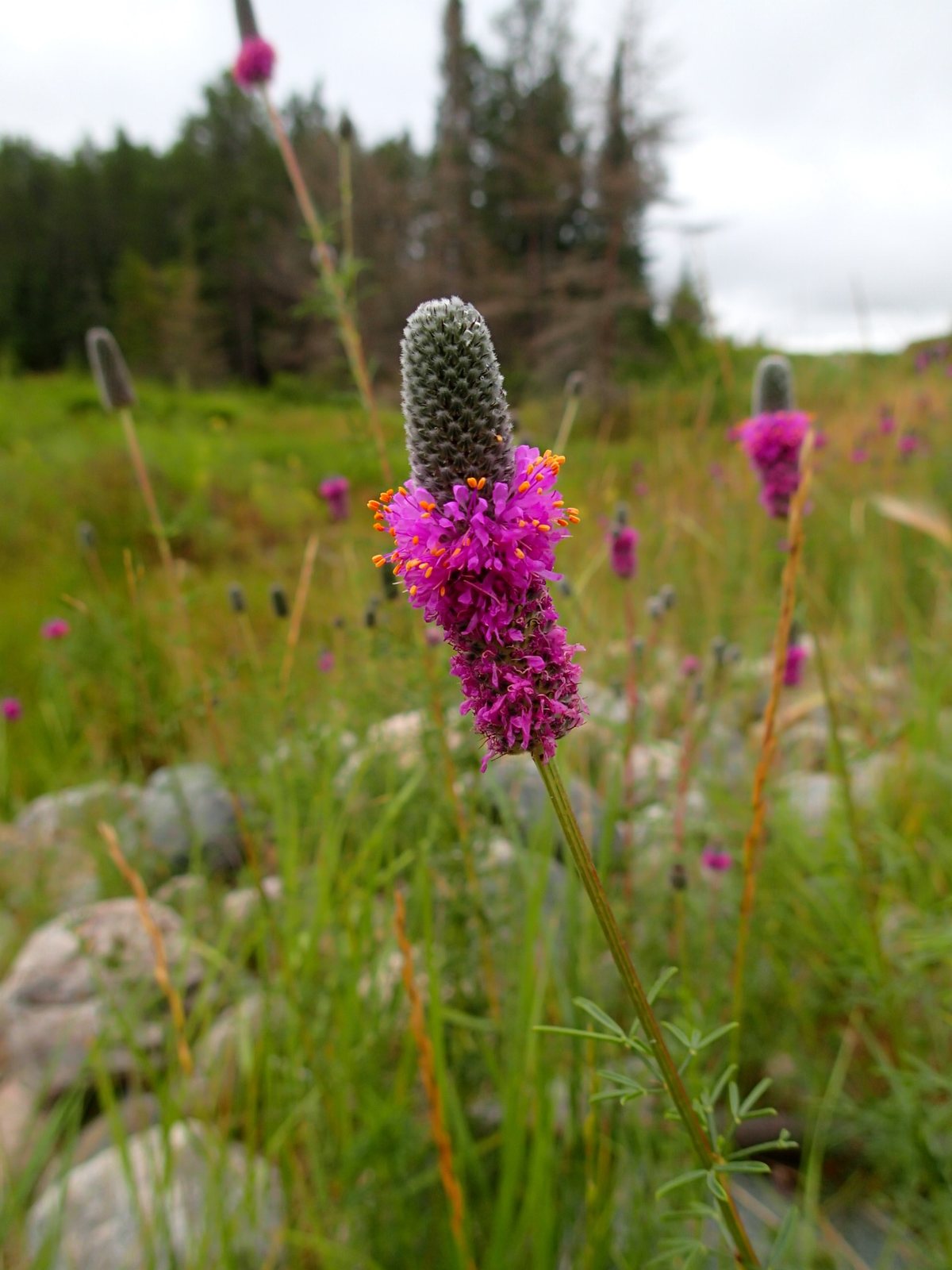
- Summer, usually June-August in the Northern Hemisphere; tiny rose-purple flowers open in a ring that moves upward along each cylindrical spike, with contrasting orange stamens.
- Foliage
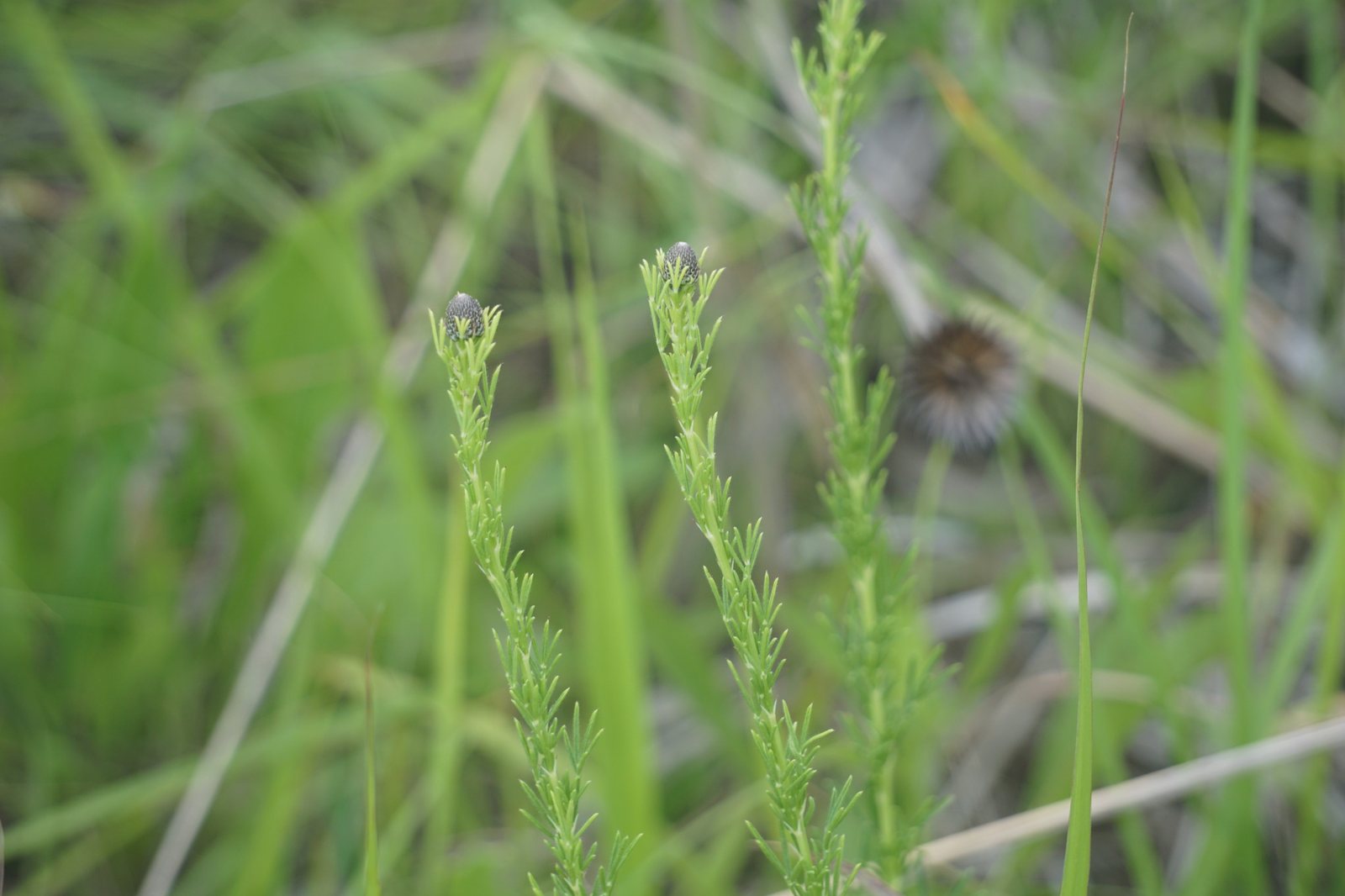
- Fine-textured green foliage with compound leaves divided into small, narrow leaflets; stems die back for winter.
- Growth
- Moderate once established; young plants spend time developing their deep roots.
- Care needed
- Low
The year at a glance
- Pollinators
- Drought tolerant
- Cold hardy
- Wildlife
- Low allergen
| J | F | M | A | M | J | J | A | S | O | N | D | |
|---|---|---|---|---|---|---|---|---|---|---|---|---|
| Flowers | ||||||||||||
| Fruit | ||||||||||||
| Plant |
Northern hemisphere months. In Australia, shift them by six.
- Difficulty
- Easy
- Toughness
- Very tough
Will it suit your garden?
Pick your zone, country, light and whether you have pets.
Full sun is 6 or more hours of direct sun a day, part shade 3 to 6 hours, shade under 3.
How it grows
Planting day
1 ft (0.3 m)
After 1 year
1.3 ft (0.4 m)
After 2 years
1.6 ft (0.5 m)
After 3 years
2 ft (0.6 m)
full size
About 3 years to full size.
From a typical nursery size, at an average rate for this kind of plant. A rule of thumb, not a forecast.
Good to know
- Cats and dogs
- Safe
- Native to
- the US and Canada
- Growth rate
- Moderate
Care
Jobs through the year
- WaterApr–May, Sep–Oct, every 21 days
- Water established plants only in prolonged drought; water young plants regularly.
- WaterJun–Aug, every 14 days
- Water established plants only during prolonged drought; let soil dry between soakings.
- PruneFeb–Mar
- Cut old stems just above ground level; retain occupied hollow stems nearby.
- MulchApr
- If needed, apply light gravel mulch rather than heavy organic mulch around crowns.
- ProtectMar–May
- Fit mesh guards around young plants where rabbits or deer browse.
- Plant in full sun with good drainage, leaving room for its mature spread.
- Water young plants through their first growing season; reduce watering once their roots are established.
- Avoid routine feeding, particularly nitrogen-rich fertiliser, which can encourage weak, floppy growth.
- Keep heavy organic mulch away from the crown; a light gravel mulch suits dry sites.
- Choose a permanent position and avoid dividing established clumps because their deep taproots resent disturbance.
Pruning. Leave stems and seedheads standing through winter if practical. Cut dead stems back to just above ground level in late winter or early spring, before new growth develops.
Through the year
- Late winter
- Cut back old stems before new shoots appear, leaving any occupied hollow stems nearby for insects.
- Spring
- Plant young plants in a sunny, freely drained position and water them in thoroughly.
- Late spring
- Remove competing weeds around young plants without digging deeply near their roots.
- Summer
- Water establishing plants during dry spells; avoid frequent watering of mature clumps.
- Late summer
- Leave some flower spikes to ripen if you want seed for propagation or natural reseeding.
- Autumn
- Sow seed outdoors following any scarification instructions supplied with it; check that winter rain drains freely around established plants.
In the garden
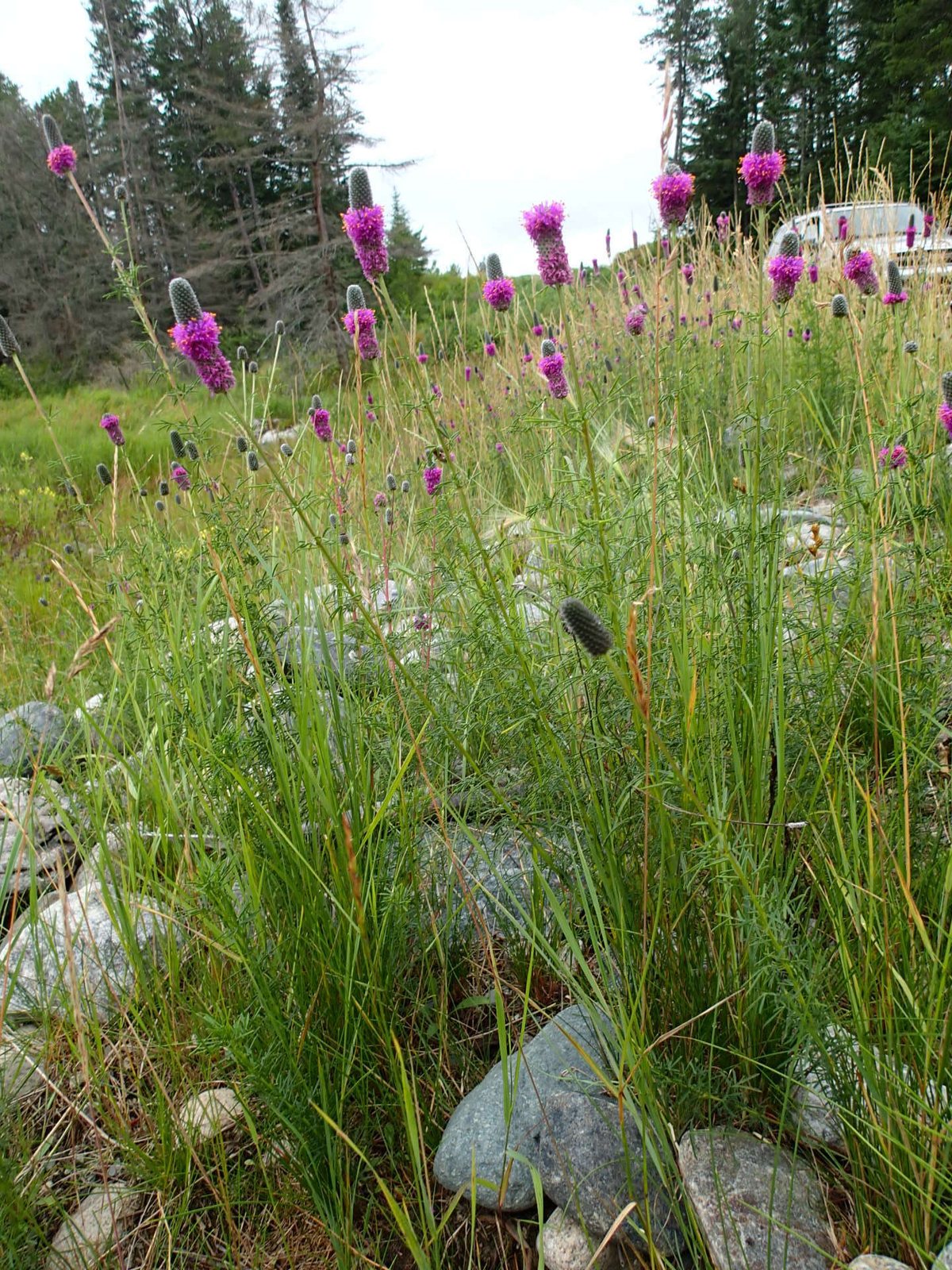
- Repeat small groups among little bluestem and prairie dropseed for a fine-textured prairie planting.
- Plant through a sunny gravel border, where the purple spikes provide summer colour without rich soil.
- Use in the middle of a pollinator border with butterfly weed and black-eyed Susan.
- Include in a small meadow on a dry, sunny site, allowing seedheads to remain after flowering.
Garden styles it suits: Native meadow, Midwest prairie, Pollinator garden, New perennial (prairie), Dry gravel garden and Desert / xeriscape.
Plant it with: Little bluestem, Prairie dropseed, Butterfly weed, Black-eyed Susan, Pale purple coneflower and Rough blazing star.
Wildlife: Flowers attract native bees, including specialist prairie-clover bees, as well as butterflies and other pollinating insects. Seed-eating birds may visit the ripe seedheads, and foliage is browsed by some mammals.
Problems to watch for
- Crown or root rot in wet soil: improve drainage before planting or move young plants to a drier site; avoid winter-wet positions.
- Floppy stems in shade or overly rich soil: provide full sun, stop feeding and avoid excessive watering.
- Rabbit or deer browsing, especially on young growth: protect establishing plants with suitable mesh guards or fencing.
- Poor establishment after transplanting: use young container-grown plants, disturb roots as little as possible and avoid moving mature clumps.
Safety
Not known to be toxic to cats, dogs, horses or people. No part is generally recognised as poisonous, but this is an ornamental plant rather than a recommended food plant.
Easily confused with
White prairie clover (Dalea candida)
Has similar cylindrical flower spikes and fine compound foliage, but its flowers are white rather than purple.
Red clover (Trifolium pratense)
Has rounded pink-purple flowerheads and leaves with three broad leaflets, often marked with a pale chevron; purple prairie clover has elongated spikes and several narrow leaflets.
The name
Dalea honours the English botanist Samuel Dale, while purpurea means purple and refers to the flower colour.
Propagation. Usually grown from seed. The hard seed coat often needs scarification; follow the seed supplier's treatment instructions, then sow outdoors in autumn or in containers in spring. Use deep pots and transplant while young to minimise taproot disturbance; division is not recommended.
Checked against open data
- Accepted botanical name
- Dalea purpurea
- In the US and Canada
- Native in Canada and the lower 48 states.
- Native range
- Alabama, Alberta, Arizona, Colorado, Georgia, Idaho, Illinois, Indiana, Kansas, Kentucky, Louisiana and Michigan.
- Measured
- Average height 52 cm.
Sources: GBIF (CC BY 4.0), USDA PLANTS and Trefle (CC BY 4.0). The care and design notes are LandscapeGPT's own.
See it in your own yard.
Upload a photo of your yard and see it redesigned with plants that suit your climate, each checked against your zone.