Queensland bottle tree
Brachychiton rupestris. Family Malvaceae. Tree.
Also called Narrow-leaved bottle tree, Bottle tree.
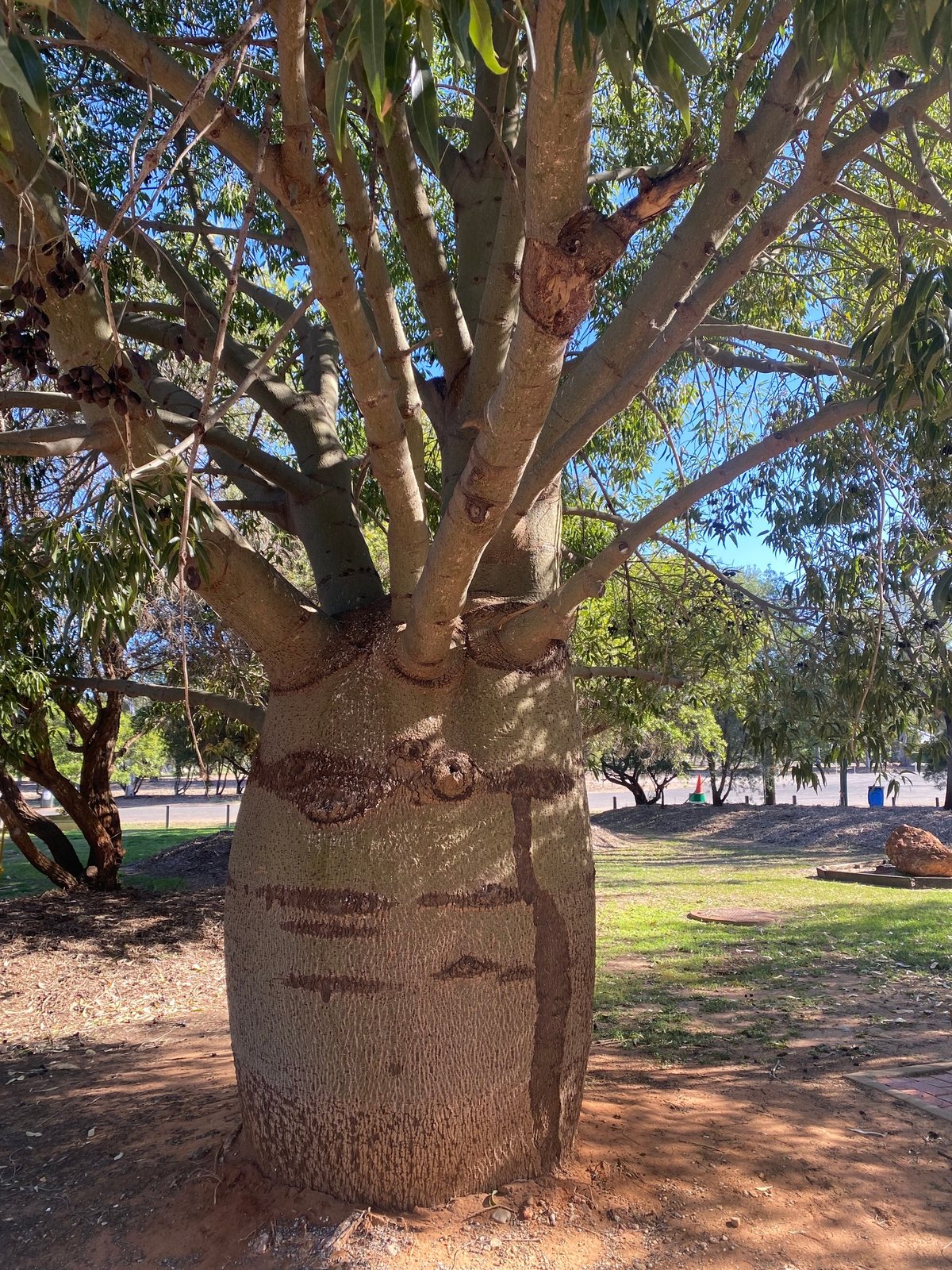
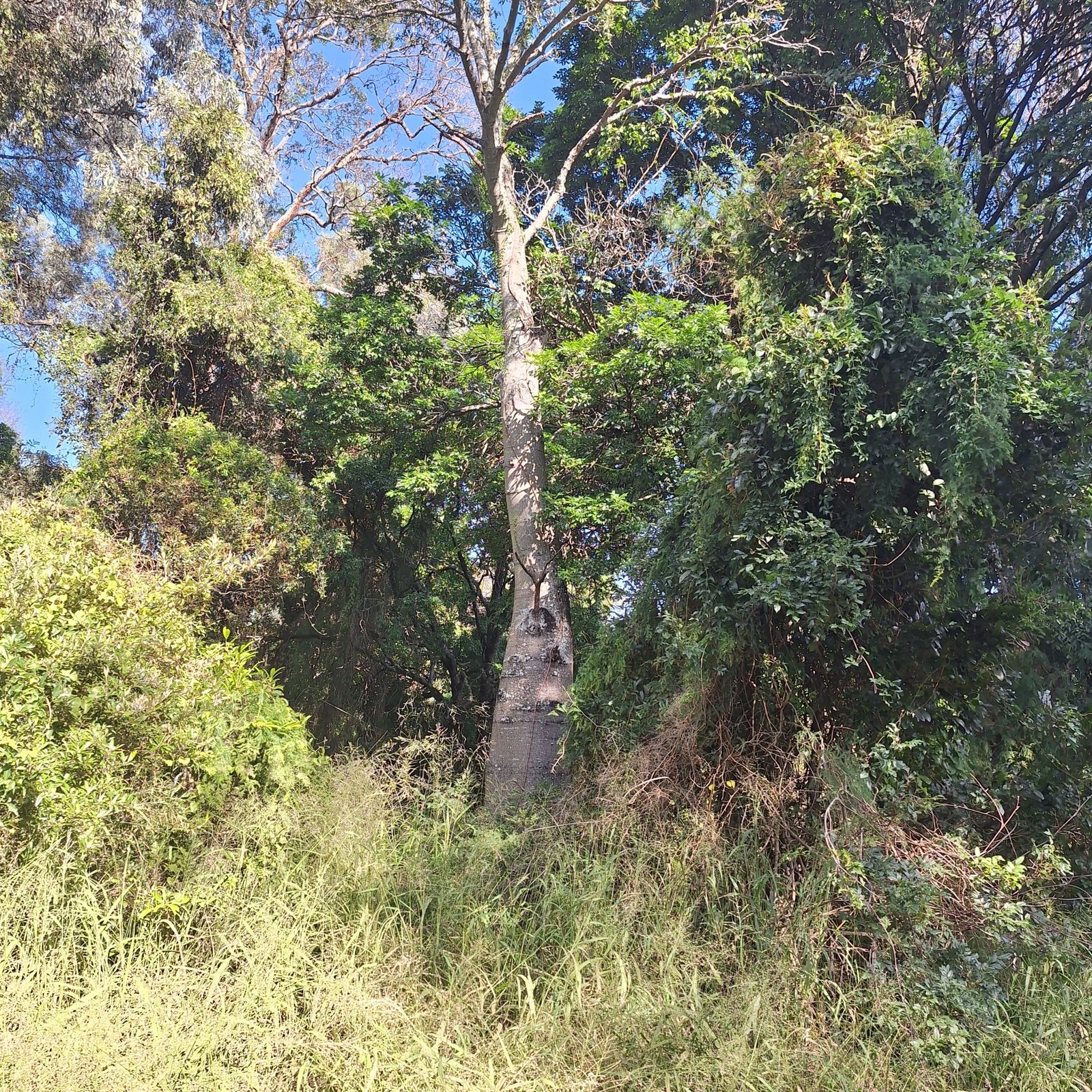
A drought-tolerant Australian tree grown for its swollen, bottle-shaped trunk and rounded crown of narrow leaves. The trunk thickens gradually over many years, making this a long-term specimen for a spacious, warm-climate garden. It tolerates brief light frosts once established but is not reliably hardy outdoors in most of the United Kingdom or Canada.
At a glance
- Sun
- Full sun; young plants tolerate light shade.
- Water
- Water regularly while establishing, allowing the soil to dry between soakings. Established trees need little supplementary water except during prolonged drought.
- Soil
- Well-drained sandy, loamy or gravelly soil; tolerates clay if drainage is good. Avoid persistently wet ground.
- Height
- 30-60 ft (9-18 m)
- Spread
- 20-40 ft (6-12 m)
- Flowers
- Small, cream to pale yellow bell-shaped flowers, sometimes marked reddish inside, in spring to summer; flowering can be irregular.
- Foliage
- Glossy green, usually narrow leaves; juvenile leaves may be deeply divided. Briefly deciduous or semi-evergreen, sometimes shedding leaves before flowering or during dry weather.
- Growth
- Slow to moderate; trunk swelling develops over many years.
- Care needed
- Low
The year at a glance
- Pollinators
- Drought tolerant
- Heat tolerant
- Wildlife
- Low allergen
| J | F | M | A | M | J | J | A | S | O | N | D | |
|---|---|---|---|---|---|---|---|---|---|---|---|---|
| Flowers | ||||||||||||
| Fruit | ||||||||||||
| Plant |
Northern hemisphere months. In Australia, shift them by six.
- Difficulty
- Hard
- Toughness
- Needs looking after
Will it suit your garden?
Pick your zone, country, light and whether you have pets.
Full sun is 6 or more hours of direct sun a day, part shade 3 to 6 hours, shade under 3.
How it grows
Planting day
7 ft (2 m)
After 1 year
8 ft (2.4 m)
After 2 years
9 ft (2.9 m)
After 3 years
11 ft (3.3 m)
After 5 years
14 ft (4.2 m)
About 26 years to full size.
From a typical nursery size, at an average rate for this kind of plant. A rule of thumb, not a forecast.
Good to know
- Cats and dogs
- Mildly toxic: may upset a stomach
- Native to
- Australia
- Growth rate
- Slow
Care
Jobs through the year
- WaterApr–May, Sep, every 21 days
- In zones 6–7, use a movable container; water only after the mix dries appreciably.
- WaterJun–Aug, every 10 days
- For containers, soak then let the mix dry; established ground trees in suitable climates need only drought watering.
- WaterJan–Mar, Oct–Dec, every 30 days
- Keep frost-free overwintered plants relatively dry, watering only if the root ball is drying out.
- FeedApr–May
- Feed lightly only if growth is weak; avoid heavy fertilizer applications.
- PruneMar–Apr
- Make small corrective cuts to dead or crossing branches; never top or cut into the swollen trunk.
- ProtectSep–Oct
- Not winter-hardy in zones 6–7; move containers to bright, frost-free shelter before cold weather.
- ProtectMay–Jun
- Return outdoors gradually after frost risk passes; a mature tree will require substantial protected space.
- Plant in a sunny position with room for the broad mature trunk and crown, well clear of buildings and paving.
- Water deeply through the first two growing seasons, letting the soil dry between waterings.
- Keep mulch away from the trunk and do not bury the swollen trunk base.
- Protect young trees from frost; established trees withstand brief cold better than seedlings.
- Feed lightly in spring only if growth is weak; avoid heavy feeding and frequent lawn irrigation around the roots.
Pruning. Prune lightly in late winter or early spring after the risk of damaging frost has passed, removing dead, damaged or crossing branches. Establish a sound branch framework while young; avoid topping or cutting into the swollen trunk.
Through the year
- Spring
- Plant after frost risk has passed, keeping the root collar at its original soil level.
- Spring
- Check young trees for crossing branches and make only small corrective cuts.
- Summer
- Water establishing trees deeply during dry spells, allowing the ground to dry between soakings.
- Autumn
- Reduce supplementary watering as growth slows and check that drainage remains clear.
- Winter
- Protect young trees during forecast frosts and keep container-grown plants bright, sheltered and relatively dry.
In the garden
- Use as a solitary focal tree in a large gravel garden, leaving the swollen trunk visible.
- Pair with low Australian native shrubs and grasses for a dry-climate planting with contrasting textures.
- Place in a generous lawn or open garden where its rounded crown can develop without repeated pruning.
- Use a young container-grown specimen in a sunny courtyard, allowing for eventual repotting or planting out.
Garden styles it suits: Australian native, Architectural minimal, Desert modern, Desert / xeriscape, Dry gravel garden and Modern Mediterranean.
Plant it with: Lomandra, Kangaroo paw, Coastal rosemary, Rock rose and Blue fescue.
Wildlife: Flowers provide food for visiting insects. The mature crown offers shelter and perching sites for birds.
Problems to watch for
- Root or collar rot in wet soil: improve drainage, keep the trunk base exposed and stop frequent irrigation.
- Frost damage, especially on young trees: choose a sheltered site and cover small specimens during cold nights.
- Scale insects and associated sooty mould: inspect stems and leaves; treat accessible infestations with horticultural oil according to the label, avoiding hot weather.
- Poor growth in containers: check for congested roots and poor drainage, then move to a larger, freely draining container when needed.
Safety
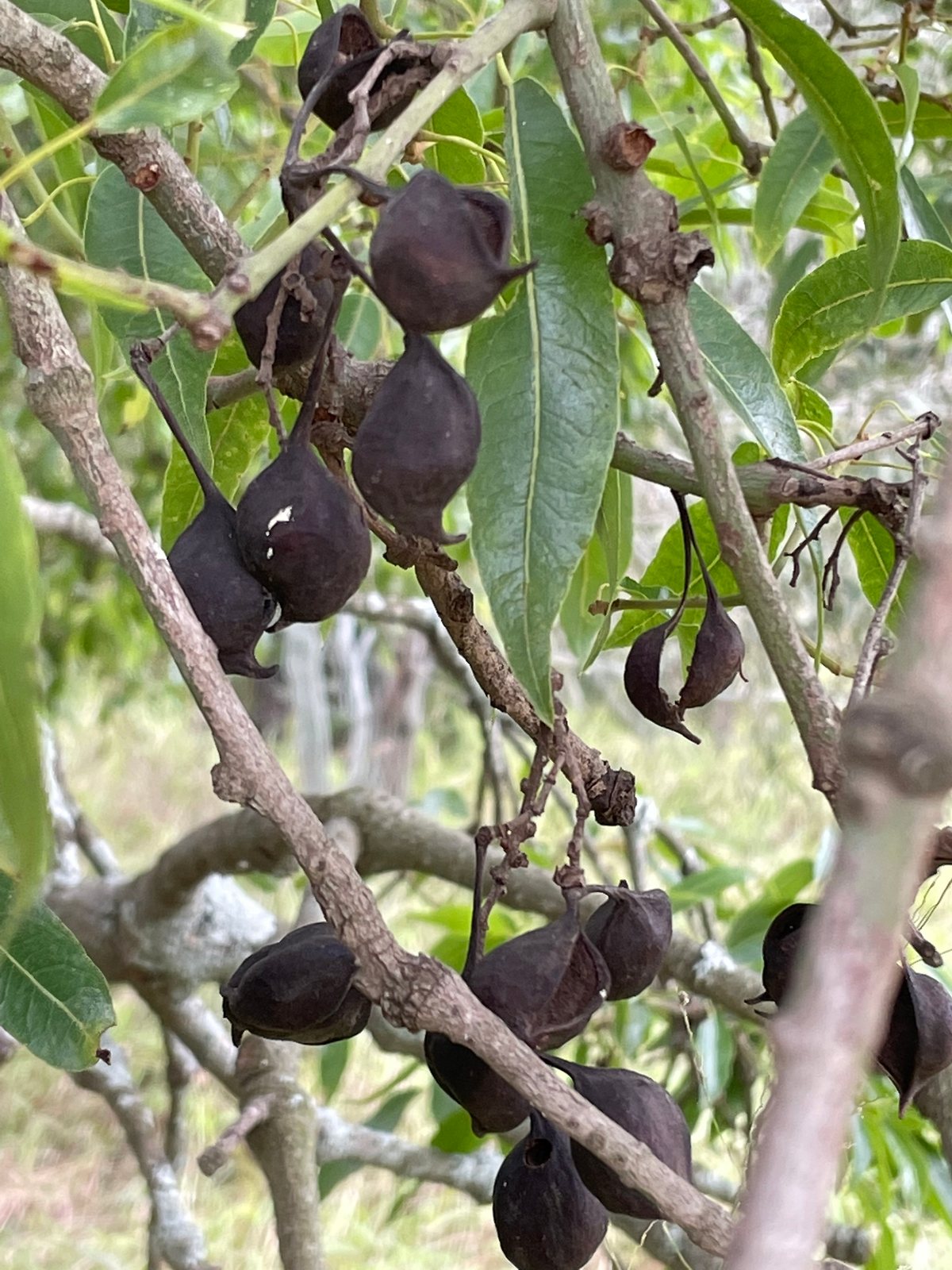
Not generally known to be poisonous to people, cats, dogs or horses, but species-specific animal safety information is limited. Seed pods contain irritating hairs that can affect skin, eyes and the mouth; wear gloves when handling open pods and keep them away from children and pets. Do not eat untreated seeds.
Easily confused with
Kurrajong (Brachychiton populneus)
Usually has broader, poplar-like leaves and a much less conspicuously swollen trunk; young leaves can be lobed.
Lacebark tree (Brachychiton discolor)
Has large, broadly lobed leaves with pale, felted undersides and conspicuous pink flowers, rather than narrow adult leaves and small cream flowers.
Silk floss tree (Ceiba speciosa)
Its swollen trunk usually bears stout prickles, and its leaves are divided into separate leaflets; flowers are large and pink.
The name
The common name describes the swollen trunk, while the botanical epithet rupestris means growing among rocks.
Propagation. Usually grown from seed sown in a warm, freely draining seed mix. Handle pods and clean seed with gloves because of the irritating hairs; protect seedlings from frost and prolonged wetness.
Checked against open data
- Accepted botanical name
- Brachychiton rupestris
- Native range
- Queensland.
Sources: GBIF (CC BY 4.0) and Trefle (CC BY 4.0). The care and design notes are LandscapeGPT's own.
See it in your own yard.
Upload a photo of your yard and see it redesigned with plants that suit your climate, each checked against your zone.