Radicchio (chicory)
Cichorium intybus. Family Asteraceae. Annual.
Also called Italian chicory, Red chicory, Heading chicory.
Radicchio is a leafy form of perennial chicory grown as an annual vegetable for its crisp, pleasantly bitter leaves. Depending on the variety, it produces round heads, elongated heads or loose rosettes, often with red leaves and contrasting white ribs. It grows best as a cool-season crop, with autumn conditions usually giving the best colour and flavour.
At a glance
- Sun
- Full sun; light afternoon shade can help in warm climates.
- Water
- Keep the root zone evenly moist but not waterlogged; drought increases bitterness and encourages bolting.
- Soil
- Fertile, moisture-retentive, well-drained soil, ideally pH 6.0-7.5.
- Height
- 0.5-1.5 ft (0.15-0.45 m) when grown for leaves
- Spread
- 0.75-1.5 ft (0.23-0.45 m)
- Foliage
- Broad, crisp leaves with prominent pale ribs; green, burgundy, red or cream-speckled, depending on variety and growing conditions.
- Growth
- Moderate; many varieties reach harvest about 70-100 days after transplanting, though late types take longer.
- Care needed
- Medium
The year at a glance
- Low allergen
- Edible
| J | F | M | A | M | J | J | A | S | O | N | D | |
|---|---|---|---|---|---|---|---|---|---|---|---|---|
| Fruit | ||||||||||||
| Plant |
Northern hemisphere months. In Australia, shift them by six.
- Difficulty
- Moderate
- Toughness
- Fairly tough
Will it suit your garden?
Pick your zone, country, light and whether you have pets.
Full sun is 6 or more hours of direct sun a day, part shade 3 to 6 hours, shade under 3.
How it grows
Planting day
0.5 ft (0.15 m)
After 1 year
1 ft (0.3 m)
full size
Full size in one season.
From a typical nursery size, at an average rate for this kind of plant. A rule of thumb, not a forecast.
Good to know
- Cats and dogs
- Safe
- Growth rate
- Moderate
Care
Jobs through the year
- WaterApr–May, Sep–Nov, every 7 days
- Water established crops if rain is insufficient; keep seedlings and forming heads evenly moist.
- WaterJun–Aug, every 4 days
- Water deeply in dry weather to prevent bitterness and bolting.
- MulchMay, Jul–Aug
- Apply a thin organic mulch after planting, keeping crowns uncovered.
- ProtectApr–Sep
- Use insect mesh against caterpillars and protect young plants from slugs.
- ProtectOct–Dec
- Cover remaining heads with fleece or a low tunnel before hard freezes.
- HarvestMay–Jun, Sep–Nov, every 7 days
- Pick usable outer leaves or cut mature, well-coloured heads at soil level.
- Mix mature compost into the bed before planting; avoid excessive nitrogen, which encourages loose leafy growth.
- Space plants about 10-14 in (25-35 cm) apart, allowing more room for large varieties.
- Water deeply whenever the surface soil begins to dry, especially while heads are forming.
- Apply a thin organic mulch to conserve moisture, keeping it clear of the crowns.
- Use insect mesh against caterpillars and fleece or a low tunnel to extend autumn harvesting.
Pruning. No routine pruning is needed. Remove damaged outer leaves and pull plants that bolt unless you want flowers or seed.
Harvest
Pick individual outer leaves once they are large enough to use, or cut a whole head at soil level when it feels firm and has developed its expected colour. Loose-leaf varieties need not form a firm head; harvest a full-sized rosette instead. Light frost often improves flavour, but harvest or protect heads before prolonged hard freezes.
Through the year
- Early spring
- Sow a spring-suitable variety under cover where summers are cool; follow local sowing dates, since cold exposure can trigger bolting.
- Spring
- Harden off seedlings and transplant into prepared soil, keeping the crown at soil level.
- Late spring
- Harvest spring crops before sustained heat and remove plants that start producing flower stalks.
- Summer
- Sow autumn varieties according to their maturity time, commonly around 12-16 weeks before the first expected autumn frost.
- Early autumn
- Keep developing heads evenly watered and remove weeds; in mild-winter climates, sow varieties suited to winter cropping.
- Late autumn
- Harvest coloured, firm heads and protect remaining plants with fleece or a low tunnel.
- Winter
- Harvest protected crops during mild weather and remove rotting leaves; clear finished plants from the bed.
In the garden
- Plant in repeated blocks in a potager, using red heads to contrast with green lettuce.
- Edge vegetable beds with compact varieties for a low, orderly border.
- Grow in deep containers near the kitchen alongside cool-season salad crops.
- Mix burgundy varieties into an edible border with parsley and kale for autumn foliage colour.
Garden styles it suits: Potager (kitchen garden), Edible landscape, Homestead, Modern courtyard, Small-space and Autumn colour.
Plant it with: Lettuce, Carrots, Beetroot, Parsley, Spring onions and Kale.
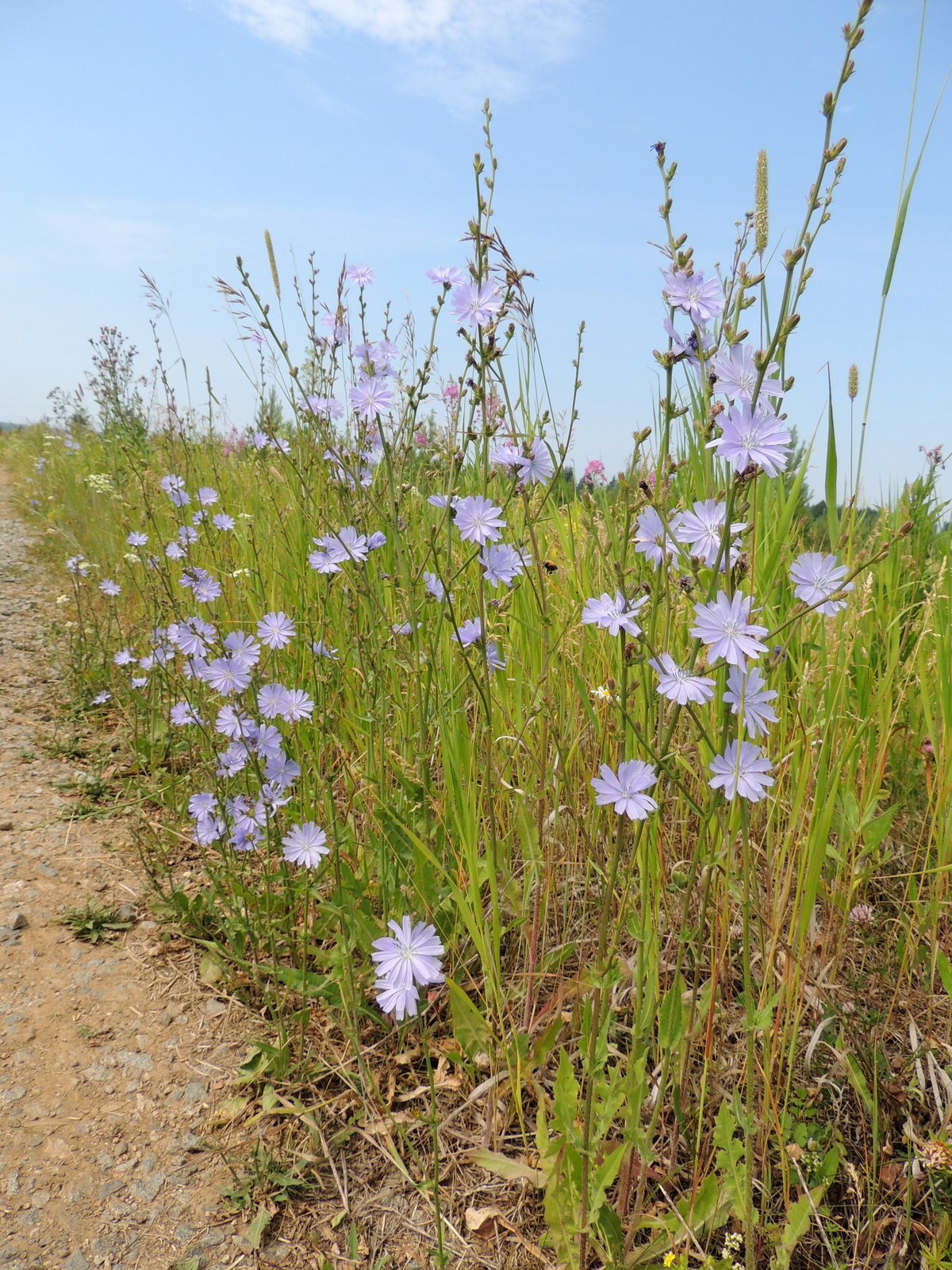
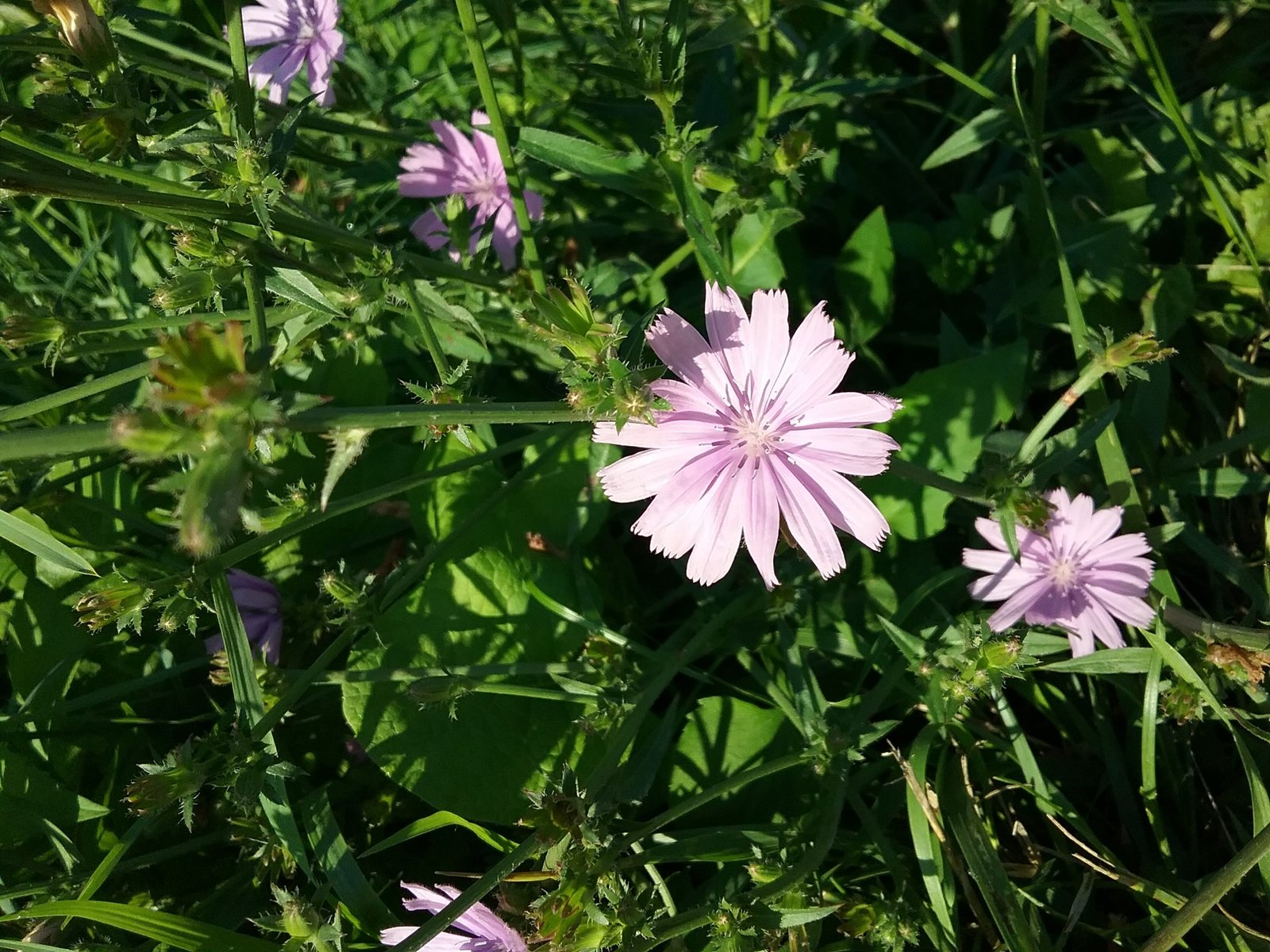
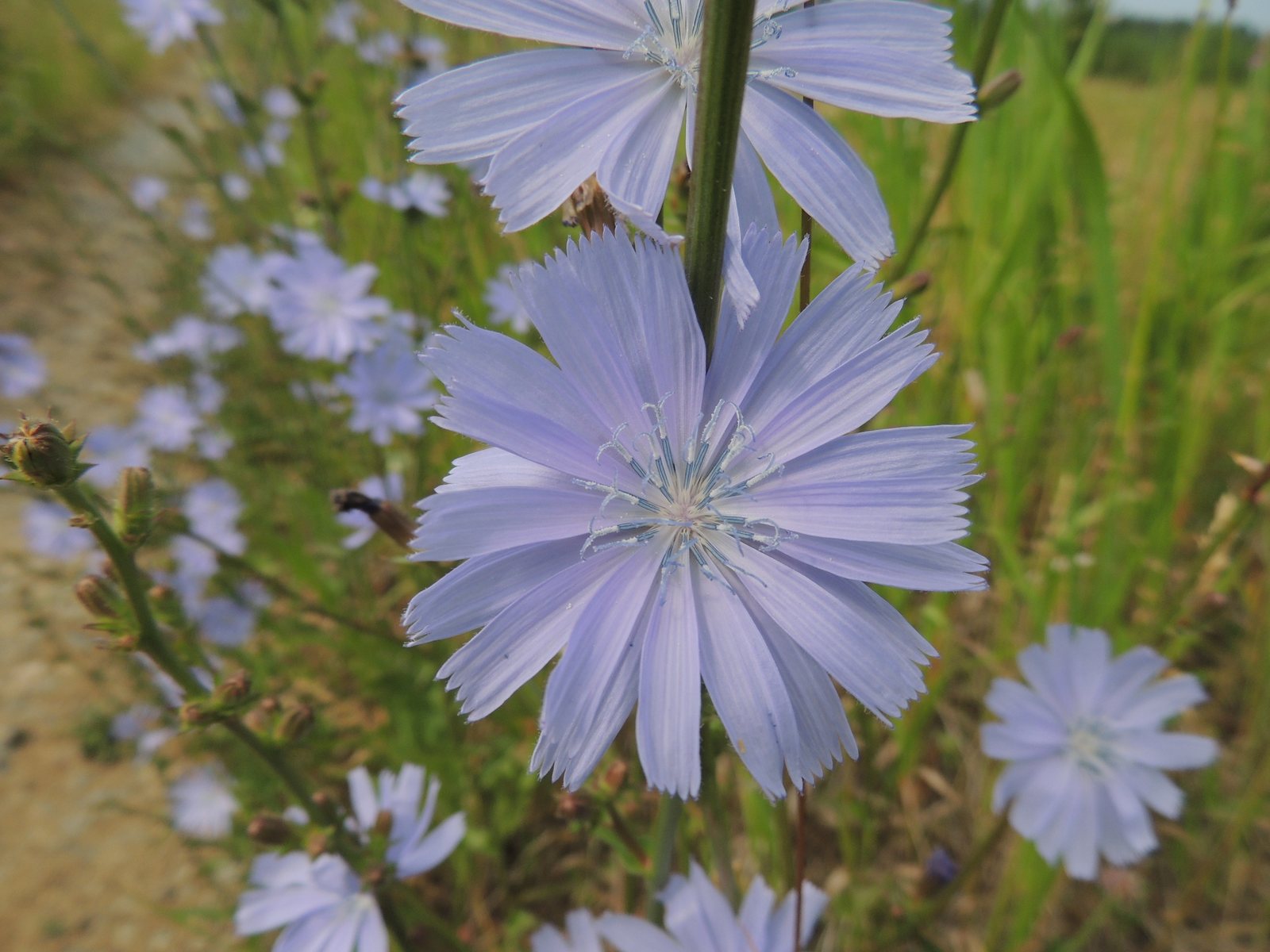
Wildlife: If allowed to flower, chicory produces blue flowers visited by bees and other insects. Plants harvested as heads provide little floral value.
Problems to watch for
- Bolting: cold exposure in young plants, long days or heat can trigger flowering; choose a variety suited to your sowing season and avoid keeping seedlings chilled or root-bound.
- Slugs and snails: protect young plants with barriers, evening hand-picking or an approved iron-phosphate bait used as directed.
- Caterpillars: inspect leaf undersides and remove larvae; cover plants with insect mesh before moths lay eggs.
- Crown rot: improve drainage, avoid burying the crown and remove affected plants promptly.
Safety
Radicchio is not known to be toxic to people, cats, dogs or horses. The leaves are edible, and chicory is also used as livestock forage. Large unfamiliar servings may cause digestive upset; people sensitive to daisy-family plants may occasionally react to chicory.
Where it spreads. Wild forms of Cichorium intybus are widely naturalised in North America and Australia and can spread along roadsides, in pasture and on disturbed ground. Cultivated radicchio is much less likely to spread when harvested before flowering; remove flower stalks to prevent seed escape.
Easily confused with
Red cabbage (Brassica oleracea Capitata Group)
Red cabbage has thicker, waxier leaves and densely layered heads; radicchio has thinner leaves, conspicuous white ribs and a distinctly bitter flavour.
Endive (Cichorium endivia)
Endive is usually green, with finely curled leaves or broad escarole leaves, rather than the red-and-white heads typical of radicchio; green radicchio varieties can be harder to distinguish.
Belgian endive (Cichorium intybus Witloof Group)
Belgian endive is the same species but is grown for tightly packed, pale shoots forced from roots in darkness, rather than naturally coloured outdoor heads.
The name
Radicchio is an Italian name derived from the Latin radicula, meaning 'little root'.
Propagation. Grow from seed, sown directly or in modules, then transplant while young. Use seed labelled for the intended harvest season; saved seed may cross with other flowering Cichorium intybus varieties and may not reproduce the original head shape or colour.
Checked against open data
- Accepted botanical name
- Cichorium intybus
- In the US and Canada
- Introduced in Canada, the lower 48 states and St. Pierre and Miquelon.
- Native range
- Afghanistan, Albania, Algeria, Austria, Azores, Baleares, Baltic States, Belarus, Belgium, Bulgaria, Cape Verde and Central European Rus.
- Measured
- Soil pH 6 to 7.5. Average height 40 cm.
Sources: GBIF (CC BY 4.0), USDA PLANTS and Trefle (CC BY 4.0). The care and design notes are LandscapeGPT's own.
See it in your own yard.
Upload a photo of your yard and see it redesigned with plants that suit your climate, each checked against your zone.