Rainbow leucothoe
Leucothoe fontanesiana 'Rainbow'. Family Ericaceae. Shrub.
Also called Rainbow drooping leucothoe, Girard's Rainbow leucothoe, Rainbow dog hobble.
Rainbow leucothoe is an evergreen shrub with arching stems and glossy leaves marbled green, cream and pink, often deepening to bronze or burgundy in cold weather. Grow it for year-round foliage in sheltered, partly shaded gardens with moist, acidic soil; it struggles in chalky soil, drought and hot afternoon sun.
At a glance
- Sun
- Partial shade or bright, dappled shade; morning sun is suitable where the soil stays moist. Protect from hot afternoon sun and drying winds.
- Water
- Keep the root zone evenly moist but not waterlogged. Water deeply during dry spells, especially while establishing and when grown in a container.
- Soil
- Acidic, humus-rich soil that holds moisture but drains freely, ideally pH 4.5-6.0. Unsuitable for chalky or persistently waterlogged ground.
- Height
- 3-5 ft (0.9-1.5 m)
- Spread
- 3-6 ft (0.9-1.8 m)
- Flowers
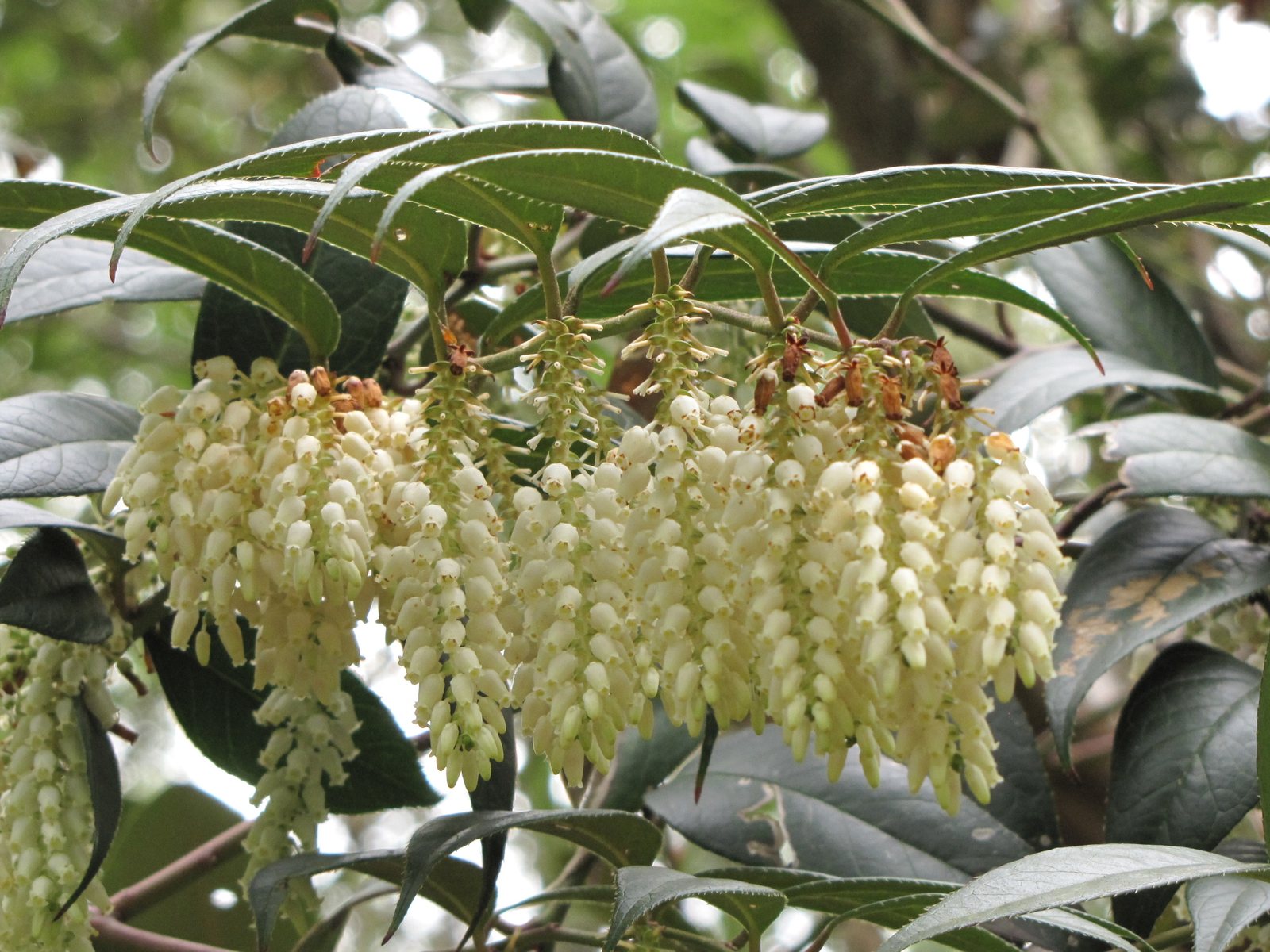
- Small, white, urn-shaped flowers hang in clusters beneath the stems in mid- to late spring.
- Foliage
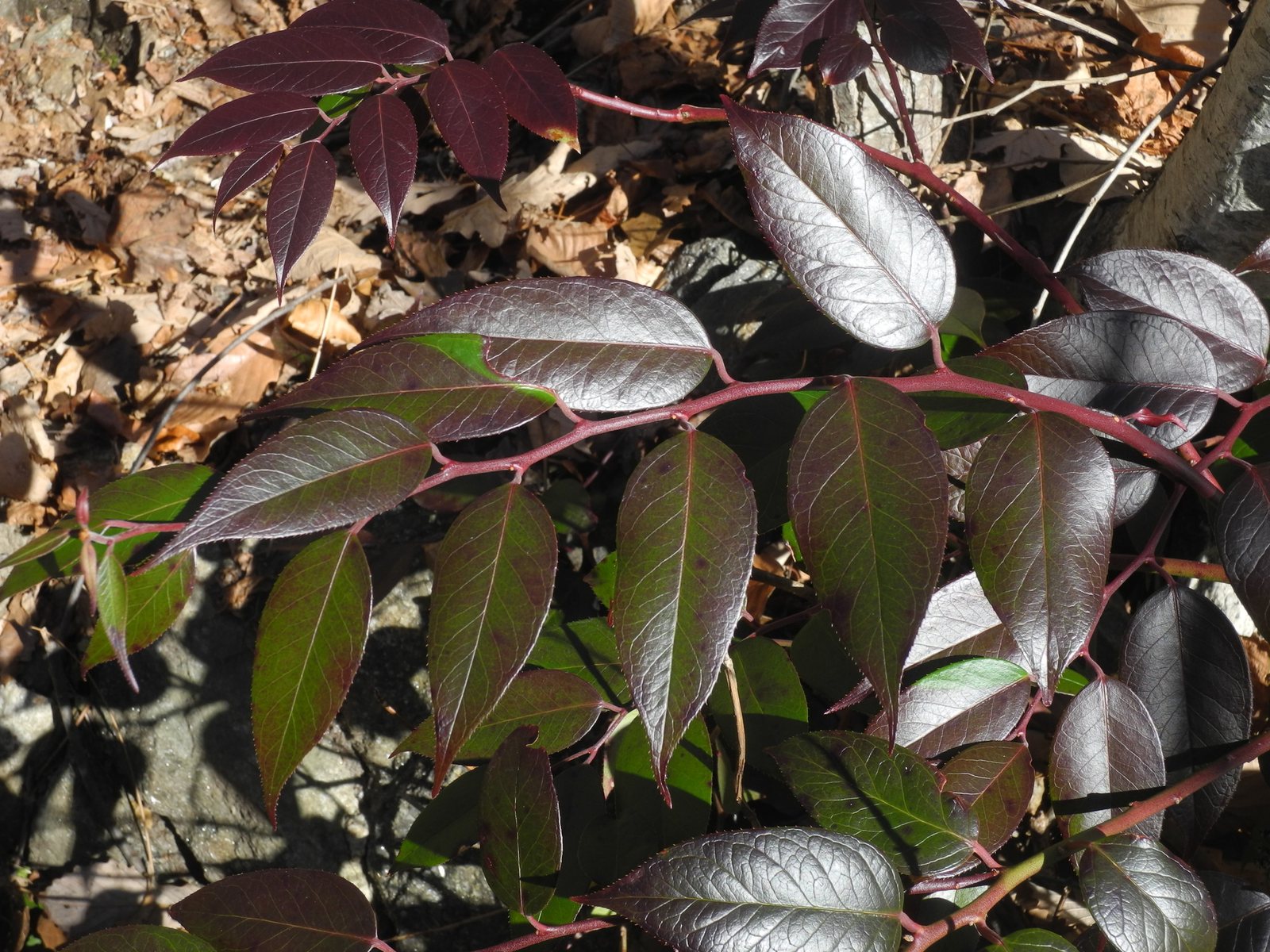
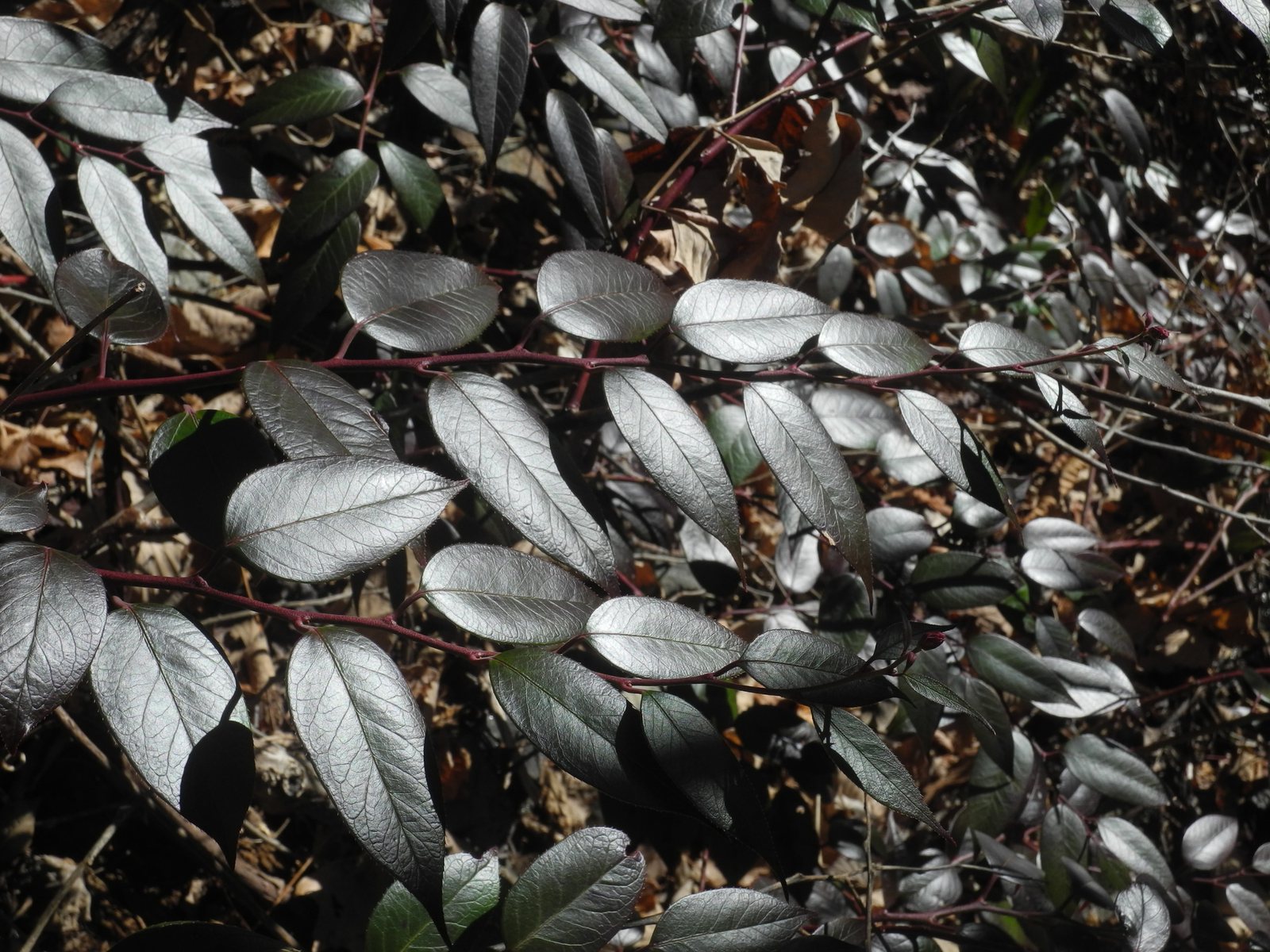
- Evergreen. Glossy, leathery, pointed leaves mottled green and cream, with pink young growth and bronze, red or burgundy winter tones. Colour varies with light, season and climate.
- Growth
- Slow to moderate
- Care needed
- Low
The year at a glance
- Pollinators
- Deer resistant
- Wildlife
- Low allergen
| J | F | M | A | M | J | J | A | S | O | N | D | |
|---|---|---|---|---|---|---|---|---|---|---|---|---|
| Flowers | ||||||||||||
| Plant |
Northern hemisphere months. In Australia, shift them by six.
- Difficulty
- Moderate
- Toughness
- Fairly tough
Will it suit your garden?
Pick your zone, country, light and whether you have pets.
Full sun is 6 or more hours of direct sun a day, part shade 3 to 6 hours, shade under 3.
How it grows
Planting day
1.6 ft (0.5 m)
After 1 year
2 ft (0.61 m)
After 2 years
2.3 ft (0.72 m)
After 3 years
2.7 ft (0.82 m)
After 5 years
3 ft (1 m)
About 7 years to full size.
From a typical nursery size, at an average rate for this kind of plant. A rule of thumb, not a forecast.
Good to know
- Cats and dogs
- Toxic
- Native to
- the US
- Growth rate
- Slow
Care
Jobs through the year
- WaterMar–May, Sep–Oct, every 14 days
- Check established plants and water deeply if the surface is drying; young plants need more frequent checks.
- WaterJun–Aug, every 7 days
- Water established plants deeply during dry weather, keeping roots evenly moist but never saturated.
- MulchMar
- Apply 5–8 cm of leaf mould or composted bark, keeping stem bases clear.
- FeedApr
- Feed lightly with ericaceous fertiliser only if growth is weak; investigate alkaline soil if leaves yellow.
- PruneMay–Jun
- Just after flowering, remove damaged stems, wholly green shoots and a few crowded old stems; do not shear.
- ProtectJan–Feb, Nov–Dec
- Shelter foliage from drying winds and insulate container roots against prolonged hard freezing.
- Water when the surface soil begins to dry; do not let newly planted shrubs dry out.
- Apply 2-3 in (5-8 cm) of leaf mould or composted bark annually, keeping mulch clear of the stem bases.
- If growth is weak, feed lightly in spring with a fertiliser formulated for acid-loving shrubs.
- Use ericaceous potting mix in containers and check moisture regularly.
- Remove any wholly green shoots at their base to preserve the variegated appearance.
Pruning. Prune just after flowering, removing dead or damaged stems and cutting a few of the oldest stems to ground level if the shrub is congested. Avoid routine shearing, which spoils its arching shape.
Through the year
- Early spring
- Check for winter damage and renew the mulch without covering the stem bases.
- Spring
- Plant in prepared acidic soil and water thoroughly; feed lightly only if needed.
- Late spring
- After flowering, thin crowded stems and remove any all-green shoots.
- Summer
- Check soil moisture during dry weather and water deeply before the root zone dries out.
- Autumn
- Plant where winters are mild, allowing time for roots to establish before frozen ground.
- Winter
- Protect container roots from prolonged hard freezing and shelter foliage from drying winds.
In the garden
- Plant along a shaded path where the arching stems and patterned foliage can be seen closely.
- Use beneath open-canopied trees with ferns and hostas, provided tree roots do not leave the soil dry.
- Combine with rhododendrons and azaleas to add evergreen texture below taller acid-loving shrubs.
- Grow in a large, well-drained container to brighten a sheltered, partly shaded courtyard.
Garden styles it suits: Woodland, Japanese, English country, Modern courtyard, Pacific Northwest woodland and Winter interest.
Plant it with: Japanese maple, Rhododendrons, Azaleas, Hostas, Japanese painted fern and Epimediums.
Wildlife: The spring flowers provide nectar and pollen for visiting insects, including bees. Dense evergreen growth offers small animals shelter.
Problems to watch for
- Yellow leaves with green veins usually indicate iron deficiency in soil that is too alkaline: test the soil and move the plant to suitable acidic soil or an ericaceous container mix.
- Brown leaf edges or bleached patches can follow drought, strong sun or drying winds: restore steady moisture and provide afternoon shade and shelter.
- Root rot can develop in waterlogged ground: improve drainage or relocate to a raised planting area; do not leave pots standing in water.
- Leaf spots are more likely in damp, crowded growth: remove fallen affected leaves, improve air circulation and water at soil level.
Safety
All parts are toxic to people, cats, dogs and horses if eaten, containing grayanotoxins. Ingestion can cause vomiting, weakness, abnormal heart rhythms and potentially life-threatening poisoning; seek urgent medical or veterinary advice after suspected ingestion.
Easily confused with
Variegated Japanese pieris (Pieris japonica)
Pieris carries conspicuous branched flower clusters at the shoot tips; leucothoe bears shorter clusters beneath its arching stems. Variegated pieris commonly has more clearly defined cream leaf margins.
Mountain laurel (Kalmia latifolia)
Mountain laurel has broad clusters of open, cup-shaped pink or white flowers at the shoot tips, rather than small hanging urn-shaped flowers beneath the stems.
The name
The cultivar name 'Rainbow' refers to its multicoloured foliage.
Propagation. Take semi-ripe cuttings in summer, or layer a low, flexible stem into moist soil and separate it once well rooted. Seed will not reliably reproduce the cultivar's variegation.
Checked against open data
- Accepted botanical name
- Leucothoe fontanesiana
- In the US and Canada
- Native in the lower 48 states.
- Native range
- Alabama, Georgia, North Carolina, South Carolina, Tennessee and Virginia.
- Measured
- Soil pH 4.5 to 6. Average height 122 cm.
Sources: GBIF (CC BY 4.0), USDA PLANTS and Trefle (CC BY 4.0). The care and design notes are LandscapeGPT's own.
See it in your own yard.
Upload a photo of your yard and see it redesigned with plants that suit your climate, each checked against your zone.