Rambling rose 'Albertine'
Rosa 'Albertine'. Family Rosaceae. Climber.
Also called Albertine rose, Rosa 'Albertine'.
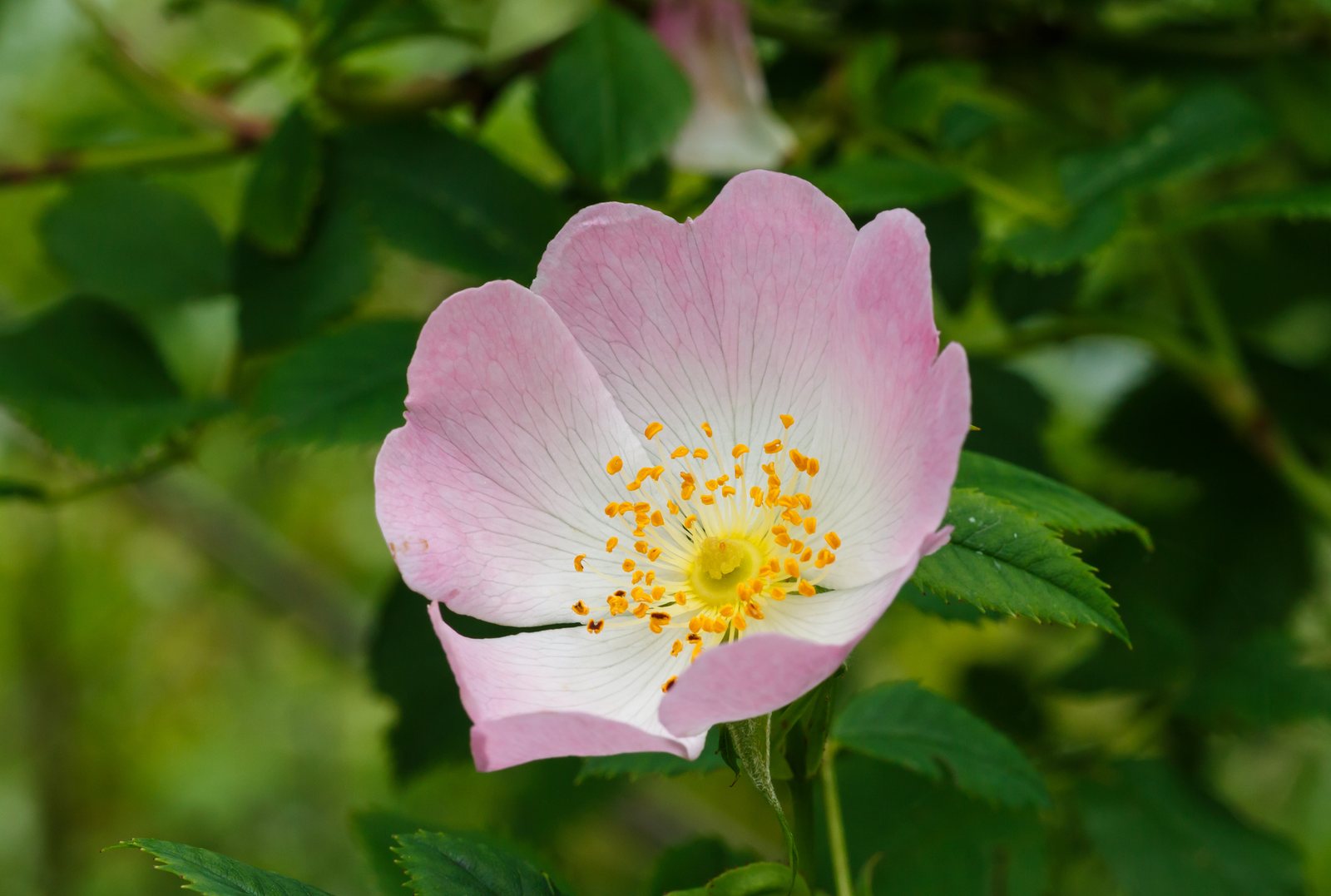
'Albertine' is a vigorous, thorny rambling rose with coppery buds opening into strongly scented, salmon-pink double flowers. It produces one main early-summer display rather than flowering repeatedly, and needs a substantial support with room for its long, arching stems.
At a glance
- Sun
- Full sun gives the best flowering; tolerates light shade but flowers less freely.
- Water
- Water deeply during establishment and prolonged dry spells. Keep water at soil level rather than wetting the leaves.
- Soil
- Fertile, moisture-retentive but well-drained soil; tolerates clay if drainage is adequate. Slightly acidic to neutral soil is ideal.
- Height
- 15-25 ft (4.5-7.5 m)
- Spread
- 10-15 ft (3-4.5 m)
- Flowers
- Late spring to early summer, usually June-July in cooler Northern Hemisphere gardens and November-December in southern Australia; coppery buds open salmon-pink and fade to softer pink.
- Foliage
- Glossy, dark green compound leaves, often with reddish young growth; normally deciduous, though some leaves may persist in mild winters.
- Growth
- Fast once established.
- Care needed
- High
The year at a glance
- Heat tolerant
- Wildlife
- Low allergen
- Fragrant
| J | F | M | A | M | J | J | A | S | O | N | D | |
|---|---|---|---|---|---|---|---|---|---|---|---|---|
| Flowers | ||||||||||||
| Plant |
Northern hemisphere months. In Australia, shift them by six.
- Difficulty
- Hard
- Toughness
- Fairly tough
Will it suit your garden?
Pick your zone, country, light and whether you have pets.
Full sun is 6 or more hours of direct sun a day, part shade 3 to 6 hours, shade under 3.
How it grows
Planting day
2 ft (0.6 m)
After 1 year
3 ft (1.1 m)
After 2 years
5 ft (1.5 m)
After 3 years
6 ft (1.8 m)
full size
About 3 years to full size.
From a typical nursery size, at an average rate for this kind of plant. A rule of thumb, not a forecast.
Good to know
- Cats and dogs
- Safe
- Growth rate
- Fast
Care
Jobs through the year
- WaterApr–May, Sep–Oct, every 14 days
- Water established ground plants deeply only when dry; give more regular water for the first two seasons.
- WaterJun–Aug, every 7 days
- During prolonged dry spells, soak the root zone without wetting leaves; skip if soil is moist.
- FeedMar–Apr
- Apply rose fertiliser at the label rate; avoid heavy late-season nitrogen.
- MulchMar–Apr
- Apply compost or well-rotted manure, keeping it clear of the stems.
- PruneFeb–Mar
- Remove dead, broken or diseased wood only; retain healthy canes that will flower.
- PruneJul–Aug
- After flowering, remove selected old canes and shorten flowered side shoots to two or three buds.
- ProtectApr–Sep, every 14 days
- Tie strong new canes loosely to sturdy supports in broad fans; wear thorn-resistant gloves.
- ProtectOct–Nov
- Secure long canes against wind and remove fallen diseased leaves.
- Provide a sturdy pergola, wall wires or large trellis before planting; this rose does not cling by itself.
- Tie long stems loosely to supports, spreading them horizontally or in broad fans to encourage flowering shoots.
- Water deeply through the first two growing seasons and during extended drought.
- Apply a rose fertiliser in early spring at the label rate; avoid heavy late-season nitrogen feeding.
- Mulch annually with compost or well-rotted manure, keeping it clear of the stems.
- Wear sturdy gloves and long sleeves when handling the heavily thorned canes.
Pruning. Prune just after flowering, retaining and tying in strong new canes that will carry next year's flowers. On established plants, remove some of the oldest flowered canes at the base and shorten flowered side shoots to two or three buds; remove dead or diseased wood whenever noticed.
Through the year
- Late autumn
- Plant bare-root roses while the soil is workable and not waterlogged; water thoroughly after planting.
- Late winter
- Check supports and ties, and remove dead, broken or diseased stems without cutting back all the healthy flowering wood.
- Early spring
- Apply rose fertiliser and mulch with compost, leaving a gap around the stems.
- Spring
- Tie in developing canes and inspect young shoots for aphids and early signs of leaf disease.
- Early summer
- Enjoy the main flowering flush and water at soil level during dry weather.
- After flowering
- Prune out selected old canes, shorten flowered side shoots and secure replacement growth.
- Autumn
- Collect fallen diseased leaves and secure long stems against winter wind.
In the garden
- Train over a substantial pergola to create a scented, shaded passage with flowers overhead.
- Fan across a large wall or sturdy fence for an early-summer backdrop to mixed borders.
- Grow over a broad arch away from narrow paths, where its thorns will not catch passers-by.
- Combine with a later-flowering clematis to extend interest after the rose's single flowering season.
Garden styles it suits: English country, Cottage garden, Romantic rose garden, Arts and Crafts, Secret garden and Sensory garden.
Plant it with: Late-flowering clematis, Catmint, Hardy geranium, Lavender, Lady's mantle and Foxglove.
Wildlife: The dense stems can provide shelter and nesting cover for small birds. The very double flowers offer less accessible pollen than open, single-flowered roses.
Problems to watch for
- Black spot: collect infected fallen leaves, improve airflow and water at soil level; use a locally approved rose fungicide if disease remains severe.
- Powdery mildew: prevent drought stress, avoid excessive nitrogen feeding and thin congested growth.
- Aphids: wash small colonies off young shoots with water and encourage ladybirds and other predators.
- Poor flowering: avoid hard spring pruning, which removes flowering wood; give more sun and retain strong replacement canes after summer pruning.
Safety
Not known to be toxic to cats, dogs, horses or people. Eating large quantities of leaves or flowers may cause stomach upset; the main hazard is injury from the sharp thorns. Do not eat flowers treated with pesticides unsuitable for edible plants.
Easily confused with
Rambling rose 'François Juranville' (Rosa 'François Juranville')
Also a vigorous, once-flowering pink rambler, but its flowers are generally smaller and flatter than the larger, more cupped and ruffled flowers of 'Albertine'.
Climbing rose 'New Dawn' (Rosa 'New Dawn')
Has much paler, silvery shell-pink flowers and normally repeats its flowering through the growing season, unlike the single main flush of 'Albertine'.
The name
Rosa is the Latin word for rose.
Propagation. Take semi-ripe cuttings in summer or hardwood cuttings in autumn, or layer a flexible low stem. Seedlings will not reliably retain the cultivar's characteristics; shoots arising below a graft union belong to the rootstock.
Checked against open data
- Accepted botanical name
- Rosa
Sources: GBIF (CC BY 4.0). The care and design notes are LandscapeGPT's own.
See it in your own yard.
Upload a photo of your yard and see it redesigned with plants that suit your climate, each checked against your zone.