Red buckeye
Aesculus pavia. Family Sapindaceae. Tree.
Also called Scarlet buckeye, Firecracker plant.
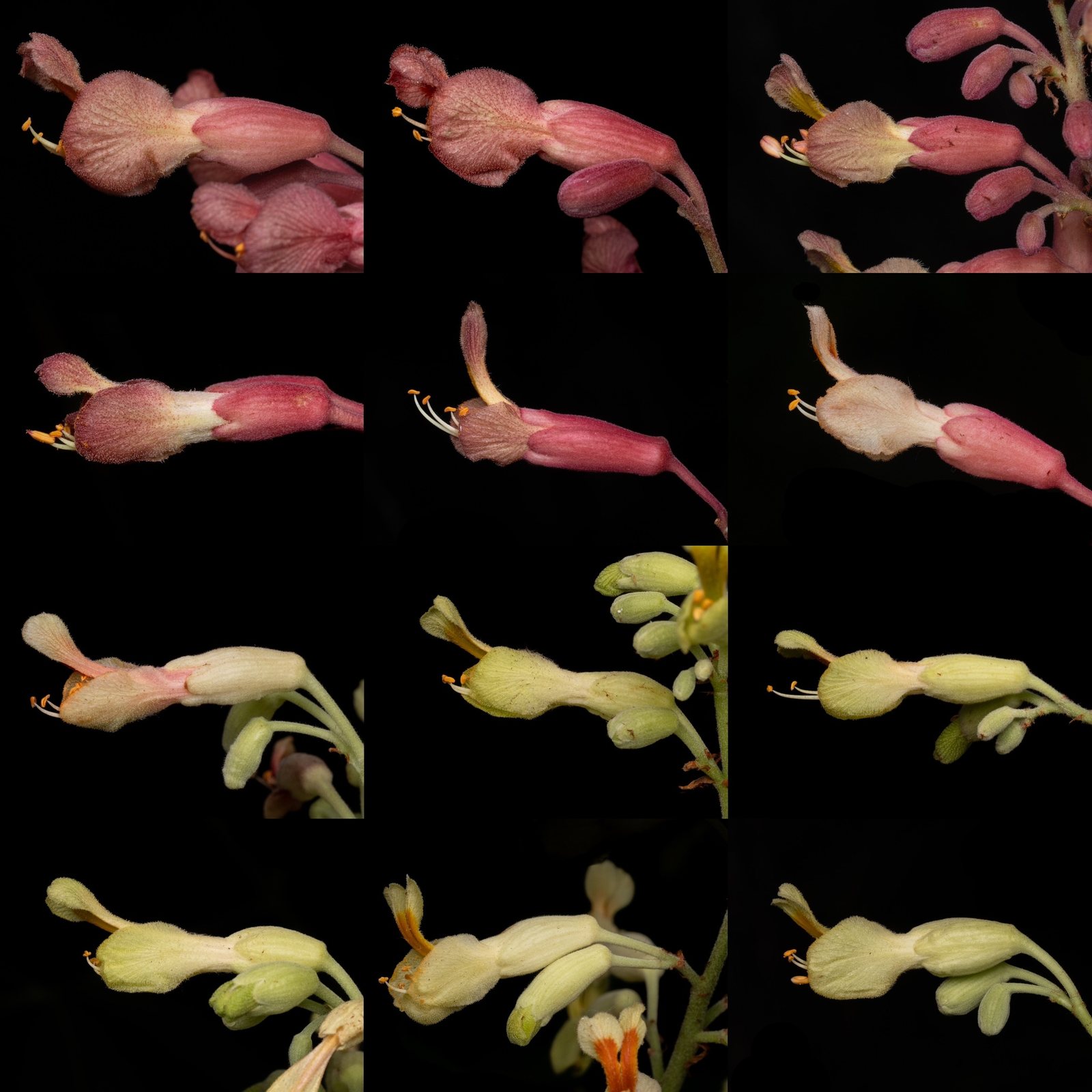
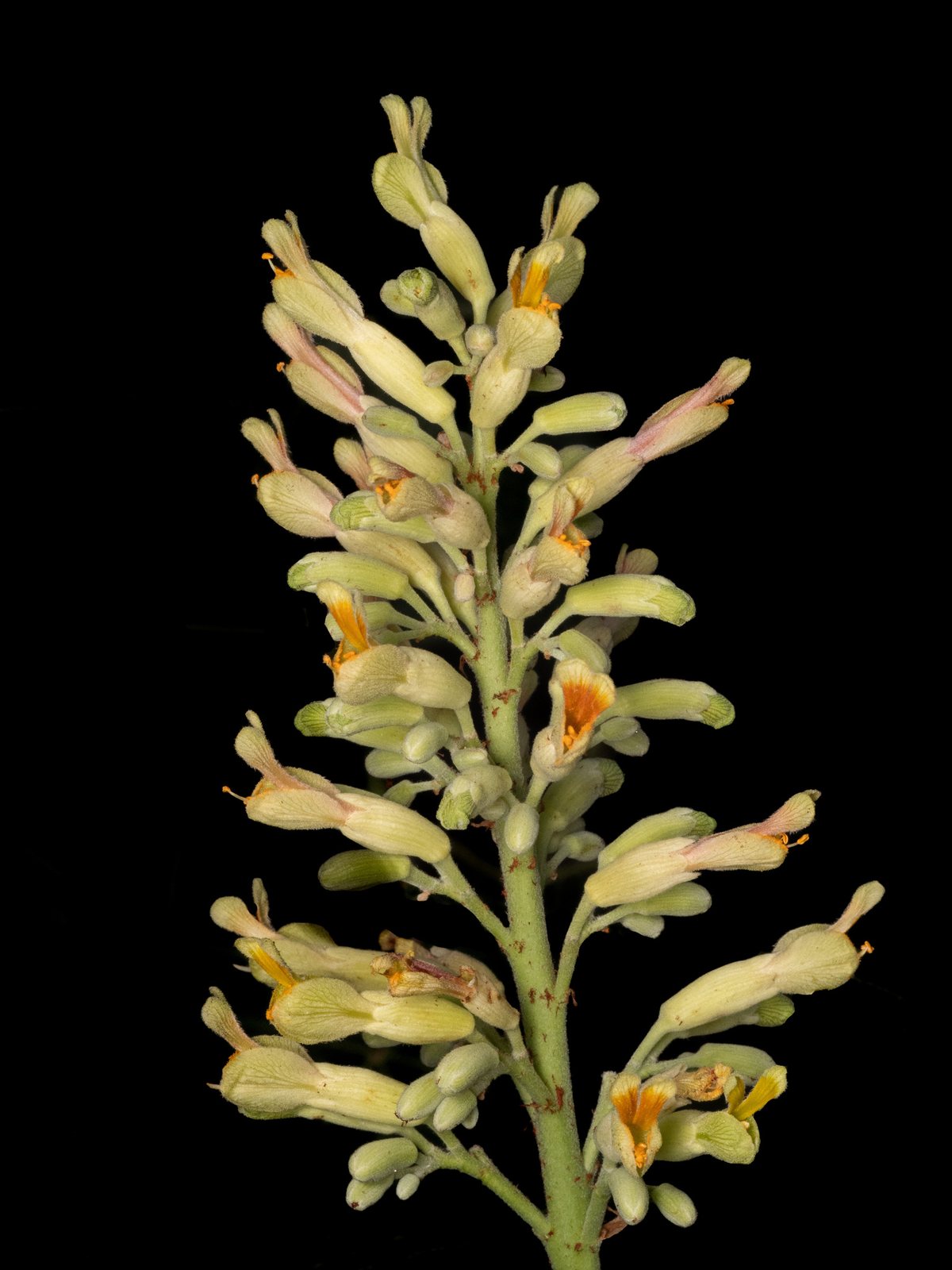
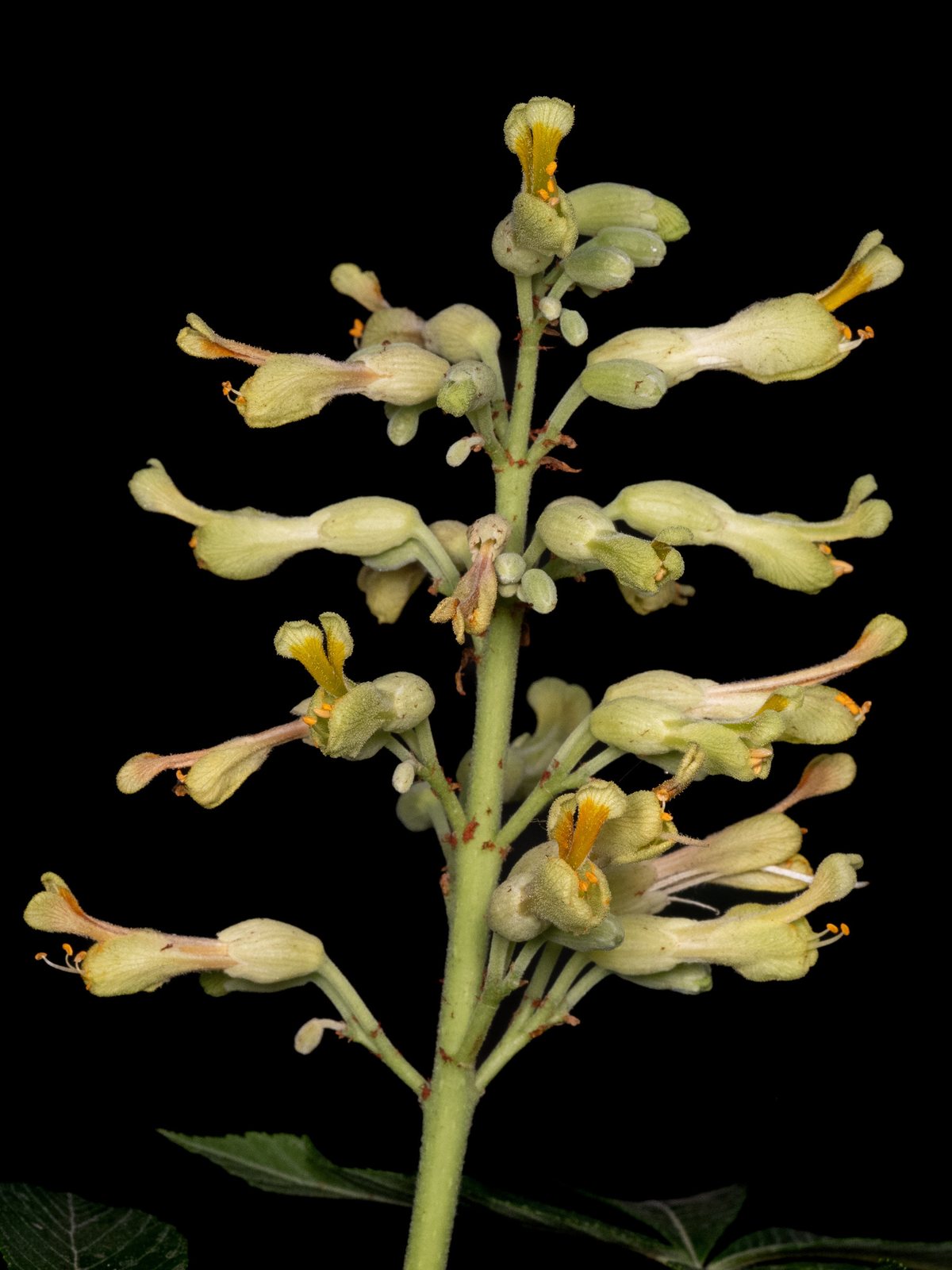
Red buckeye is a deciduous small tree or large, multi-stemmed shrub native to the southeastern United States. Gardeners grow it for upright clusters of red spring flowers and bold, divided leaves, although its foliage often browns or drops early in hot, dry summers.
At a glance
- Sun
- Partial shade is ideal, especially afternoon shade in hot climates. Full sun suits cooler sites if the soil stays moist.
- Water
- Moderate; keep the root zone evenly moist during establishment and water during prolonged dry spells.
- Soil
- Moist, well-drained soil enriched with organic matter; tolerates clay if drainage is adequate and grows in acidic to mildly alkaline conditions.
- Height
- 10-20 ft (3-6 m)
- Spread
- 10-20 ft (3-6 m)
- Flowers
- Spring, usually April-May in the Northern Hemisphere and September-November in the Southern Hemisphere; upright clusters of tubular red to orange-red flowers.
- Foliage
- Dark green leaves divided into five, occasionally seven, toothed leaflets. Autumn colour is usually modest, and leaves may fall well before autumn in dry conditions.
- Growth
- Slow to moderate
- Care needed
- Low
The year at a glance
- Pollinators
- Deer resistant
- Cold hardy
- Wildlife
- Low allergen
| J | F | M | A | M | J | J | A | S | O | N | D | |
|---|---|---|---|---|---|---|---|---|---|---|---|---|
| Flowers | ||||||||||||
| Fruit | ||||||||||||
| Plant |
Northern hemisphere months. In Australia, shift them by six.
- Difficulty
- Easy
- Toughness
- Fairly tough
Will it suit your garden?
Pick your zone, country, light and whether you have pets.
Full sun is 6 or more hours of direct sun a day, part shade 3 to 6 hours, shade under 3.
How it grows
Planting day
7 ft (2 m)
After 1 year
7 ft (2.1 m)
After 2 years
7 ft (2.2 m)
After 3 years
8 ft (2.3 m)
After 5 years
8 ft (2.5 m)
About 26 years to full size.
From a typical nursery size, at an average rate for this kind of plant. A rule of thumb, not a forecast.
Good to know
- Cats and dogs
- Toxic
- Native to
- the US
- Growth rate
- Slow
Care
Jobs through the year
- WaterApr–May, Sep, every 14 days
- Water established trees only if soil is dry; young trees need more regular soaking.
- WaterJun–Aug, every 7 days
- Check moisture and soak during drought; do not overwater to counter normal early leaf drop.
- MulchMar–Apr
- Maintain 5–8 cm of organic mulch, keeping it away from the trunk.
- PruneMay–Jun
- Prune lightly after flowering to remove crossing growth and establish the desired framework.
- ProtectSep–Oct
- Collect toxic fallen seeds where children, pets or livestock could reach them.
- Water deeply during dry weather for the first two growing seasons.
- Apply 2-3 in (5-8 cm) of organic mulch, keeping it clear of the trunk.
- Give afternoon shade where summers are hot to reduce leaf scorch.
- Avoid waterlogged planting sites; do not try to correct normal early leaf drop with constant watering.
- Feed only if growth is weak or a soil test shows a deficiency.
Pruning. Prune lightly just after flowering to remove damaged or crossing branches and shape the crown. Retain several main stems for a shrub, or gradually select one trunk while the plant is young for a small tree.
Through the year
- Autumn
- Plant while the soil is workable, water thoroughly and mulch the root zone.
- Late winter
- Check for dead or storm-damaged branches and remove them.
- Spring
- Refresh mulch and check soil moisture as leaves and flowers develop.
- Late spring
- After flowering, make any light shaping cuts.
- Summer
- Water during prolonged drought; check soil moisture before watering a tree with browning leaves.
- Autumn
- Collect fallen seeds promptly where children, pets or livestock could reach them.
In the garden
- Use as an understorey tree beneath tall deciduous trees, where spring light supports flowering.
- Plant at a woodland edge with ferns and shade-tolerant perennials to soften its multi-stemmed outline.
- Make it a spring focal point in a mixed shrub border, with later-flowering plants carrying the display after its leaves decline.
- Include in a southeastern US native garden to provide spring nectar for hummingbirds.
Garden styles it suits: Woodland, Wildlife garden, Traditional, Southern and Low-maintenance.
Plant it with: Flowering dogwood, Eastern redbud, Oakleaf hydrangea, Christmas fern, Foamflower and Woodland phlox.
Wildlife: The flowers attract hummingbirds in North America and are also visited by bees. Its branches provide cover for small birds; the seeds are not edible nuts for people or domestic animals.
Problems to watch for
- Leaf scorch and early leaf drop: provide afternoon shade, mulch and water during drought; some early seasonal leaf loss is normal.
- Fungal leaf blotch: collect fallen leaves and improve airflow; established plants rarely need fungicide treatment.
- Powdery mildew: avoid crowding and improve airflow; tolerate light infections rather than spraying routinely.
- Root decline in wet soil: improve drainage or relocate young plants rather than keeping the root zone saturated.
Safety
Toxic to people, cats, dogs and horses if eaten. All parts should be treated as poisonous, especially the seeds and young growth; ingestion can cause vomiting, diarrhoea, weakness and potentially serious neurological signs. Seek urgent medical or veterinary advice after ingestion.
Easily confused with
Red horse chestnut (Aesculus × carnea)
This hybrid usually becomes a much larger tree, with denser, broader flower clusters and often seven leaflets rather than five.
Painted buckeye (Aesculus sylvatica)
Its flowers are usually yellow-green, cream or pinkish rather than predominantly vivid red; distinguishing plants can be difficult where species hybridise.
Bottlebrush buckeye (Aesculus parviflora)
Forms a broad, suckering shrub and flowers in summer, producing long white flower spikes with conspicuously projecting stamens.
The name
The name red buckeye refers to the red flowers and the glossy brown seed with a pale scar that resembles a deer's eye.
Propagation. Sow fresh seeds promptly in autumn, protecting them from rodents and keeping the compost moist but not waterlogged. Seeds lose viability if allowed to dry out; seedlings take several years to reach flowering size.
Checked against open data
- Accepted botanical name
- Aesculus pavia
- In the US and Canada
- Native in the lower 48 states. Introduced in Canada.
- Native range
- Alabama, Arkansas, Florida, Georgia, Illinois, Kentucky, Louisiana, Mississippi, Missouri, North Carolina, Oklahoma and South Carolina.
- Measured
- Soil pH 3.7 to 7. Average height 650 cm.
Sources: GBIF (CC BY 4.0), USDA PLANTS and Trefle (CC BY 4.0). The care and design notes are LandscapeGPT's own.
See it in your own yard.
Upload a photo of your yard and see it redesigned with plants that suit your climate, each checked against your zone.