Red cabbage
Brassica oleracea 'Red Acre'. Family Brassicaceae. Annual.
Also called Red Acre cabbage, Purple cabbage.
'Red Acre' is a compact red cabbage grown for its firm, rounded, purple-red heads, eaten raw, cooked or pickled. Although cabbage is botanically a biennial, it is grown as an annual and harvested before flowering. It crops best in cool weather, with steady moisture and fertile soil.
At a glance
- Sun
- Full sun; light afternoon shade can help in warm climates.
- Water
- Keep soil evenly moist, supplying about 1-1.5 in (2.5-4 cm) of water weekly during dry weather; avoid waterlogging.
- Soil
- Fertile, moisture-retentive but well-drained soil, ideally pH 6.5-7.5.
- Height
- 1-1.5 ft (0.3-0.45 m)
- Spread
- 1.5-2 ft (0.45-0.6 m)
- Foliage
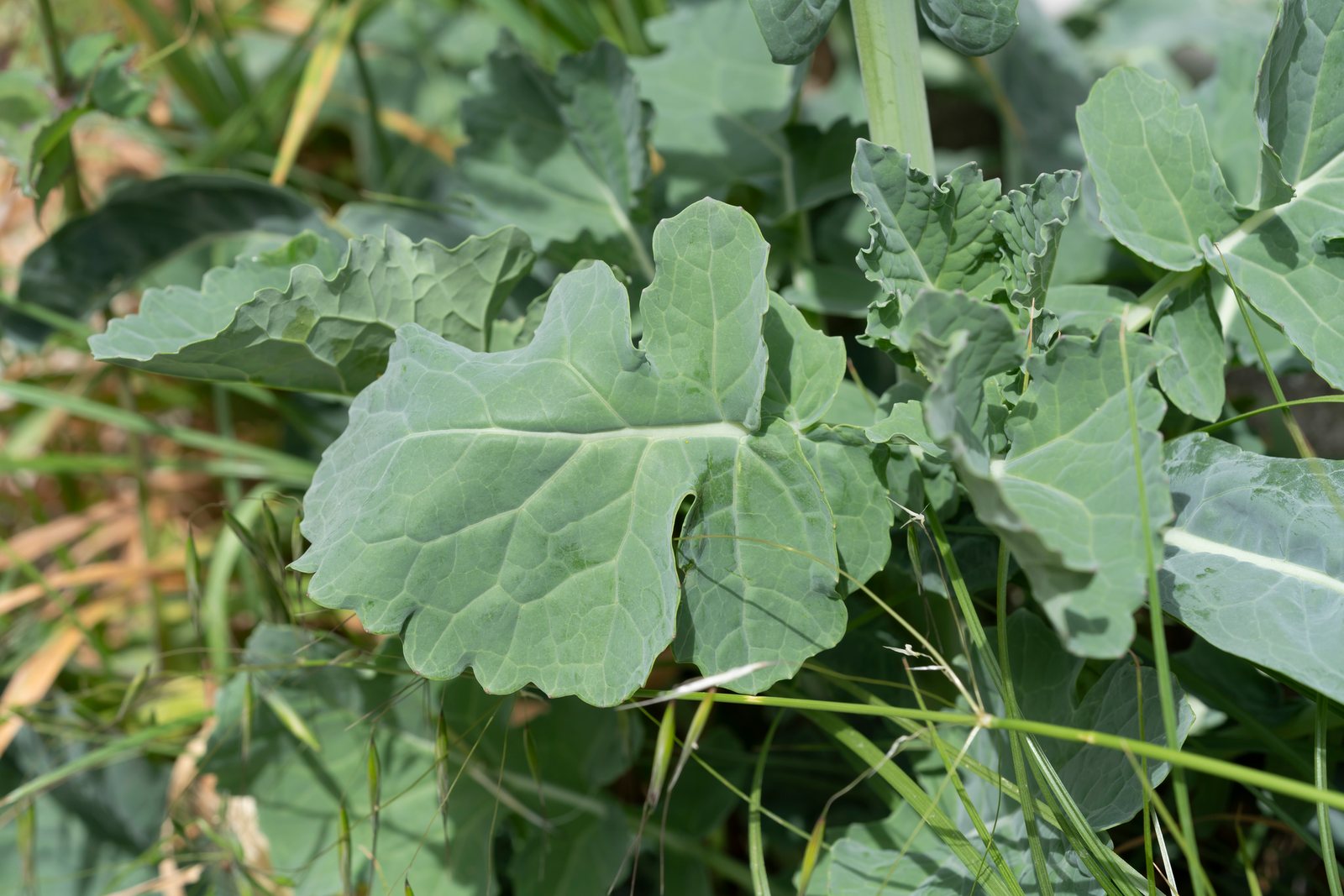
- Broad, rounded, waxy purple-red leaves with pale veins; inner leaves overlap tightly to form a dense head.
- Growth
- Fast in cool weather.
- Care needed
- Medium
The year at a glance
- Low allergen
- Edible
| J | F | M | A | M | J | J | A | S | O | N | D | |
|---|---|---|---|---|---|---|---|---|---|---|---|---|
| Fruit | ||||||||||||
| Plant |
Northern hemisphere months. In Australia, shift them by six.
- Difficulty
- Moderate
- Toughness
- Fairly tough
Will it suit your garden?
Pick your zone, country, light and whether you have pets.
Full sun is 6 or more hours of direct sun a day, part shade 3 to 6 hours, shade under 3.
How it grows
Planting day
0.5 ft (0.15 m)
After 1 year
1.2 ft (0.38 m)
full size
Full size in one season.
From a typical nursery size, at an average rate for this kind of plant. A rule of thumb, not a forecast.
Good to know
- Cats and dogs
- Safe
- Native to
- the UK
- Growth rate
- Fast
Care
Jobs through the year
- WaterMar–May, Sep–Nov, every 7 days
- Keep soil evenly moist if rain is insufficient; check new transplants more often.
- WaterJun–Aug, every 3 days
- Water during dry weather, supplying 2.5–4 cm weekly overall without waterlogging.
- FeedMar–Jul
- Apply balanced vegetable fertiliser at planting; repeat only for pale or slow growth.
- MulchMay, Jul–Aug
- Mulch once plants establish, keeping material away from stems.
- ProtectMar–Apr
- Protect newly planted seedlings from severe frost with fleece.
- ProtectApr–Oct
- Keep insect mesh sealed around plants and inspect for caterpillars and aphids.
- HarvestJun–Nov
- Cut heads as soon as they feel firm, retaining a few wrapper leaves.
- Mix mature compost into the bed before planting and space plants 1.5-2 ft (0.45-0.6 m) apart.
- Water at soil level and keep moisture steady, especially while heads are forming.
- Apply a balanced vegetable fertiliser at planting, following the label; feed again if growth is pale or slow.
- Mulch around established plants to conserve moisture, keeping mulch clear of the stems.
- Cover young plants with insect mesh, securing the edges to exclude cabbage butterflies and moths.
- Rotate brassicas between beds, leaving at least three years before returning them to the same ground.
Pruning. No routine pruning is needed. Remove yellowing or diseased outer leaves, but retain healthy leaves because they feed the developing head.
Harvest
Cut heads when they feel solid and firm under gentle pressure, usually about 75-90 days after transplanting, depending on weather and growing conditions. Use a sharp knife to cut through the stem beneath the head, retaining a few wrapper leaves, and harvest promptly once mature to reduce splitting.
Through the year
- Late winter
- In cold climates, sow under cover about 4-6 weeks before the expected spring planting date.
- Early spring
- Harden off seedlings, then transplant into prepared soil once it is workable; protect against severe frost.
- Spring
- Fit insect mesh, check beneath leaves for pests and mulch once plants are established.
- Summer
- Water consistently and harvest firm spring-sown heads; in cooler regions, sow an autumn crop early enough to mature before severe cold.
- Autumn
- Harvest mature heads; in mild-winter regions, plant a cool-season crop rather than growing through summer heat.
- Late autumn
- Remove harvested stems and roots, and record where brassicas grew for next year's rotation.
In the garden
- Plant in orderly rows in a potager, using the purple heads to contrast with green lettuces.
- Use repeated groups along edible-bed edges for bold colour and rounded form.
- Grow one plant in a large container with adequate drainage for a small courtyard harvest.
- Mix into seasonal edible borders with parsley, calendulas and compact lettuces.
Garden styles it suits: Potager (kitchen garden), Edible landscape, Cottage garden, Homestead, Formal and Small-space.
Plant it with: Lettuce, Spring onions, Parsley, Calendula, Beetroot and Swiss chard.
Wildlife: Leaves feed cabbage butterfly and moth caterpillars, which can seriously damage the crop. Plants left to flower in their second year provide nectar and pollen for insects, but harvested plants normally offer little floral value.
Problems to watch for
- Cabbage caterpillars chew leaves and foul heads: exclude butterflies and moths with insect mesh and remove caterpillars by hand.
- Cabbage aphids form grey, waxy colonies in leaf folds: inspect regularly, wash off small colonies and remove badly infested outer leaves.
- Clubroot causes swollen roots, wilting and poor growth: remove affected plants, improve drainage, avoid moving contaminated soil and use a long brassica rotation; raise soil pH only after testing.
- Heads split after maturity or sudden heavy watering: maintain even moisture and harvest as soon as heads become firm.
Safety
Not known to be toxic to people, cats or dogs in ordinary food amounts; the leaves and heads are edible. Large amounts can cause digestive upset. Do not use cabbage as horse forage: substantial brassica intake can cause gas and potentially serious blood or thyroid problems.
Easily confused with
Red savoy cabbage (Brassica oleracea, Savoy Cabbage Group)
Savoy cabbages have strongly crinkled or blistered leaves; 'Red Acre' has comparatively smooth, waxy leaves.
Ornamental cabbage (Brassica oleracea, ornamental cabbage cultivars)
Ornamental selections usually form open, colourful rosettes rather than the dense, solid head of 'Red Acre'.
Red kohlrabi (Brassica oleracea, Gongylodes Group)
Kohlrabi forms a swollen above-ground stem with separate leaf stalks projecting from it, not a head made of tightly overlapping leaves.
The name
The common name refers to the reddish-purple leaves, while the botanical epithet oleracea means 'of the vegetable garden'.
Propagation. Grow from seed, sowing about 0.25-0.5 in (0.6-1.3 cm) deep in modules or a prepared seedbed. Transplant sturdy seedlings with several true leaves after hardening off. Saved seed may cross with other flowering Brassica oleracea crops and will not reliably remain true to 'Red Acre'.
Checked against open data
- Accepted botanical name
- Brassica oleracea
- In the US and Canada
- Introduced in the lower 48 states, Pacific Basin and Puerto Rico.
- Native range
- France, Great Britain and Spain.
- Measured
- Soil pH 7 to 7.5. Average height 50 cm.
Sources: GBIF (CC BY 4.0), USDA PLANTS and Trefle (CC BY 4.0). The care and design notes are LandscapeGPT's own.
See it in your own yard.
Upload a photo of your yard and see it redesigned with plants that suit your climate, each checked against your zone.