Red elder 'Sutherland Gold'
Sambucus racemosa 'Sutherland Gold'. Family Viburnaceae. Shrub.
Also called Golden cut-leaved red elder, Sambucus racemosa 'Sutherland Gold'.
A deciduous elder grown for its finely divided, golden-yellow leaves and broad, bushy shape. It brightens woodland edges and mixed borders, especially against dark green foliage, but needs reasonably moist soil and protection from strong sun in warmer gardens.
At a glance
- Sun
- Partial shade is usually best, especially afternoon shade in warmer areas. Full sun suits cool climates if the soil stays moist; deep shade makes the leaves greener.
- Water
- Keep evenly moist, particularly during establishment and summer dry spells. Avoid prolonged waterlogging.
- Soil
- Moist, well-drained soil enriched with organic matter; tolerates clay and a broad range of soil pH.
- Height
- 6-10 ft (1.8-3 m)
- Spread
- 6-10 ft (1.8-3 m)
- Flowers
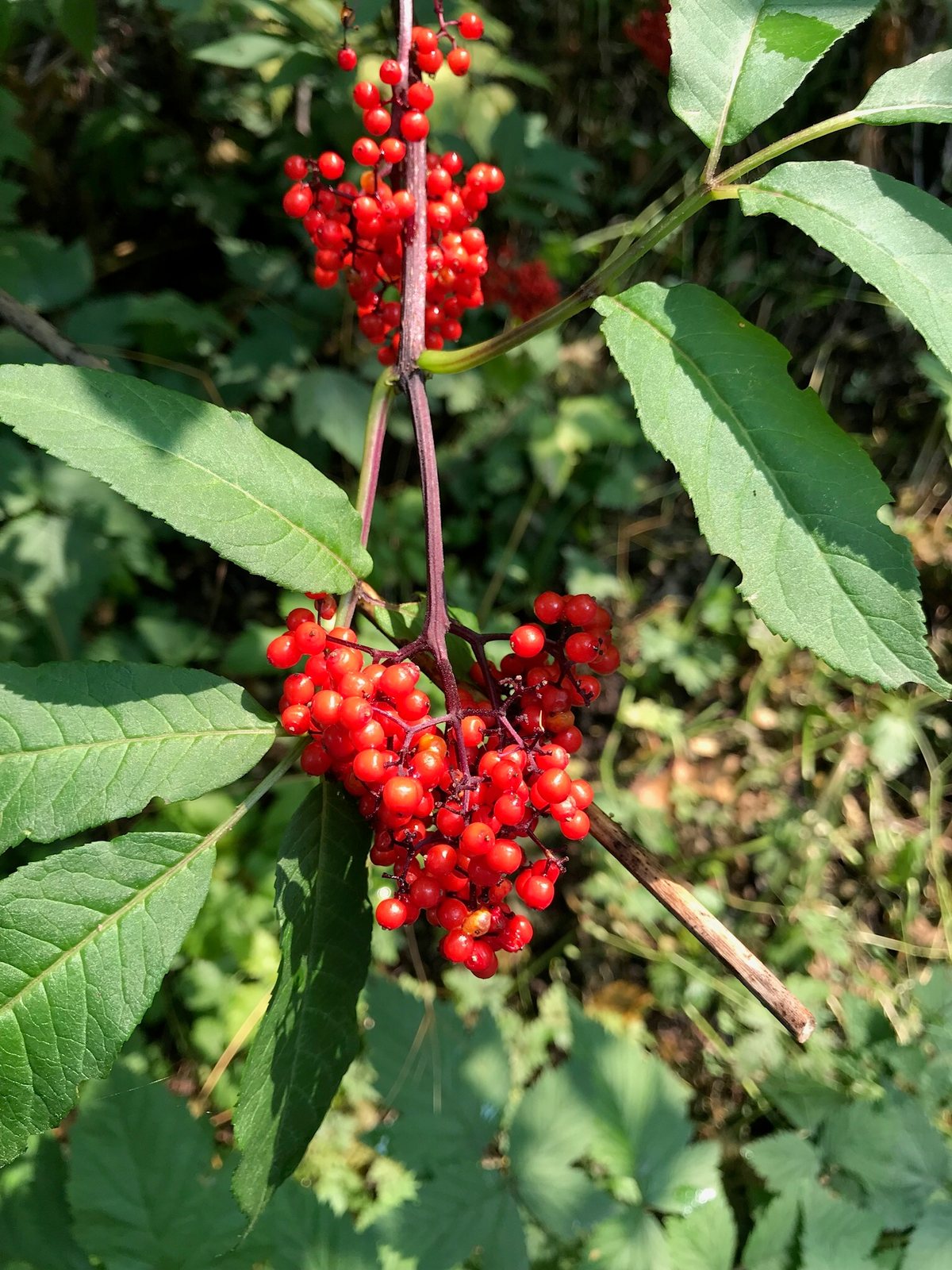
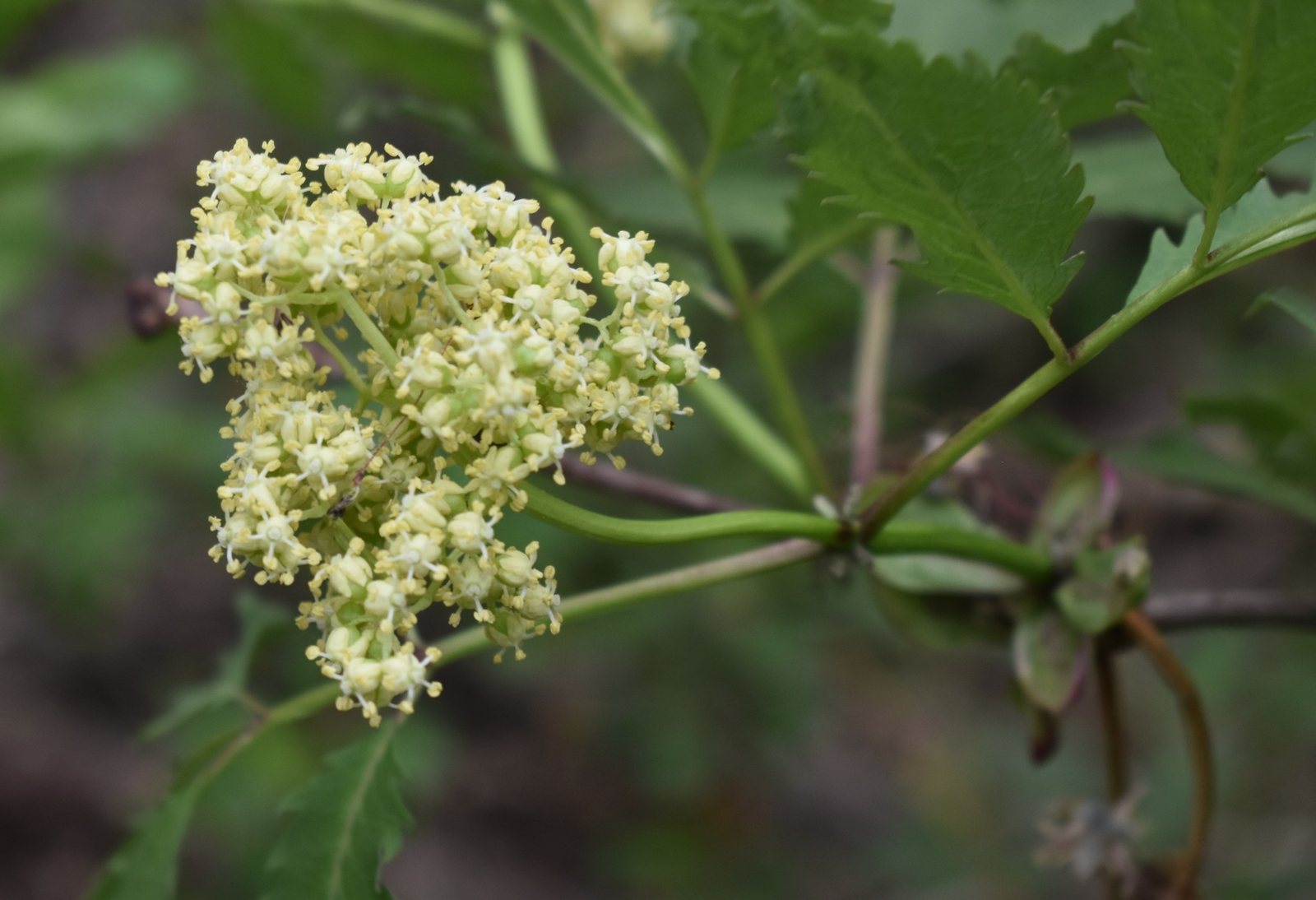
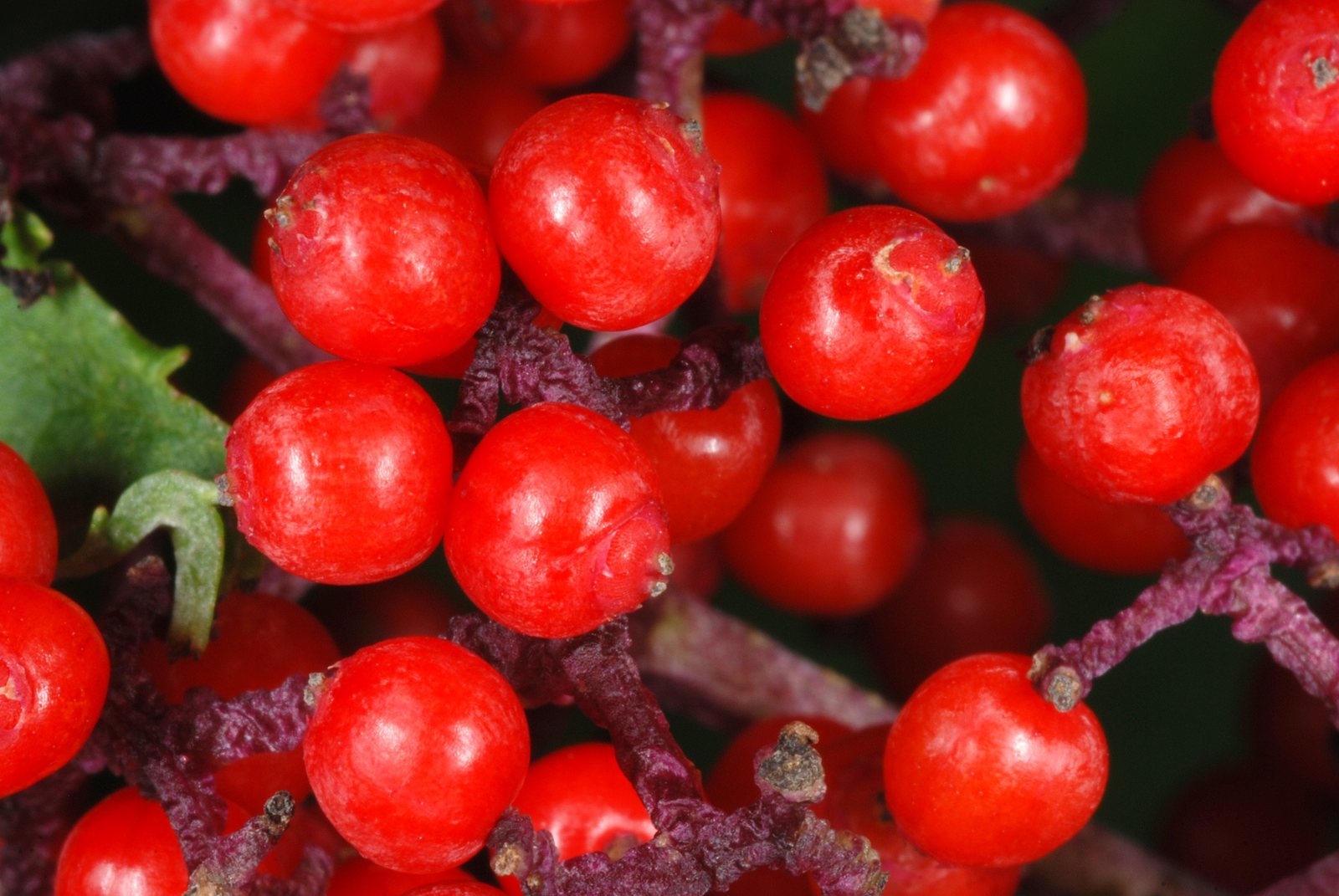
- Creamy-white flowers in rounded to conical clusters in mid- to late spring, sometimes followed by red berries.
- Foliage
- Deeply cut, compound leaves emerge bronze-tinted, turn bright golden yellow, and may become yellow-green later in summer.
- Growth
- Fast
- Care needed
- Medium
The year at a glance
- Pollinators
- Cold hardy
- Wildlife
- Low allergen
| J | F | M | A | M | J | J | A | S | O | N | D | |
|---|---|---|---|---|---|---|---|---|---|---|---|---|
| Flowers | ||||||||||||
| Fruit | ||||||||||||
| Plant |
Northern hemisphere months. In Australia, shift them by six.
- Difficulty
- Moderate
- Toughness
- Fairly tough
Will it suit your garden?
Pick your zone, country, light and whether you have pets.
Full sun is 6 or more hours of direct sun a day, part shade 3 to 6 hours, shade under 3.
How it grows
Planting day
1.6 ft (0.5 m)
After 1 year
4 ft (1.1 m)
After 2 years
5 ft (1.7 m)
After 3 years
7 ft (2.3 m)
After 5 years
8 ft (2.4 m)
full size
About 3 years to full size.
From a typical nursery size, at an average rate for this kind of plant. A rule of thumb, not a forecast.
Good to know
- Cats and dogs
- Toxic
- Native to
- the US and Canada
- Growth rate
- Fast
Care
Jobs through the year
- WaterApr–May, Sep–Oct, every 10 days
- Water established shrubs when soil begins drying; give young shrubs more frequent attention for two years.
- WaterJun–Aug, every 7 days
- Water deeply during dry weather to keep soil evenly moist; skip if rain has soaked the root zone.
- MulchMar–Apr
- Top-dress with compost and maintain 5–8 cm of organic mulch clear of stems.
- FeedApr
- Use a balanced fertilizer only if growth remains weak after compost top-dressing.
- PruneFeb–Mar
- Remove damaged wood and a few old stems; hard cutting for foliage sacrifices flowers and berries.
- PruneJun–Sep, every 30 days
- Cut or dig out unwanted suckers at their point of origin.
- ProtectJun–Aug
- Provide afternoon shade if exposed golden leaves scorch in summer sun.
- Water deeply during dry spells for the first two growing seasons and whenever established plants begin to wilt.
- Apply a 2-3 in (5-8 cm) organic mulch in spring, keeping it clear of the stems.
- Top-dress with compost in spring; use a balanced fertiliser only if growth is weak.
- Remove unwanted suckers at their point of origin to keep the shrub within its allotted space.
- Provide afternoon shade where summer sun scorches the yellow leaves.
Pruning. In late winter or early spring, remove dead or damaged wood and cut a few of the oldest stems to ground level. For a smaller shrub with vigorous foliage growth, cut all stems back to 1-2 ft (0.3-0.6 m), accepting fewer or no flowers and berries that year.
Through the year
- Late winter
- Thin out old stems or cut back hard if foliage and size control matter more than flowers.
- Spring
- Plant in moist, well-drained soil and water thoroughly.
- Mid-spring
- Top-dress with compost and renew the mulch without covering the stem bases.
- Summer
- Water during dry spells and check exposed leaves for scorching.
- Late summer
- Remove unwanted suckers and take semi-ripe cuttings if you want more plants.
- Autumn
- Plant while the soil remains workable, or take hardwood cuttings after leaf fall.
In the garden
- Use at a woodland edge to bring light-coloured foliage into partial shade.
- Set against dark evergreen shrubs or a dark fence to show off the finely cut leaves.
- Combine with hostas, ferns and other broad-leaved shade plants for contrasting leaf shapes.
- Use as a loose backdrop in a mixed border, allowing room for its arching branches.
- Grow as a regularly cut-back foliage shrub where its full mature size would be too large.
Garden styles it suits: Woodland, English country, Cottage garden, Wildlife garden, Modern rustic and Pacific Northwest woodland.
Plant it with: Hostas, Japanese painted fern, Siberian bugloss, Astilbes, Oakleaf hydrangea and Purple-leaved ninebark.
Wildlife: Flowers provide food for visiting insects, and birds eat the red berries when they develop. The dense branches offer cover; hard annual pruning reduces flowering and fruiting.
Problems to watch for
- Leaf scorch: brown, crisp leaf edges usually indicate strong sun, heat or dry soil; water deeply, mulch and provide afternoon shade.
- Aphids: inspect soft new shoots and wash colonies off with a firm spray of water; preserve ladybirds and other predators.
- Powdery mildew: improve airflow, avoid drought stress and remove badly affected fallen leaves.
- Unwanted suckers: cut or dig them out at their origin rather than repeatedly clipping their tops.
Safety
Treat this as a toxic ornamental, not an edible elderberry. Leaves, stems, bark, roots and unripe fruit contain cyanogenic compounds; raw red berries and their seeds are also unsafe to eat. Ingestion can poison people, cats, dogs and horses, causing vomiting and diarrhoea, with potentially serious poisoning after substantial consumption. Seek medical or veterinary advice if it is eaten.
Easily confused with
Golden cut-leaved elder 'Plumosa Aurea' (Sambucus racemosa 'Plumosa Aurea')
Very similar, with golden, finely divided leaves, but generally more prone to sun scorch. Appearance overlaps enough that a reliable nursery label is the best way to confirm the cultivar.
Golden elder (Sambucus nigra 'Aurea')
Has broader, much less finely divided leaflets, flatter flower clusters and black rather than red ripe fruit.
Tiger Eyes staghorn sumac (Rhus typhina 'Bailtiger')
Also has golden compound leaves, but its leaflets are toothed rather than finely cut, its young stems are conspicuously hairy, and its red fruit forms upright, dense cones.
The name
Sambucus is the ancient Latin name for elder, and racemosa refers to its clustered flowers.
Propagation. Take semi-ripe cuttings in summer or hardwood cuttings during dormancy. Rooted suckers can also be separated; seed will not reliably produce plants identical to 'Sutherland Gold'.
Checked against open data
- Accepted botanical name
- Sambucus racemosa
- In the US and Canada
- Native in Alaska, Canada and the lower 48 states.
- Native range
- Alaska, Albania, Alberta, Aleutian Is., Arizona, Austria, Baltic States, Belarus, Belgium, British Columbia, Bulgaria and California.
- Measured
- Soil pH 5 to 5.5. Average height 225 cm.
Sources: GBIF (CC BY 4.0), USDA PLANTS and Trefle (CC BY 4.0). The care and design notes are LandscapeGPT's own.
See it in your own yard.
Upload a photo of your yard and see it redesigned with plants that suit your climate, each checked against your zone.