Red Fox speedwell
Veronica spicata 'Rotfuchs'. Family Plantaginaceae. Perennial.
Also called Veronica spicata 'Rotfuchs', Spiked speedwell 'Rotfuchs', Red Fox veronica.
Red Fox speedwell is a compact, clump-forming perennial grown for upright spikes of deep rosy-pink flowers, rather than true red. It brings summer colour and a strong vertical shape to border edges and attracts bees. Good drainage, especially in winter, is important for reliable survival.
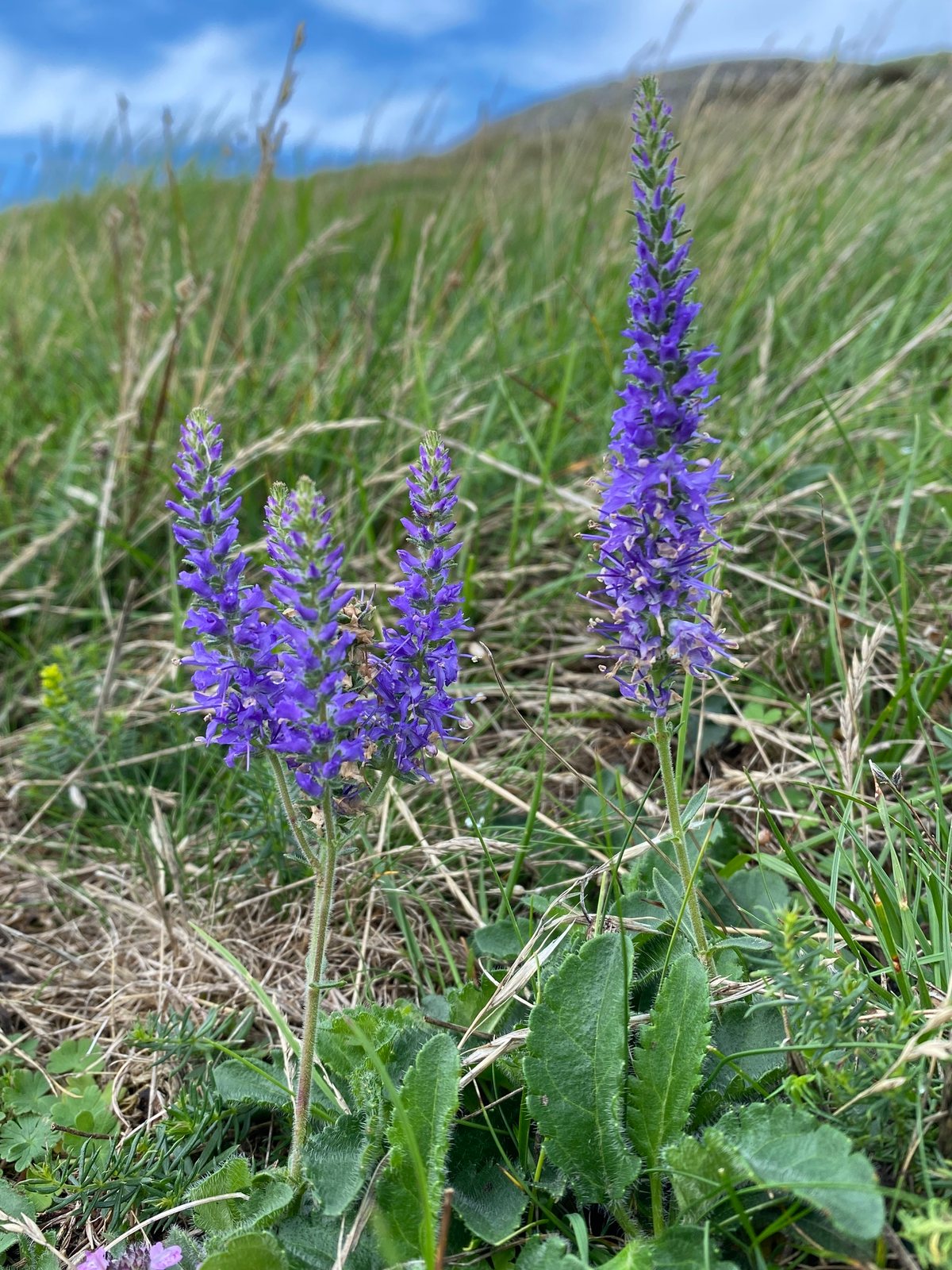
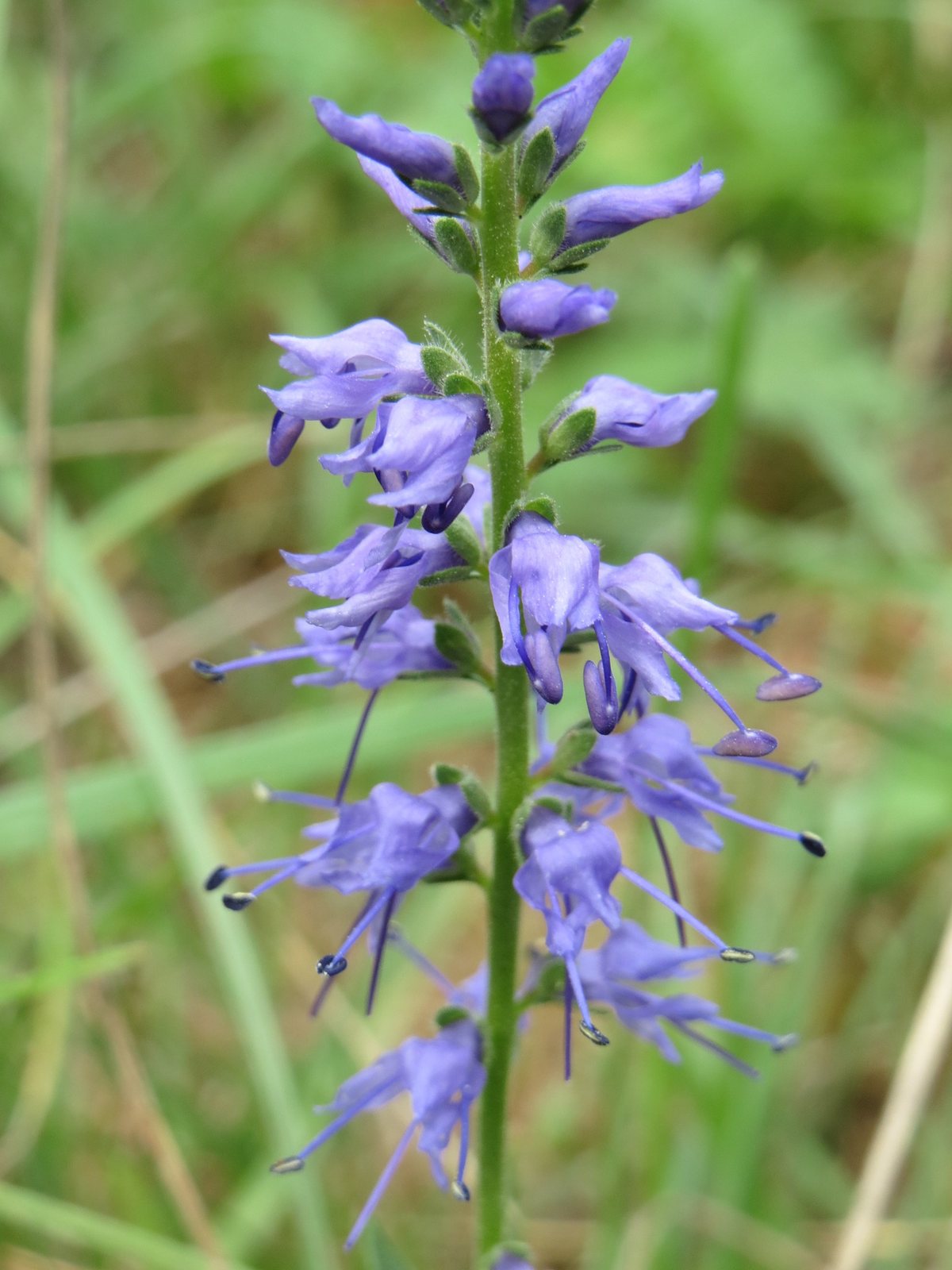
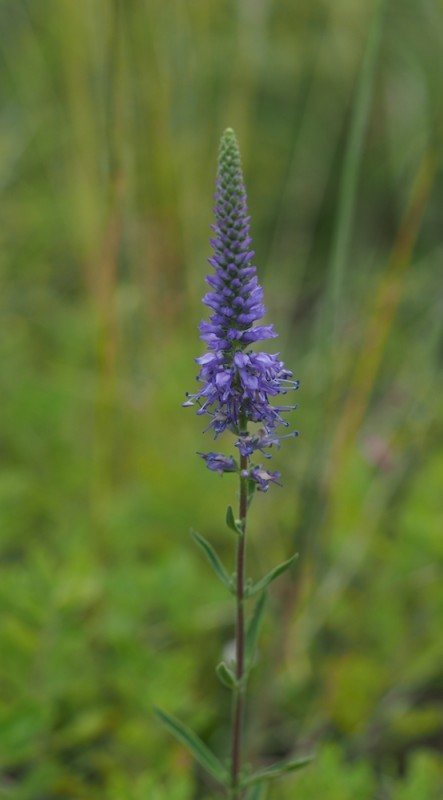
At a glance
- Sun
- Full sun gives the strongest stems and best flowering; tolerates light partial shade.
- Water
- Water regularly while establishing, then during prolonged dry spells. Established plants tolerate some drought but flower better with moderate moisture.
- Soil
- Well-drained loam, sandy soil or gravelly soil; tolerates a range of pH. Avoid heavy soil that stays wet in winter.
- Height
- 1-1.5 ft (0.3-0.45 m)
- Spread
- 1-1.5 ft (0.3-0.45 m)
- Flowers
- Early to midsummer, with dense spikes of deep rosy-pink flowers; removing spent spikes can encourage a smaller later flush.
- Foliage
- Narrow, green, toothed leaves, mostly forming a low mound beneath the flower stems.
- Growth
- Moderate; usually forms a useful flowering clump within two growing seasons.
- Care needed
- Low
The year at a glance
- Pollinators
- Deer resistant
- Drought tolerant
- Cold hardy
- Low allergen
| J | F | M | A | M | J | J | A | S | O | N | D | |
|---|---|---|---|---|---|---|---|---|---|---|---|---|
| Flowers | ||||||||||||
| Plant |
Northern hemisphere months. In Australia, shift them by six.
- Difficulty
- Easy
- Toughness
- Fairly tough
Will it suit your garden?
Pick your zone, country, light and whether you have pets.
Full sun is 6 or more hours of direct sun a day, part shade 3 to 6 hours, shade under 3.
How it grows
Planting day
1 ft (0.3 m)
After 1 year
1.1 ft (0.32 m)
After 2 years
1.1 ft (0.35 m)
After 3 years
1.2 ft (0.38 m)
full size
About 3 years to full size.
From a typical nursery size, at an average rate for this kind of plant. A rule of thumb, not a forecast.
Good to know
- Cats and dogs
- Safe
- Native to
- the UK
- Growth rate
- Moderate
Care
Jobs through the year
- WaterApr–May, Sep–Oct, every 14 days
- Water established plants if the root zone is dry; water young plants more frequently.
- WaterJun–Aug, every 7 days
- In extended dry spells, water established plants at soil level to support flowering.
- FeedApr
- Apply a thin compost dressing if soil is poor; avoid heavy feeding.
- MulchApr–May
- Apply a light mulch, leaving the crown clear.
- DivideMar–Apr
- Divide congested clumps every three to four years if flowering declines.
- DeadheadJun–Aug, every 7 days
- Cut faded spikes to a healthy pair of leaves to encourage a smaller repeat flush.
- PruneFeb–Mar
- Remove dead stems just above the crown before new growth develops.
- ProtectMar–May
- Inspect emerging shoots for slugs and remove pests.
- ProtectJan–Feb, Oct–Dec
- Remove wet leaf mats from the crown and keep drainage clear.
- Water at soil level during the first growing season, allowing the surface to dry slightly between waterings.
- Add a thin layer of compost in spring; avoid heavy feeding, which encourages soft, floppy growth.
- Keep mulch away from the crown, especially where winters are wet.
- Allow air to circulate between plants rather than crowding them.
- Divide congested clumps in spring every three to four years if flowering declines.
Pruning. Cut faded flower spikes back to a healthy pair of leaves to encourage further flowering. Remove dead stems to just above the crown in late winter or early spring, before new growth develops.
Through the year
- Late winter
- Remove dead stems and clear wet debris from around the crown.
- Spring
- Plant or divide clumps in well-drained soil and water them in thoroughly.
- Mid-spring
- Apply a thin layer of compost if the soil is poor.
- Early summer
- Water during extended dry spells and check young shoots for aphids.
- Midsummer
- Remove fading flower spikes to encourage a smaller repeat display.
- Autumn
- Check drainage and keep fallen leaves from forming a wet mat over the crown.
In the garden
- Repeat small groups along a sunny border edge for a rhythm of upright pink spikes.
- Pair with catmint or hardy geraniums so their softer mounds contrast with the flower spikes.
- Plant among low ornamental grasses in a small-scale perennial border.
- Use in a sunny gravel garden where the soil drains freely but does not remain extremely dry.
Garden styles it suits: Cottage garden, English country, New perennial (prairie), Pollinator garden, Dry gravel garden and Small-space.
Plant it with: Catmint, Hardy geranium, Yarrow, Purple coneflower, Lamb's ears and Prairie dropseed.
Wildlife: Flowers provide nectar and pollen for bees and other visiting insects, including butterflies. It is not a native plant in the United States, Canada or Australia.
Problems to watch for
- Crown or root rot in waterlogged soil: improve drainage or move the plant to a raised position; replace plants with badly rotted crowns.
- Powdery mildew: allow more space between plants, water at soil level and remove badly affected foliage.
- Aphids on tender shoots: wash them off with water and encourage natural predators rather than using broad-spectrum insecticides.
- Slugs and snails eating emerging shoots: inspect during damp evenings, remove pests and use an approved iron-phosphate bait if needed.
Safety
Not known to be toxic to people, cats, dogs or horses. No part is generally recognised as poisonous, but it is not a food plant, and eating plant material can still cause digestive upset.
Easily confused with
Longleaf speedwell (Veronica longifolia)
Usually taller, with longer leaves along the stems, often arranged in whorls, and a more substantial branching flower display.
Germander speedwell (Veronica chamaedrys)
Has broader, rounded-toothed leaves and loose clusters of individual blue flowers rather than dense, upright pink spikes.
The name
The cultivar name 'Rotfuchs' is German for 'red fox', while spicata means 'bearing spikes', referring to the flower clusters.
Propagation. Divide healthy clumps in spring or take basal cuttings from fresh spring shoots. Seed-grown plants may differ from 'Rotfuchs'; use vegetative propagation to retain the cultivar's colour and habit.
Checked against open data
- Accepted botanical name
- Veronica spicata
- In the US and Canada
- Introduced in Canada and the lower 48 states.
- Native range
- Albania, Altay, Austria, Baltic States, Belarus, Bulgaria, Central European Rus, Czechoslovakia, Denmark, East European Russia, Finland and France.
- Measured
- Average height 23 cm.
Sources: GBIF (CC BY 4.0), USDA PLANTS and Trefle (CC BY 4.0). The care and design notes are LandscapeGPT's own.
See it in your own yard.
Upload a photo of your yard and see it redesigned with plants that suit your climate, each checked against your zone.