Red hot poker 'Percy's Pride'
Kniphofia 'Percy's Pride'. Family Combretaceae. Perennial.
Also called Torch lily 'Percy's Pride', Kniphofia 'Percy's Pride'.
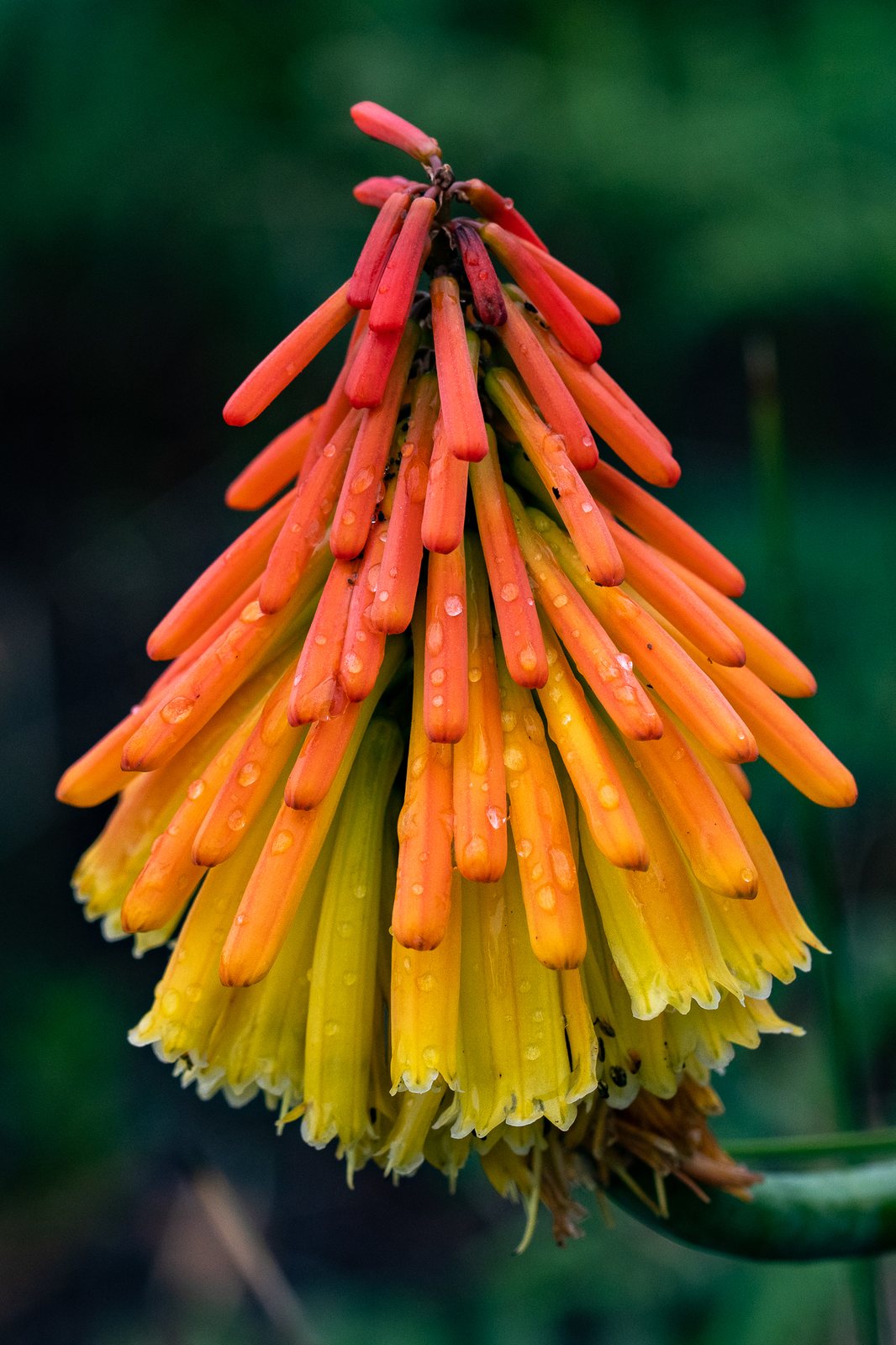
'Percy's Pride' forms a clump of arching, strap-shaped leaves with tall, upright flower spikes in late summer and early autumn. Unlike fiery orange red hot pokers, its flowers open pale green and soften to creamy yellow, giving borders a quieter vertical accent.
At a glance
- Sun
- Full sun; light shade is tolerated but usually reduces flowering.
- Water
- Water regularly during the first growing season. Once established, water deeply during prolonged dry spells, especially while flower spikes are developing; avoid persistently wet soil.
- Soil
- Moderately fertile, well-drained soil, including sandy or loamy soil. Heavy soil needs improved drainage, particularly where winters are wet.
- Height
- 3-4 ft (0.9-1.2 m)
- Spread
- 2-3 ft (0.6-0.9 m)
- Flowers
- Late summer to early autumn; dense spikes of pale green buds opening to creamy-yellow tubular flowers.
- Foliage
- Long, narrow, arching green leaves form a coarse, grassy mound. Foliage is evergreen in mild climates but may become semi-evergreen or die back in cold winters.
- Growth
- Moderate; develops into a substantial clump over several growing seasons.
- Care needed
- Low
The year at a glance
- Pollinators
- Deer resistant
- Drought tolerant
- Heat tolerant
- Low allergen
| J | F | M | A | M | J | J | A | S | O | N | D | |
|---|---|---|---|---|---|---|---|---|---|---|---|---|
| Flowers | ||||||||||||
| Plant |
Northern hemisphere months. In Australia, shift them by six.
- Difficulty
- Easy
- Toughness
- Fairly tough
Will it suit your garden?
Pick your zone, country, light and whether you have pets.
Full sun is 6 or more hours of direct sun a day, part shade 3 to 6 hours, shade under 3.
How it grows
Planting day
1 ft (0.3 m)
After 1 year
1.8 ft (0.55 m)
After 2 years
2.6 ft (0.8 m)
After 3 years
3 ft (1.1 m)
full size
About 3 years to full size.
From a typical nursery size, at an average rate for this kind of plant. A rule of thumb, not a forecast.
Good to know
- Cats and dogs
- Safe
- Growth rate
- Moderate
Care
Jobs through the year
- WaterApr–May, Oct, every 14 days
- Water established clumps only when soil is dry; water new plants more regularly through their first summer.
- WaterJun–Sep, every 7 days
- Water deeply during prolonged dry spells, especially as spikes develop; let excess water drain freely.
- FeedApr–May
- Apply a thin compost dressing around the clump, not over the crown; avoid heavy nitrogen feeding.
- PruneMar–Apr
- Remove dead and winter-damaged leaves without cutting into the crown.
- DivideApr–May
- Divide only when clumps are overcrowded or flowering declines; replant with crowns at soil level.
- DeadheadAug–Oct, every 14 days
- Cut faded flower stalks near the base unless seedheads are wanted.
- ProtectOct–Nov
- Leave healthy foliage intact and clear wet debris and mulch away from the crown for winter.
- Plant in spring in colder areas, keeping the crown at soil level rather than burying it.
- Water new plants through their first summer and established clumps during prolonged drought.
- Apply a thin layer of compost around the clump in spring; avoid heavy nitrogen feeding.
- Keep mulch clear of the crown and prevent water collecting around the plant in winter.
- Divide overcrowded clumps in spring when flowering declines; avoid unnecessary disturbance.
Pruning. Cut spent flower stalks down near the base unless you want to leave seedheads. Leave healthy foliage through winter, then remove dead or badly damaged leaves in spring without cutting into the crown.
Through the year
- Early spring
- Remove winter-damaged leaves and check that the crown is firm and not sitting in wet soil.
- Spring
- Plant or divide clumps as growth begins, then water well.
- Late spring
- Apply a light compost dressing around, but not over, the crown.
- Summer
- Water during prolonged dry weather, particularly as flower spikes develop.
- Late summer to early autumn
- Enjoy the flowers and remove faded stalks if seedheads are not wanted.
- Late autumn
- Leave the foliage in place and clear away debris that traps moisture against the crown.
In the garden
- Plant in small groups through sunny perennial borders for repeated vertical accents.
- Combine with ornamental grasses for contrasting upright flower spikes and arching foliage.
- Use beside purple-flowered catmint or Russian sage to highlight the pale yellow flowers.
- Place in a well-drained gravel border where its bold leaf clump contrasts with finer foliage.
Garden styles it suits: Architectural minimal, Cottage garden, New perennial (prairie), Dry gravel garden, Pollinator garden and Modern Mediterranean.
Plant it with: Catmint, Russian sage, Yarrow, Purple coneflower, Feather reed grass and Lavender.
Wildlife: The tubular flowers provide nectar for bees and other insects, and may attract hummingbirds where they occur in North America.
Problems to watch for
- Crown or root rot in wet soil: improve drainage or move the plant to a raised position; keep mulch away from the crown.
- Slugs and snails damaging fresh growth: inspect young shoots and use barriers, hand removal or an appropriate iron-phosphate bait.
- Few flowers: provide more sun, avoid high-nitrogen fertiliser and divide a congested clump in spring.
- Winter leaf damage: leave foliage in place until spring, then remove damaged leaves; use a sheltered, freely drained site in colder areas.
Safety
Not known to be toxic to people, cats, dogs or horses. No part is recognised as seriously poisonous, but it is not an edible plant and specific safety data for this cultivar are limited.
Easily confused with
Red hot poker 'Little Maid' (Kniphofia 'Little Maid')
'Little Maid' also has pale creamy flowers but is much shorter, usually about 1.5-2 ft (0.45-0.6 m) tall in flower.
Common red hot poker (Kniphofia uvaria)
Typical forms have orange-red buds and yellow lower flowers, rather than the pale green and creamy-yellow spikes of 'Percy's Pride'.
The name
Kniphofia honours the German physician and botanist Johann Hieronymus Kniphof, while 'red hot poker' describes the shape and fiery colouring of the flower spikes in many members of the genus.
Propagation. Divide established clumps in spring, taking divisions with healthy roots and growing points. Division preserves the cultivar; seedlings may differ from the parent.
Checked against open data
- Accepted botanical name
- Terminalia Kniphofia 'Percy's Pride' is an older name for Terminalia.
Sources: GBIF (CC BY 4.0). The care and design notes are LandscapeGPT's own.
See it in your own yard.
Upload a photo of your yard and see it redesigned with plants that suit your climate, each checked against your zone.