Red ironbark
Eucalyptus sideroxylon. Family Myrtaceae. Tree.
Also called Mugga ironbark.
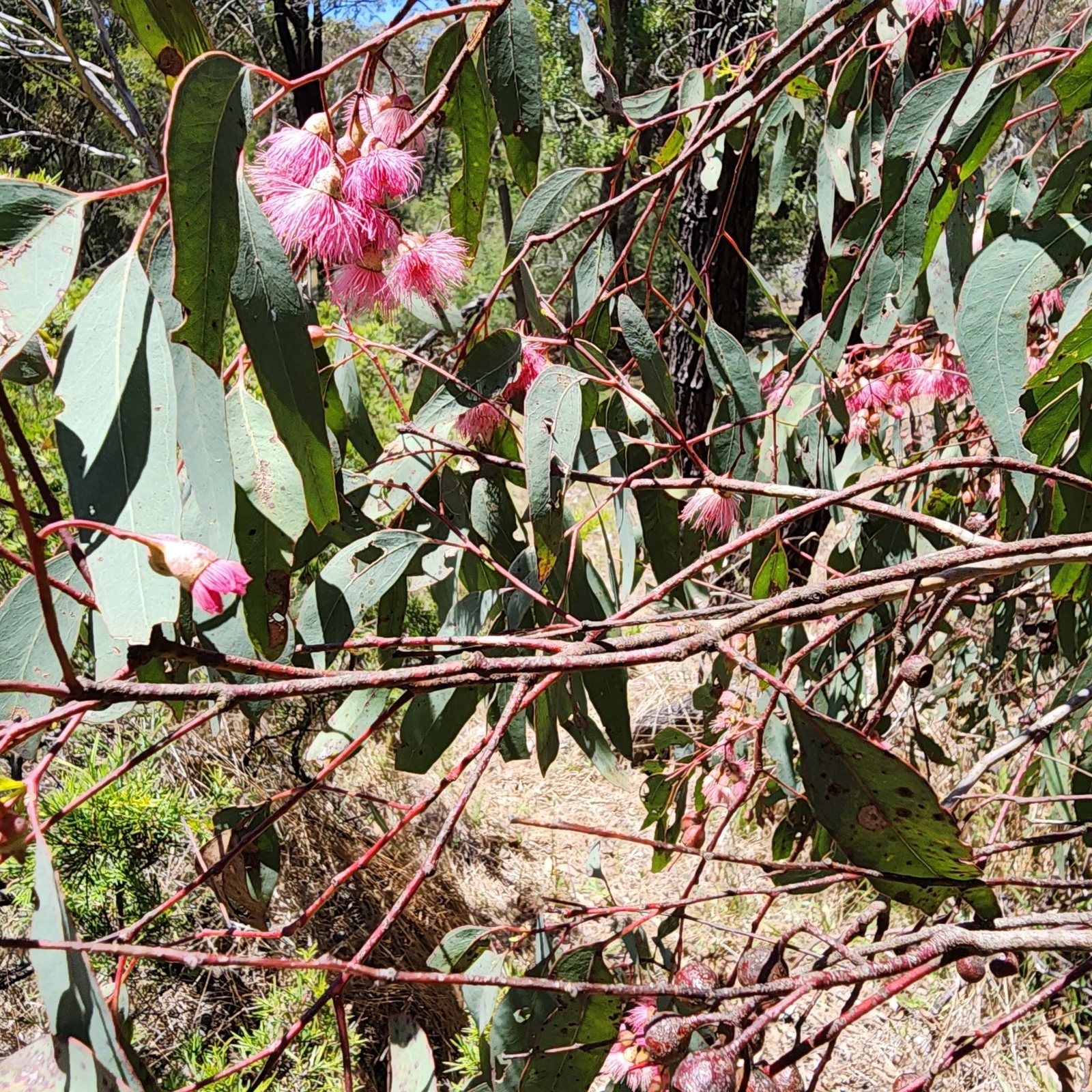
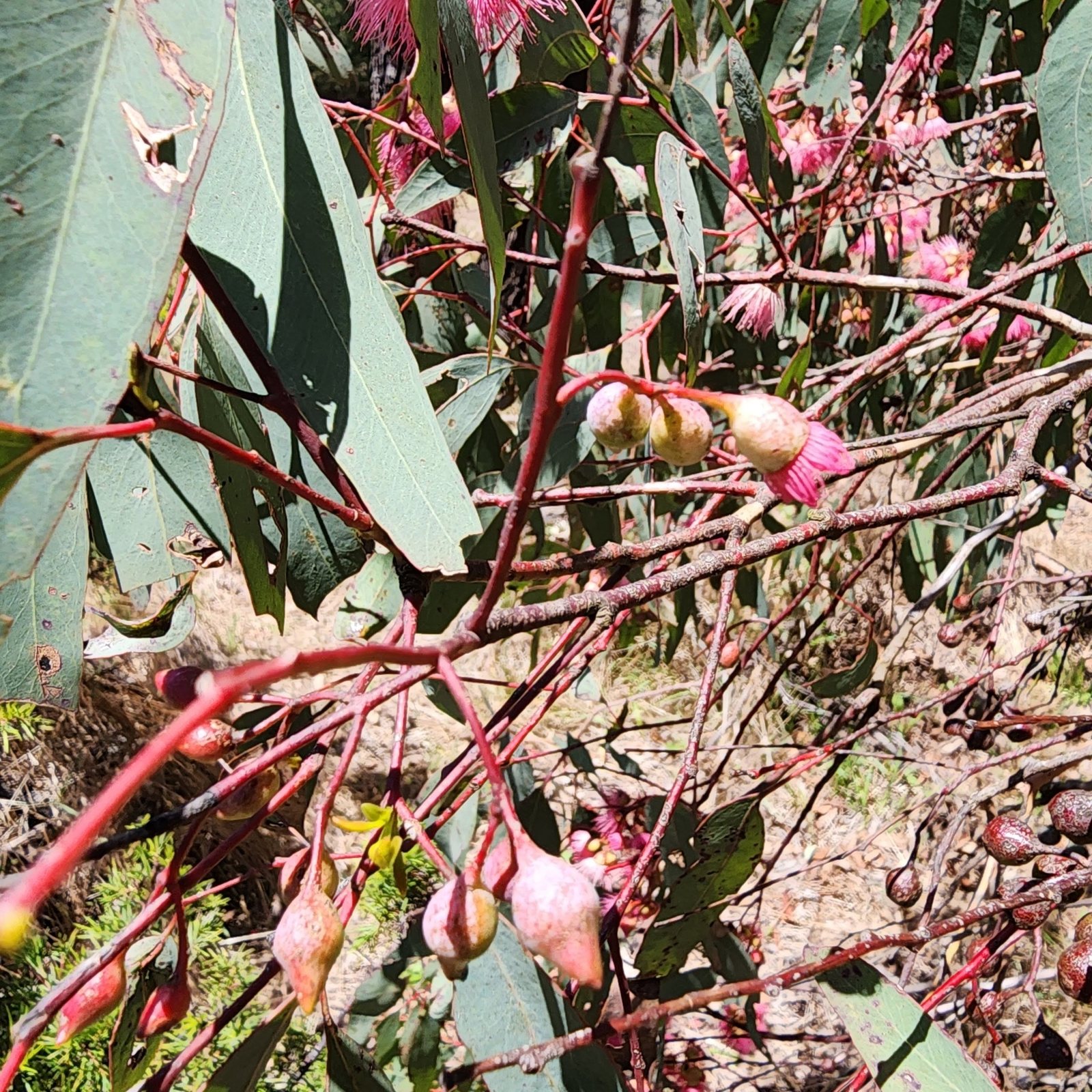
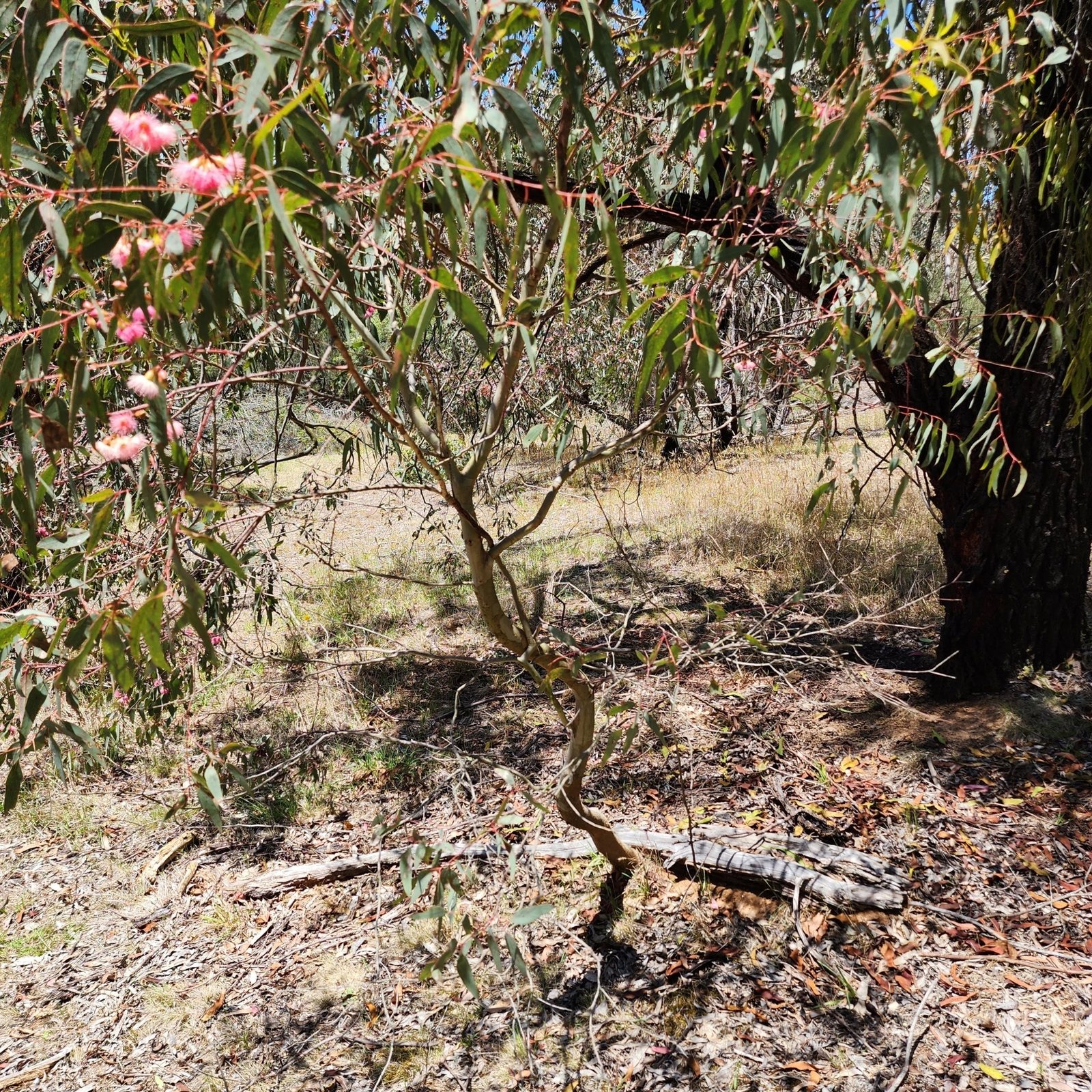
A large evergreen Australian tree with deeply furrowed, almost black bark, grey-green leaves and clusters of cream, pink or red flowers. Gardeners grow it for its striking trunk, open canopy and nectar-rich flowers, but it needs a spacious site in a warm climate.
At a glance
- Sun
- Full sun.
- Water
- Water deeply during establishment; drought tolerant once established. Avoid frequent shallow watering and persistently wet soil.
- Soil
- Well-drained sandy, loamy or clay soil. Tolerates relatively poor soil, but not prolonged waterlogging.
- Height
- 30-80 ft (9-24 m)
- Spread
- 20-40 ft (6-12 m)
- Flowers
- Usually late autumn through spring, although timing varies with climate and individual trees; cream, pink or red flowers.
- Foliage
- Evergreen, narrow, hanging grey-green to blue-green adult leaves; young leaves are broader and often more silvery.
- Growth
- Moderate to fast when young, depending on warmth and water availability.
- Care needed
- Medium
The year at a glance
- Pollinators
- Drought tolerant
- Heat tolerant
- Wildlife
- Low allergen
| J | F | M | A | M | J | J | A | S | O | N | D | |
|---|---|---|---|---|---|---|---|---|---|---|---|---|
| Flowers | ||||||||||||
| Plant |
Northern hemisphere months. In Australia, shift them by six.
- Difficulty
- Hard
- Toughness
- Needs looking after
Will it suit your garden?
Pick your zone, country, light and whether you have pets.
Full sun is 6 or more hours of direct sun a day, part shade 3 to 6 hours, shade under 3.
How it grows
Planting day
7 ft (2 m)
After 1 year
10 ft (2.9 m)
After 2 years
13 ft (3.8 m)
After 3 years
15 ft (4.7 m)
After 5 years
21 ft (6.5 m)
About 16 years to full size.
From a typical nursery size, at an average rate for this kind of plant. A rule of thumb, not a forecast.
Good to know
- Cats and dogs
- Toxic
- Native to
- Australia
- Growth rate
- Fast
Care
Jobs through the year
- WaterApr–May, Sep–Oct, every 21 days
- Deep-water established trees only during dry spells; young trees need more frequent watering.
- WaterJun–Aug, every 14 days
- Water deeply during prolonged drought; water establishing trees more often for two years.
- WaterJan–Mar, Nov–Dec, every 21 days
- For frost-free overwintered pots, water sparingly as the compost dries.
- MulchMay
- Spread 5–8 cm of organic mulch without covering the trunk.
- PruneApr–May
- Lightly train young trees after frost risk; never top mature trees or tackle hazardous limbs yourself.
- ProtectJan–Apr, Oct–Dec
- Unsuitable for permanent outdoor planting in zones 6–7; small container specimens need frost-free shelter.
- ProtectMay, Sep
- Check young-tree ties and drainage; allow ample space away from buildings and overhead wires.
- Plant where the mature crown and roots have ample room, well away from buildings, drains and overhead wires.
- Water deeply during dry spells for the first two growing seasons, allowing the surface soil to dry between waterings.
- Spread organic mulch 2-3 in (5-8 cm) deep over the root area, keeping it clear of the trunk.
- Avoid routine feeding; use a modest amount of low-phosphorus fertiliser only if growth and soil conditions indicate a need.
- Stake only if the young tree cannot stand securely, using flexible ties and removing support once roots hold it firm.
- Keep fallen bark, leaves and branches cleared around buildings, particularly in bushfire-prone areas.
Pruning. Prune young trees lightly in late winter or spring, after severe frost risk has passed, to establish a sound framework and remove damaged or poorly attached branches. Do not top mature trees; have a qualified arborist assess large limbs and any branches over occupied areas.
Through the year
- Spring
- Plant in cooler districts once severe frost risk has passed, and water the rootball thoroughly.
- Late spring
- Check young trees for competing leaders, rubbing branches and tight staking ties.
- Summer
- Deep-water establishing trees during dry weather; inspect foliage for psyllids and unusual dieback.
- Autumn
- Plant in mild-winter districts with well-drained soil, and replenish mulch without covering the trunk.
- Winter
- Check drainage and protect recently planted trees from forecast frost where practical.
- After storms
- Inspect for broken or hanging branches and arrange professional removal of hazardous limbs.
In the garden
- Use as a specimen in a large lawn or gravel garden, where the dark trunk can be seen clearly.
- Combine with silver-leaved shrubs and ornamental grasses for a restrained, drought-tolerant planting.
- Place in a spacious Australian-native garden with nectar-producing shrubs beneath the outer canopy.
- Use as an open-canopied shade tree away from patios, play areas and buildings where falling branches or litter would be a concern.
Garden styles it suits: Australian native, Mediterranean, Desert / xeriscape, Architectural minimal, Wildlife garden and Dry gravel garden.
Plant it with: Mat rush, Kangaroo paw, Westringia, Bottlebrush, Emu bush and Wallaby grass.
Wildlife: Flowers provide nectar and pollen for bees and other insects, and attract nectar-feeding birds where these occur. Older trees can provide valuable shelter and, eventually, nesting hollows.
Problems to watch for
- Psyllids, including lerp-forming species, can cause sticky deposits and leaf drop: support tree health with appropriate watering and conserve natural predators rather than routinely spraying.
- Eucalyptus longhorned borers can attack stressed trees in regions where the beetles occur: avoid drought stress during establishment and have infested or dying wood assessed and removed promptly.
- Root rot and decline can develop in waterlogged soil: improve drainage before planting and keep irrigation away from the trunk; badly affected trees may not recover.
- Hard frost can scorch foliage or kill young growth: choose a sheltered, warm site and protect small trees during exceptional cold.
Safety
Eucalyptus leaves and essential oil are toxic if eaten by cats, dogs or horses, and can also poison people. Concentrated oil is especially dangerous and can cause severe poisoning; do not use the foliage as food or allow pets or livestock to browse it.
Where it spreads. Listed as an invasive alien tree in South Africa, with restrictions depending on locality and habitat. Check local rules before planting there.
Easily confused with
Red ironbark (Eucalyptus tricarpa)
Also has dark ironbark and coloured flowers, but normally carries flower buds in groups of three; Eucalyptus sideroxylon normally has groups of seven.
Yellow gum (Eucalyptus leucoxylon)
Can have similar grey-green foliage and pink or red flowers, but much of its trunk is smooth and pale rather than covered in persistent, deeply furrowed black bark.
The name
Sideroxylon comes from Greek words meaning 'iron wood', while ironbark refers to the hard, deeply furrowed bark and red refers to the timber.
Propagation. Grow from seed surface-sown onto a free-draining seed mix, keeping it lightly moist in a warm, bright position. Plant seedlings out while young and before roots become crowded; seed-grown trees may differ in flower colour.
Checked against open data
- Accepted botanical name
- Eucalyptus sideroxylon
- Native range
- New South Wales, Queensland and Victoria.
- Measured
- Average height 800 cm.
Sources: GBIF (CC BY 4.0) and Trefle (CC BY 4.0). The care and design notes are LandscapeGPT's own.
See it in your own yard.
Upload a photo of your yard and see it redesigned with plants that suit your climate, each checked against your zone.