Red Robin photinia
Photinia × fraseri 'Red Robin'. Family Rosaceae. Shrub.
Also called Christmas berry 'Red Robin', Red-tip photinia 'Red Robin'.
An evergreen shrub grown for glossy leaves that emerge bright red before turning dark green. It makes a dense hedge or screening shrub, but needs room and good airflow; leaf spot can make it unreliable in hot, humid climates.
At a glance
- Sun
- Full sun to partial shade; the strongest red growth develops in good light. Shelter from cold, drying winds.
- Water
- Water regularly while establishing. Established plants tolerate short dry spells, but benefit from deep watering during prolonged drought.
- Soil
- Fertile, well-drained soil, preferably slightly acidic to neutral. Avoid waterlogged ground; very alkaline soil may cause yellowing.
- Height
- 10-20 ft (3-6 m) if unpruned
- Spread
- 8-15 ft (2.4-4.5 m) if unpruned
- Flowers
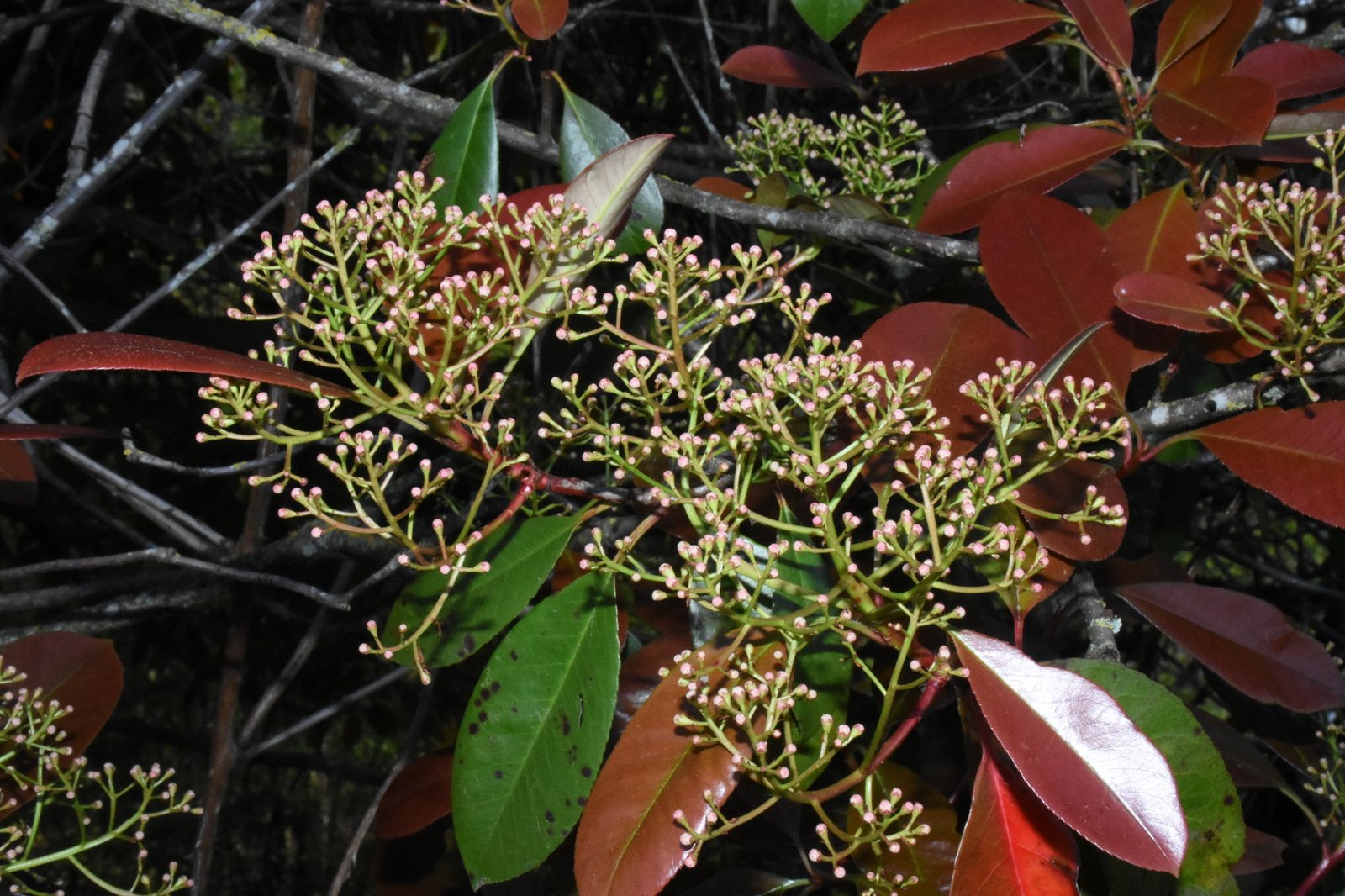
- Clusters of small creamy-white flowers in late spring to early summer, mainly on plants that are not regularly clipped.
- Foliage
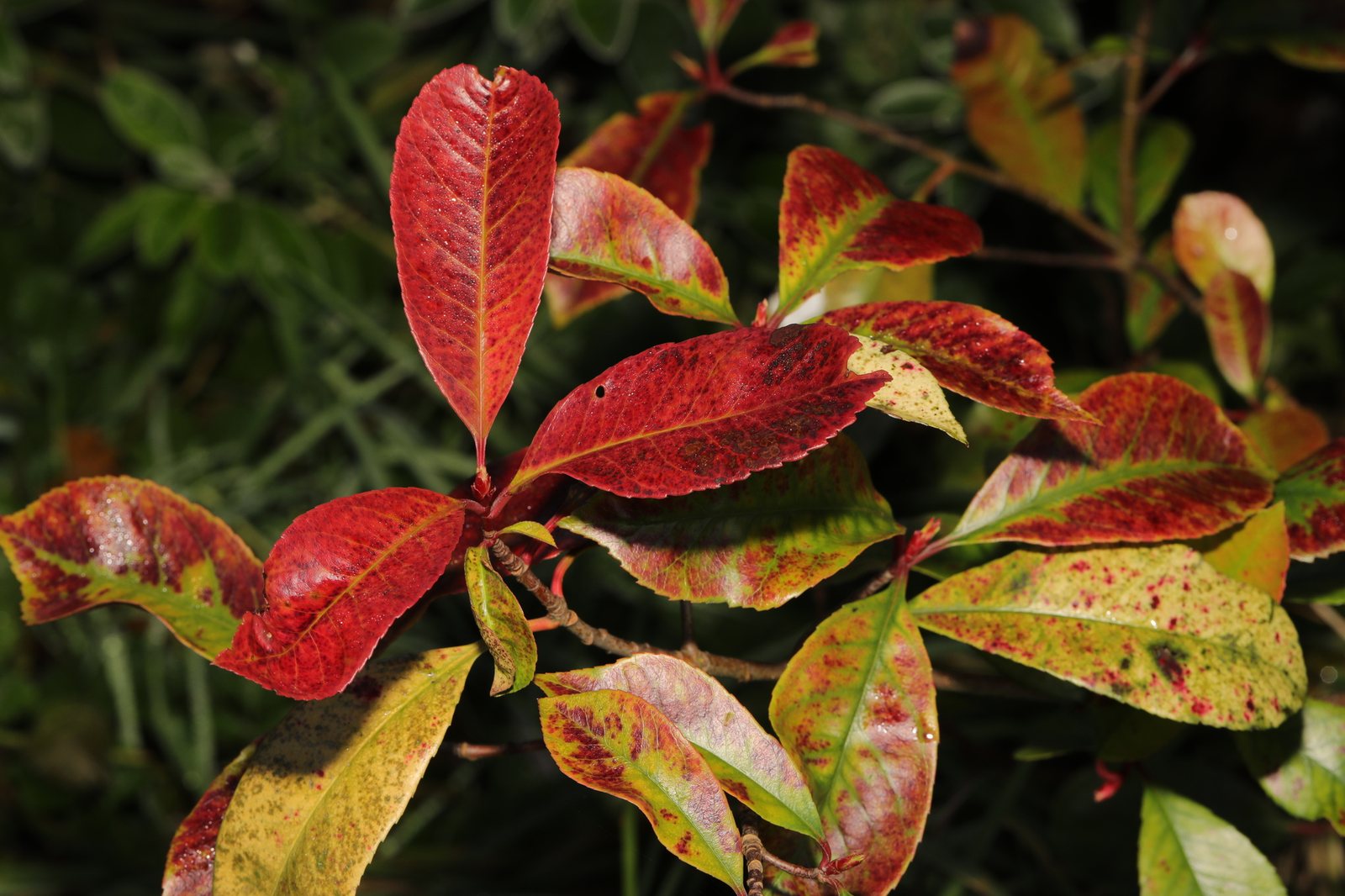
- Evergreen. Leathery, glossy, finely toothed leaves; new growth is bright red, passing through bronze before becoming dark green.
- Growth
- Moderate to fast once established.
- Care needed
- Medium
The year at a glance
- Pollinators
- Drought tolerant
- Heat tolerant
- Wildlife
- Low allergen
| J | F | M | A | M | J | J | A | S | O | N | D | |
|---|---|---|---|---|---|---|---|---|---|---|---|---|
| Flowers | ||||||||||||
| Fruit | ||||||||||||
| Plant |
Northern hemisphere months. In Australia, shift them by six.
- Difficulty
- Moderate
- Toughness
- Fairly tough
Will it suit your garden?
Pick your zone, country, light and whether you have pets.
Full sun is 6 or more hours of direct sun a day, part shade 3 to 6 hours, shade under 3.
How it grows
Planting day
1.8 ft (0.54 m)
After 1 year
5 ft (1.5 m)
After 2 years
8 ft (2.5 m)
After 3 years
12 ft (3.5 m)
After 5 years
15 ft (4.5 m)
full size
About 4 years to full size.
From a typical nursery size, at an average rate for this kind of plant. A rule of thumb, not a forecast.
Good to know
- Cats and dogs
- Mildly toxic: may upset a stomach
- Growth rate
- Fast
Care
Jobs through the year
- WaterApr–May, Sep–Oct, every 14 days
- Water established plants only when soil is dry; young plants need more for two seasons.
- WaterJun–Aug, every 10 days
- Water deeply during prolonged drought, keeping foliage dry.
- MulchMar–Apr
- Spread 5–8 cm of organic mulch, keeping it clear of stems.
- FeedApr
- Feed lightly with balanced shrub fertilizer only if growth is weak.
- PruneApr
- Remove frost-damaged wood once healthy growth is visible.
- PruneMay–Jul
- Shape after the spring flush or flowering; avoid autumn cuts and active bird nests.
- ProtectSep–Nov
- Clear diseased fallen leaves to reduce leaf spot.
- ProtectJan–Mar, Nov–Dec
- Shelter young plants from cold winds; zone 6 sites are generally too cold.
- Water deeply during dry weather for the first two growing seasons; keep water off the leaves where possible.
- Apply a 2-3 in (5-8 cm) mulch in spring, keeping it clear of the stems.
- Feed lightly with a balanced shrub fertilizer in spring only if growth is weak or the soil is poor.
- Allow enough space for air to circulate rather than crowding plants into a narrow hedge.
- Remove fallen diseased leaves promptly and keep pruning waste away from grazing animals.
Pruning. Shape in late spring after the main flush of growth, or after flowering if you want flowers, then trim lightly in summer if needed. Avoid autumn pruning, which encourages frost-sensitive shoots; renovate overgrown plants by cutting back selected old stems in spring.
Through the year
- Spring
- Plant once the soil is workable, water well, and mulch.
- Spring
- Remove frost-damaged shoots once new growth shows which wood is alive.
- Late spring
- Shape hedges after the first flush, or wait until flowers finish.
- Summer
- Water during prolonged dry spells and check for spotting or premature leaf drop.
- Autumn
- Clear fallen diseased foliage and avoid pruning or nitrogen feeding.
- Winter
- Check exposed young plants for wind rock and protect container roots during severe freezes.
In the garden
- Use as a tall boundary hedge where there is room for its mature width.
- Plant behind mixed borders to provide an evergreen backdrop and red spring contrast.
- Train as a standard or loose specimen in a sheltered courtyard.
- Combine with dark-green evergreens and pale-flowered shrubs for contrast without relying on flowers.
Garden styles it suits: Formal, Traditional, Urban city garden, Modern courtyard, Architectural minimal and Winter interest.
Plant it with: Pittosporum, Viburnum, Choisya, Hardy geraniums, Catmint and Daffodils.
Wildlife: Unclipped plants provide flowers for visiting insects and dense shelter for birds. Small red fruits may follow flowering and can be eaten by birds; frequent clipping greatly reduces flowers and fruit.
Problems to watch for
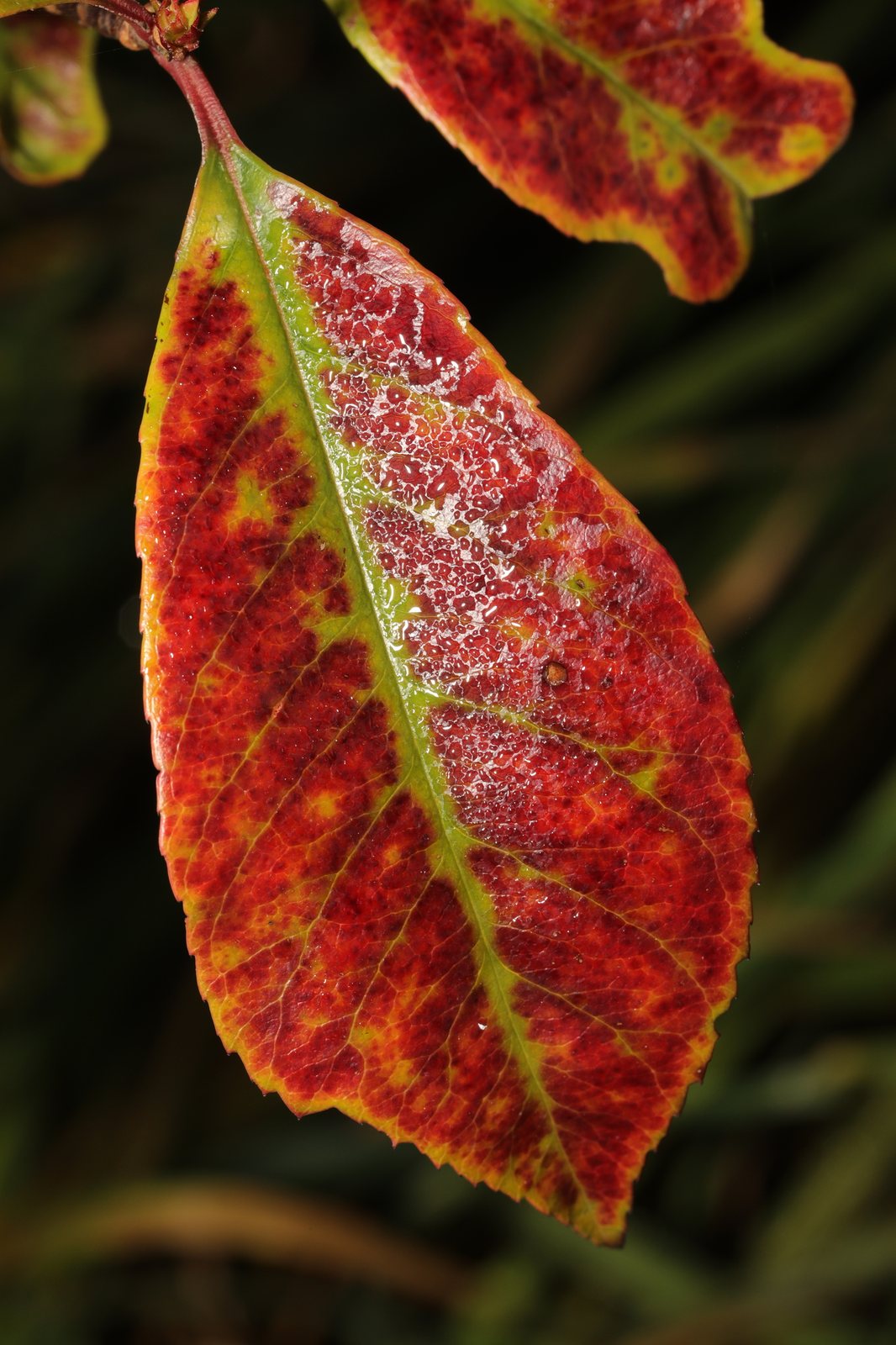
- Entomosporium leaf spot causes red-purple spots and leaf drop: remove infected litter, avoid overhead watering and improve airflow. Replace repeatedly defoliated plants with a better-adapted shrub.
- Root rot in wet soil causes wilting and dieback: improve drainage and avoid overwatering; badly affected plants usually need replacing.
- Frost and cold wind scorch young red leaves: choose a sheltered site, avoid late pruning and remove damaged shoots in spring.
- Vine weevil larvae can damage roots, especially in containers: inspect declining plants and use an appropriate biological control when conditions suit.
Safety
Leaves contain cyanogenic compounds and can poison grazing animals, including horses, particularly if substantial quantities are eaten; keep all clippings out of paddocks. The risk to people, cats and dogs is less clearly documented, so do not treat the leaves or berries as edible. Seek medical or veterinary advice after significant ingestion.
Easily confused with
Chinese photinia (Photinia serratifolia)
Usually has larger, broader leaves and develops into a larger shrub or tree; its young growth is often bronze rather than the vivid red of 'Red Robin'.
Japanese photinia (Photinia glabra)
Generally has smaller, narrower leaves and less conspicuous red new growth; it is one of the parents of Fraser photinia.
Lilly pilly (Syzygium australe)
Also has reddish young growth, but its leaves are opposite and have smooth edges, unlike photinia's alternate, finely toothed leaves.
The name
Photinia comes from the Greek word for shining, referring to the glossy leaves, while 'Red Robin' refers to the red young foliage.
Propagation. Take semi-ripe cuttings in summer and root in a free-draining medium under humid conditions. Seed does not reliably reproduce 'Red Robin'.
Checked against open data
- Accepted botanical name
- Photinia fraseri
Sources: GBIF (CC BY 4.0). The care and design notes are LandscapeGPT's own.
See it in your own yard.
Upload a photo of your yard and see it redesigned with plants that suit your climate, each checked against your zone.