Red valerian
Centranthus ruber. Family Caprifoliaceae. Perennial.
Also called Jupiter's beard, Kiss-me-quick, Fox's brush.
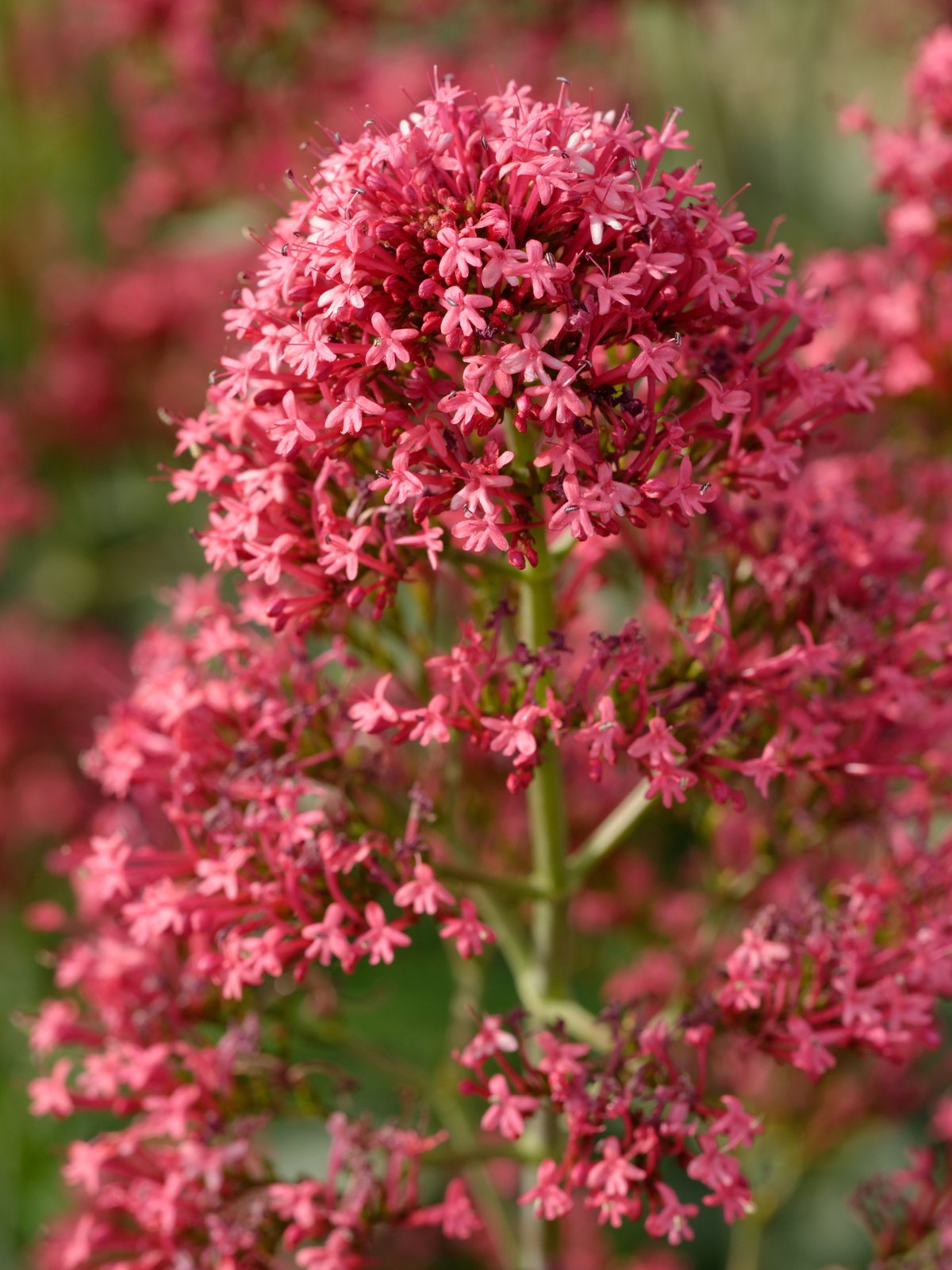
Red valerian is a short-lived perennial with branching stems and dense clusters of small, fragrant flowers that attract butterflies. Gardeners grow it for its long flowering season and ability to thrive in dry, stony ground, but it can self-seed freely and is unsuitable near natural areas where it is invasive.
At a glance
- Sun
- Full sun is best; tolerates light shade but flowers less heavily and may become floppy.
- Water
- Water regularly while establishing; once rooted, water only during prolonged drought. Avoid persistently wet soil.
- Soil
- Well-drained, lean to moderately fertile soil, including chalk, limestone and gravel. Tolerates alkaline conditions; struggles in wet clay.
- Height
- 2-3 ft (0.6-0.9 m)
- Spread
- 1-2 ft (0.3-0.6 m)
- Flowers
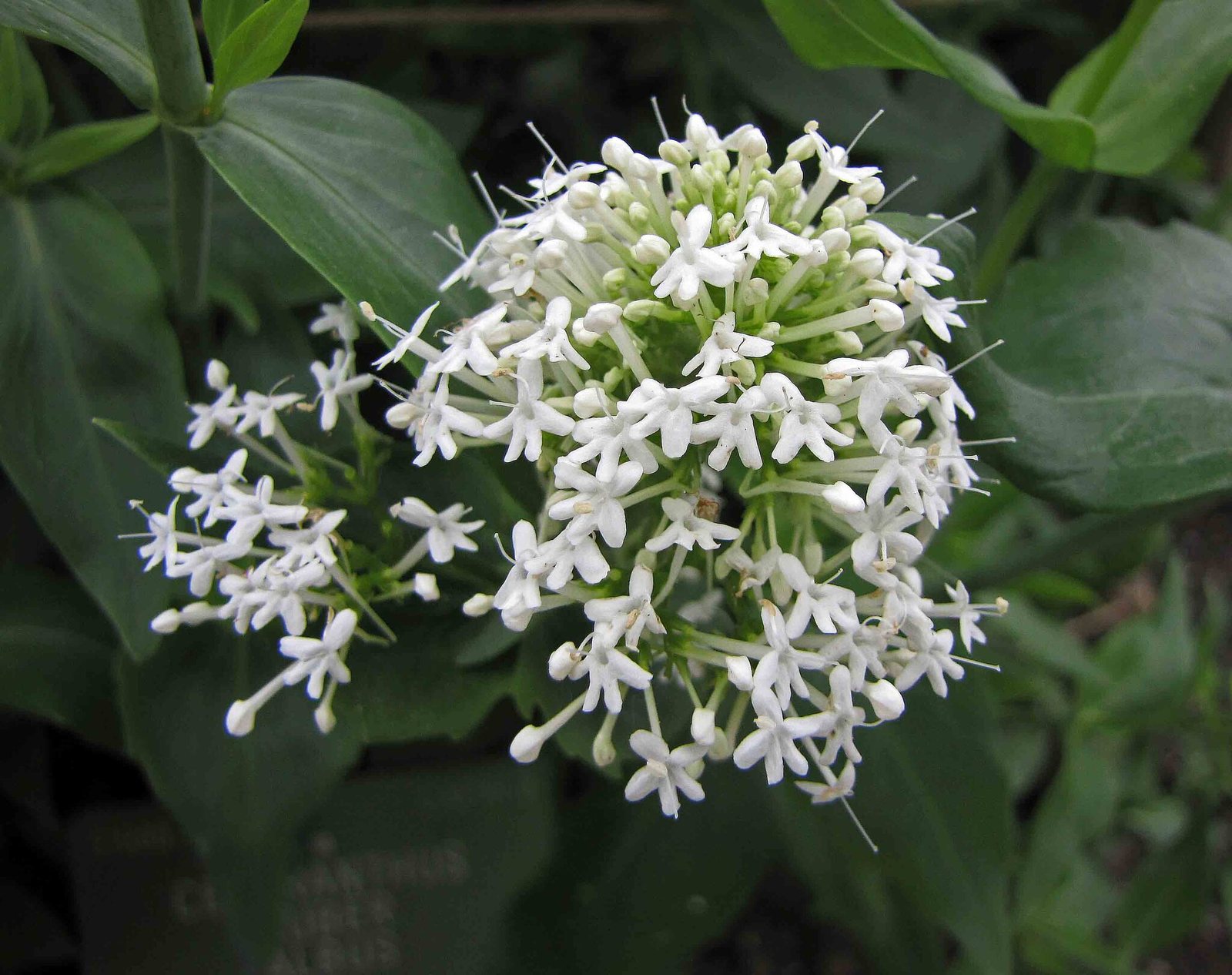
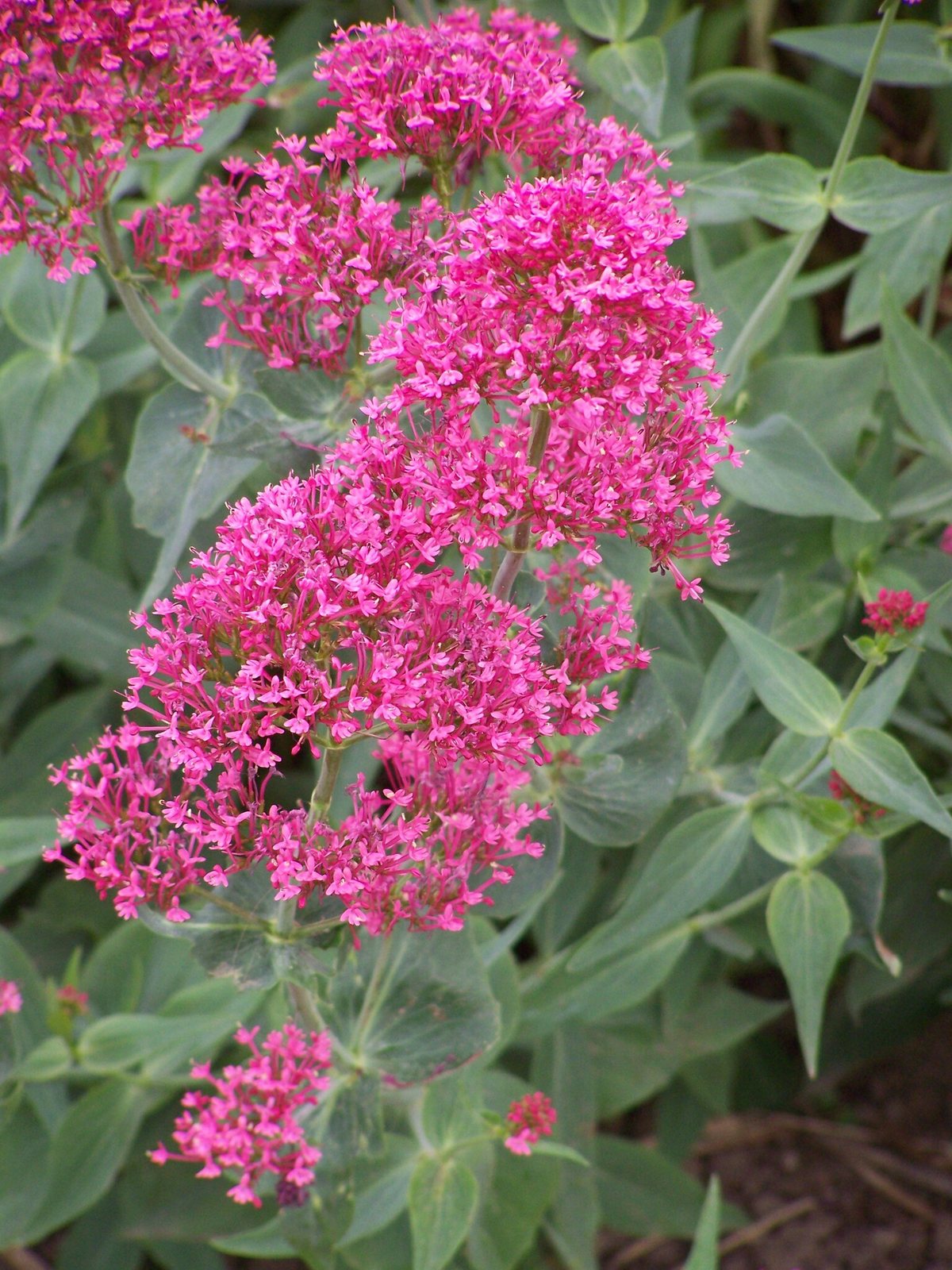
- Late spring through summer, often repeating into early autumn after cutting back; usually rosy red to pink, with white-flowered forms also available.
- Foliage
- Fleshy, smooth, blue-green to grey-green leaves in opposite pairs; lower leaves have stalks and upper leaves clasp the stems.
- Growth
- Fast
- Care needed
- Low
The year at a glance
- Pollinators
- Drought tolerant
- Heat tolerant
- Low allergen
| J | F | M | A | M | J | J | A | S | O | N | D | |
|---|---|---|---|---|---|---|---|---|---|---|---|---|
| Flowers | ||||||||||||
| Plant |
Northern hemisphere months. In Australia, shift them by six.
- Difficulty
- Easy
- Toughness
- Very tough
Will it suit your garden?
Pick your zone, country, light and whether you have pets.
Full sun is 6 or more hours of direct sun a day, part shade 3 to 6 hours, shade under 3.
How it grows
Planting day
1 ft (0.3 m)
After 1 year
1.7 ft (0.53 m)
After 2 years
2.5 ft (0.75 m)
full size
About 2 years to full size.
From a typical nursery size, at an average rate for this kind of plant. A rule of thumb, not a forecast.
Good to know
- Cats and dogs
- Safe
- Invasive in
- the US and Australia
- In the garden
- Spreads vigorously: plan to contain it.
- Growth rate
- Fast
Care
Jobs through the year
- WaterApr–May, Sep, every 21 days
- Water established plants only during prolonged drought; water new plants more often until rooted.
- WaterJun–Aug, every 14 days
- During prolonged drought, water established plants deeply and let soil dry between waterings.
- MulchApr
- Apply a light gravel mulch, keeping the crown clear of moisture-retentive material.
- PruneMar
- Remove dead or winter-damaged stems, retaining healthy basal foliage.
- DeadheadJun–Sep, every 14 days
- Cut spent flower stems to leafy growth for repeat bloom and to prevent seed dispersal.
- ProtectNov–Dec
- Clear wet leaves from the crown and keep drainage routes open.
- Plant in freely draining soil, keeping the crown out of wet hollows.
- Water new plants until established, then let the soil dry between waterings.
- Avoid rich manure and routine feeding, which encourage weak, floppy growth.
- Use a light gravel mulch rather than moisture-retentive material around the crown.
- Pull unwanted seedlings while small; established plants develop stubborn roots.
Pruning. Cut spent flowering stems back to leafy growth after the main flush to encourage another crop of flowers and prevent seeding. Remove dead stems in early spring, leaving any healthy basal foliage.
Through the year
- Early spring
- Remove winter-damaged stems and check that the crown is not sitting in wet soil.
- Spring
- Plant into well-drained ground and water new plants during dry spells.
- Late spring
- Pull unwanted seedlings before their roots become established.
- Summer
- Cut back spent flower stems to leafy growth for repeat flowering.
- Early autumn
- Remove remaining flower heads before seed disperses, especially near natural areas.
- Winter
- Keep the crown free of wet leaves and avoid watering established plants in damp weather.
In the garden
- Plant in gravel gardens with lavender and catmint for loose colour above low, drought-tolerant planting.
- Use in sunny cottage borders, where its branching flower stems soften more upright plants.
- Grow on dry banks or beside sound stone retaining walls, removing seedlings from mortar joints.
- Repeat small groups along sunny paths to bring flowers and butterflies close to view.
Garden styles it suits: Cottage garden, Mediterranean, Dry gravel garden, Pollinator garden, Coastal and Low-maintenance.
Plant it with: Lavender, Catmint, Yarrow, Lamb's ears, Bearded iris and Rock rose.
Wildlife: Nectar-rich flowers attract butterflies, bees and other pollinating insects over a long season.
Problems to watch for
- Crown and root rot in wet soil: improve drainage or move the plant to a raised, gravelly position; replace badly rotted plants.
- Excessive self-seeding: cut off fading flower heads before seeds form and pull seedlings promptly.
- Floppy stems in shade or rich soil: move to full sun, stop feeding and cut back after flowering.
- Aphids on soft shoots: wash them off with water and allow ladybirds and other predators to control small colonies.
Safety
Not known to be toxic to people, cats, dogs or horses. No poisonous part is established, though animal-specific safety information is limited; do not treat it as a food plant or substitute it for medicinal valerian.
Where it spreads. Listed as invasive in California and regarded as an environmental weed in parts of southern Australia, including Western Australia, South Australia and Victoria. It self-seeds readily into rocky ground, walls and disturbed sites; check local guidance before planting and avoid it near vulnerable natural habitats.
Easily confused with
Common valerian (Valeriana officinalis)
Common valerian has divided leaves with many leaflets and pale pink or white flowers; red valerian has simple, undivided leaves and usually deeper pink-red flowers.
Sweet William (Dianthus barbatus)
Sweet William has flatter flower heads with conspicuous five-petalled, often toothed flowers; red valerian has many tiny tubular flowers with a slender spur.
The name
Centranthus comes from Greek words for spur and flower, referring to the spurred blooms, while ruber is Latin for red.
Propagation. Sow seed in spring, or take basal cuttings in spring to preserve a particular flower colour. Self-sown seedlings are easy to transplant when young but may differ from the parent; do not propagate where the plant is locally invasive.
Checked against open data
- Accepted botanical name
- Centranthus ruber
- In the US and Canada
- Introduced in Hawaii and the lower 48 states.
Sources: GBIF (CC BY 4.0) and USDA PLANTS. The care and design notes are LandscapeGPT's own.
See it in your own yard.
Upload a photo of your yard and see it redesigned with plants that suit your climate, each checked against your zone.