Redhaven peach
Prunus persica 'Redhaven'. Family Rosaceae. Tree.
Also called Red Haven peach, Prunus persica 'Redhaven'.
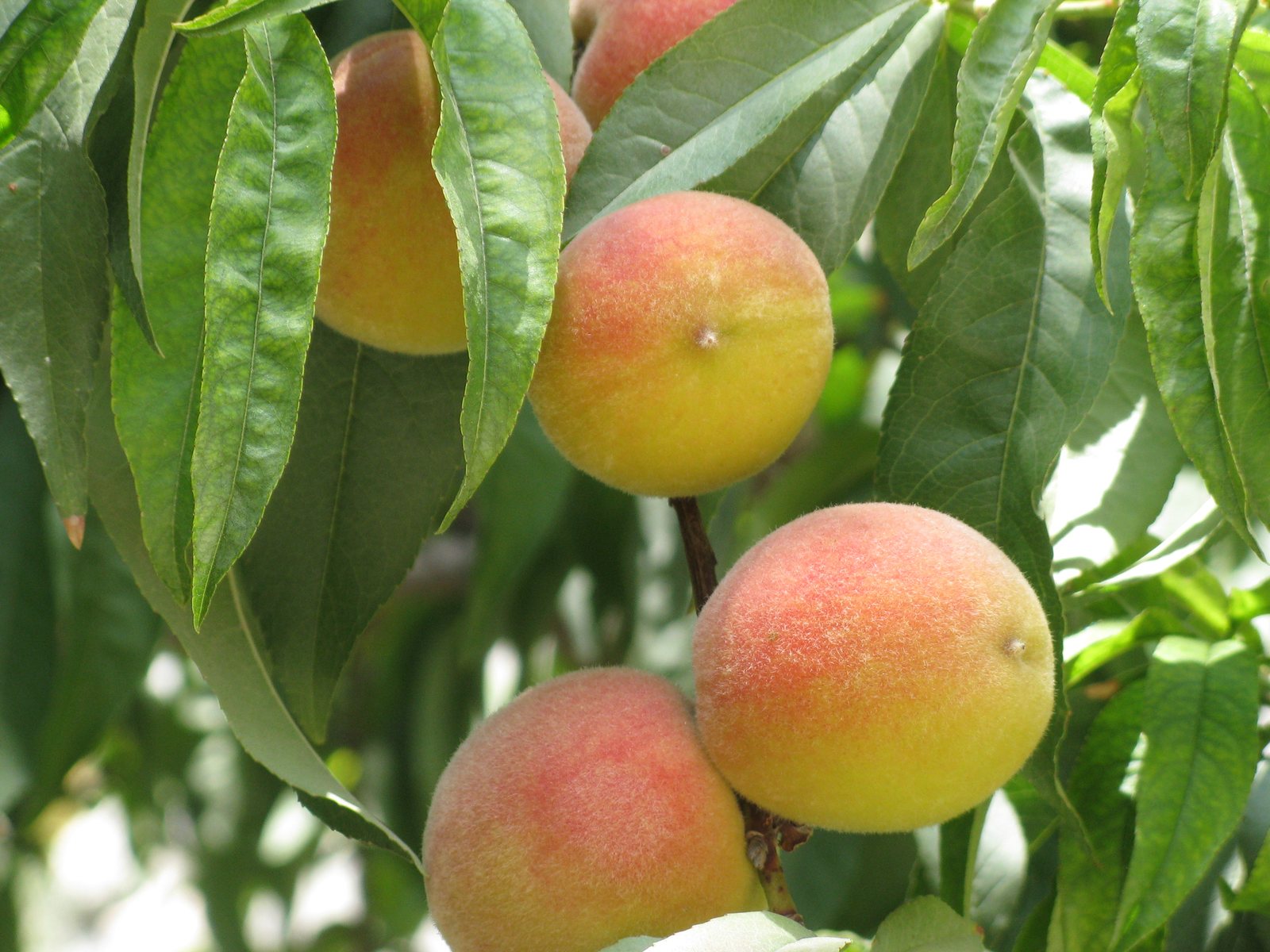
Redhaven is a deciduous peach tree grown for red-blushed, yellow-fleshed fruit that usually separates readily from the stone when fully ripe. It is self-fertile, so one tree can crop, but it needs a sunny site, substantial winter chilling and protection from spring frost. It performs best where summers are warm and winters provide roughly 800-1,000 hours of chilling.
At a glance
- Sun
- Full sun, with at least 6-8 hours of direct light daily; choose a warm, sheltered position in cooler climates.
- Water
- Water deeply during dry spells, especially while establishing and while fruit is swelling; avoid waterlogged soil.
- Soil
- Fertile, well-drained loam, ideally pH 6.0-7.0; avoid heavy, persistently wet ground.
- Height
- 12-20 ft (3.7-6.1 m) on vigorous rootstocks; dwarfing rootstocks and pruning can keep it smaller.
- Spread
- 12-20 ft (3.7-6.1 m), depending on rootstock and training.
- Flowers
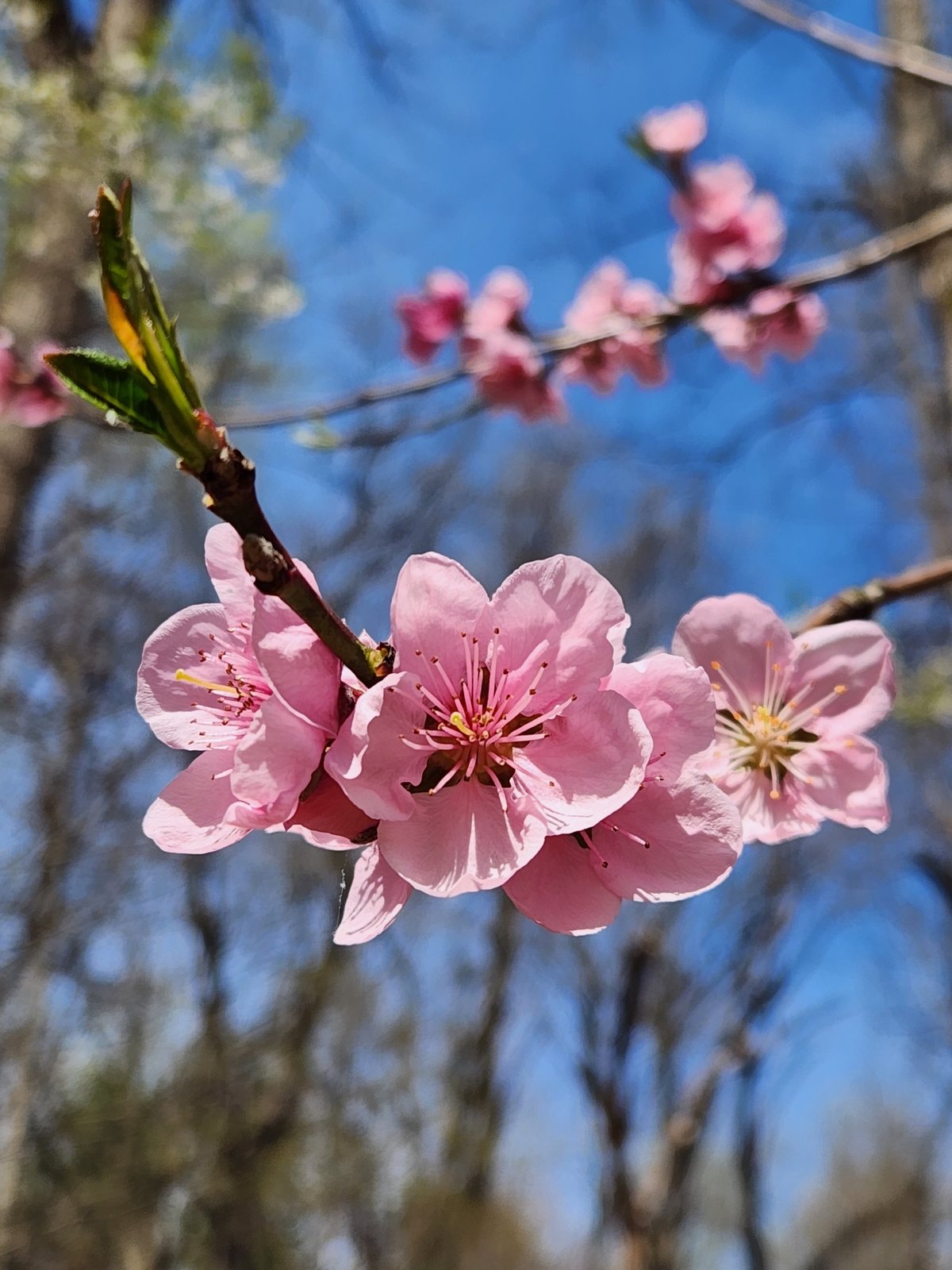
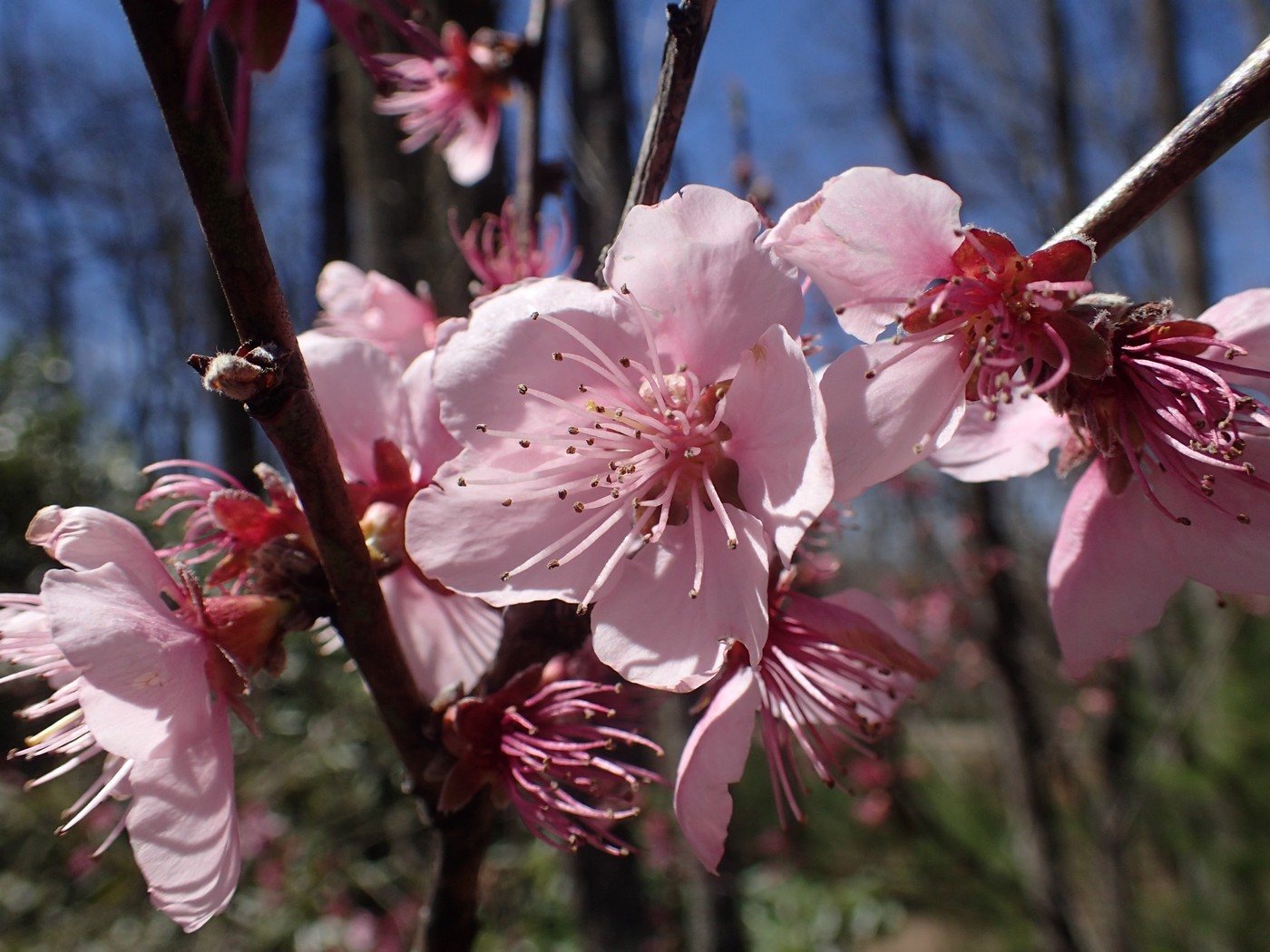
- Pink flowers in early to mid-spring, before or as the leaves emerge; flowers are vulnerable to frost.
- Foliage
- Long, narrow, pointed green leaves, sometimes turning yellow in autumn.
- Growth
- Moderate to fast when young.
- Care needed
- High
The year at a glance
- Pollinators
- Heat tolerant
- Wildlife
- Low allergen
- Edible
| J | F | M | A | M | J | J | A | S | O | N | D | |
|---|---|---|---|---|---|---|---|---|---|---|---|---|
| Flowers | ||||||||||||
| Fruit | ||||||||||||
| Plant |
Northern hemisphere months. In Australia, shift them by six.
- Difficulty
- Hard
- Toughness
- Needs looking after
Will it suit your garden?
Pick your zone, country, light and whether you have pets.
Full sun is 6 or more hours of direct sun a day, part shade 3 to 6 hours, shade under 3.
How it grows
Planting day
7 ft (2 m)
After 1 year
7 ft (2.2 m)
After 2 years
8 ft (2.4 m)
After 3 years
8 ft (2.5 m)
After 5 years
10 ft (2.9 m)
About 16 years to full size.
From a typical nursery size, at an average rate for this kind of plant. A rule of thumb, not a forecast.
Good to know
- Cats and dogs
- Toxic
- Growth rate
- Fast
Care
Jobs through the year
- WaterApr–May, Sep–Oct, every 14 days
- Deeply water established trees if soil is dry; young trees need more frequent watering.
- WaterJun–Aug, every 7 days
- Water deeply during dry weather, especially as fruit swells; skip if soil remains moist.
- FeedMar
- Apply a balanced fruit-tree feed at the label rate; reduce feeding if growth is excessive.
- MulchMar–Apr
- Spread 5-8 cm of organic mulch over the roots, keeping the trunk clear.
- PruneApr–Jun
- Prune annually in dry weather around flowering, retaining well-spaced young fruiting shoots.
- PruneJun
- Thin fruit after the natural drop, leaving peaches 15-20 cm apart.
- ProtectJan–Apr
- Shelter trained trees from rain before buds open where peach leaf curl recurs.
- ProtectMar–Apr
- Cover blossom on frosty nights and remove fleece during the day.
- HarvestJul–Aug
- Pick fragrant peaches that yield slightly, lifting and twisting gently.
- ProtectSep–Nov
- Remove diseased leaves and mummified fruit; guard young trunks against browsing animals.
- Water newly planted trees deeply whenever the root zone begins to dry; continue watering established trees during prolonged dry spells.
- Apply a balanced fruit-tree fertiliser in early spring according to the label; reduce feeding if growth is excessively leafy.
- Spread 2-3 in (5-8 cm) of organic mulch over the root area, keeping it clear of the trunk.
- Thin young peaches to about 6-8 in (15-20 cm) apart after the natural fruit drop to improve size and reduce branch breakage.
- Keep grass and weeds away from the trunk, and protect young trunks from rabbits and other browsing animals.
- Cover flowering branches with horticultural fleece during forecast frosts, removing it during the day for pollinators.
Pruning. Prune annually around flowering or in early summer during dry weather, particularly in cool, damp climates where winter pruning increases disease risk. Train an open-centred tree or wall fan, removing crowded and damaged branches and renewing fruiting shoots because peaches bear mainly on the previous year's growth.
Harvest
Pick peaches in midsummer, often July-August in the Northern Hemisphere and January-February in the Southern Hemisphere, with timing varying by climate. Harvest when the background skin changes from green to yellow, the fruit smells fragrant and yields slightly to gentle pressure; lift and twist carefully rather than pulling. Grafted trees usually give their first worthwhile crop about 2-4 years after planting.
Through the year
- Winter
- Plant bare-root trees while dormant if the ground is workable; choose a sunny position away from frost pockets.
- Late winter
- Where peach leaf curl is recurrent, put a rain shelter over a wall-trained tree before buds open, leaving the sides ventilated.
- Early spring
- Feed and refresh mulch; protect blossom on frosty nights and uncover it during the day.
- Spring
- Prune around flowering in dry weather, keeping the centre open and retaining well-spaced young fruiting shoots.
- Late spring
- Thin developing fruit after the natural drop, leaving about 6-8 in (15-20 cm) between peaches.
- Summer
- Water during dry weather, support heavily laden branches if needed and harvest fruit as it ripens.
- Autumn
- Remove fallen diseased leaves and any shrivelled fruit remaining on the tree or ground.
In the garden
- Grow as a small orchard tree with enough space around it for pruning, picking and good airflow.
- Train as a fan against a sunny wall to improve ripening and make blossom protection easier in cool climates.
- Use as a productive focal tree in an edible garden, with low herbs beyond its clear, mulched root area.
- Combine with other fruit trees in a home orchard, spacing crowns so they do not shade one another.
Garden styles it suits: Backyard orchard, Edible landscape, Potager (kitchen garden), Homestead, Cottage garden and Food forest.
Plant it with: Chives, Thyme, Oregano, Calendula and Sweet alyssum.
Wildlife: Flowers provide nectar and pollen for bees. Birds, squirrels and other mammals may take ripe fruit; if netting is needed, use wildlife-safe netting secured tightly to a frame.
Problems to watch for
- Peach leaf curl causes thickened, red, distorted leaves: shelter trained trees from winter and early-spring rain, choose an airy site and, where needed, use a locally approved dormant treatment before buds open.
- Brown rot turns ripening fruit soft and brown, often with pale spore patches: remove infected and mummified fruit promptly, thin crowded fruit and prune for airflow.
- Peach tree borers can cause gum mixed with sawdust-like debris near the trunk base: inspect regularly, avoid trunk injury and seek locally appropriate treatment because the pests and controls vary by region.
- Spring frost can kill flowers despite the tree surviving winter: avoid low-lying frost pockets and cover blossom during cold nights.
Safety
The ripe flesh is edible. Leaves, stems and the kernels inside the stones contain cyanogenic compounds and can seriously poison people, cats, dogs and horses if eaten; wilted leaves are a particular risk to livestock. Do not eat or crush the kernels, and keep fallen stones away from pets because they can also cause choking or intestinal blockage.
Easily confused with
Nectarine (Prunus persica, nectarine cultivars)
The tree and flowers are very similar, but nectarines have smooth fruit skin rather than peach fuzz.
Apricot (Prunus armeniaca)
Apricots have broader, rounded leaves and generally smaller yellow-orange fruit; peach leaves are long and narrow.
Other peach cultivars (Prunus persica)
Many peaches look much like Redhaven. Ripening season and fruit traits can help, but a reliable nursery label or propagation record is needed to confirm the cultivar.
The name
Prunus is the Latin name for plum, while persica means 'Persian', reflecting the peach's historical association with Persia although the species originated in China.
Propagation. Propagate by budding or grafting onto a suitable peach-compatible rootstock. Seedlings will not reliably retain Redhaven's fruit quality, size or ripening time.
Checked against open data
- Accepted botanical name
- Prunus persica
- In the US and Canada
- Introduced in Canada, the lower 48 states and US Virgin Islands.
- Native range
- China North-Central.
- Measured
- Average height 640 cm.
Sources: GBIF (CC BY 4.0), USDA PLANTS and Trefle (CC BY 4.0). The care and design notes are LandscapeGPT's own.
See it in your own yard.
Upload a photo of your yard and see it redesigned with plants that suit your climate, each checked against your zone.