Rhubarb 'Victoria'
Rheum × hybridum 'Victoria'. Family Polygonaceae. Perennial.
Also called Victoria rhubarb, Pie plant.
'Victoria' is a long-lived, deciduous rhubarb grown for thick, tart leaf stalks used in pies, crumbles and preserves. Its stalks are usually green with red or pink colouring near the base; they do not need to turn red before harvesting. It crops best where winters are cold and summers are reasonably cool, and is less dependable in hot, humid climates.
At a glance
- Sun
- Full sun in cool climates; light afternoon shade where summers are hot.
- Water
- Keep the root zone evenly moist during active growth, especially while stalks are developing; avoid waterlogged soil.
- Soil
- Deep, fertile, moisture-retentive but well-drained soil, ideally slightly acidic to neutral. Improve poor soil with well-rotted compost before planting.
- Height
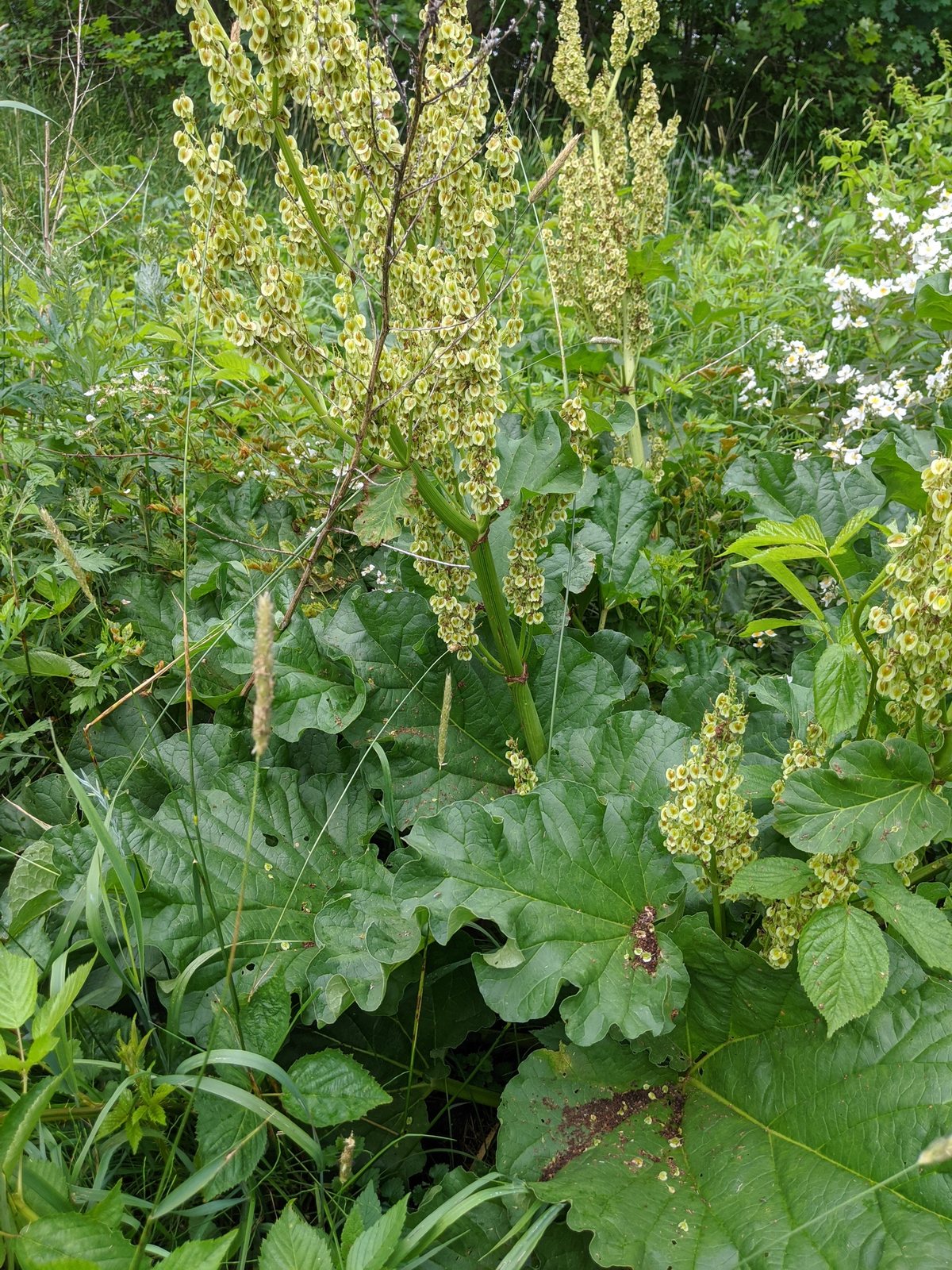
- 2-3 ft (0.6-0.9 m) in leaf; flower stems can reach 5-6 ft (1.5-1.8 m)
- Spread
- 3-4 ft (0.9-1.2 m)
- Flowers
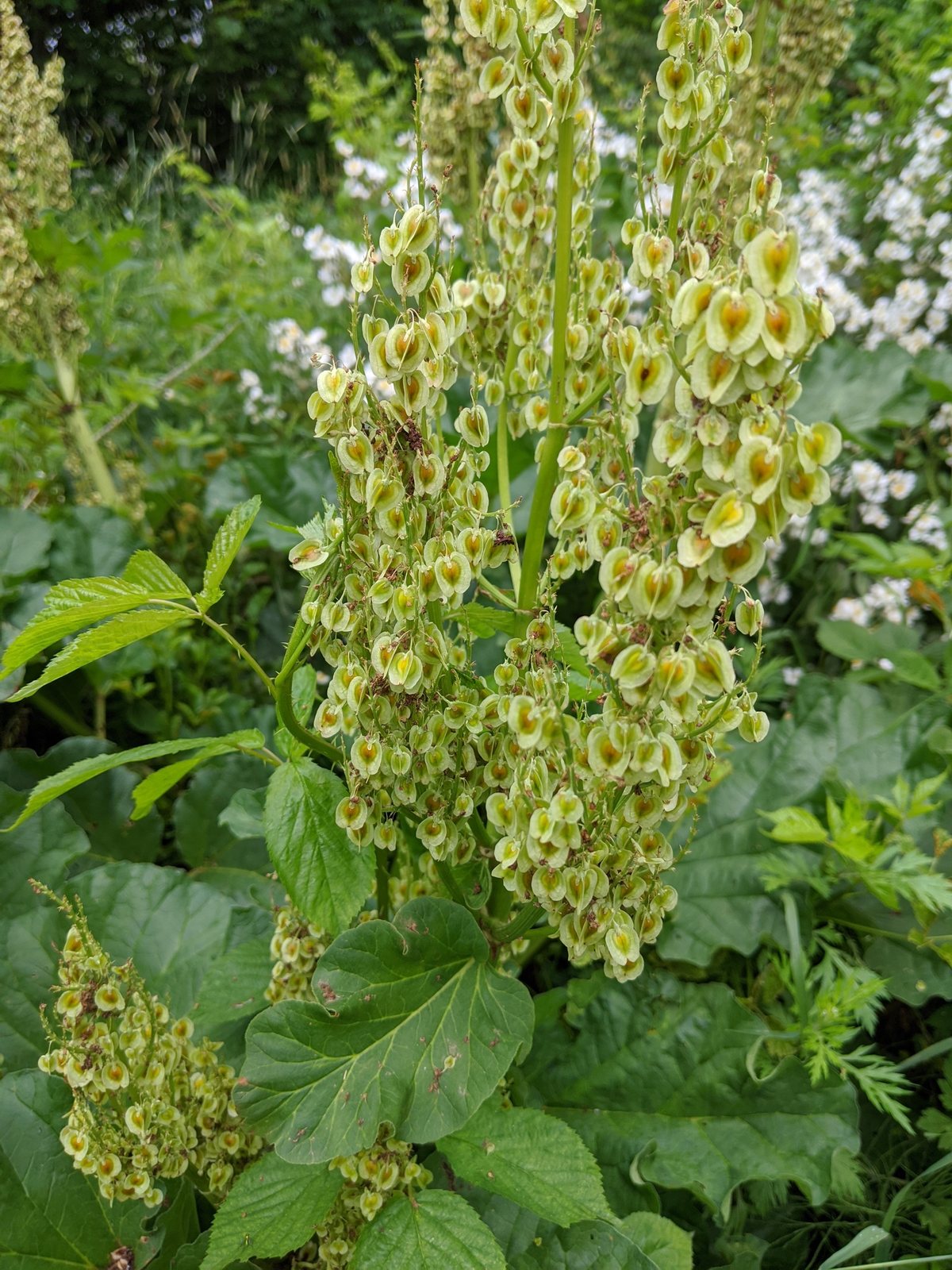
- Tall, branched sprays of small cream-white flowers in late spring or early summer; usually removed to favour stalk production.
- Foliage
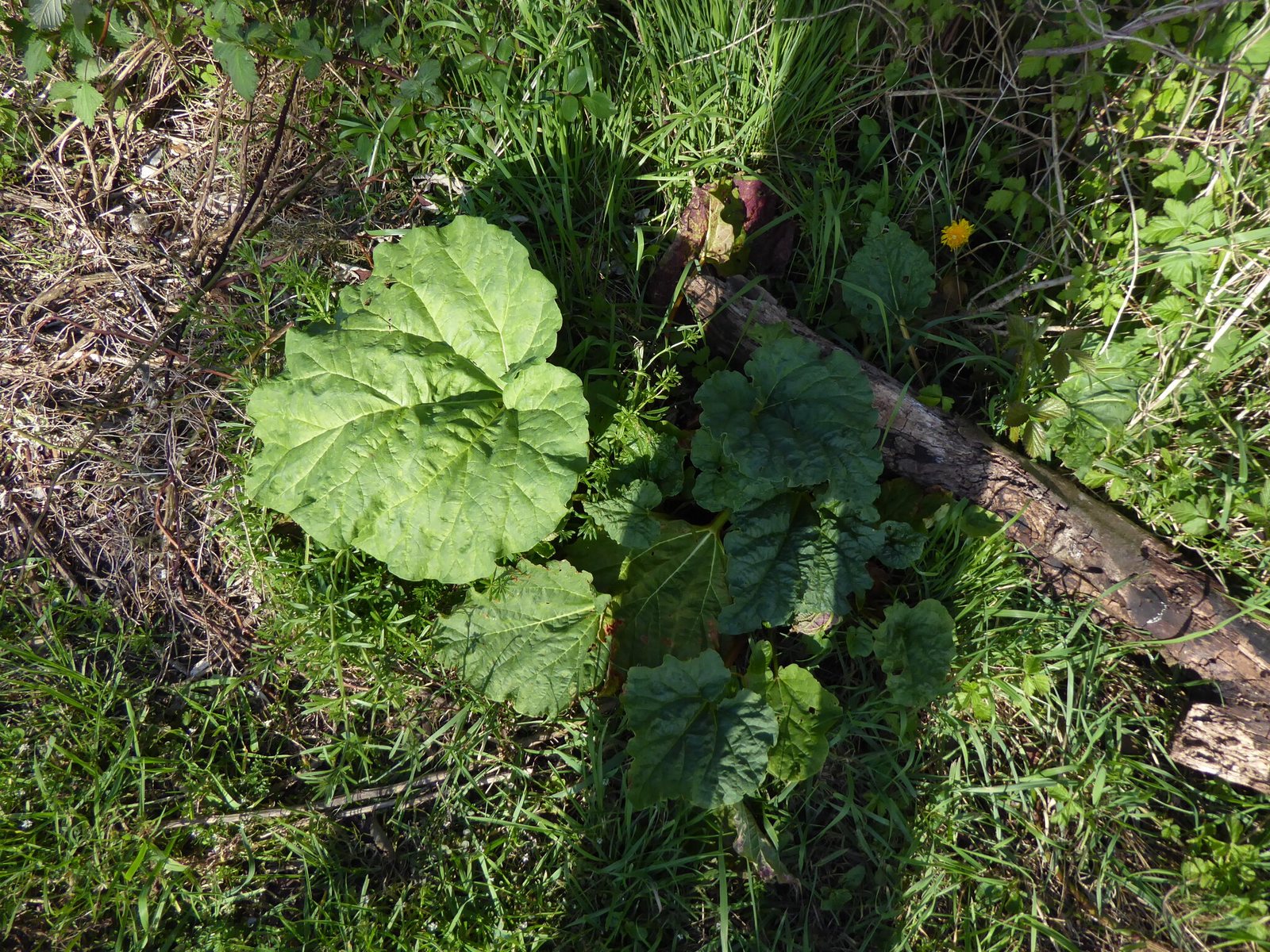
- Large, broad, crinkled green leaves on thick green stalks flushed pink or red, especially at the base; dies back for winter.
- Growth
- Fast seasonal growth once established; allow two to three years to develop a productive crown.
- Care needed
- Medium
The year at a glance
- Cold hardy
- Edible
| J | F | M | A | M | J | J | A | S | O | N | D | |
|---|---|---|---|---|---|---|---|---|---|---|---|---|
| Flowers | ||||||||||||
| Fruit | ||||||||||||
| Plant |
Northern hemisphere months. In Australia, shift them by six.
- Difficulty
- Easy
- Toughness
- Very tough
Will it suit your garden?
Pick your zone, country, light and whether you have pets.
Full sun is 6 or more hours of direct sun a day, part shade 3 to 6 hours, shade under 3.
How it grows
Planting day
1 ft (0.3 m)
After 1 year
1.7 ft (0.53 m)
After 2 years
2.5 ft (0.75 m)
full size
About 2 years to full size.
From a typical nursery size, at an average rate for this kind of plant. A rule of thumb, not a forecast.
Good to know
- Cats and dogs
- Toxic
- Growth rate
- Fast
Care
Jobs through the year
- WaterMar–Apr, Sep, every 14 days
- Deep-water established crowns if soil is dry; newly planted crowns need more consistent moisture.
- WaterMay–Aug, every 7 days
- Water deeply during dry spells to sustain stalk and leaf growth; avoid waterlogging.
- MulchFeb–Mar
- Spread well-rotted compost or manure around, but not over, the crown.
- FeedMar–Apr
- Apply a balanced fertiliser at the label rate as growth begins.
- DivideFeb–Mar, Nov
- Divide congested or declining dormant crowns, usually every five to eight years.
- PruneMay–Jun, every 7 days
- Cut emerging flower stems close to the base to favour stalk production.
- HarvestApr–Jun, every 7 days
- Harvest fully from year three; twist off mature stalks sparingly, retain plenty of leaves and never eat leaves.
- ProtectMar–Apr, every 7 days
- Check emerging buds for slugs and snails and remove pests promptly.
- PruneNov
- Clear dead leaves after dieback without cutting into the crown.
- Plant dormant crowns with the buds just at, or slightly above, soil level, spacing plants 3-4 ft (0.9-1.2 m) apart.
- Water deeply during dry spells rather than giving frequent light sprinklings.
- Apply well-rotted compost or manure around the plant in late winter, keeping it off the crown.
- Feed in early spring with a balanced fertiliser at the label rate.
- Divide congested or declining crowns during dormancy, usually every five to eight years.
Pruning. Cut flower stems off close to the base as soon as they appear. Remove dead leaves after autumn dieback, without cutting into the crown.
Harvest
Leave newly planted crowns unharvested in their first growing season, take only a few stalks in the second, and expect a full crop from the third. Harvest firm, well-developed stalks in spring and early summer by gently pulling and twisting them from the base; colour is not a guide to ripeness.
Through the year
- Late winter
- Plant or divide dormant crowns while the soil is workable and not waterlogged.
- Early spring
- Apply compost around the crown and a balanced fertiliser as new growth begins.
- Spring
- Harvest established plants and remove emerging flower stems.
- Early summer
- Continue modest harvesting only while growth remains strong; water during dry spells.
- Midsummer
- Stop harvesting and leave healthy foliage to feed the crown.
- Late autumn
- Clear dead foliage and check that drainage keeps winter water away from the crown.
In the garden
- Place at the edge of a vegetable garden where its permanent crown will not be disturbed by annual digging.
- Use as a bold-leaved focal point in a kitchen garden, with lower herbs along the path.
- Plant in a generous edible border with currants and gooseberries, allowing each plant enough light and root space.
- Repeat clumps through a large productive garden to give structure before summer vegetables fill out.
Garden styles it suits: Potager (kitchen garden), Cottage garden, Edible landscape, Homestead, Traditional and Farmhouse.
Plant it with: Chives, Thyme, Calendula, Strawberries and Gooseberries.
Wildlife: Flowers attract bees and other insects if allowed to develop, though flowering uses energy that would otherwise support the crop. The broad leaves provide shelter for small garden animals, including slugs.
Problems to watch for
- Crown rot: soft, collapsing growth often follows waterlogging or deep planting; remove badly rotted crowns and replant healthy stock in better-drained soil.
- Slugs and snails: protect emerging buds with hand-picking, traps or a locally approved slug treatment.
- Leaf spots: remove badly affected or fallen leaves, avoid overhead watering and improve air circulation.
- Thin stalks or poor cropping: stop harvesting, water and feed the plant; divide an overcrowded crown during dormancy and consider whether excessive summer heat is limiting growth.
Safety
Leaves are poisonous to people, cats, dogs and horses because they contain oxalates and other harmful compounds; ingestion can cause digestive illness and, in serious cases, kidney damage. Do not eat the leaves or roots, or allow livestock access to discarded foliage. The leaf stalks are the edible part and are normally safe for people in ordinary food quantities; people advised to limit dietary oxalate should seek medical guidance.
Easily confused with
Giant rhubarb (Gunnera manicata)
An ornamental, not an edible rhubarb, with much larger, deeply lobed leaves and conspicuously prickly stalks.
Greater burdock (Arctium lappa)
Has duller leaves with woolly, pale undersides and later produces hooked burrs; rhubarb has broad, crinkled leaves and thick, fleshy stalks.
Swiss chard (Beta vulgaris)
Forms a smaller rosette with prominent coloured veins and narrower leaf blades; its stalks are flattened or channelled rather than the thick, rounded stalks of rhubarb.
The name
The cultivar name 'Victoria' honours Queen Victoria.
Propagation. Divide dormant crowns in late autumn or early spring, keeping at least one strong bud and a substantial piece of root on each division. 'Victoria' is also sold as seed, but seedlings vary in stalk colour and performance; divide a known plant to retain its characteristics.
Checked against open data
- Accepted botanical name
- Rheum hybridum
Sources: GBIF (CC BY 4.0). The care and design notes are LandscapeGPT's own.
See it in your own yard.
Upload a photo of your yard and see it redesigned with plants that suit your climate, each checked against your zone.