River wattle Fettuccini
Acacia cognata 'Fettuccini'. Family Fabaceae. Shrub.
Also called Fettuccini wattle, Fettuccini bower wattle.
This compact evergreen Australian shrub forms a soft mound of narrow, curled, ribbon-like foliage on weeping branches. Gardeners grow it mainly for its texture and fresh green colour in borders and containers. It needs a mild climate, good drainage and protection from hard frost.
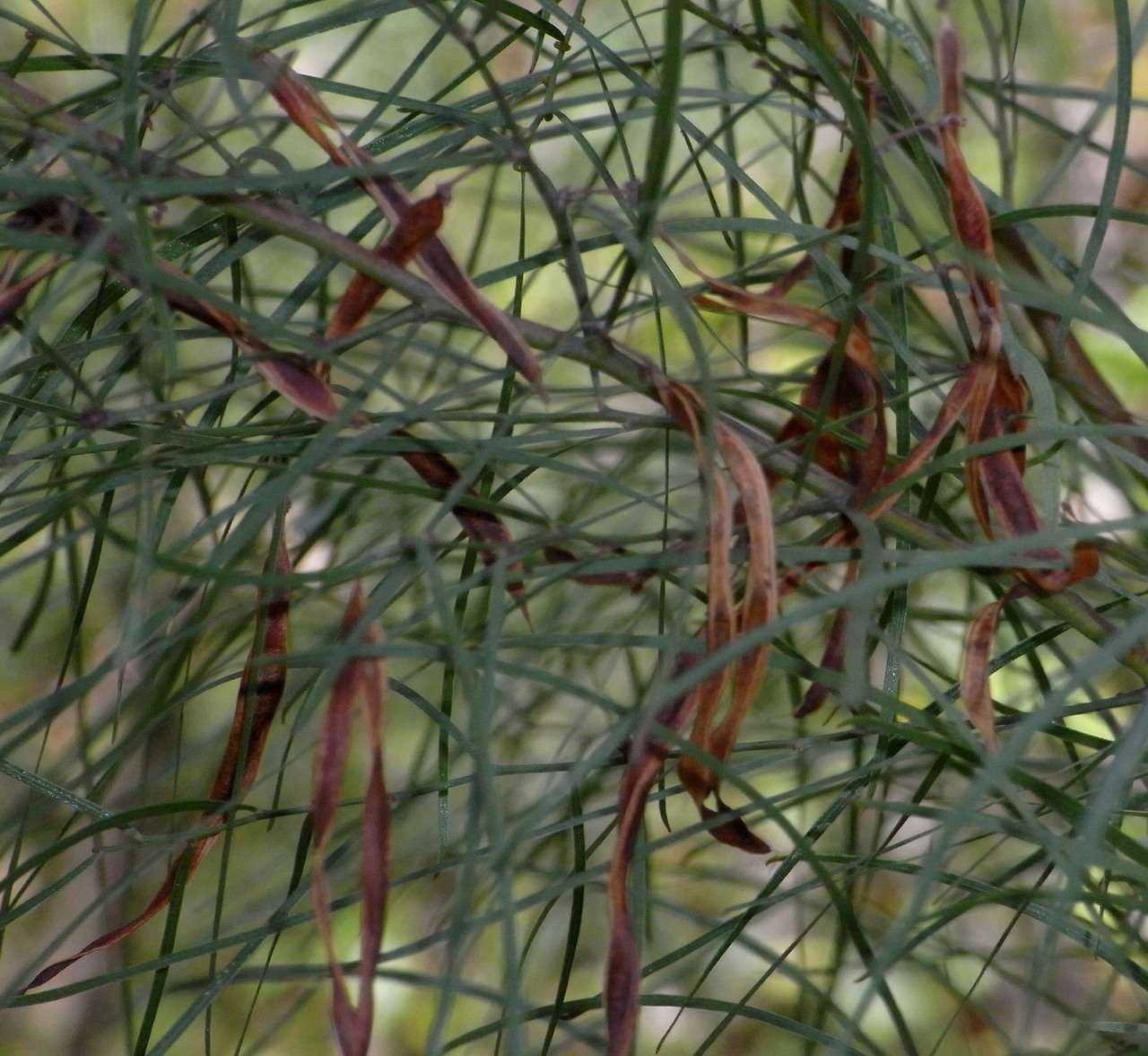
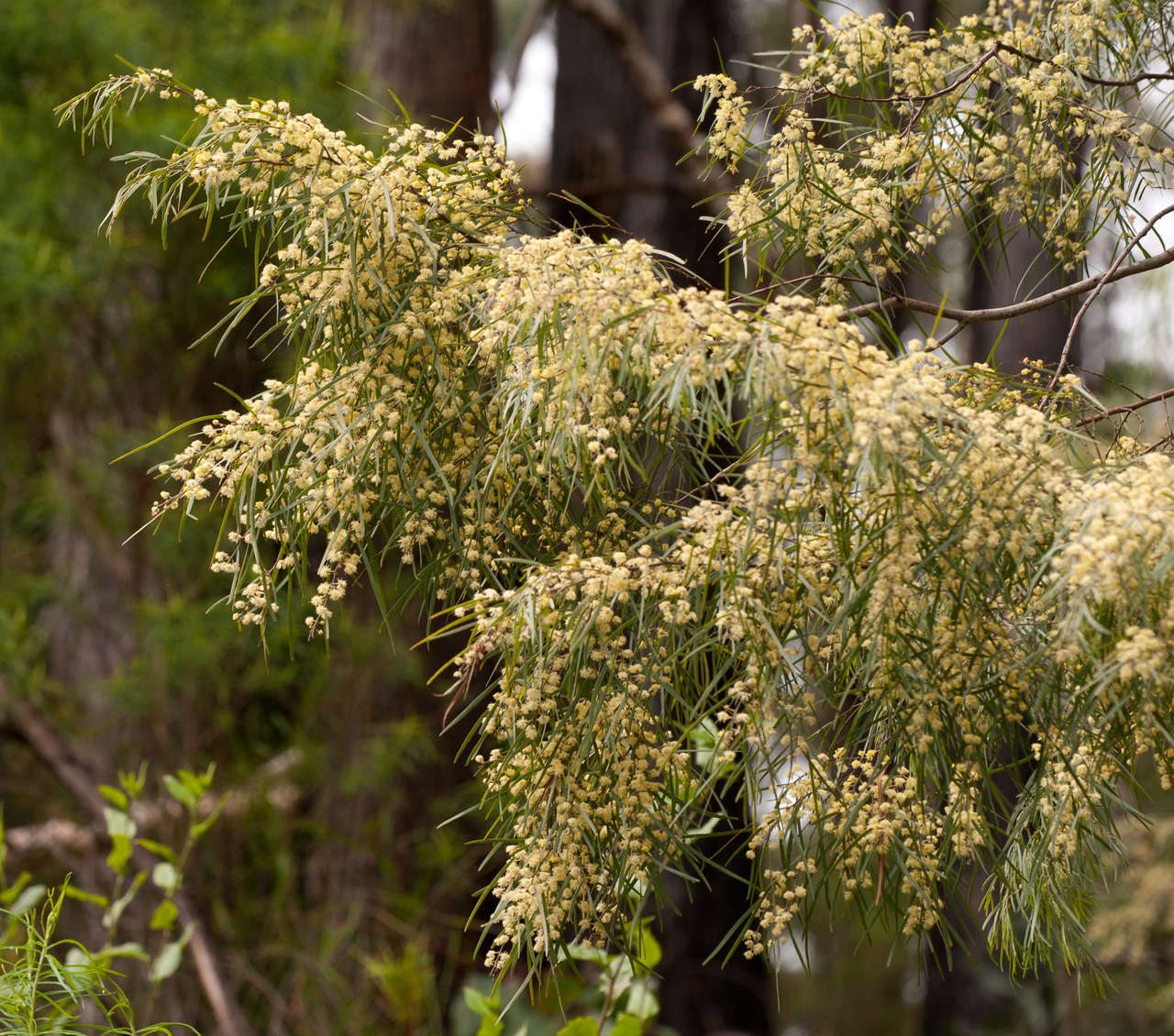
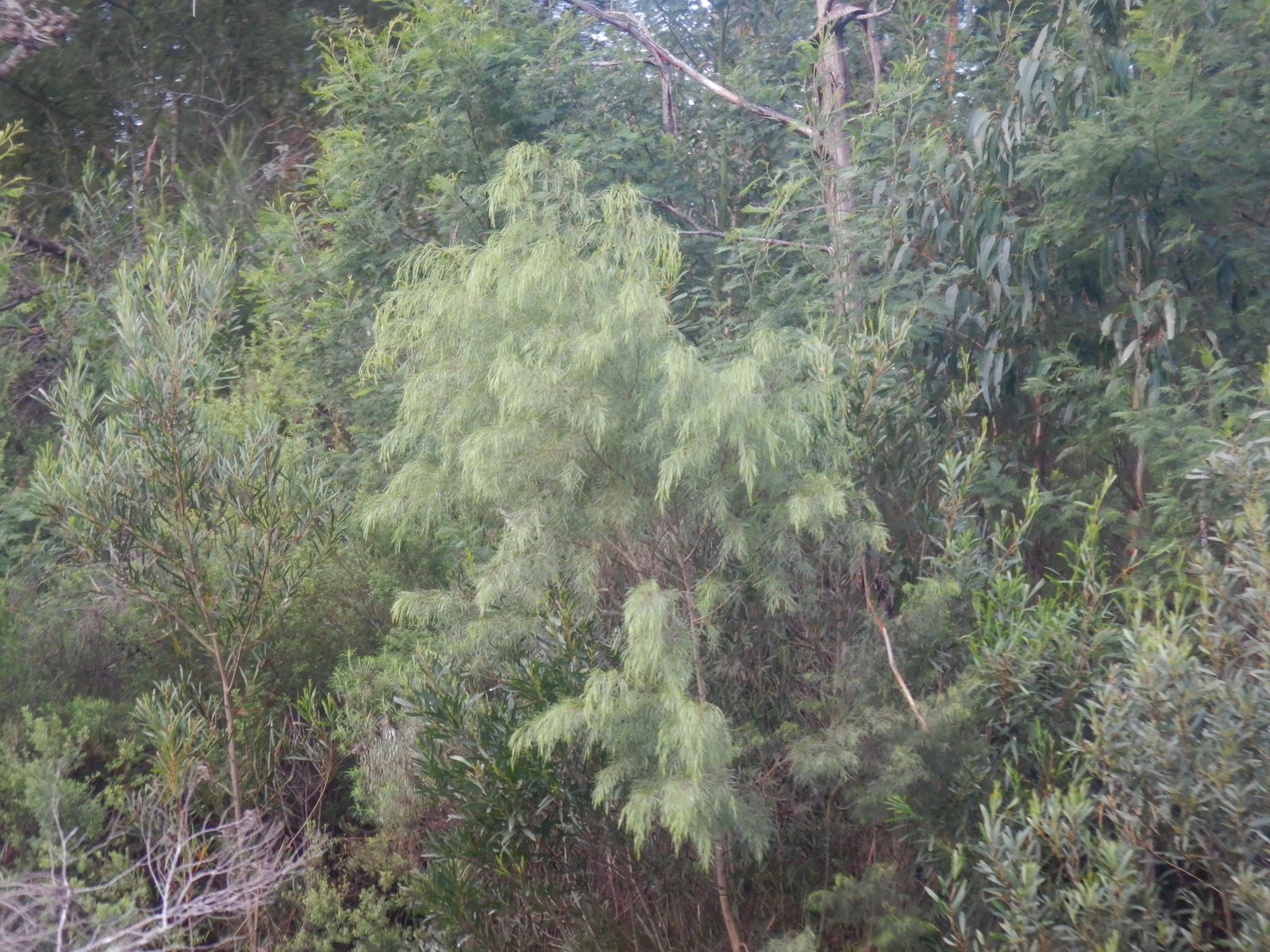
At a glance
- Sun
- Full sun to partial shade; light afternoon shade is helpful in hot inland gardens.
- Water
- Water regularly while establishing, then deeply during prolonged dry weather. Keep container plants evenly moist but never waterlogged.
- Soil
- Well-drained sandy or loamy soil, preferably slightly acidic to neutral; avoid heavy, persistently wet ground.
- Height
- 3-5 ft (0.9-1.5 m)
- Spread
- 4-6 ft (1.2-1.8 m)
- Flowers
- Small pale-yellow flower heads may appear in late winter or spring; flowering can be sparse.
- Foliage
- Evergreen, narrow, flattened leaf-like stems called phyllodes, with curled or rippled edges and a soft, cascading habit; new growth is often lime green.
- Growth
- Moderate; size and speed vary with climate, soil and watering.
- Care needed
- Low
The year at a glance
- Pollinators
- Drought tolerant
- Heat tolerant
- Wildlife
| J | F | M | A | M | J | J | A | S | O | N | D | |
|---|---|---|---|---|---|---|---|---|---|---|---|---|
| Plant |
Northern hemisphere months. In Australia, shift them by six.
- Difficulty
- Hard
- Toughness
- Fairly tough
Will it suit your garden?
Pick your zone, country, light and whether you have pets.
Full sun is 6 or more hours of direct sun a day, part shade 3 to 6 hours, shade under 3.
How it grows
Planting day
1.6 ft (0.5 m)
After 1 year
2.1 ft (0.64 m)
After 2 years
2.6 ft (0.78 m)
After 3 years
3 ft (0.92 m)
After 5 years
4 ft (1.2 m)
full size
About 5 years to full size.
From a typical nursery size, at an average rate for this kind of plant. A rule of thumb, not a forecast.
Good to know
- Cats and dogs
- Safe
- Native to
- Australia
- Growth rate
- Moderate
Care
Jobs through the year
- WaterApr–May, Sep–Oct, every 14 days
- Water established ground plants only during dry spells; water young plants more regularly.
- WaterJun–Aug, every 14 days
- Deep-water established ground plants during drought; check pots often and keep evenly moist.
- WaterJan–Mar, Nov–Dec, every 14 days
- In frost-free shelter, water pots only as needed to keep the root ball lightly moist.
- FeedApr–May
- Give one light low-phosphorus native-plant feed only if growth is weak.
- PruneMay–Jun
- Lightly tip-prune wayward shoots; avoid hard cuts into bare old wood.
- MulchMay
- Mulch the root zone while keeping the stem base clear.
- ProtectJan–Apr, Sep–Dec
- Grow in a movable pot in zones 6–7 and overwinter in bright frost-free shelter.
- Water deeply through the first growing season, allowing the soil surface to dry slightly between waterings.
- Spread mulch over the root zone, keeping it clear of the stem.
- If feeding is needed, apply a low-phosphorus fertiliser suitable for Australian native plants in spring.
- Use a freely draining potting mix and a container with unobstructed drainage holes.
- Shelter from cold, drying winds and protect young plants from frost; move containers under cover in colder climates.
Pruning. Lightly tip-prune after flowering or during spring growth to maintain a compact outline, and remove dead or damaged branches. Avoid cutting hard into old, bare wood, which may not regrow reliably.
Through the year
- Spring
- Plant once damaging frosts have passed, water thoroughly and mulch the root zone.
- Late spring
- Lightly trim wayward shoots after any flowering; feed only if growth is weak.
- Summer
- Check container moisture frequently and water established garden plants during prolonged dry spells.
- Autumn
- Check drainage before wetter weather and remove fallen material that blocks container drainage holes.
- Winter
- Protect from hard frost and keep sheltered container plants only lightly moist.
In the garden
- Use as a soft-textured specimen beside a path or patio, allowing room for its mature spread.
- Grow in a large container where its trailing branch tips can fall over the rim.
- Repeat through a gravel or Australian native border for rounded evergreen structure.
- Pair with upright grasses and broad-leaved plants to emphasise its fine, ribbon-like foliage.
Garden styles it suits: Australian native, Contemporary minimal, Modern courtyard, Dry gravel garden, Green on green and Coastal.
Plant it with: Kangaroo paw, Lomandra, Flax lily, Coastal rosemary and Correa.
Wildlife: Flowers, when produced, can attract bees and other insects. The dense foliage offers shelter for small garden animals.
Problems to watch for
- Root rot in wet soil: improve drainage before planting, avoid low spots and never leave pots standing in water.
- Frost scorch: choose a sheltered position, cover young plants during brief frosts and delay removing damaged growth until spring.
- Scale insects: inspect stems and treat small infestations with horticultural oil according to the label, avoiding hot weather.
- Brown foliage during drought or hot winds: check moisture around the roots, water deeply and provide shelter rather than frequent shallow watering.
Safety
Not known to be toxic to people, cats, dogs or horses, but safety information specific to this cultivar is limited. Do not treat the foliage, flowers or seeds as edible, and discourage pets and children from chewing them.
Easily confused with
Little River wattle (Acacia cognata 'Limelight')
Also forms a weeping mound, but its fine lime-green foliage is generally straighter and less conspicuously curled.
River wattle (Acacia cognata)
The ordinary species develops into a large shrub or small tree, with much less compact growth and mostly straight, narrow foliage.
The name
The cultivar name 'Fettuccini' refers to its flattened, curling foliage, which resembles ribbons of pasta.
Propagation. Propagate from semi-ripe cuttings to retain the cultivar's foliage and habit; rooting can be difficult. Seed-grown plants will not reliably resemble the parent.
Checked against open data
- Accepted botanical name
- Acacia cognata
- Native range
- New South Wales and Victoria.
Sources: GBIF (CC BY 4.0) and Trefle (CC BY 4.0). The care and design notes are LandscapeGPT's own.
See it in your own yard.
Upload a photo of your yard and see it redesigned with plants that suit your climate, each checked against your zone.