Robyn Gordon grevillea
Grevillea 'Robyn Gordon'. Family Proteaceae. Shrub.
Also called Grevillea 'Robyn Gordon'.
A rounded Australian evergreen shrub with deeply divided leaves and red, brush-like flowers that attract nectar-feeding birds. It flowers for much of the year in warm climates but needs protection from substantial frost; in colder regions, grow it in a container that can overwinter under cover.
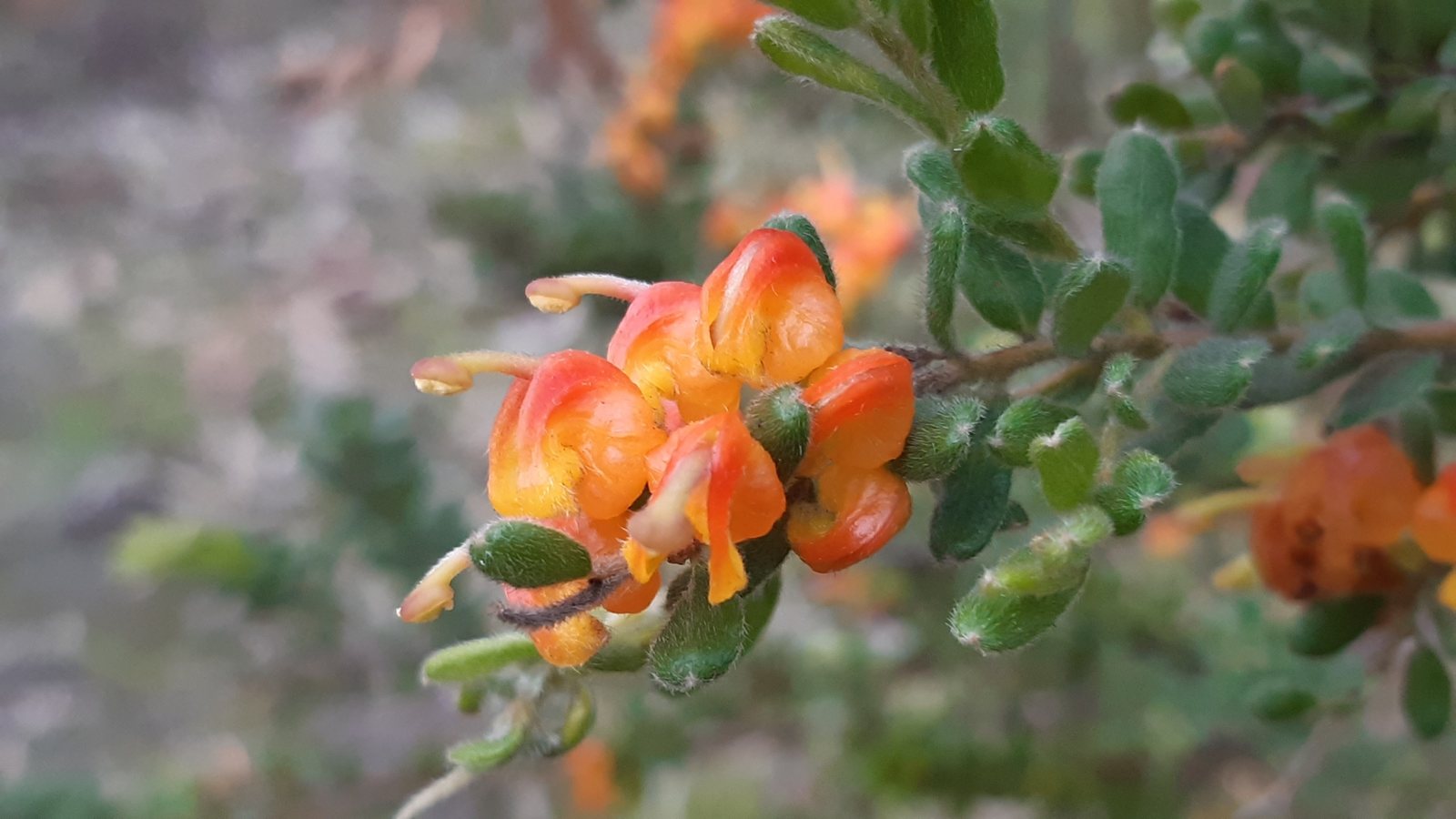
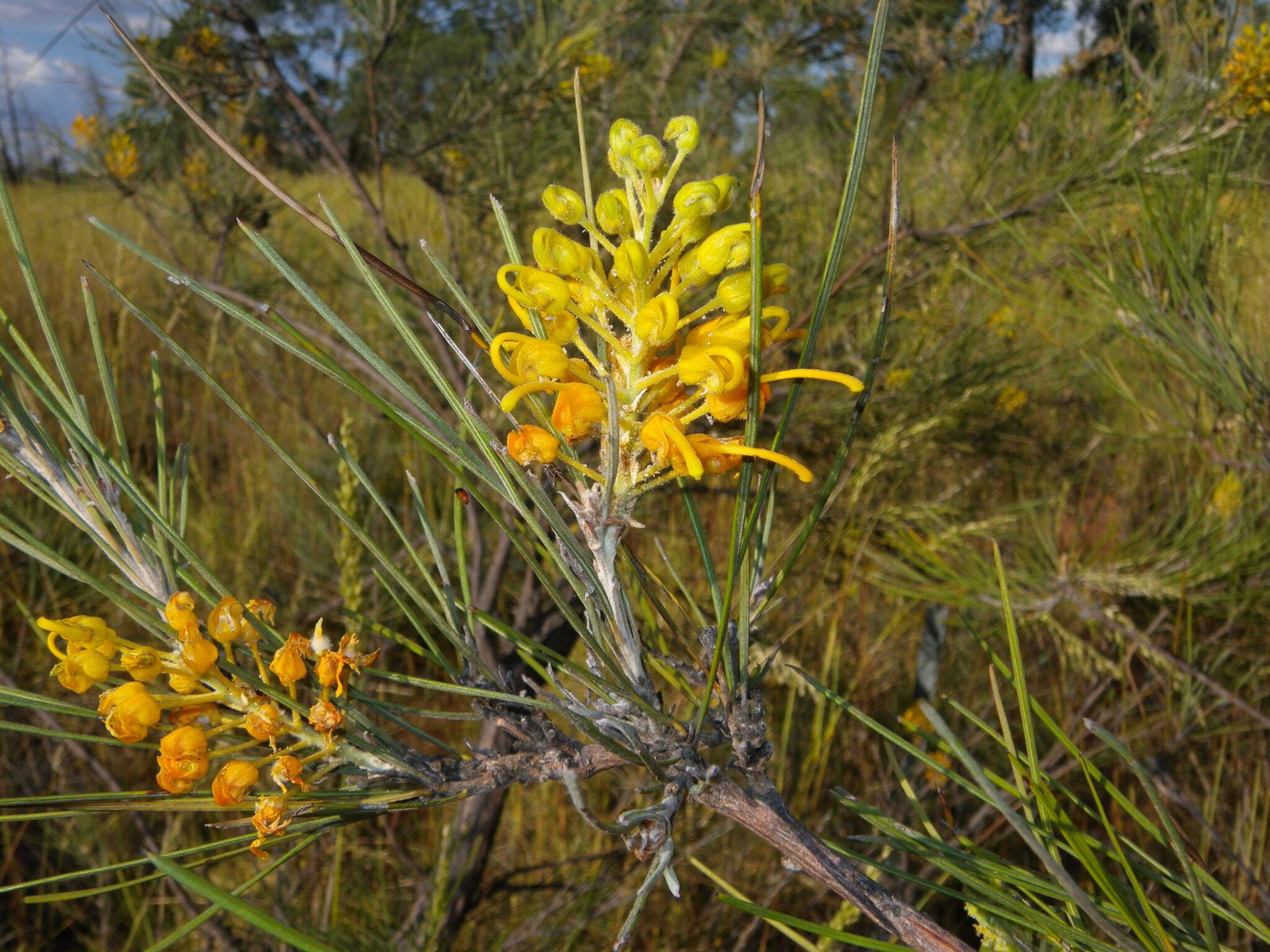
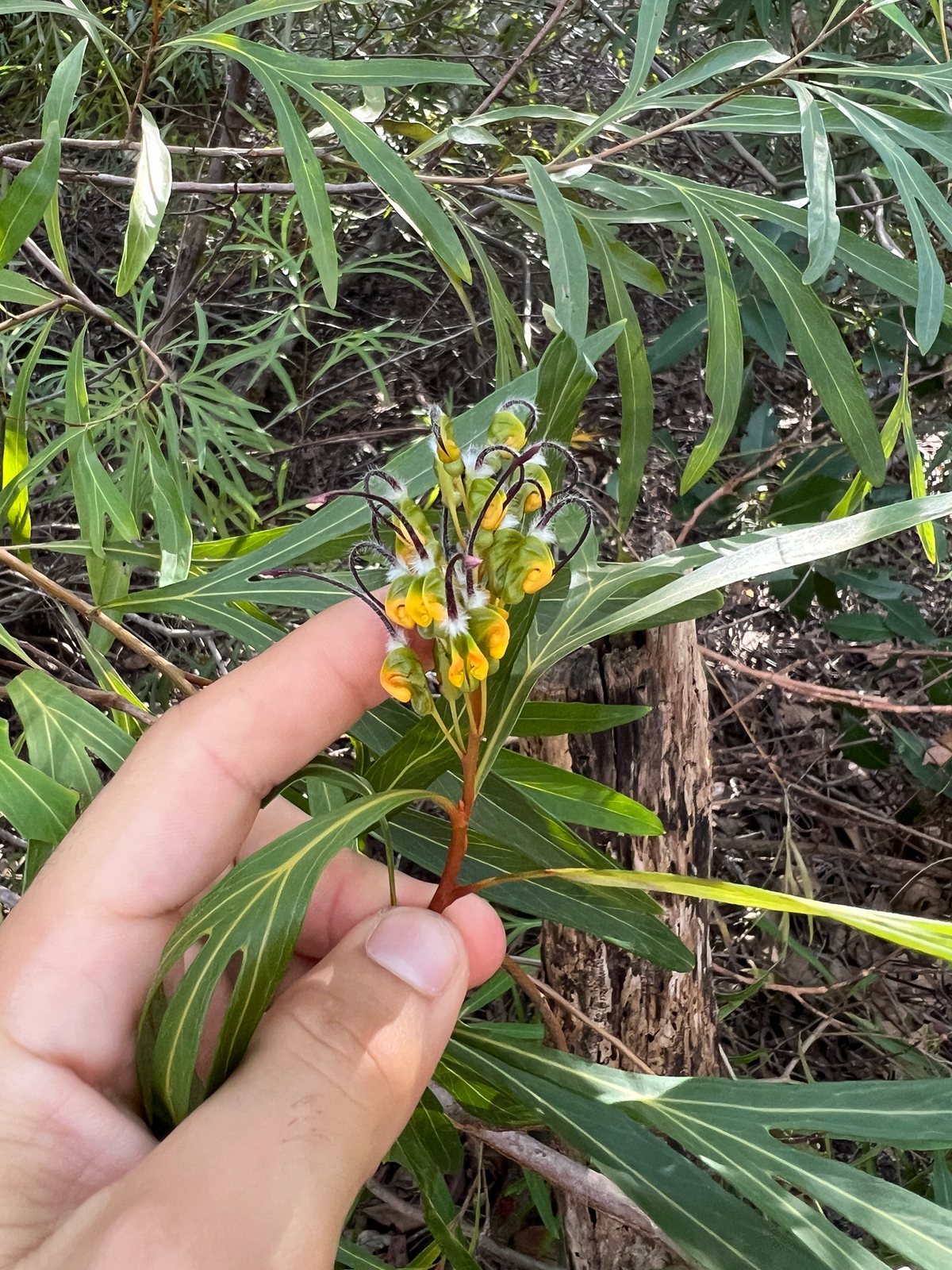
At a glance
- Sun
- Full sun for the best flowering; tolerates light partial shade.
- Water
- Water regularly while establishing, then deeply during prolonged dry spells. Let the soil drain and partly dry between waterings; avoid persistently wet roots.
- Soil
- Well-drained, low-phosphorus soil, preferably slightly acidic to neutral. Sandy or gravelly soil is suitable; use a raised bed where drainage is poor.
- Height
- 5-7 ft (1.5-2.1 m)
- Spread
- 5-8 ft (1.5-2.4 m)
- Flowers
- Red flower clusters through much of the year in frost-free climates, often strongest from spring to autumn; flowering is more seasonal in cooler areas.
- Foliage
- Evergreen. Leathery, deeply divided green leaves give the shrub a coarse, fern-like texture.
- Growth
- Moderate to fast in warm conditions.
- Care needed
- Medium
The year at a glance
- Pollinators
- Drought tolerant
- Heat tolerant
- Wildlife
- Low allergen
| J | F | M | A | M | J | J | A | S | O | N | D | |
|---|---|---|---|---|---|---|---|---|---|---|---|---|
| Flowers | ||||||||||||
| Plant |
Northern hemisphere months. In Australia, shift them by six.
- Difficulty
- Hard
- Toughness
- Fairly tough
Will it suit your garden?
Pick your zone, country, light and whether you have pets.
Full sun is 6 or more hours of direct sun a day, part shade 3 to 6 hours, shade under 3.
How it grows
Planting day
1.6 ft (0.5 m)
After 1 year
2.7 ft (0.83 m)
After 2 years
4 ft (1.2 m)
After 3 years
5 ft (1.5 m)
After 5 years
6 ft (1.8 m)
full size
About 4 years to full size.
From a typical nursery size, at an average rate for this kind of plant. A rule of thumb, not a forecast.
Good to know
- Cats and dogs
- Safe
- Growth rate
- Fast
Care
Jobs through the year
- WaterApr–May, Sep–Oct, every 14 days
- For established outdoor plants, water during dry spells only, letting soil partly dry; young plants need more.
- WaterJun–Aug, every 10 days
- Deep-water established plants during prolonged dry weather; containers need more frequent checks.
- FeedApr
- Only if growth is weak, apply a small dose of low-phosphorus feed for sensitive Australian natives.
- MulchMay
- Maintain a light mulch over the roots, clear of stems.
- PruneJun, Aug
- Trim lightly after a flower flush; avoid bare old wood and wear gloves and long sleeves.
- ProtectJan–Apr, Oct–Dec
- Not hardy in zone 6–7; move containers into bright, frost-free shelter and keep roots barely moist.
- Water deeply through the first growing season, allowing excess water to drain away.
- Use only a low-phosphorus fertiliser labelled for phosphorus-sensitive Australian native plants, and apply sparingly.
- Keep a light mulch over the root zone, clear of the stems.
- Use a free-draining, low-phosphorus potting mix for container plants; never leave the pot standing in water.
- Protect young plants from frost and move containers into bright, frost-free shelter before winter.
Pruning. Lightly trim after a main flush of flowers to encourage branching and maintain a rounded shape. Avoid cutting hard into old, leafless wood, and wear gloves and long sleeves because contact can cause dermatitis.
Through the year
- Spring
- Plant after the risk of damaging frost has passed, choosing a sunny position with excellent drainage.
- Spring
- If growth is weak, apply a small amount of low-phosphorus native-plant fertiliser.
- Early summer
- Lightly trim after a flowering flush to keep growth dense.
- Summer
- Water young plants and containers deeply during dry weather; check that drainage remains clear.
- Late summer
- Take semi-ripe cuttings from healthy, non-flowering shoots.
- Autumn
- Move container plants under bright, frost-free cover where winters are cold.
- Winter
- Keep sheltered plants on the dry side without allowing the root ball to dry out completely.
In the garden
- Use as a flowering focal shrub in a sunny Australian native planting with kangaroo paws and mat rushes.
- Plant as an informal low screen where its broad habit has room to develop without frequent clipping.
- Add to a bird-friendly border, away from narrow paths where its foliage could brush bare skin.
- Grow in a large container on a sunny patio in colder climates, with space to shelter it in winter.
Garden styles it suits: Australian native, Wildlife garden, Mediterranean, Dry gravel garden, Coastal and Desert / xeriscape.
Plant it with: Kangaroo paw, Coastal rosemary, Mat rush, Correa and Waxflower.
Wildlife: Nectar attracts honeyeaters and other nectar-feeding birds in Australia, hummingbirds where present in the Americas, and visiting insects. Dense growth also provides cover for small birds.
Problems to watch for
- Root rot in wet soil: improve drainage, reduce watering and avoid sites that remain waterlogged in winter.
- Phosphorus injury, causing yellowing, scorched leaves or decline: stop general-purpose fertilisers and use a low-phosphorus native-plant feed only if needed.
- Frost damage: protect young growth with horticultural fleece and overwinter containers in bright, frost-free shelter.
- Scale insects: inspect stems and leaf undersides, remove small infestations by hand and use a labelled horticultural oil if needed, avoiding hot weather.
Safety
Foliage, flowers and sap can cause allergic contact dermatitis in people; reactions can be severe in sensitive individuals. It is not known to cause systemic poisoning in cats, dogs or horses, but animal-specific information is limited. It is not an edible plant, and the effects of ingestion are poorly documented.
Easily confused with
Superb grevillea (Grevillea 'Superb')
Has similar divided foliage and brush-like flowers, but the flowers are generally salmon-orange with cream rather than predominantly red.
Ned Kelly grevillea (Grevillea 'Ned Kelly')
Usually has orange-red flowers with conspicuous yellow portions, rather than the more uniformly red display of 'Robyn Gordon'; check a nursery label when plants are not flowering.
The name
Grevillea honours the British plant collector Charles Francis Greville, and Australian breeder David Gordon named 'Robyn Gordon' for his daughter.
Propagation. Take semi-ripe cuttings in summer and root them in a free-draining propagation mix with gentle bottom heat if available. Cuttings preserve the cultivar; seed will not reliably produce the same plant. Specialist nurseries may also graft it onto suitable rootstocks.
Checked against open data
- Accepted botanical name
- Grevillea
Sources: GBIF (CC BY 4.0). The care and design notes are LandscapeGPT's own.
See it in your own yard.
Upload a photo of your yard and see it redesigned with plants that suit your climate, each checked against your zone.